Results by title
3064 books match the query 'Social conditions' and 138 start with i
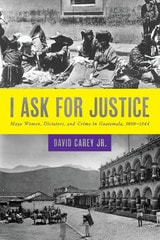
I Ask for Justice
Maya Women, Dictators, and Crime in Guatemala, 1898–1944By David Carey Jr.
University of Texas Press, 2013
This study of the Guatemalan legal system during the regimes of two of Latin America’s most repressive dictators reveals the surprising extent to which Maya women used the courts to air their grievances and defend their human rights.
Winner, Bryce Wood Book Award, Latin American Studies Association, 2015
Given Guatemala’s record of human rights abuses, its legal system has often been portrayed as illegitimate and anemic. I Ask for Justice challenges that perception by demonstrating that even though the legal system was not always just, rural Guatemalans considered it a legitimate arbiter of their grievances and an important tool for advancing their agendas. As both a mirror and an instrument of the state, the judicial system simultaneously illuminates the limits of state rule and the state’s ability to co-opt Guatemalans by hearing their voices in court.
Against the backdrop of two of Latin America’s most oppressive regimes—the dictatorships of Manuel Estrada Cabrera (1898–1920) and General Jorge Ubico (1931–1944)—David Carey Jr. explores the ways in which indigenous people, women, and the poor used Guatemala’s legal system to manipulate the boundaries between legality and criminality. Using court records that are surprisingly rich in Maya women’s voices, he analyzes how bootleggers, cross-dressers, and other litigants crafted their narratives to defend their human rights. Revealing how nuances of power, gender, ethnicity, class, and morality were constructed and contested, this history of crime and criminality demonstrates how Maya men and women attempted to improve their socioeconomic positions and to press for their rights with strategies that ranged from the pursuit of illicit activities to the deployment of the legal system.
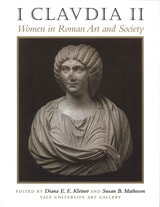
I Claudia II
Women in Roman Art and SocietyEdited by Diana E. E. Kleiner and Susan B. Matheson
University of Texas Press, 2000
I, Claudia: Women in Ancient Rome—an exhibition and catalog produced by the Yale University Art Gallery—provided the first comprehensive study of the lives of Roman women as revealed in Roman art. Responding to the popular success of the exhibit and catalog, Diana E. E. Kleiner and Susan B. Matheson here gather ten additional essays by specialists in art history, history, and papyrology to offer further reflections on women in Roman society based on the material evidence provided by art, archaeology, and ancient literary sources.
In addition to the editors, the contributors are Cornelius C. Vermeule, Rolf Winkes, Mary T. Boatwright, Susan Wood, Eve D'Ambra, Andrew Oliver, Diana Delia, and Ann Ellis Hanson. Their essays, illustrated with black-and-white photos of the art under discussion, treat such themes as mothers and sons, marriage and widowhood, aging, adornment, imperial portraiture, and patronage.
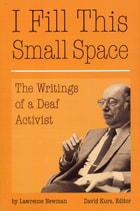
I Fill This Small Space
The Writings of a Deaf ActivistLawrence Newman
Gallaudet University Press, 2009
Lawrence Newman became deaf at the age of five in 1930, and saw his father fight back tears knowing that his son would never hear again. The next time he saw his father cry was in 1978, when Newman received an honorary doctorate from Gallaudet University, his alma mater. Newman was recognized for his achievements as a life-long advocate for deaf education, including receiving California’s Teacher of the Year award in 1968. Perhaps his greatest influence, however, stemmed from his many articles and columns that appeared in various publications, the best of which are featured in I Fill This Small Space: The Writings of a Deaf Activist.
Editor David Kurs has organized Newman’s writings around his passions — deaf education, communication and language, miscellaneous columns and poems on Deaf life, and humorous insights on his activism. His articles excel both as seamless arguments supporting his positions and as windows on the historical conflicts that he fought: against the Least Restrictive Environment in favor of residential deaf schools; for sign language, Total Communication, and bilingual education; and as a deaf teacher addressing parents of deaf children. A gifted writer in all genres, Newman amuses with ease (“On Mini and Midi-Skirts”), and moves readers with his heartfelt verse (“Girl with a Whirligig”). Newman ranges wide in his ability, but he always maintains his focus on equal tights for deaf people, as he demonstrates in his title poem “I Fill This Small Space:”
I fill this small space, this time
Who is to say yours is better
Than mine or mine yours
I Give You Half the Road
Carol Spindel
University of Wisconsin Press, 2021
Once considered the most stable country in West Africa, Ivory Coast was split by an armed rebellion in 2002 and endured a decade of instability and a violent conflict. Spindel provides an intimate glimpse into this turbulent period by weaving together the daily lives and paths of five neighbors. Their stories reveal Ivorians determined to reunite a divided country through reliance on mutual respect and obligation even while power-hungry politicians pursued xenophobic and anti-immigrant platforms for personal gain. Illuminating democracy as a fragile enterprise that must be continually invented and reinvented, I Give You Half the Road emphasizes the importance of connection, generosity, and forgiveness.
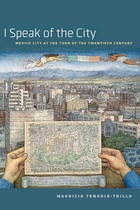
I Speak of the City
Mexico City at the Turn of the Twentieth CenturyMauricio Tenorio-Trillo
University of Chicago Press, 2013
I Think Again of Those Ancient Chinese Poets
Tom Sexton
University of Alaska Press, 2010

I Want to Get Married!
One Wannabe Bride’s Misadventures with Handsome Houdinis, Technicolor Grooms, Morality Police, and Other Mr. Not Quite RightsBy Ghada Abdel Aal
University of Texas Press, 2010
The rules may differ from country to country, but the dating game is a universal constant.
After years of searching for Mr. Right in living-room meetings arranged by family or friends, Ghada Abdel Aal, a young Egyptian professional, decided to take to the blogosphere to share her experiences and vent her frustrations at being young, single, and female in Egypt. Her blog, I Want to Get Married!, quickly became a hit with both men and women in the Arab world. With a keen sense of humor and biting social commentary, Abdel Aal recounts in painful detail her adventures with failed proposals and unacceptable suitors. There's Mr. Precious, who storms out during their first meeting when he feels his favorite athlete has been slighted, and another suitor who robs her in broad daylight, to name just a few of the characters she runs across in her pursuit of wedded bliss.
I Want to Get Married! has since become a best-selling book in Egypt and the inspiration for a television series. This witty look at dating challenges skewed representations of the Middle East and presents a realistic picture of what it means to be a single young woman in the Arab world, where, like elsewhere, a good man can be hard to find.

I Will Live for Both of Us
A History of Colonialism, Uranium Mining, and Inuit ResistanceJoan Scottie
University of Manitoba Press, 2022

I Will Mix Your Blood with Coal
Snapshots from the East of UkraineOleksandr Mykhed, Tanya Savchynska, and David Mossop
Northwestern University Press, 2025
In 2014, the Russian army, with support from local militants, occupied parts of Ukraine’s two easternmost regions—once the beating industrial heart of the Soviet Union—where coal extraction has since exhausted both the human population and the natural resources. In late 2016, Oleksandr Mykhed set out on a research trip to explore the deep history and contested present of the area from the perspective of a fellow countryman who’d never been there.
Mykhed brings us on a painful yet hopeful journey across the Ukrainian east, sharing conversations with locals, snippets from archival documents, and the complicated perspectives of prominent cultural figures, such as writer Serhiy Zhadan, historian Olena Stiazhkina, and philosopher Ihor Kozlovsky, who was imprisoned and tortured for nearly two years.
I Will Mix Your Blood with Coal invites us to meet generations of coal miners. To learn about the Belgian and British investors who founded the east’s industrial cities. To remember the harrowing events of the First and Second World Wars and the incalculable brutality of Soviet history. To see the activists who are even now working to improve the country. To hear sweet memories of a lost utopia that never existed. Mykhed provides a unique portrait of life in the east during the war, before the full-scale invasion that would change everything.
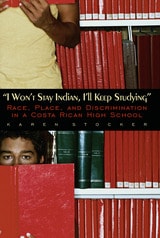
I Won't Stay Indian, I'll Keep Studying
Race, Place, and Discrimination in a Costa Rican High SchoolKaren Stocker
University Press of Colorado, 2005
Stocker reveals how overt and hidden curricula taught ethnic, racial, and gendered identities and how the dominant ideology of the town, present in school, conveyed racist messages to students.
"I Won't Stay Indian, I'll Keep Studying" documents how students from the reservation reacted to, coped with, and resisted discrimination. Considering the students' experiences in the context of the Costa Rican educational system as a whole, Stocker discusses policy shifts that might reduce institutionalized discrimination. Her interpretation of the experiences of these students makes a significant contribution to anthropology, Latin American studies, critical race theory, and educational theory.
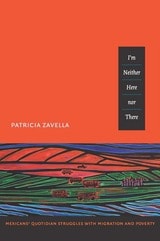
I'm Neither Here nor There
Mexicans' Quotidian Struggles with Migration and PovertyPatricia Zavella
Duke University Press, 2011
Drawing on close interactions with Mexicans on both sides of the border, Zavella examines migrant journeys to and within the United States, gendered racialization, and exploitation at workplaces, and the challenges that migrants face in forming and maintaining families. As she demonstrates, the desires of migrants to express their identities publicly and to establish a sense of cultural memory are realized partly through Latin American and Chicano protest music, and Mexican and indigenous folks songs played by musicians and cultural activists.

INSIDE WEST VIRGINIA
PUBLIC POLICY PERSPECTIVES FOR THE 21ST CENTURYBRUCE KEITH
West Virginia University Press, 1999

Identity and the Failure of America
From Thomas Jefferson to the War on TerrorJohn Michael
University of Minnesota Press, 2008
From Thomas Jefferson to John Rawls, justice has been at the center of America’s self-image and national creed. At the same time, for many of its peoples-from African slaves and European immigrants to women and the poor-the American experience has been defined by injustice: oppression, disenfranchisement, violence, and prejudice.
In Identity and the Failure of America, John Michael explores the contradictions between a mythic national identity promising justice to all and the realities of a divided, hierarchical, and frequently iniquitous history and social order. Through a series of insightful readings, Michael analyzes such cultural moments as the epic dramatization of the tension between individual ambition and communal complicity in Moby-Dick, attempts to effect social change through sympathy in the novels of Lydia Marie Child and Harriet Beecher Stowe, Ralph Waldo Emerson’s antislavery activism and Frederick Douglass’s long fight for racial equity, and the divisive figures of John Brown and Nat Turner in American letters and memory.
Focusing on exemplary instances when the nature of the United States as an essentially conflicted nation turned to force, Michael ultimately posits the development of a more cosmopolitan American identity, one that is more fully and justly imagined in response to the nation’s ethical failings at home and abroad.
John Michael is professor of English and of visual and cultural studies at the University of Rochester. He is the author of Anxious Intellects: Academic Professionals, Public Intellectuals, and Enlightenment Values and Emerson and Skepticism: The Cipher of the World.
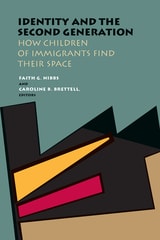
Identity and the Second Generation
How Children of Immigrants Find Their SpaceFaith G. Nibbs
Vanderbilt University Press, 2015
This book explores the social worlds of the children of immigrants. Based on rich ethnographic research, the contributors illustrate how these young people, the so-called second generation, construct and negotiate their lives. Ultimately, the driving question is profoundly important on a universal level: How do these young people construct an identity and a sense of belonging for themselves, and how do they deal with processes of inclusion and exclusion?
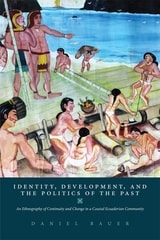
Identity, Development, and the Politics of the Past
An Ethnography of Continuity and Change in a Coastal Ecuadorian CommunityBauer
University Press of Colorado, 2018
Residents in the coastal community of Salango pushed for formal recognition of Indigenous identity while highlighting their pre-Hispanic roots in order to make claims about cultural continuity and ancestrality. Bauer considers the extent to which the politics of identity is embedded in the process of community-based development, paying close attention to how local conceptions of identity and residents’ ideas about their own identity and the identities of others fit within the broader context of Ecuadorian and Latin American notions of mestizaje. He emphasizes ethnogenesis and the fluid nature of identity as residents reference prehistory and the archaeological record as anchor points for claims to an Indigenous ethnic identity.
Identity, Development, and the Politics of the Past moves beyond existing studies that center on questions of authenticity and instead focuses on the ways people make claims to identity. This book makes a significant contribution to the growing body of literature on the Ecuadorian coast and directs scholars who focus on Ecuador to expand their focus beyond the highland and Amazonian regions. It will be of interest to students and scholars of Latin American studies, anthropology, ethnology, economic development, and ethnic identity.
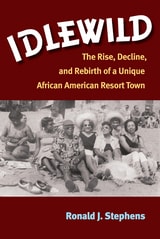
Idlewild
The Rise, Decline, and Rebirth of a Unique African American Resort TownRonald J. Stephens
University of Michigan Press, 2013
In 1912, white land developers founded Idlewild, an African American resort community in western Michigan. Over the following decades, the town became one of the country’s foremost vacation destinations for the black middle class, during its peak drawing tens of thousands of visitors annually and hosting the era’s premier entertainers, such as The Four Tops, Della Reese, Brook Benton, and George Kirby. With the civil rights movement and the resulting expansion of recreation options available to African Americans, Idlewild suffered a sharp social and economic decline, and by the early 1980s the town had become a struggling retirement community in the midst of financial and political crises.
Meticulously researched and unearthing never-before-seen historical material, Ronald J. Stephens’s book examines the rapid rise and decline of this pivotal landmark in African American and leisure history, in the process exploring intersections among race, class, tourism, entertainment, and historic preservation in the United States. Featuring a wealth of fieldwork on contemporary Idlewild, the book also takes a candid look at recent revitalization efforts and analyzes the possibilities for a future resurgence of this national treasure.
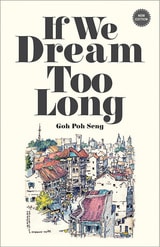
If We Dream Too Long
Poh Seng Goh
National University of Singapore Press, 2020
Image Matters
Archive, Photography, and the African Diaspora in EuropeTina M. Campt
Duke University Press, 2012
Images and Conversations
Mexican Americans Recall a Southwestern PastText by Patricia Preciado Martin; Photographs by Louis Carlos Bernal
University of Arizona Press, 1983
Images of Public Wealth or the Anatomy of Well-Being in Indigenous Amazonia
Edited by Fernando Santos-Granero
University of Arizona Press, 2015
Mindful of the widespread discontent generated by the ongoing economic crisis in postindustrial societies as well as the renewed attempts by social scientists to measure more effectively what we consider to be “development” and “economic success,” the contributors to this volume contend that the study of public wealth in indigenous Amazonia provides not only an exceptional opportunity to apprehend native notions of wealth, poverty, and the good life, but also to engage in a critical revision of capitalist constructions of living well.
Through ethnographic analysis and thought-provoking new approaches to contemporary and historical cases, the book’s contributors reveal how indigenous views of wealth—based on the abundance of intangibles such as vitality, good health, biopower, and convivial relations—are linked to the creation of strong, productive, and moral individuals and collectivities, differing substantially from those in capitalist societies more inclined toward the avid accumulation and consumption of material goods.
Imagining Asia in the Americas
Zelideth María Rivas and Debbie Lee-DiStefano
Rutgers University Press, 2016
Imagining Transgender
An Ethnography of a CategoryDavid Valentine
Duke University Press, 2007
Valentine argues that “transgender” has been adopted so rapidly in the contemporary United States because it clarifies a model of gender and sexuality that has been gaining traction within feminism, psychiatry, and mainstream gay and lesbian politics since the 1970s: a paradigm in which gender and sexuality are distinct arenas of human experience. This distinction and the identity categories based on it erase the experiences of some gender-variant people—particularly poor persons of color—who conceive of gender and sexuality in other terms. While recognizing the important advances transgender has facilitated, Valentine argues that a broad vision of social justice must include, simultaneously, an attentiveness to the politics of language and a recognition of how social theoretical models and broader political economies are embedded in the day-to-day politics of identity.
Immigrant Agency
Hmong American Movements and the Politics of Racialized IncorporationYang Sao Xiong
Rutgers University Press, 2022
Immigrant Crossroads
Globalization, Incorporation, and Placemaking in Queens, New YorkEdited by Tarry Hum, Ron Hayduk, Francois Pierre-Louis Jr., and Michael Alan Krasner
Temple University Press, 2021
Nearly half the 2.3 million residents of Queens, New York are foreign-born. Immigrants in Queens hail from more than 120 countries and speak more than 135 languages. As an epicenter of immigrant diversity, Queens is an urban gateway that exemplifies opportunities and challenges in shaping a multi-racial democracy.
The editors and contributors to Immigrant Crossroads examine the social, spatial, economic, and political dynamics that stem from this fast-growing urbanization. The interdisciplinary chapters examine residential patterns and neighborhood identities, immigrant incorporation and mobilizations, and community building and activism.
Essays combine qualitative and quantitative research methods to address globalization and the unprecedented racial and ethnic diversity as a result of international migration. Chapters on incorporation focus on immigrant participation and representation in electoral politics, and advocacy for immigrant inclusion in urban governance and service provision. A section of Immigrant Crossroads concerns placemaking, focusing on the production of neighborhood spaces and identities as well as immigrant activism and community development and control.
Based on engaged and robust analysis, Immigrant Crossroads highlights the dynamics of this urban gateway.
Immigrant Identity and the Politics of Citizenship
A Collection of Articles from the Journal of American Ethnic HistoryJohn J Bukowczyk
University of Illinois Press, 2016
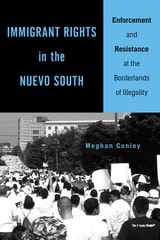
Immigrant Rights in the Nuevo South
Enforcement and Resistance at the Borderlands of IllegalityMeghan Conley
Temple University Press, 2020
Every day, undocumented immigrants are rendered vulnerable through policies and practices that illegalize them. Moreover, they are socially constructed into dangerous criminals and taxpayer burdens who are undeserving of rights, dignity, and respect. Meghan Conley’s timely book, Immigrant Rights in the Nuevo South, seeks to expose and challenge these dehumanizing ideas and practices byexamining the connections between repression and resistance for unauthorized immigrants in communities across the American Southeast.
Conley uses on-the-ground interviews to describe fear and resistance from the perspective of those most affected by it. She shows how, for example, the Illegal Immigration Reform and Enforcement Act in Georgia prompted marches and an action that became “a day of non-compliance.” Likewise, an “enforcement lottery” that created unpredictable threats of arrest and deportation in the region mobilized immigrants to organize and demonstrate. However, as immigrant rights activists mobilize in opposition to the criminalization of undocumented people, they may unintentionally embrace stories of who deserves to be in the United States and who does not. Immigrant Rights in the Nuevo South explores these paradoxes while offering keen observations about the nature and power of Latinx resistance.

Immigrants Raising Citizens
Undocumented Parents and Their ChildrenHirokazu Yoshikawa
Russell Sage Foundation, 2011
Immigration and the Remaking of Black America
Tod G. Hamilton
Russell Sage Foundation, 2019
Honorable Mention for the 2020 Thomas and Znaniecki Award from the International Migration Section of the American Sociological Association
Over the last four decades, immigration from the Caribbean and sub-Saharan Africa to the U. S. has increased rapidly. In several states, African immigrants are now major drivers of growth in the black population. While social scientists and commentators have noted that these black immigrants’ social and economic outcomes often differ from those of their native-born counterparts, few studies have carefully analyzed the mechanisms that produce these disparities. In Immigration and the Remaking of Black America, sociologist and demographer Tod Hamilton shows how immigration is reshaping black America. He weaves together interdisciplinary scholarship with new data to enhance our understanding of the causes of socioeconomic stratification among both the native-born and newcomers.
Hamilton demonstrates that immigration from the Caribbean and sub-Saharan Africa is driven by selective migration, meaning that newcomers from these countries tend to have higher educational attainment than those who stay behind. As a result, they arrive in the U.S. with some advantages over native-born blacks, and, in some cases, over whites. He also shows the importance of historical context: prior to the Civil Rights Movement, black immigrants’ socioeconomic outcomes resembled native-born blacks’ much more closely, regardless of their educational attainment in their country of origin. Today, however, certain groups of black immigrants have better outcomes than native-born black Americans—such as lower unemployment rates and higher rates of homeownership—in part because they immigrated at a time of expanding opportunities for minorities and women in general. Hamilton further finds that rates of marriage and labor force participation among native-born blacks that move away from their birth states resemble those of many black immigrants, suggesting that some disparities within the black population stem from processes associated with migration, rather than from nativity alone.
Hamilton argues that failing to account for this diversity among the black population can lead to incorrect estimates of the social progress made by black Americans and the persistence of racism and discrimination. He calls for future research on racial inequality to disaggregate different black populations. By richly detailing the changing nature of black America, Immigration and the Remaking of Black America helps scholars and policymakers to better understand the complexity of racial disparities in the twenty-first century.
Immigration, Poverty, and Socioeconomic Inequality
David Card
Russell Sage Foundation, 2013
Imperial Plots
Women, Land, and the Spadework of British Colonialism on the Canadian PrairiesSarah Carter
University of Manitoba Press, 2016

Implicating the System
Judicial Discourses in Sentencing of Indigenous WomenElspeth Kaiser-Derrick
University of Manitoba Press, 2019
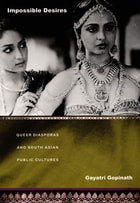
Impossible Desires
Queer Diasporas and South Asian Public CulturesGayatri Gopinath
Duke University Press, 2005
Gopinath juxtaposes diverse texts to indicate the range of oppositional practices, subjectivities, and visions of collectivity that fall outside not only mainstream narratives of diaspora, colonialism, and nationalism but also most projects of liberal feminism and gay and lesbian politics and theory. She considers British Asian music of the 1990s alongside alternative media and cultural practices. Among the fictional works she discusses are V. S. Naipaul’s classic novel A House for Mr. Biswas, Ismat Chughtai’s short story “The Quilt,” Monica Ali’s Brick Lane, Shyam Selvadurai’s Funny Boy, and Shani Mootoo’s Cereus Blooms at Night. Analyzing films including Deepa Mehta’s controversial Fire and Mira Nair’s Monsoon Wedding, she pays particular attention to how South Asian diasporic feminist filmmakers have reworked Bollywood’s strategies of queer representation and to what is lost or gained in this process of translation. Gopinath’s readings are dazzling, and her theoretical framework transformative and far-reaching.
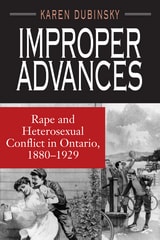
Improper Advances
Rape and Heterosexual Conflict in Ontario, 1880-1929Karen Dubinsky
University of Chicago Press, 1993
Karen Dubinsky relies on criminal case files, a revealing but largely untapped source for social historians, to retell individual stories of sexual danger—crimes such as rape, abortion, seduction, murder, and infanticide. Her research supports many feminist analyses of sexual violence: that crimes are expressions of power, that courts are prejudiced by the victim's background, and that most assaults occur within the victims' homes and communities.
Dubinsky distinguishes herself from most feminist scholars, however, by refusing to view women solely as victims and sex as a tool of oppression. She finds that these women actively sought and took pleasure in sexuality, but they distinguished between wanted and unwanted sexual encounters and attempted to punish coercive sex despite obstacles in the court system and the community.
Confronting a number of key theoretical and historiographic controversies, including recent debates over sexuality in feminist theory and politics, she challenges current thinking on the history of women, gender, and sexuality.
Impure Migration
Jews and Sex Work in Golden Age ArgentinaMir Yarfitz
Rutgers University Press, 2019
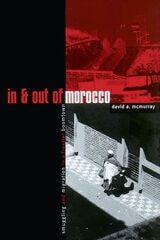
In And Out Of Morocco
Smuggling and Migration in a Frontier BoomtownDavid Mcmurray
University of Minnesota Press, 2001
A revealing inquiry into how global culture is lived locally.
Every summer for almost forty years, tens of thousands of Moroccan emigrants from as far away as Norway and Germany descend on the duty-free smugglers’ cove/migrant frontier boomtown of Nador, Morocco. David McMurray investigates the local effects of the multiple linkages between Nador and international commodity circuits, and analyzes the profound effect on everyday life of the free flow of bodies, ideas, and commodities into and out of the region.
Combining immigration and population statistics with street-level ethnography, In and Out of Morocco covers a wide range of topics, including the origin and nature of immigrant nostalgia, the historical evolution of the music of migration in the region, and the influence of migrant wealth on social distinctions in Nador. Groundbreaking in its attention to the performative aspects of life in a smuggling border zone, the book also analyzes the way in which both migration and smuggling have affected local structures of feeling by contributing to the spread of hyperconsumption. The result is a rare and revealing inquiry into how the global culture is lived locally.
In Defense of Justice
Joseph Kurihara and the Japanese American Struggle for EqualityEileen H. Tamura
University of Illinois Press, 2013
In Good Relation
History, Gender, and Kinship in Indigenous FeminismsSarah Nickel
University of Manitoba Press, 2020

In Hush to Harbor
Black Sanctuary from Slavery to Trump's AmericaLa-Toya L. Scott
Rutgers University Press, 2026
Black communities in America have a long history of constructing sanctuaries amid oppression, from the secret hush harbors of slavery to the digital refuges created in response to the resurgence of white supremacist violence in the Trump era. These havens have offered places to grieve and to gather, to imagine freedom when the world denied it, and to practice care and resistance in the face of constant danger. They remind us that even in the darkest moments, Black people have made space to grieve, rest, heal, strategize, and imagine new futures.
In Hush to Harbor traces this enduring sanctuary-making through both historical memory and contemporary expression from the legacy of Freedmen’s Towns and Green Books for Motorists in the Jim Crow era as testaments to Black mobility and mutual protection to present-day digital activism and grassroots organizing that reimagine safety in the public sphere.
Blending literary criticism, cultural history, and ethnography, Scott demonstrates that sanctuary is not merely a place of retreat but a political and spiritual practice that calls forth a collective act of making space when none is offered. In Hush to Harbor offers not just a chronicle of survival but a blueprint for sustaining Black refuge in a time of urgent need, redefining what it means to be safe in a nation that has never guaranteed safety for Black life.
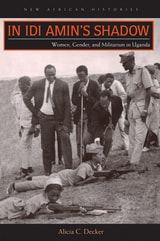
In Idi Amin’s Shadow
Women, Gender, and Militarism in UgandaAlicia C. Decker
Ohio University Press, 2014
Finalist for the 2015 Aidoo-Snyder Prize
In Idi Amin’s Shadow is a rich social history examining Ugandan women’s complex and sometimes paradoxical relationship to Amin’s military state. Based on more than one hundred interviews with women who survived the regime, as well as a wide range of primary sources, this book reveals how the violence of Amin’s militarism resulted in both opportunities and challenges for women. Some assumed positions of political power or became successful entrepreneurs, while others endured sexual assault or experienced the trauma of watching their brothers, husbands, or sons “disappeared” by the state’s security forces. In Idi Amin’s Shadow considers the crucial ways that gender informed and was informed by the ideology and practice of militarism in this period. By exploring this relationship, Alicia C. Decker offers a nuanced interpretation of Amin’s Uganda and the lives of the women who experienced and survived its violence.
Each chapter begins with the story of one woman whose experience illuminates some larger theme of the book. In this way, it becomes clear that the politics of military rule were highly relevant to women and gender relations, just as the politics of gender were central to militarism. By drawing upon critical security studies, feminist studies, and violence studies, Decker demonstrates that Amin’s dictatorship was far more complex and his rule much more strategic than most observers have ever imagined.
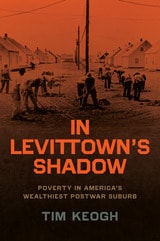
In Levittown’s Shadow
Poverty in America’s Wealthiest Postwar SuburbTim Keogh
University of Chicago Press, 2023
There is a familiar narrative about American suburbs: after 1945, white residents left cities for leafy, affluent subdivisions and the prosperity they seemed to embody. In Levittown’s Shadow tells us there’s more to this story, offering an eye-opening account of diverse, poor residents living and working in those same neighborhoods. Tim Keogh shows how public policies produced both suburban plenty and deprivation—and why ignoring suburban poverty doomed efforts to reduce inequality.
Keogh focuses on the suburbs of Long Island, home to Levittown, often considered the archetypal suburb. Here military contracts subsidized well-paid employment welding airplanes or filing paperwork, while weak labor laws impoverished suburbanites who mowed lawns, built houses, scrubbed kitchen floors, and stocked supermarket shelves. Federal mortgage programs helped some families buy orderly single-family homes and enter the middle class but also underwrote landlord efforts to cram poor families into suburban attics, basements, and sheds. Keogh explores how policymakers ignored suburban inequality, addressing housing segregation between cities and suburbs rather than suburbanites’ demands for decent jobs, housing, and schools.
By turning our attention to the suburban poor, Keogh reveals poverty wasn’t just an urban problem but a suburban one, too. In Levittown’s Shadow deepens our understanding of suburbia’s history—and points us toward more effective ways to combat poverty today.
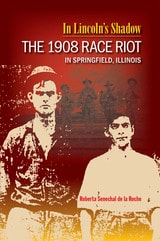
In Lincoln's Shadow
The 1908 Race Riot in Springfield, IllinoisRoberta Senechal de la Roche
Southern Illinois University Press, 2008
Winner of the Gustavus Myers Center Award for the Study of Human Rights in the United States!
Winner of the Illinois State Historical Society Superior Achievement Award!
This detailed case study of the 1908 race riot in Springfield, Illinois, which began only a few blocks from Abraham Lincoln’s family home, explores the social origins of rioting by whites against the city’s African American community after a white woman alleged that a black man had raped her. Over two days rioters wrecked black-owned businesses, burned neighborhoods to the ground, killed two black men, and injured many others.
Author Roberta Senechal de la Roche draws from a wide range of sources to describe the riot, identify the rioters and their victims, and challenge previous interpretations that attribute rioting to interracial competition for jobs, housing, or political influence. Written in a direct and clear style, In Lincoln’s Shadow documents a violent explosion of racial hatred that shocked the nation and reveals the complexity of white racial attitudes in the early twentieth century.
In Order to Live Untroubled
Inuit of the Central Artic 1550 to 1940Renee Fossett
University of Manitoba Press, 2001
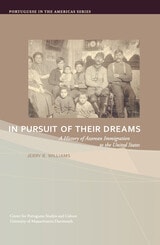
In Pursuit of Their Dreams
A History of Azorean Immigration to the United StatesJerry R. Williams
Tagus Press, 2007
Jerry Williams' history of Azorean immigration to the United States offers us valuable insight into the experience and culture of Portuguese immigrants and their descendants. This account fills a major gap in American immigration history and gives us a comprehensive overview of how Portuguese-Americans—now numbering close to a million people—have come to constitute a vibrant and highly visible presence within southeastern New England, the areas around San Francisco and San Diego, Hawaii, and the New Jersey/New York metropolitan area. Even though Azorean immigrants all came from similar cultural and social backgrounds, Williams shows how regionally specific opportunity structures and social hierarchies have contributed to significant differences within the Portuguese-American experience.
Starting with the whaling routes that first connected the mid-Atlantic archipelago with the ports of call in New England and California in the early 1800s, Williams lays out the complex relationship between the Azores and the US that has continued into the present. We learn how particular patterns of poverty, overpopulation and social inequality in the Azores pushed large numbers of the islands' inhabitants to leave their homes in search of better opportunities for themselves and their children. He tells the story of how the early whalers who jumped ship in New Bedford, San Francisco, or Hawaii were followed by kin and fellow villagers who had heard of plentiful jobs in New England's textile mills, gold and land in California, or agricultural work on Hawaiian plantations. Williams' account allows us to understand the importance of family and community connections throughout the immigrants' arduous transition from peasant life to industrial society.
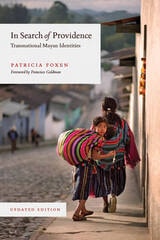
In Search of Providence
Transnational Mayan Identities, Updated EditionPatricia Foxen
Vanderbilt University Press, 2020
In the mid-1990s, Patricia Foxen traveled back and forth between the Guatemalan highlands and Providence, Rhode Island, to understand the migration paths of K'iche' Mayan Indians who had fled the Guatemalan civil war to work in the factories and fisheries of New England. More than two decades later, many Mayans are still migrating to the US. As Foxen argues, the recent surge in Mayan border crossings must be contextualized within both the longer history of violence, marginality, and exclusion that has long led Guatemala's Indigenous populations to be "survivors on the move," as well as contemporary push factors such as climate change and growing inequality that have forced people from their communities.
And yet one of the most significant drivers of continued emigration today, ironically, is the very culture of migration (described in the book) that has accelerated social change within many Indigenous communities, setting in motion a complex series of economic and cultural shifts that have compelled a continuous movement of people and generations to the US. Reading this story in 2020—at a time of massive growth in flows of irregular migrations around the world—can help us better understand the highly complex set of factors that propel long-term migrations and that shape transnational communities on both sides of the border.
In Search of Providence offers a layered, historically grounded perspective that speaks to the local specificity behind the migration experience in order to point to the universal themes and contradictions of contemporary global displacements.
In Sierra Leone
Michael Jackson
Duke University Press, 2004
Though the Revolutionary United Front (R.U.F.) ostensibly fought its war (1991–2002) against corrupt government, the people of Sierra Leone were its victims. By the time the war was over, more than fifty thousand were dead, thousands more had been maimed, and over one million were displaced. Jackson relates the stories of political leaders and ordinary people trying to salvage their lives and livelihoods in the aftermath of cataclysmic violence. Combining these with his own knowledge of African folklore, history, and politics and with S. B.’s bittersweet memories—of his family’s rich heritage, his imprisonment as a political detainee, and his position in several of Sierra Leone’s post-independence governments—Jackson has created a work of elegiac, literary, and philosophical power.
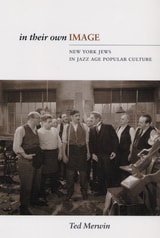
In Their Own Image
New York Jews in Jazz Age Popular CultureMerwin, Ted
Rutgers University Press, 2006
The Jazz Age of the 1920s is an era remembered for illegal liquor, innovative music and dance styles, and burgeoning ideas of social equality. It was also the period during which second-generation Jews began to emerge as a significant demographic in New York City. In TheirOwn Image examines thegrowing cultural visibility of Jewish life amid this vibrant scene.
From the vaudeville routines of Fanny Brice, Eddie Cantor, George Jessel, and Sophie Tucker, to the slew of Broadway comedies about Jewish life and the silent films that showed immigrant families struggling to leave the ghetto, images and representations of Jews became staples of interwar popular culture. Through the performing arts, Jews expressed highly ambivalent feelings about their identification with Jewish and American cultures. Ted Merwin shows how they became American by producing and consuming not images of another group, but images of themselves. As a result, they humanized Jewish stereotypes, softened anti-Semitic attitudes, and laid the groundwork for today’s Jewish comedians.
An entertaining look at the role popular culture plays in promoting the acculturation of an ethnic group, In Their Own Image enhances our understanding of American Jewish history and provides a model for the study of other groups and their integration into mainstream society.
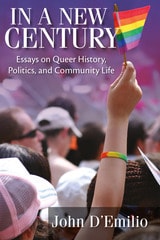
In a New Century
Essays on Queer History, Politics, and Community LifeJohn D’Emilio
University of Wisconsin Press, 2014
A pioneering scholar of gay history, John D’Emilio reflects in this wide-ranging collection of essays upon the social, cultural, and political changes provoked by LGBT activism. He offers provocative questions and historical analyses: What can we learn from a life-long activist like Bayard Rustin, who questioned the wisdom of “identity politics”? Was Richard Nixon a “gay liberationist”? How can knowing local stories—like those of Chicago in the 1950s, 1960s, and 1970s—help build stronger communities and enrich traditions of activism? Might the focus on achieving actually be evidence of growing conservatism in LGBT communities?
In a New Century provides a dynamic, thoughtful, and important resource for identifying changes that have occurred in the United States since 1960, taking stock of the work that still needs to be done, and issuing an urgent call to action for getting there.
Best Books for General Audiences, selected by the American Association of School Librarians
Best Special Interest Books, selected by the Public Library Reviewers
In the Aftermath of Genocide
Armenians and Jews in Twentieth-Century FranceMaud S. Mandel
Duke University Press, 2003
In the Aftermath of Genocide reveals that Armenian and Jewish survivors rarely sought to shed the obvious symbols of their ethnic and religious identities. Mandel shows that following the 1915 genocide and the Holocaust, these communities, if anything, seemed increasingly willing to mobilize in their own self-defense and thereby call attention to their distinctiveness. Most Armenian and Jewish survivors were neither prepared to give up their minority status nor willing to migrate to their national homelands of Armenia and Israel. In the Aftermath of Genocide suggests that the consolidation of the nation-state system in twentieth-century Europe led survivors of genocide to fashion identities for themselves as ethnic minorities despite the dangers implicit in that status.
In the Barrios
Latinos and the Underclass DebateJoan Moore
Russell Sage Foundation, 1993
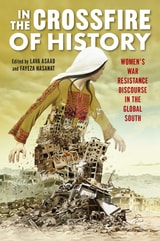
In the Crossfire of History
Women's War Resistance Discourse in the Global SouthLava Asaad
Rutgers University Press, 2022
The transformative mode of these examples expands the definition of heroism and defiance. To prevent these types of heroism from slipping into the abyss of history, this collection brings forth and celebrates women’s fortitude in conflict zones. In the Crossfire of History shines a light onwomen across the globe who are resisting the sociopolitical and economic injustices in their nation-states.