Results by title
150 books match the query 'Social psychology' and 13 start with i

Idiocracy
The Culture of the New IdiotZoran Terzic
Diaphanes, 2021
Zoran Terzić’s wide-ranging essay takes up the figure of the idiot and follows its numerous appearances throughout intellectual history in an examination of the “art of the idiotic” that both reflects and transcends the freneticism of the present.

Immigrants Raising Citizens
Undocumented Parents and Their ChildrenHirokazu Yoshikawa
Russell Sage Foundation, 2011

Incarceration Games
A History of Role-Play in Psychology, Prisons, and PerformanceStephen Scott-Bottoms
University of Michigan Press, 2024

Inner Speech and the Dialogical Self
Norbert Wiley
Temple University Press, 2016
Inner speech, also known as self-talk, is distinct from ordinary language. It has several functions and structures, from everyday thinking and self-regulation to stream of consciousness and daydreaming. Inner Speech and the Dialogical Self provides a comprehensive analysis of this internal conversation that people have with themselves to think about problems, clarify goals, and guide their way through life.
Norbert Wiley shrewdly emphasizes the semiotic and dialogical features of the inner speech, rather than the biological and neurological issues. He also examines people who lack control of their inner speech—such as some autistics and many emotionally disturbed people who use trial and error rather than self-control—to show the power and effectiveness of inner speech.
Inner Speech and the Dialogical Self takes a humanistic social theorist approach to its topic. Wiley acknowledges the contributions of inner speech theorists, Lev Vygotsky and Mikhail Bakhtin, and addresses the classical pragmatism of Charles Sanders Peirce, John Dewey, William James, and George Herbert Mead to show the range and depth of this largely unexplored field.

Inner Worlds
Interiority and Capitalist Modernity in JapanRichard M Reitan
University of Michigan Press, 2026
Inner Worlds examines the emergence and operation of representations of interiority—consciousness, “folk mind,” “spirit”—in Japan from its industrial revolution to the rise of fascism during the interwar period. These representations functioned to reproduce the capitalist system by containing its excesses. Thus, poverty in the 1880s was ostensibly the result of defects in one’s innate mental character. A degenerate “crowd mind” explained the strikes and riots of the early twentieth century. State subversion during the 1930s supposedly reflected an attenuated “folk spirit.” By locating the roots of capitalism’s excesses not within the socioeconomic order itself but within a defective interiority, ideologies of interiority operated to contain disruptions to Japan’s socioeconomic order, conceal its defects, and sustain the capitalist system. Inner Worlds reveals how interiority was constituted in ways consistent with both the demands of the emerging capitalist order of the late nineteenth century and the conditions that coalesced to form a fascist conjecture in the 1930s.
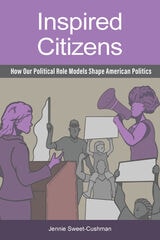
Inspired Citizens
How Our Political Role Models Shape American PoliticsJennie Sweet-Cushman
Temple University Press, 2024
Sweet-Cushman develops Inspired Citizenship Theory to show that political role models can have motivating effects on one’s political citizenship and may, in some case, insulate those who have been traditionally marginalized in American politics. Moreover, she asserts that citizens who have political role models possess very different political behaviors and attitudes than those who do not.
Inspired Citizens also considers the often-conflicting pressures and messages political role models project to citizens. Sweet-Cushman posits that role models inspire political action most effectively when they fulfill highly individualized expectations for role model identity, spurring deeper connection and a desire to emulate.
Inspired Citizens strengthens our understanding of what we should (and should not) look to political figures for in guiding democratic behaviors and inspiring productive citizenship.

Interpreting the Self
Two Hundred Years of American AutobiographyDiane Bjorklund
University of Chicago Press, 1998
"A refreshingly welcome approach to this intriguing topic. . . . [Bjorklund's] extensive and systematic approach to her source material is impressive and enriches our understanding of this essential subject."—Virginia Quarterly Review
"Bjorklund studies both famous and obscure writers, and her clear prose style and copious quotations provide insight into the many aspects of the changing American self." —Library Journal

Interracial Housing
A Psychological Evaluation of a Social ExperimentMorton Deutsch and Mary Evans Collins
University of Minnesota Press, 1951
Interracial Housing was first published in 1951. Minnesota Archive Editions uses digital technology to make long-unavailable books once again accessible, and are published unaltered from the original University of Minnesota Press editions.
One of the most crucial strains on democracy today is the practice of racial segregation. In the press, in local, state, and federal government agencies, in fact, wherever people thrash out the problems of democratic living, the question is being discussed.
This book offers facts which throw new light on an important issue in the overall problem of racial segregation. Here are the results of a study comparing two kinds of public housing—segregated and non-segregated.
Two low-rent, public housing projects in which Negroes and whites live as next door neighbors were compared with two similar housing developments in which Negroes and whites are assigned to separate buildings or areas. The study reveals how the people living in these contrasting ways differ in their social relations, community morale, racial attitudes, and other significant social aspects. The research procedures used are explained, and general conclusions about changing prejudices are offered.
Social scientists, psychologists, housing officials, and community leaders concerned with the problems not only of housing but of race relations in general will find helpful guidance here.
In addition to providing much-needed data on an important social problem, the book offers a valuable demonstration of research techniques in social science.

Intimacies
Leo Bersani and Adam Phillips
University of Chicago Press, 2008
In pursuit of new forms of intimacy they take up a range of concerns across a variety of contexts. To test the hypothesis that the essence of the analytic exchange is intimate talk without sex, they compare Patrice Leconte’s film about an accountant mistaken for a psychoanalyst, Intimate Strangers, with Henry James’s classic novella The Beast in the Jungle. A discussion of the radical practice of barebacking—unprotected anal sex between gay men—delineates an intimacy that rejects the personal. Even serial killer Jeffrey Dahmer and the Bush administration’s war on terror enter the scene as the conversation turns to the way aggression thrills and gratifies the ego. Finally, in a reading of Socrates’ theory of love from Plato’s Phaedrus, Bersani and Phillips call for a new form of intimacy which they term “impersonal narcissism”: a divestiture of the ego and a recognition of one’s non-psychological potential self in others. This revolutionary way of relating to the world, they contend, could lead to a new human freedom by mitigating the horrifying violence we blithely accept as part of human nature.
Charmingly persuasive and daringly provocative, Intimacies is a rare opportunity to listen in on two brilliant thinkers as they explore new ways of thinking about the human psyche.

Intoxication
An Ethnography of Effervescent RevelrySébastien Tutenges
Rutgers University Press, 2023
For two decades, Sébastien Tutenges has conducted research in bars, nightclubs, festivals, drug dens, nightlife resorts, and underground dance parties in a quest to answer a fundamental question: Why do people across cultures gather regularly to intoxicate themselves?
Vivid and at times deeply personal, this book offers new insights into a wide variety of intoxicating experiences, from the intimate feeling of connection among concertgoers to the adrenaline-fueled rush of a fight, to the thrill of jumping off a balcony into a swimming pool. Tutenges shows what it means and feels to move beyond the ordinary into altered states in which the transgressive, spectacular, and unexpected take place.
He argues that the primary aim of group intoxication is the religious experience that Émile Durkheim calls collective effervescence, the essence of which is a sense of connecting with other people and being part of a larger whole. This experience is empowering and emboldening and may lead to crime and deviance, but it is at the same time vital to our humanity because it strengthens social bonds and solidarity.
The book fills important gaps in Durkheim’s social theory and contributes to current debates in micro-sociology as well as cultural criminology and cultural sociology. Here, for the first time, readers will discover a detailed account of collective effervescence in contemporary society that includes: an explanation of what collective effervescence is; a description of the conditions that generate collective effervescence; a typology of the varieties of collective effervescence; a discussion of how collective effervescence manifests in the realm of nightlife, politics, sports, and religion; and an analysis of how commercial forces amplify and capitalize on the universal human need for intoxication.
This book is also freely available online as an open access digital edition.
Download the open access ebook here. (https://www.rutgersuniversitypress.org/media/wysiwyg/documents/intoxication.pdf)

Inventing the Ties That Bind
Imagined Relationships in Moral and Political LifeFrancesca Polletta
University of Chicago Press, 2020
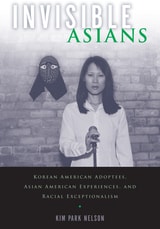
Invisible Asians
Korean American Adoptees, Asian American Experiences, and Racial ExceptionalismPark Nelson, Kim
Rutgers University Press, 2016
Invisible Asians offers an engaging account that makes an important contribution to our understanding of race in America, and illuminates issues of power and identity in a globalized world.

Islands of Privacy
Christena E. Nippert-Eng
University of Chicago Press, 2010
Everyone worries about privacy these days. As corporations and governments devise increasingly sophisticated data gathering tools and joining Facebook verges on obligatory, concerns over the use and abuse of personal information are undeniable. But the way privacy functions on the virtual frontier of the Internet is only a subset of the fascinating ways we work to achieve it throughout our everyday lives. In Islands of Privacy, Christena Nippert-Eng pries open the blinds, giving us an intimate view into the full range of ordinary people’s sometimes extraordinary efforts to preserve the border between themselves and the rest of the world.
Packed with stories that are funny and sad, familiar and strange, Islands of Privacy tours the myriad arenas where privacy battles are fought, lost, and won. Nippert-Eng explores how we manage our secrets, our phone calls and e-mail, the perimeters of our homes, and our interactions with neighbors. She discovers that everybody practices the art of selectively concealing and disclosing information on a daily basis. This important balancing act governs a wide range of behaviors, from deciding whether to give our bosses our cell phone numbers to choosing what we carry in our wallets or purses. Violations of privacy and anxiety about how we grant it to each other also come under Nippert-Eng’s microscope as she crafts a compelling argument that successfully managing privacy is critical for successfully maintaining our relationships with each other and our selves.
Roaming from the beach to the bank and from the bathroom to the bus, Nippert-Eng’s keenly observed and vividly told book gives us the skinny on how we defend our shrinking islands of privacy in the vast ocean of accessibility that surrounds us.