Results by title
135 books match the query 'Sociological aspects' and 8 start with i
In the Meantime
Temporality and Cultural PoliticsSarah Sharma
Duke University Press, 2014
Indigenous Economics
Sustaining Peoples and Their LandsRonald L. Trosper
University of Arizona Press, 2022
What does “development” mean for Indigenous peoples? Indigenous Economics lays out an alternative path showing that conscious attention to relationships among humans and the natural world creates flourishing social-ecological economies.
Economist Ronald L. Trosper draws on examples from North and South America, Aotearoa/New Zealand, and Australia to argue that Indigenous worldviews centering care and good relationships provide critical and sustainable economic models in a world under increasing pressure from biodiversity loss and climate change. He explains the structure of relational Indigenous economic theory, providing principles based on his own and others’ work with tribal nations and Indigenous communities. Trosper explains how sustainability is created at every level when relational Indigenous economic theory is applied—micro, meso, and macro.
Good relationships support personal and community autonomy, replacing the individualism/collectivism dichotomy with relational leadership and entrepreneurship. Basing economies on relationships requires changing governance from the top-down approaches of nation-states and international corporations; instead, each community creates its own territorial relationships, creating plurinational relational states. This book offers an important alternative to classic economic theory. In Indigenous Economics, support for Indigenous communities’ development and Indigenous peoples’ well-being go hand-in-hand.
Publication of this book is made possible in part by the Alfred P. Sloan Foundation Program in Public Understanding of Science.

Institutional Ethnography
A Theory of Practice for Writing Studies ResearchersMichelle LaFrance
Utah State University Press, 2019
In this book, Michelle LaFrance introduces the theories, rhetorical frames, and methods that ground and animate institutional ethnography. Three case studies illustrate key aspects of the methodology in action, tracing the work of writing assignment design in a linked gateway course, the ways annual reviews coordinate the work of faculty and writing center administrators and staff, and how the key term “information literacy” socially organizes teaching in a first-year English program. Through these explorations of the practice of ethnography within sites of writing and writing instruction, LaFrance shows that IE is a methodology keenly attuned to the material relations and conditions of work in twenty-first-century writing studies contexts, ideal for both practiced and novice ethnographers who seek to understand the actualities of social organization and lived experience in the sites they study.
Institutional Ethnography expands the field’s repertoire of research methodologies and offers the grounding necessary for work with the IE framework. It will be invaluable to writing researchers and students and scholars of writing studies across the spectrum—composition and rhetoric, literacy studies, and education—as well as those working in fields such as sociology and cultural studies.
Insurgent Encounters
Transnational Activism, Ethnography, and the PoliticalJeffrey S. Juris and Alex Khasnabish, eds.
Duke University Press, 2013
Contributors. Giuseppe Caruso, Maribel Casas-Cortés, Janet Conway, Stéphane Couture, Vinci Daro, Manisha Desai, Sylvia Escárcega, David Hess, Jeffrey S. Juris, Alex Khasnabish, Lorenzo Mosca, Michal Osterweil, Geoffrey Pleyers, Dana E. Powell, Paul Routledge, M. K. Sterpka, Tish Stringer

Intoxication
An Ethnography of Effervescent RevelrySébastien Tutenges
Rutgers University Press, 2023
For two decades, Sébastien Tutenges has conducted research in bars, nightclubs, festivals, drug dens, nightlife resorts, and underground dance parties in a quest to answer a fundamental question: Why do people across cultures gather regularly to intoxicate themselves?
Vivid and at times deeply personal, this book offers new insights into a wide variety of intoxicating experiences, from the intimate feeling of connection among concertgoers to the adrenaline-fueled rush of a fight, to the thrill of jumping off a balcony into a swimming pool. Tutenges shows what it means and feels to move beyond the ordinary into altered states in which the transgressive, spectacular, and unexpected take place.
He argues that the primary aim of group intoxication is the religious experience that Émile Durkheim calls collective effervescence, the essence of which is a sense of connecting with other people and being part of a larger whole. This experience is empowering and emboldening and may lead to crime and deviance, but it is at the same time vital to our humanity because it strengthens social bonds and solidarity.
The book fills important gaps in Durkheim’s social theory and contributes to current debates in micro-sociology as well as cultural criminology and cultural sociology. Here, for the first time, readers will discover a detailed account of collective effervescence in contemporary society that includes: an explanation of what collective effervescence is; a description of the conditions that generate collective effervescence; a typology of the varieties of collective effervescence; a discussion of how collective effervescence manifests in the realm of nightlife, politics, sports, and religion; and an analysis of how commercial forces amplify and capitalize on the universal human need for intoxication.
This book is also freely available online as an open access digital edition.
Download the open access ebook here. (https://www.rutgersuniversitypress.org/media/wysiwyg/documents/intoxication.pdf)
Irrational Together
The Social Forces That Invisibly Shape Our Economic BehaviorAdam S. Hayes
University of Chicago Press, 2025
In Irrational Together, economic sociologist Adam S. Hayes takes readers on a fascinating journey to uncover the often-unseen social forces that shape our financial behavior. Drawing on original research and engaging real-world examples, Hayes challenges not only the notion that economic decisions are purely rational but also the prevailing behavioral economics view that irrational choices stem primarily from individual beliefs. Instead, he argues that our economic choices and actions are deeply embedded in our social and cultural contexts and that understanding these influences is crucial to fully grasp the complexities of financial decision-making.
From the impact of social class and cultural capital on risk-taking and the role of social networks and group identities in shaping consumer choices to the gendered dimensions of financial advice and literacy, this book weaves together insights from sociology, behavioral economics, and cultural studies to paint a nuanced picture of how we navigate the economic landscape as inherently social beings. Why, for example, would someone choose to continue paying 20% interest on a large credit card debt rather than taking out a low-interest mortgage on their home to pay off the card? As Hayes makes clear through rigorous analysis, cultural values—like those related to home ownership—hold as much or more sway over us than financial best practices.
Bridging the gap between behavioral economics and sociology, this groundbreaking work paves the way for a more holistic understanding of the social and cultural influences on economic behavior. Hayes also looks to the future and argues that to correct major disparities in our social understanding of wealth and money, we need to construct financial systems that consider a diversity of social backgrounds.
With its accessible language and thought-provoking insights, Irrational Together is an essential guide for anyone seeking to understand the intersection of money, society, and human behavior.
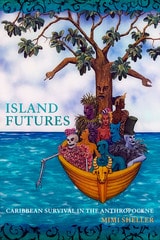
Island Futures
Caribbean Survival in the AnthropoceneMimi Sheller
Duke University Press, 2020
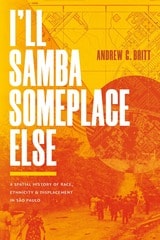
I’ll Samba Someplace Else
A Spatial History of Race, Ethnicity, and Displacement in São PauloAndrew G. Britt
Duke University Press, 2026