234 books match the query 'Technological innovations' and 10 start with i

cover of ITS for Freight Logistics

ITS for Freight Logistics

Hironao Kawashima

The Institution of Engineering and Technology, 2022

The global economy requires globalized movement of goods. Freight transport operations need to be efficient, productive, safe and secure, clean and green. The use of ICT and ITS (intelligent transport systems) are addressing these challenges by developing more rapid, more reliable and more precisely timed strategies for freight transport.
[more]
cover of In the Land of the Unreal: Virtual and Other Realities in Los Angeles

In the Land of the Unreal

Virtual and Other Realities in Los Angeles

Lisa Messeri

Duke University Press, 2024
In the mid-2010s, a passionate community of Los Angeles-based storytellers, media artists, and tech innovators formed around virtual reality (VR), believing that it could remedy society’s ills. Lisa Messeri offers an ethnographic exploration of this community, which conceptualized VR as an “empathy machine” that could provide glimpses into diverse social realities. She outlines how, in the aftermath of #MeToo, the backlash against Silicon Valley, and the turmoil of the Trump administration, it was imagined that VR—if led by women and other marginalized voices—could bring about a better world. Messeri delves into the fantasies that allowed this vision to flourish, exposing the paradox of attempting to use a singular VR experience to mend a fractured reality full of multiple, conflicting social truths. She theorizes this dynamic as unreal, noting how dreams of empathy collide with reality’s irreducibility to a “common” good. With In the Land of the Unreal, Messeri navigates the intersection of place, technology, and social change to show that technology alone cannot upend systemic forces attached to gender and race.
[more]
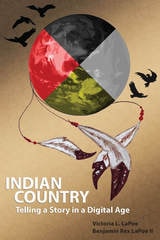
cover of Indian Country: Telling a Story in a Digital Age

Indian Country

Telling a Story in a Digital Age

Victoria L. LaPoe

Michigan State University Press, 2017

Storytelling has always been an important part of Native culture. Stories play a part in everyday Native life—they are often oral and rich in detail and language and serve as a form of recording history. Digital media now allow for the extension of this storytelling. This necessary text evaluates how digital media are changing the rich cultural act of storytelling within Native communities, with a specific focus on Native newsroom norms and routines. The authors argue that the non-Native press often leave consumers with a stereotypical view of American Indians, and aim to give a more authentic representation to Native journalism. With interviews from more than forty Native journalists around the country, this book is essential to understanding how digital media possibly advances the distribution of storytelling within the American Indian community.
 
[more]
cover of Indie Cinema Online

Indie Cinema Online

Sarah E.S. Sinwell

Rutgers University Press, 2020

Indie Cinema Online investigates the changing nature of contemporary American independent cinema in an era of media convergence. Focusing on the ways in which modes of production, distribution, and exhibition are shifting with the advent of online streaming, simultaneous release strategies, and web series, this book analyzes sites such as SundanceTV, YouTube, Netflix, Hulu, and other online spaces as a means of redefining independent cinema in a digital era. Analyzing the intersections among cinema studies, cultural studies, and new media studies within contemporary convergence culture, author Sarah E.S. Sinwell looks at sites of media convergence that are often ignored within most studies of digital media. Emphasizing the ways in which the forms and technologies of media culture have changed during the age of convergence, this book analyzes contemporary production, distribution, and exhibition practices as a means of examining the changing meanings of independent cinema within digital culture.
[more]
cover of Innovation Equity: Assessing and Managing the Monetary Value of New Products and Services

Innovation Equity

Assessing and Managing the Monetary Value of New Products and Services

Elie Ofek, Eitan Muller, and Barak Libai

University of Chicago Press, 2016

From drones to wearable technology to Hyperloop pods that can potentially travel more than seven hundred miles per hour, we’re fascinated with new products and technologies that seem to come straight out of science fiction. But, innovations are not only fascinating, they’re polarizing, as, all too quickly, skepticism regarding their commercial viability starts to creep in. And while fortunes depend on people’s ability to properly assess their prospects for success, no one can really agree on how to do it, especially for truly radical new products and services.

In Innovation Equity, Elie Ofek, Eitan Muller, and Barak Libai analyze how a vast array of past innovations performed in the marketplace—from their launch to the moment they became everyday products to the phase where consumers moved on to the “next big thing.” They identify key patterns in how consumers adopt innovations and integrate these with marketing scholarship on how companies manage their customer base by attracting new customers, keeping current customers satisfied, and preventing customers from switching to competitors’ products and services. In doing so, the authors produce concrete models that powerfully predict how the marketplace will respond to innovations, providing a much more authoritative way to estimate their potential monetary value, as well as a framework for making it possible to achieve that value.
 
[more]
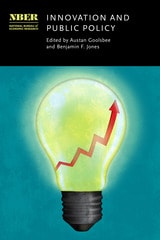
cover of Innovation and Public Policy

Innovation and Public Policy

Austan Goolsbee and Benjamin F. Jones

University of Chicago Press, 2021

Using the latest empirical and conceptual research for readers in economics, business, and policy, this volume surveys the key components of innovation policy and the social returns to innovation investment. 

In advanced economies like the United States, innovation has long been recognized as a central force for increasing economic prosperity and human welfare. Today, the US government promotes innovation through various mechanisms, including tax credits for private-sector research, grant support for basic and applied research, and institutions like the Small Business Innovation Research Program of the National Science Foundation. Drawing on the latest empirical and conceptual research, Innovation and Public Policy surveys the key components of innovation policy and the social returns to innovation investment. It examines mechanisms that can advance the pace of invention and innovative activity, including expanding the research workforce through schooling and immigration policy and funding basic research. It also considers scientific grant systems for funding basic research, including those at institutions like the National Institutes of Health and the National Science Foundation, and investigates the role of entrepreneurship policy and of other institutions that promote an environment conducive to scientific breakthroughs.

[more]
cover of Innovation and the Communications Revolution: From the Victorian pioneers to broadband Internet

Innovation and the Communications Revolution

From the Victorian pioneers to broadband Internet

John Bray

The Institution of Engineering and Technology, 2002

This book describes the stage-by-stage creation and development, from the mid-nineteenth century to the present day, of the remarkable global communications technologies that have profoundly transformed the way that people live and work.
[more]
cover of Insufferable Tools: Feminism Against Big Tech

Insufferable Tools

Feminism Against Big Tech

Sarah Sharma

Duke University Press, 2026

In a world seemingly run by the whims and power plays of Musks and Zucks, Insufferable Tools cuts to the core of modern technology’s gendered politics. Sarah Sharma challenges the idea that the Big Tech broligarchs are neutral utilitarians who view technology as mere tools. She shows instead how these tech giants have turned the internet, and, increasingly, “real life” into a set of environments which they cultivate and manipulate to wield the real tools: us, the users. Sharma critiques a popular system of inclusion she calls “Big Tech Feminism” that attempts to incorporate and make useful people of color, queer people, and others who are seen as broken machines in the current gendered power structures. Deconstructing Big Tech’s patriarchal deployment of media theory to gain and maintain power, Sharma proposes a feminist techno-politics that can forge new futures free from the grip of the truly insufferable tools.
[more]
cover of Interactive Journalism: Hackers, Data, and Code

Interactive Journalism

Hackers, Data, and Code

Nikki Usher

University of Illinois Press, 2016

Interactive journalism has transformed the newsroom. Emerging out of changes in technology, culture, and economics, this new specialty uses a visual presentation of storytelling that allows users to interact with the reporting of information. Today it stands at a nexus: part of the traditional newsroom, yet still novel enough to contribute innovative practices and thinking to the industry.

Nikki Usher brings together a comprehensive portrait of nothing less than a new journalistic identity. Usher provides a history of the impact of digital technology on reporting, photojournalism, graphics, and other disciplines that define interactive journalism. Her eyewitness study of the field's evolution and accomplishments ranges from the interactive creation of Al Jazeera English to the celebrated data desk at the Guardian to the New York Times' Pulitzer-endowed efforts in the new field. What emerges is an illuminating, richly reported profile of the people coding a revolution that may reverse the decline and fall of traditional journalism.

[more]
cover of International Trade in East Asia

International Trade in East Asia

Edited by Takatoshi Ito and Andrew K. Rose

University of Chicago Press, 2005

The practice of trading across international borders has undergone a series of changes with great consequences for the world trading community, the result of new trade agreements, a number of financial crises, the emergence of the World Trade Organization, and countless other less obvious developments. In International Trade in East Asia, a group of esteemed contributors provides a summary of empirical factors of international trade specifically as they pertain to East Asian countries such as China, Japan, Korea, and Taiwan.

Comprised of twelve fascinating studies, International Trade in East Asia highlights many of the trading practices between countries within the region as well as outside of it. The contributors bring into focus some of the region's endemic and external barriers to international trade and discuss strategies for improving productivity and fostering trade relationships. Studies on some of the factors that drive exports, the influence of research and development, the effects of foreign investment, and the ramifications of different types of protectionism will particularly resonate with the financial and economic communities who are trying to keep pace with this dramatically altered landscape.
[more]