Results by title
177 books match the query 'Themes, motives' and 11 start with i
Iconology
Image, Text, IdeologyW. J. T. Mitchell
University of Chicago Press, 1986
Illegible Will
Coercive Spectacles of Labor in South Africa and the DiasporaHershini Bhana Young
Duke University Press, 2017
Illuminated Paris
Essays on Art and Lighting in the Belle ÉpoqueHollis Clayson
University of Chicago Press, 2019
Image and Myth
A History of Pictorial Narration in Greek ArtLuca Giuliani
University of Chicago Press, 2013
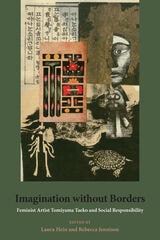
Imagination without Borders
Feminist Artist Tomiyama Taeko and Social ResponsibilityLaura Hein and Rebecca Jennison, Editors
University of Michigan Press, 2010
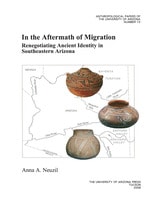
In the Aftermath of Migration
Renegotiating Ancient Identity in Southeastern ArizonaAnna A. Neuzil
University of Arizona Press, 2008
This research explores the social changes that took place in the Safford and Aravaipa valleys during the thirteenth through the fifteenth centuries A.D. as a result of an influx of migrants from the Kayenta and Tusayan regions of northeastern Arizona. Focusing on domestic architecture and ceramics, the author evaluates how migration affects the expression of identity of both migrant and indigenous populations in the Safford and Aravaipa valleys and provides a model for research in other areas where migration played an important role.
Archaeologists interested in the Greater Southwest will find a wealth of information on these little-known valleys that provides contextualization for this important and intriguing time period, and those interested in migration in the ancient past will find a useful case study that goes beyond identifying incidents of migration to understanding its long-lasting implications for both migrants and the local people they impacted.
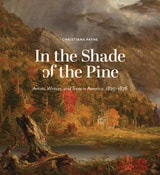
In the Shade of the Pine
Artists, Writers, and Trees in America, 1825-1876Christiana Payne
University of Arkansas Press, 2026
In the Shade of the Pine: Artists, Writers, and Trees in America, 1825–1876 explores the significance of trees in the visual and literary imagination of mid-nineteenth-century America through the work of seven artists and writers: Thomas Cole’s explorations of the Catskills; Albert Bierstadt’s portrayal of the splendid trees of California, including the ancient giant sequoias; the paintings and drawings of Asher Brown Durand and Frederic Edwin Church; the photographs of William James Stillman; and the environmental writings of Susan Fenimore Cooper and Henry David Thoreau.
This richly illustrated volume shows the unique influence the ecology of their land had on the emotional and intellectual landscapes of a generation. In their careful study of the woods—the beauty of trees, their practical importance to human beings and other living creatures, and the power of the forest to confer spiritual and emotional benefits—these artists and writers laid the groundwork for an ecological consciousness that remains vitally relevant today.
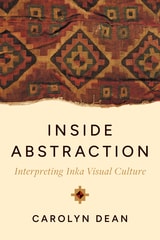
Inside Abstraction
Interpreting Inka Visual CultureCarolyn Dean
University of Texas Press, 2025
2026 PROSE Award for Art History And Criticism, Association of American Publishers
Illuminating the abstract art of the Inka, what it conveys about Inka values, and its relationship to those who view it.
Inka visual culture is unusual in its tendency toward abstraction. Public stonework, vessels used at state feasts, garments worn by the imperial elite—these objects announcing status and power are adorned with geometric designs that refuse figuration. After searching in vain for hidden referents, many scholars have largely given up the search for meaning.
Inside Abstraction develops a novel interpretation. Eminent art historian Carolyn Dean proposes that Inka geometries are neither ornamental nor coded depictions of other objects. Rather, Dean shows that in the Andean world, the designs were functionally self-aware, possessing perspectives of their own, quite literally looking back at and addressing viewers directly. Further, Dean contends that these agent-abstractions were teachers, conveying particular messages concerning social hierarchy: the relations among geometries and colors instructed viewers as to their own proper social relations. Inka designs thereby served imperial aims by wordlessly communicating the state’s values and demands for submission. Extensively illustrated and rigorously argued, Inside Abstraction is a dramatic step forward in our understanding of Inka art and political order.

Interstices
Negotiations at Contemporary Art’s BoundariesAlexander Alberro
University of Chicago Press, 2025
With this book, Alexander Alberro engages decolonial theory to explore the dynamic exchanges that occur where the ideals and values of different artistic frameworks meet. Resisting notions of a singular art world and global contemporary art, Alberro explores what lies outside of Western art’s hegemonic presence, recognizing the rich multitude of art formations at its periphery, each with its own artistic narratives and conventions. Alberro brings into focus the complex negotiations that are cultivating innovation and transformation at the margins of Western art, showing how this seemingly monolithic framework is both crucial to and insufficient for a comprehensive understanding of contemporary art.
His examples include artists and collectives from around the world, including Iosu Aramburu, Subhankar Banerjee, Yto Barrada, Mabe Bethônico, El Colectivo, Maria Galindo and Mujeres Creando, Bouchra Khalili, Multiplicity, Lucy Orta, Raqs Media Collective, Tracey Rose, Doris Salcedo, Yinka Shonibare, World of Matter, and Yin Xiuzhen. As notions of transculturation and decoloniality continue to drive conversations about contemporary art, Interstices offers a critical explanation of what is at stake, showing how the tensions at the edges of the Western art framework are pushing it toward its discursive limits.
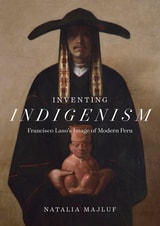
Inventing Indigenism
Francisco Laso's Image of Modern PeruNatalia Majluf
University of Texas Press, 2021
2023 ALAA Book Award, Association for Latin American Art/Arvey Foundation
A fascinating account of the modern reinvention of the image of the Indian in nineteenth-century literature and visual culture, seen through the work of Peruvian painter Francisco Laso.
One of the outstanding painters of the nineteenth century, Francisco Laso (1823–1869) set out to give visual form to modern Peru. His solemn and still paintings of indigenous subjects were part of a larger project, spurred by writers and intellectuals actively crafting a nation in the aftermath of independence from Spain. In this book, at once an innovative account of modern indigenism and the first major monograph on Laso, Natalia Majluf explores the rise of the image of the Indian in literature and visual culture. Reading Laso’s works through a broad range of sources, Majluf traces a decisive break in a long history of representations of indigenous peoples that began with the Spanish conquest. She ties this transformation to the modern concept of culture, which redefined both the artistic field and the notion of indigeneity. As an abstraction produced through indigenist discourse, an icon of authenticity, and a densely racialized cultural construct, the Indian would emerge as a central symbol of modern Andean nationalisms.
Inventing Indigenism brings the work and influence of this extraordinary painter to the forefront as it offers a broad perspective on the dynamics of art and visual culture in nineteenth-century Latin America.

It's All in the Delivery
Pregnancy in American Film and Television ComedyVictoria Sturtevant
University of Texas Press, 2024
2025 John G. Cawelti Award for the Best Textbook/Primer, Popular Culture Association/American Culture Association (PCA/ACA)
2025 Longlist, Kraszna-Krausz Moving Image Book Award
How changing depictions of pregnancy in comedy from the start of the twentieth century to the present show an evolution in attitudes toward women’s reproductive roles and rights.
Some of the most groundbreaking moments in American film and TV comedy have centered on pregnancy, from Lucille Ball’s real-life pregnancy on I Love Lucy, to the abortion plot on Maude; Murphy Brown’s controversial single motherhood; Arnold Schwarzenegger’s pregnancy in Junior; or the third-trimester stand-up special Ali Wong: Baby Cobra.
In the first book-length study of pregnancy in popular comedy, Victoria Sturtevant examines the slow evolution of pregnancy tropes during the years of the Production Code; the sexual revolution and changing norms around nonmarital pregnancy in the 1960s and ‘70s; and the emphasis on biological clocks, infertility, adoption, and abortion from the 1980s to now.
Across this history, popular media have offered polite evasions and sentimentality instead of real candor about the physical and social complexities of pregnancy. But comedy has often led the way in puncturing these clichés, pointing an irreverent and satiric lens at the messy and sometimes absurd work of gestation. Ultimately, Sturtevant argues that comedy can reveal the distortions and lies that treat pregnancy as simple and natural “women’s work,” misrepresentations that rest at the heart of contemporary attacks on reproductive rights in the US.