Results by title
141 books match the query 'Twentieth Century' and 5 start with i
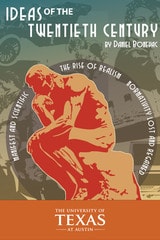
Ideas of the Twentieth Century
Daniel Bonevac
University of Texas Press, 2014
The twentieth century ushered in significant progress, as philosophers, scientists, artists, and poets across the world improved the way we lived. Yet the last century also brought increased levels of war, tyranny, and genocide, and people lost faith in values. Now, thinkers and leaders are reconstructing theories of value and creating institutions to embody them. In this thought-provoking, broad-sweeping course, you will learn how philosophy, art, literature, and history shaped the past century and continue to impact our world today.

Imperialism in the Twentieth Century
A.P. Thornton
University of Minnesota Press, 1980
Imperialism in the Twentieth Century was first published in 1978. Minnesota Archive Editions uses digital technology to make long-unavailable books once again accessible, and are published unaltered from the original University of Minnesota Press editions.
"Nothing is filed under the heading 'imperialism' in the archives of any nation-state that owned an empire. Foreign affairs, or external relations, are catalogued there, and a place is found for imperial administration and colonial trade; but 'imperialism' is always a listing in someone else's index, never one's own. It is not the name a government uses to classify the policies it sets in motion. It is the name given them by those who adopt a particular attitude... In our time the attitude toward this control is hostile."
With these words A.P. Thornton takes on a complex and elusive term, imperialism,and pursues its meaning and implications in the years of imperial decline. The disappearance of territorial empire, according to Thornton, did not bring imperial impulses to an end, nor did it destroy the power relationships set up in the heyday of empire. Casting a cool eye on the claims of both imperialism and nationalism—the principal countervailing force—Thornton brings imagination, wide learning, and clarifying wit to bear upon a subject that remains significant in the last quarter of the twentieth century.
Invasion of Indian Country in the Twentieth Century
American Capitalism and Tribal Natural ResourcesDonald Fixico
University Press of Colorado, 1998
In The Invasion of Indian Country in the 20th Century, Donald Fixico details the course of this struggle, providing a wealth of information on the resources possessed by individual tribes and the way in which they were systematically defrauded and stripped of these resources. Fixico contends that federal policies originally devised to protect Indian interests ironically worked against the Indian nations as the tribes employed new tactics with the Council of Energy Resources Tribes, using the law in courts and applying aggressive business leadership to combat the capitalist invasion by mainstream America.
Fixico's analysis of this war being waged throughout the century and today serves as an indispensable reference tool for anyone interested in Native American history and current government policy with regard to Indian lands.
Invasion of Indian Country in the Twentieth Century
American Capitalism and Tribal Natural Resources, Second EditionDonald Fixico
University Press of Colorado, 2012
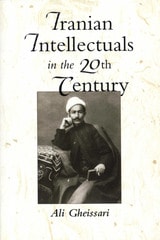
Iranian Intellectuals in the Twentieth Century
By Ali Gheissari
University of Texas Press, 1997
Since the middle of the nineteenth century, Iranian intellectuals have been preoccupied by issues of political and social reform, Iran's relation with the modern West, and autocracy, or arbitrary rule. Drawing from a close reading of a broad array of primary sources, this book offers a thematic account of the Iranian intelligentsia from the Constitutional movement of 1905 to the post-1979 revolution.
Ali Gheissari shows how in Iran, as in many other countries, intellectuals have been the prime mediators between the forces of tradition and modernity and have contributed significantly to the formation of the modern Iranian self image. His analysis of intellectuals' response to a number of fundamental questions, such as nationalism, identity, and the relation between Islam and modern politics, sheds new light on the factors that led to the Iranian Revolution—the twentieth century's first major departure from Western political ideals—and helps explain the complexities surrounding the reception of Western ideologies in the Middle East.