Results by title
923 books match the query 'Urban' and 35 start with i
I Speak of the City
Mexico City at the Turn of the Twentieth CenturyMauricio Tenorio-Trillo
University of Chicago Press, 2013
I've Got to Make My Livin'
Black Women's Sex Work in Turn-of-the-Century ChicagoCynthia M. Blair
University of Chicago Press, 2010
For many years, the interrelated histories of prostitution and cities have perked the ears of urban scholars, but until now the history of urban sex work has dealt only in passing with questions of race. In I’ve Got to Make My Livin’, Cynthia Blair explores African American women’s sex work in Chicago during the decades of some of the city’s most explosive growth, expanding not just our view of prostitution, but also of black women’s labor, the Great Migration, black and white reform movements, and the emergence of modern sexuality.
Focusing on the notorious sex districts of the city’s south side, Blair paints a complex portrait of black prostitutes as conscious actors and historical agents; prostitution, she argues here, was both an arena of exploitation and abuse, as well as a means of resisting middle-class sexual and economic norms. Blair ultimately illustrates just how powerful these norms were, offering stories about the struggles that emerged among black and white urbanites in response to black women’s increasing visibility in the city’s sex economy. Through these powerful narratives, I’ve Got to Make My Livin’ reveals the intersecting racial struggles and sexual anxieties that underpinned the celebration of Chicago as the quintessentially modern twentieth-century city.
Idea City
How to Make Boston More Livable, Equitable, and ResilientEdited by David Gamble, Foreword by Renée Loth
University of Massachusetts Press, 2023
Racial strife, increased social and economic discrimination, amplified political friction, and growing uncertainty around the impacts of the COVID-19 pandemic and climate change have laid bare many inequalities within the city of Boston. How will these disruptions and inequities influence the city’s future, especially as Boston celebrates its quadricentennial in 2030?
This collection of original essays addresses the many challenges Boston contends with in the twenty-first century and considers ways to improve the city for everyone. Presenting a range of perspectives written by area experts—academics, reflective practitioners, and policymakers—these essays tackle issues of resiliency, mobility, affordable housing, health outcomes, social equity, economic equality, zoning, regionalism, and more. Reflecting the diversity of the city and the challenges and opportunities Boston currently faces, Idea City will help readers think differently about their own areas of expertise and draw conclusions from urban regeneration work in other fields.
Imagine Lagos
Mapping History, Place, and Politics in a Nineteenth-Century African CityAdemide Adelusi-Adeluyi
Ohio University Press, 2024
Imagining The Modern City
James Donald
University of Minnesota Press, 1999
Immigrant Crossroads
Globalization, Incorporation, and Placemaking in Queens, New YorkEdited by Tarry Hum, Ron Hayduk, Francois Pierre-Louis Jr., and Michael Alan Krasner
Temple University Press, 2021
Nearly half the 2.3 million residents of Queens, New York are foreign-born. Immigrants in Queens hail from more than 120 countries and speak more than 135 languages. As an epicenter of immigrant diversity, Queens is an urban gateway that exemplifies opportunities and challenges in shaping a multi-racial democracy.
The editors and contributors to Immigrant Crossroads examine the social, spatial, economic, and political dynamics that stem from this fast-growing urbanization. The interdisciplinary chapters examine residential patterns and neighborhood identities, immigrant incorporation and mobilizations, and community building and activism.
Essays combine qualitative and quantitative research methods to address globalization and the unprecedented racial and ethnic diversity as a result of international migration. Chapters on incorporation focus on immigrant participation and representation in electoral politics, and advocacy for immigrant inclusion in urban governance and service provision. A section of Immigrant Crossroads concerns placemaking, focusing on the production of neighborhood spaces and identities as well as immigrant activism and community development and control.
Based on engaged and robust analysis, Immigrant Crossroads highlights the dynamics of this urban gateway.

Imperial Creatures
Humans and Other Animals in Colonial Singapore, 1819-1942Timothy P. Barnard
National University of Singapore Press, 2019
Through a multidisciplinary consideration of fauna, Imperial Creatures weaves together a series of tales to document how animals were cherished, monitored, employed, and slaughtered in a colonial society. All animals, including humans, Barnard shows, have been creatures of imperialism in Singapore. Their stories teach us lessons about the structures that upheld such a society and how it developed over time, lessons of relevance to animal historians, to historians of Singapore, and to urban historians and imperial historians with an interest in environmental themes.
Imperial Policing
Weaponized Data in Carceral ChicagoAndy Clarno
University of Minnesota Press, 2024
Exposing the carceral webs and weaponized data that shape Chicago’s police wars
Chicago is a city with extreme concentrations of racialized poverty and inequity, one that relies on an extensive network of repressive agencies to police the poor and suppress struggles for social justice. Imperial Policing examines the role of local law enforcement, federal immigration authorities, and national security agencies in upholding the city’s highly unequal social order.
Collaboratively authored by the Policing in Chicago Research Group, Imperial Policing was developed in dialogue with movements on the front lines of struggles against racist policing in Black, Latinx, and Arab/Muslim communities. It analyzes the connections between three police “wars”—on crime, terror, and immigrants—focusing on the weaponization of data and the coordination between local and national agencies to suppress communities of color and undermine social movements. Topics include high-tech, data-based tools of policing; the racialized archetypes that ground the police wars; the manufacturing of criminals and terrorists; the subversion of sanctuary city protections; and abolitionist responses to policing, such as the Erase the Database campaign.
Police networks and infrastructure are notoriously impenetrable to community members and scholars, making Imperial Policing a rare, vital example of scholars working directly with community organizations to map police networks and intervene in policing practices. Engaging in a methodology designed to provide support for transformative justice organizations, the Policing in Chicago Research Group offers a critical perspective on the abolition of imperial policing, both in Chicago and around the globe.

In Levittown’s Shadow
Poverty in America's Wealthiest Postwar SuburbTim Keogh
University of Chicago Press, 2023
Highlights how low-wage residents have struggled to live and work in a place usually thought of as affluent: suburbia.
There is a familiar narrative about American suburbs: after 1945, white residents left cities for leafy, affluent subdivisions and the prosperity they seemed to embody. In Levittown’s Shadow tells us there’s more to this story, offering an eye-opening account of diverse, poor residents living and working in those same neighborhoods. Tim Keogh shows how public policies produced both suburban plenty and deprivation—and why ignoring suburban poverty doomed efforts to reduce inequality.
Keogh focuses on the suburbs of Long Island, home to Levittown, often considered the archetypal suburb. Here military contracts subsidized well-paid employment welding airplanes or filing paperwork, while weak labor laws impoverished suburbanites who mowed lawns, built houses, scrubbed kitchen floors, and stocked supermarket shelves. Federal mortgage programs helped some families buy orderly single-family homes and enter the middle class but also underwrote landlord efforts to cram poor families into suburban attics, basements, and sheds. Keogh explores how policymakers ignored suburban inequality, addressing housing segregation between cities and suburbs rather than suburbanites’ demands for decent jobs, housing, and schools.
By turning our attention to the suburban poor, Keogh reveals poverty wasn’t just an urban problem but a suburban one, too. In Levittown’s Shadow deepens our understanding of suburbia’s history—and points us toward more effective ways to combat poverty today.
In Levittown’s Shadow
Poverty in America’s Wealthiest Postwar SuburbTim Keogh
University of Chicago Press, 2023
There is a familiar narrative about American suburbs: after 1945, white residents left cities for leafy, affluent subdivisions and the prosperity they seemed to embody. In Levittown’s Shadow tells us there’s more to this story, offering an eye-opening account of diverse, poor residents living and working in those same neighborhoods. Tim Keogh shows how public policies produced both suburban plenty and deprivation—and why ignoring suburban poverty doomed efforts to reduce inequality.
Keogh focuses on the suburbs of Long Island, home to Levittown, often considered the archetypal suburb. Here military contracts subsidized well-paid employment welding airplanes or filing paperwork, while weak labor laws impoverished suburbanites who mowed lawns, built houses, scrubbed kitchen floors, and stocked supermarket shelves. Federal mortgage programs helped some families buy orderly single-family homes and enter the middle class but also underwrote landlord efforts to cram poor families into suburban attics, basements, and sheds. Keogh explores how policymakers ignored suburban inequality, addressing housing segregation between cities and suburbs rather than suburbanites’ demands for decent jobs, housing, and schools.
By turning our attention to the suburban poor, Keogh reveals poverty wasn’t just an urban problem but a suburban one, too. In Levittown’s Shadow deepens our understanding of suburbia’s history—and points us toward more effective ways to combat poverty today.
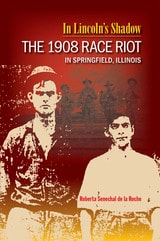
In Lincoln's Shadow
The 1908 Race Riot in Springfield, IllinoisRoberta Senechal de la Roche
Southern Illinois University Press, 2008
Winner of the Gustavus Myers Center Award for the Study of Human Rights in the United States!
Winner of the Illinois State Historical Society Superior Achievement Award!
This detailed case study of the 1908 race riot in Springfield, Illinois, which began only a few blocks from Abraham Lincoln’s family home, explores the social origins of rioting by whites against the city’s African American community after a white woman alleged that a black man had raped her. Over two days rioters wrecked black-owned businesses, burned neighborhoods to the ground, killed two black men, and injured many others.
Author Roberta Senechal de la Roche draws from a wide range of sources to describe the riot, identify the rioters and their victims, and challenge previous interpretations that attribute rioting to interracial competition for jobs, housing, or political influence. Written in a direct and clear style, In Lincoln’s Shadow documents a violent explosion of racial hatred that shocked the nation and reveals the complexity of white racial attitudes in the early twentieth century.
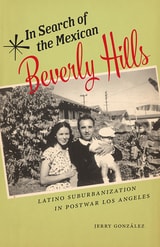
In Search of the Mexican Beverly Hills
Latino Suburbanization in Postwar Los AngelesGonzález, Jerry
Rutgers University Press, 2018
In The Metro
Marc Auge
University of Minnesota Press, 2002
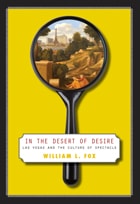
In the Desert of Desire
Las Vegas and the Culture of SpectacleWilliam L. Fox
University of Nevada Press, 2007
Las Vegas, says William Fox, is a pay-as-you-play paradise that succeeds in satisfying our fantasies of wealth and the excesses of pleasure and consumption that go with it. In this context, Fox examines how Las Vegas’s culture of spectacle has obscured the boundaries between high art and entertainment extravaganza, nature and fantasy, for-profit and nonprofit enterprises. His purview ranges from casino art galleries—including Steve Wynn’s private collection and a branch of the famed Guggenheim Museum—to the underfunded Las Vegas Art Museum; from spectacular casino animal collections like those of magicians Siegfried and Roy and Mandalay Bay’s Shark Reef exhibit to the city’s lack of support for a viable public zoo; from the environmental and psychological impact of lavish water displays in the arid desert to the artistic ambiguities intrinsic to Las Vegas’s floating world of showgirls, lapdancers, and ballet divas. That Las Vegas represents one of the world’s most opulent displays of private material wealth in all its forms, while providing miserly funding for local public amenities like museums and zoos, is no accident, Fox maintains. Nor is it unintentional that the city’s most important collections of art and exotic fauna are presented in the context of casino entertainment, part of the feast of sensation and excitement that seduces millions of visitors each year. Instead, this phenomenon shows how our insatiable modern appetite for extravagance and spectacle has diminished the power of unembellished nature and the arts to teach and inspire us, and demonstrates the way our society privileges private benefit over public good. Given that Las Vegas has been a harbinger of national cultural trends, Fox’s commentary offers prescient insight into the increasing commercialization of nature and culture across America.
In the Heart of the Rustbelt
Race, Ethnicity, and Industrial Change in the Calumet RegionRoger Biles and Mark H. Rose
Temple University Press, 2027
The Calumet Region around Lake Michigan’s southern rim once housed massive steel mills, workshops, and railroads. Capitalists like Elbert Gary built factories and dominated local governments. During its heyday in the twentieth century, the Calumet Region was also a thriving district for immigrants who worked dangerous jobs.
But even before the area’s decline started in the 1970s, intense racial, ethnic, and political strife determined job and housing prospects. In the Heart of the Rustbelt details how people struggled as factory rules and local politics failed to protect residents from health hazards and sabotaged workers’ rights.
Roger Biles and Mark Rose describe how workers organized (or didn’t), the ethnic neighborhoods where they lived, and the distinct foodstuffs, such as Hungarian goulash, that both bonded and excluded immigrants. The authors also showcase individuals including Gary, IN Mayor Richard G. Hatcher, who fought for equality. Chapters also explore the lives of steelworkers Eddie Sadlowski, who sought to democratize the union, and Mexican American Jesse Villalpando, who experienced union and management’s hostility in hiring and job assignments.
In the Heart of the Rustbelt provides a fascinating history about industrial growth and why race and ethnicity mattered as the Calumet Region rose and fell.
In the Meantime
Temporality and Cultural PoliticsSarah Sharma
Duke University Press, 2014
In the Shadow of Slavery
African Americans in New York City, 1626-1863Leslie M. Harris
University of Chicago Press, 2024
The popular understanding of the history of slavery in America almost entirely ignores the institution’s extensive reach in the North. But the cities of the North were built by—and became the home of—tens of thousands of enslaved African Americans, many of whom would continue to live there as free people after Emancipation.
In the Shadow of Slavery reveals the history of African Americans in the nation’s largest metropolis, New York City. Leslie M. Harris draws on travel accounts, autobiographies, newspapers, literature, and organizational records to extend prior studies of racial discrimination. She traces the undeniable impact of African Americans on class distinctions, politics, and community formation by offering vivid portraits of the lives and aspirations of countless black New Yorkers. This new edition includes an afterword by the author addressing subsequent research and the ongoing arguments over how slavery and its legacy should be taught, memorialized, and acknowledged by governments.
In the Skin of the City
Spatial Transformation in LuandaAntónio Tomás
Duke University Press, 2022
In the Spirit of Alinsky
Community Organizing’s Fight to Strengthen DemocracyRobert T. Gannett Jr.
University of Illinois Press, 2026
As Gannett shows, the methods pioneered by legendary activist Saul Alinsky provide the means for channeling citizens’ anger and frustration into meaningful social change. Gannett weaves his personal journey as an “outside agitator” through in-depth studies of successful and unsuccessful campaigns. Gannett places financial sustainability, political independence, and a commitment to process as much as to purpose at the core of organizing. He also focuses on the importance of veterans mentoring the next generation to meet the challenges of the future.
Hard-headed but hopeful, In the Spirit of Alinsky distills decades of on-the-ground experience into a guide for effective radical action.
Inequality, Crime, and Resistance in New York City
Timothy P. R. Weaver
Temple University Press, 2025
Weaver brings these clashes to the fore by showing how New York City politics has been shaped by these conflicting orders. He examines the transformation of the city’s political economy in the aftermath of the 1975 fiscal crisis through neoliberal real estate development and privatization, the conservative rise of law-and-order politics in the 1970s to 1990s, and the efforts of the city’s egalitarians to respond to each of these shifts through social movements such as Occupy and Black Lives Matter.
Inequality, Crime, and Resistance in New York City belies glib assumptions about the city’s liberal character. Weaver reveals the metropolis not as a homogenous political whole, but as a site in which the victories and defeats of rival political forces change the terms of local citizenship for the millions of residents who call the city home.
In the series Political Lessons from American Cities
Informal Cities
Histories of Governance and Inequality in Latin Europe, Latin America, and Colonial North AfricaEdited by Charlotte Vorms and Brodwyn Fischer
University of Chicago Press, 2025
An empirically rich reconstruction of how informality became an intrinsic part of urban life across three continents.
Over a quarter of the world’s urban population lives in informal settlements. While informality as a concept has been widely debated, we still know very little about the phenomenon’s urban history or how that history has shaped the evolution of world cities. Spotlighting the historical processes that have created and sustained urban informality for more than a century, editors Charlotte Vorms and Brodwyn Fischer and this volume’s contributors reveal informality as an intrinsic feature of urbanity, shaping not only cities across the globe but also deeper processes of state formation, socioeconomic stratification, and political struggle.
The volume brings together case studies spanning more than a hundred years, drawn from Latin America (Brazil, Chile, Venezuela, and Mexico), Northern Africa (Morocco and Algeria), and Latin Europe (France, Spain, and Italy). Together, they show that informality is neither a contemporary crisis nor a predicament unique to the Global South. Topics include the origins of informal settlements and their relationship with law and institutional power; grassroots efforts to legitimize shantytown communities; mass social movements for rights to the city; the role that shantytown removal campaigns played in populist politics, fascism, and colonialism; and the ways that informality perpetuated racial and ethnic inequalities. Informal Cities is an indispensable guide to the complex and fraught terrain of urban informality in its many historical guises.
Informational Peripheries
Rethinking the Urban in a Digital AgeEdited by Ayona Datta and Fenna Imara Hoefsloot
University College London, 2025
Moving beyond current scholarship in urban and regional studies, this volume presents a case for “informational peripheries” as an analytical lens to understand the uneven, fragmented, and disconnected geographies of urban peripheries in the Global South. While this concept is parallel to and overlaps with the urban periphery, the circulation—or restriction—of information has taken on additional significance with the coming of a digital age. The periphery is no longer confined to the slums or suburbia at a city's edge; it now also encompasses uneven and fragmented digital infrastructures.
Providing empirical and theoretical contributions from cities in the Global South, this book advances scholarship in Southern urbanism, smart cities, and peripheral urbanization, conceptualizing the diverse ways in which informational peripheries are resisted, adapted, complied with, and lived in.
Inheriting the City
The Children of Immigrants Come of AgePhilip Kasinitz
Russell Sage Foundation, 2008
Inland Empire
Settler Colonialism and Modern Architecture in Southern CaliforniaManuel Shvartzberg Carrió
Duke University Press, 2026
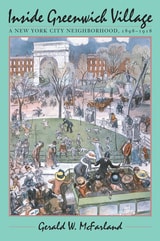
Inside Greenwich Village
A New York City Neighborhood, 1898-1918Gerald W. McFarland
University of Massachusetts Press, 2001
McFarland examines how these Villagers, so divided along class and ethnic lines, interacted with one another. He shows how clashing expectations about what constituted proper behavior in the neighborhood's public spaces—especially streets, parks, and saloons—often led to intergroup conflict, political rivalries, and campaigns by the more privileged Villagers to impose middle-class mores on their working-class neighbors. Occasionally, however, a crisis or common problem led residents to overlook their differences and cooperate across class and ethnic lines. Throughout the book, McFarland connects the evolution of Village life to the profound transformations taking place in American society at large during the same years.

Inside Tenement Time
Suss, Spirit, and SurveillanceKezia Page
Rutgers University Press, 2025
Inside Tenement Time is the first comprehensive treatment of literary and cultural texts on surveillance in the Caribbean. Covering the long historical arc of the twentieth to the twenty-first centuries, Inside Tenement Time uses Jamaica as a case study to examine moments of crisis and particular spaces, especially urban yard enclaves and their environs, in the Caribbean encounter with surveillance. Making the argument that the Caribbean situation reveals flexible hegemonies rather than provinces of exclusive control, the book demonstrates the countervailing force of sussveillance and spiritveillance, Afro-Indigenous variations on surveillance. Sussveillance and spiritveillance are exemplars of vernacular arts and sciences that operate at and within the frangible borders of state power, exposing the unique dynamics of surveillance in the region and marshalling the acts of imagination with which it contends. For example, the Smile Jamaica concert of 1976, headlined by reggae Superstar Bob Marley, and the reputedly US government-backed 2010 Tivoli Gardens incursion in West Kingston, both moments that have dramatic, even mythic residue in Caribbean and global memory, are among the real-life events brought into conversation with literary representations of this history.
Insight Philadelphia
Historical Essays IllustratedFinkel, Kenneth
Rutgers University Press, 2018
Illustrated with scores of rare archival images, Insight Philadelphia will give readers a new appreciation for the people and places that make the City of Brotherly Love so unique.
Institution Building in Urban Education
Morris Janowitz
Russell Sage Foundation, 1968
Integrating the Inner City
The Promise and Perils of Mixed-Income Public Housing TransformationRobert J. Chaskin and Mark L. Joseph
University of Chicago Press, 2015
In the most thorough examination of mixed-income public housing redevelopment to date, Robert J. Chaskin and Mark L. Joseph draw on five years of field research, in-depth interviews, and volumes of data to demonstrate that while considerable progress has been made in transforming the complexes physically, the integrationist goals of the policy have not been met. They provide a highly textured investigation into what it takes to design, finance, build, and populate a mixed-income development, and they illuminate the many challenges and limitations of the policy as a solution to urban poverty. Timely and relevant, Chaskin and Joseph’s findings raise concerns about the increased privatization of housing for the poor while providing a wide range of recommendations for a better way forward.
Invisible China
How the Urban-Rural Divide Threatens China’s RiseScott Rozelle and Natalie Hell
University of Chicago Press, 2020
As the glittering skyline in Shanghai seemingly attests, China has quickly transformed itself from a place of stark poverty into a modern, urban, technologically savvy economic powerhouse. But as Scott Rozelle and Natalie Hell show in Invisible China, the truth is much more complicated and might be a serious cause for concern.
China’s growth has relied heavily on unskilled labor. Most of the workers who have fueled the country’s rise come from rural villages and have never been to high school. While this national growth strategy has been effective for three decades, the unskilled wage rate is finally rising, inducing companies inside China to automate at an unprecedented rate and triggering an exodus of companies seeking cheaper labor in other countries. Ten years ago, almost every product for sale in an American Walmart was made in China. Today, that is no longer the case. With the changing demand for labor, China seems to have no good back-up plan. For all of its investment in physical infrastructure, for decades China failed to invest enough in its people. Recent progress may come too late. Drawing on extensive surveys on the ground in China, Rozelle and Hell reveal that while China may be the second-largest economy in the world, its labor force has one of the lowest levels of education of any comparable country. Over half of China’s population—as well as a vast majority of its children—are from rural areas. Their low levels of basic education may leave many unable to find work in the formal workplace as China’s economy changes and manufacturing jobs move elsewhere.
In Invisible China, Rozelle and Hell speak not only to an urgent humanitarian concern but also a potential economic crisis that could upend economies and foreign relations around the globe. If too many are left structurally unemployable, the implications both inside and outside of China could be serious. Understanding the situation in China today is essential if we are to avoid a potential crisis of international proportions. This book is an urgent and timely call to action that should be read by economists, policymakers, the business community, and general readers alike.
Invisible City
Poverty, Housing, and New UrbanismBy John Ingram Gilderbloom
University of Texas Press, 2008
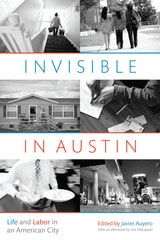
Invisible in Austin
Life and Labor in an American CityEdited by Javier Auyero with an afterword by Loïc Wacquant
University of Texas Press, 2015
Austin, Texas, is renowned as a high-tech, fast-growing city for the young and creative, a cool place to live, and the scene of internationally famous events such as SXSW and Formula 1. But as in many American cities, poverty and penury are booming along with wealth and material abundance in contemporary Austin. Rich and poor residents lead increasingly separate lives as growing socioeconomic inequality underscores residential, class, racial, and ethnic segregation.
In Invisible in Austin, the award-winning sociologist Javier Auyero and a team of graduate students explore the lives of those working at the bottom of the social order: house cleaners, office-machine repairers, cab drivers, restaurant cooks and dishwashers, exotic dancers, musicians, and roofers, among others. Recounting their subjects’ life stories with empathy and sociological insight, the authors show us how these lives are driven by a complex mix of individual and social forces. These poignant stories compel us to see how poor people who provide indispensable services for all city residents struggle daily with substandard housing, inadequate public services and schools, and environmental risks. Timely and essential reading, Invisible in Austin makes visible the growing gap between rich and poor that is reconfiguring the cityscape of one of America’s most dynamic places, as low-wage workers are forced to the social and symbolic margins.
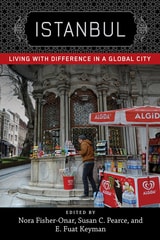
Istanbul
Living with Difference in a Global CityFisher-Onar, Nora
Rutgers University Press, 2018
Rather than exploring Istanbul as one place at one time, the contributors to this volume focus on the city’s experience of migration and globalization over the last two centuries. Asking what Istanbul teaches us about living with people whose hopes jostle with one’s own, contributors explore the rise, collapse, and fragile rebirth of cosmopolitan conviviality in a once and future world city. The result is a cogent, interdisciplinary exchange about an urban space that is microcosmic of dilemmas of diversity across time and space.
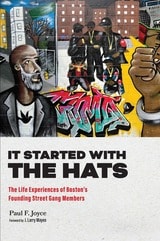
It Started with the Hats
The Life Experiences of Boston’s Founding Street Gang MembersPaul F. Joyce, with a foreword by J. Larry Mayes
Southern Illinois University Press, 2024
In the late 1980s, the introduction of crack cocaine and easy access to guns led to the emergence of the street gang culture and an explosion of gun violence in Boston. Black and Latino youth were both perpetrators and victims of firearm violence as the city grappled with a staggering number of shootings and homicides. Officers within the Boston Police Department struggled to find new and creative ways to combat the growing violence and neutralize gang influence. Paul Joyce was one of those officers.
Throughout his extensive career with the Boston Police, Joyce was at the forefront of the Department’s anti-gang and youth violence initiatives, including during the height of gang and gun violence in the late 1980s through early 1990s. Later in his career, after thirty-one years in policing, Joyce transitioned to academia as a criminologist, seeking to better understand the lives of the gang members he had encountered during his time as an officer. He interviewed thirty Black and Latino men who witnessed and led the emergence of the street gang phenomenon in Boston. Joyce’s strong relationship with community leaders led to the recruitment of the men, who ultimately entrusted him with their life stories and their inner worlds. Using the men’s own words to describe the tragedies they endured, the crimes they committed, and the penalties they paid, Joyce now shares their stories of life before, during, and after gang membership.
Joyce examines the influences that motivated the men toward joining gangs, their gang experiences, and the turning points that shaped their paths later in life, whether leading to desistance from or continued persistence in criminal behavior. Joyce explores their lives from childhood into adulthood, providing a deep analysis of the factors that influenced the entire trajectory of gang members’ lives. By utilizing this life-course approach, Joyce adds to the discourse regarding what influences a gang member’s ability or inability to transition out of criminality and the gang life.
This uniquely candid look at gang membership, humanized by the perspectives of the men who experienced it, provides invaluable insight into the complex interplay of the social, cultural, and personal factors that shape individuals’ life courses. This, in turn, has important implications regarding the types of outside interventions that would be the most effective in making a positive difference in the lives of current and former gang members.
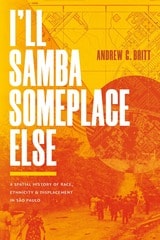
I’ll Samba Someplace Else
A Spatial History of Race, Ethnicity, and Displacement in São PauloAndrew G. Britt
Duke University Press, 2026