Results by title
2194 books match the query 'Women's Studies' and 63 start with i
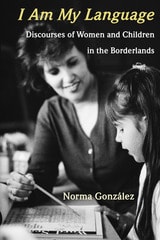
I Am My Language
Discourses of Women and Children in the BorderlandsNorma González
University of Arizona Press, 2001
“I am my language,” says the poet Gloria Anzaldúa, because language is at the heart of who we are. But what happens when a person has more than one language? Is there an overlay of language on identity, and do we shift identities as we shift languages? More important, what identities do children construct for themselves when they use different languages in particular ways?
In this book, Norma González uses language as a window on the multiple levels of identity construction in children—as well as on the complexities of life in the borderlands—to explore language practices and discourse patterns of Mexican-origin mothers and the language socialization of their children. She shows how the unique discourses that result from the interplay of two cultures shape perceptions of self and community, and how they influence the ways in which children learn and families engage with their children’s schools.
González demonstrates that the physical presence of the border profoundly affects the practices and ideologies of Mexican-origin women and children. She then argues that language and cultural background should be used as a basis for building academic competencies, and she demonstrates why the evocative/emotive dimension of language should play a major part in studies of discourse, language socialization, and language ideology.
Drawing on women’s own narratives of their experiences as both mothers and borderland residents, I Am My Language is firmly rooted in the words of common people in their everyday lives. It combines personal odyssey with cutting-edge ethnographic research, allowing us to hear voices that have been muted in the academic and public policy discussions of “what it means to be Latina/o” and showing us new ways to connect language to complex issues of education, political economy, and social identity.
I Am of Ireland
Women of the North Speak OutElizabeth Shannon
University of Massachusetts Press, 1997
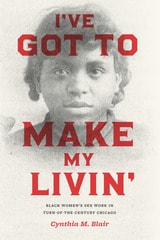
I've Got to Make My Livin'
Black Women's Sex Work in Turn-of-the-Century ChicagoCynthia M. Blair
University of Chicago Press, 2010
For many years, the interrelated histories of prostitution and cities have perked the ears of urban scholars, but until now the history of urban sex work has dealt only in passing with questions of race. In I’ve Got to Make My Livin’, Cynthia Blair explores African American women’s sex work in Chicago during the decades of some of the city’s most explosive growth, expanding not just our view of prostitution, but also of black women’s labor, the Great Migration, black and white reform movements, and the emergence of modern sexuality.
Focusing on the notorious sex districts of the city’s south side, Blair paints a complex portrait of black prostitutes as conscious actors and historical agents; prostitution, she argues here, was both an arena of exploitation and abuse, as well as a means of resisting middle-class sexual and economic norms. Blair ultimately illustrates just how powerful these norms were, offering stories about the struggles that emerged among black and white urbanites in response to black women’s increasing visibility in the city’s sex economy. Through these powerful narratives, I’ve Got to Make My Livin’ reveals the intersecting racial struggles and sexual anxieties that underpinned the celebration of Chicago as the quintessentially modern twentieth-century city.
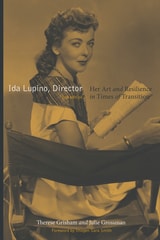
Ida Lupino, Director, 2nd edition
Her Art and Resilience in Times of TransitionTherese Grisham
Rutgers University Press, 2026
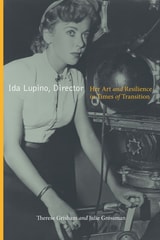
The updated edition of Ida Lupino, Director: Her Art and Resilience in Times of Transition, an in-depth exploration of Lupino’s film and television directing work, provides close readings of the films and TV episodes Lupino directed and accounts for the history of Lupino’s reception, continuing into the mid-2020s, in media and film scholarship. The book gives readers a fuller understanding of Lupino’s major contribution to the history of American cinema and media. The revisions update this book, the first on Lupino’s directing, to address recent scholarship on Lupino’s work and reinforce her abiding relevance for cinephiles and film scholars. It incorporates scholarly and popular culture references to Lupino in the last seven years. Updates include a foreword by writer and film critic Imogen Sara Smith, whose work in film scholarship and the public arena has drawn attention to Lupino and the importance of gender to film noir. Authors Therese Grisham and Julie Grossman have added a complete list of the TV episodes Lupino directed in the 1950s and '60s, as well as an updated epilogue.
This new edition addresses how our views of Lupino’s innovative cinema and her prodigious contributions to classic television have been taken up by others, proving that Lupino, whose reputation has waxed and waned since the middle of the twentieth century, is here to stay as a major figure in the history of American media.
Ida Lupino, Director
Her Art and Resilience in Times of TransitionGrisham, Therese
Rutgers University Press, 2017
The first in-depth study devoted to Lupino’s directorial work, this book makes a strong case for her as a trailblazing feminist auteur, a filmmaker with a clear signature style and an abiding interest in depicting the plights of postwar American women. Ida Lupino, Director not only examines her work as a cinematic auteur, but also offers a serious consideration of her diverse and long-ranging career, getting her start in Hollywood as an actress in her teens and twenties, directing her first films in her early thirties, and later working as an acclaimed director of television westerns, sitcoms, and suspense dramas. It also demonstrates how Lupino fused generic elements of film noir and the social problem film to create a distinctive directorial style that was both highly expressionistic and grittily realistic. Ida Lupino, Director thus shines a long-awaited spotlight on one of our greatest filmmakers.
Identity Politics
Lesbian Feminism and the Limits of CommunityShane Phelan
Temple University Press, 1991
"Lesbian feminism began and has fueled itself with the rejection of liberalism.... In this rejection, lesbian feminists were not alone. They were joined by the New Left, by many blacks in the civil rights movement, by male academic theorists.... What all these groups shared was an intense awareness of the ways in which liberalism fails to account for the social reality of the world, through a reliance upon law and legal structure to define membership, through individualism, through its basis in a particular conception of rationality."
In tracing how lesbian feminism came to be defined in uneasy relationships with the Women’s Movement and gay rights groups, Shane Phelan explores the tension between liberal ideals of individual rights and tolerance and communitarian ideals of solidarity. The debate over lesbian sado-masochism—an expression of individual choice or pornographic, anti-feminist behavior?—is considered as a test case.
Phelan addresses the problems faced by "the woman-identified woman" in a liberal society that presumes heterosexuality as the biological, psychological, and moral standard. Often silenced by laws defining their sexual behavior as criminal and censured by a medical establishment that persists in defining homosexuality as perversion, lesbians, like blacks and other groups, have fought to have the same rights as others in their communities and even in their own homes. Lesbian feminists have also sought to define themselves as a community that would be distinctly different, a community that would disavow the traditional American obsession with individual advancement in the world as it is.
In this controversial study of political philosophy and the women’s movement, Phelan argues that "the failure to date to produce a satisfying theory and program for lesbian action is reflective of the failure of modern political thinking to produce a compelling, nonsuspect alternative to liberalism."
In the series Women in the Political Economy, edited by Ronnie J. Steinberg.
Images of Women in Peace and War
Cross-cultural and Historical PerspectivesSharon Macdonald
University of Wisconsin Press, 1988
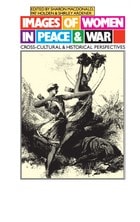
As warriors, freedom fighters and victims, as mothers, wives and prostitutes, and as creators and members of peace movements, women are inevitably caught up in the net of war. Yet women’s participation in warfare and peace campaigns has often been underestimated or ignored.
Images of Women in Peace and War explores women’s relationships to war, peace, and revolution, from the Amazons, Inka and Boadicea, to women soldiers in South Africa, Mau Mau freedom fighters and the protestors at Greenham Common. The contributors consider not only the reality of women’s participation but also look at how their actions have been perceived and represented across cultures and through history. They examine how sexual imagery is constructed, how it is used to delineate women’s relation to warfare and how these images have sometimes been subverted in order to challenge the status quo. The book raises important questions about whether women have a special prerogative to promote peace and considers whether the experience of motherhood leads to a distinctive women’s position on war. The authors find that their analyses lead them to deal with arguments on the basic nature of the sexes and to reevaluate our concepts of “peace,” “war,” and “gender.”
Imagining Adoption
Essays on Literature and CultureMarianne Novy, Editor
University of Michigan Press, 2003
Imagining la Chica Moderna
Women, Nation, and Visual Culture in Mexico, 1917–1936Joanne Hershfield
Duke University Press, 2008
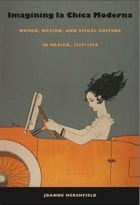
Through her detailed interpretations of visual representations of la chica moderna, Hershfield demonstrates how the images embodied popular ideas and anxieties about sexuality, work, motherhood, and feminine beauty, as well as class and ethnicity. Her analysis takes into account the influence of mexicanidad, the vision of Mexican national identity promoted by successive postrevolutionary administrations, and the fashions that arrived in Mexico from abroad, particularly from Paris, New York, and Hollywood. She considers how ideals of the modern housewife were promoted to Mexican women through visual culture; how working women were represented in illustrated periodicals and in the Mexican cinema; and how images of traditional “types” of Mexican women, such as la china poblana (the rural woman), came to define a “domestic exotic” form of modern femininity. Scrutinizing photographs of Mexican women that accompanied articles in the Mexican press during the 1920s and 1930s, Hershfield reflects on the ways that the real and the imagined came together in the production of la chica moderna.
Imagining the Mulatta
Blackness in U.S. and Brazilian MediaJasmine Mitchell
University of Illinois Press, 2020
Jasmine Mitchell investigates the development and exploitation of the mulatta figure in Brazilian and U.S. popular culture. Drawing on a wide range of case studies, she analyzes policy debates and reveals the use of mixed-Black female celebrities as subjects of racial and gendered discussions. Mitchell also unveils the ways the media moralizes about the mulatta figure and uses her as an example of an ”acceptable” version of blackness that at once dreams of erasing undesirable blackness while maintaining the qualities that serve as outlets for interracial desire.
Imitations of Life
Fannie Hurst’s Gaslight SonatasAbe C. Ravitz
Southern Illinois University Press, 2009
In the early 1920s, Fannie Hurst’s enormous popularity made her the highest-paid writer in America. She conquered the literary scene at the same time the silent movie industry began to emerge as a tremendously profitable and popular form of entertainment. Abe C. Ravitz parallels Hurst’s growing acclaim with the evolution of silent films, from which she borrowed ideas and techniques that furthered her career. Ravitz notes that Hurst was amazingly adept at anticipating what the public wanted. Sensing that the national interest was shifting from rural to urban subjects, Hurst set her immigrant tales and her "woiking goil" tales in urban America. In her early stories, she tried to bridge the gap between Old World and New World citizens, each somewhat fearful and suspicious of the other. She wrote of love and ethnicity—bringing the Jewish Mother to prominence—of race relations and prejudice, of the woman alone in her quest for selfhood. Ravitz argues, in fact, that her socially oriented tales and her portraits of women in the city clearly identify her as a forerunner of contemporary feminism.
Ravitz brings to life the popular culture from 1910 through the 1920s, tracing the meteoric rise of Hurst and depicting the colorful cast of characters surrounding her. He reproduces for the first time the Hurst correspondence with Theodore Dreiser, Charles and Kathleen Norris, and Gertrude Atherton. Fellow writers Rex Beach and Vachel Lindsay also play important roles in Ravitz’s portrait of Hurst, as does Zora Neale Hurston, who awakened Hurst’s interest in the Harlem Renaissance and in race relations, as shown in Hurst’s novel Imitation of Life.
Immigrant Women Workers in the Neoliberal Age
Edited by Nilda Flores-Gonzalez, Anna Romina Guevarra, Maura Toro-Morn, and Grace Chang
University of Illinois Press, 2013
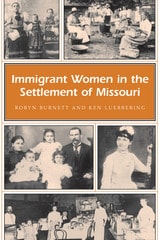
Immigrant Women in the Settlement of Missouri
Robyn Burnett & Ken Luebbering
University of Missouri Press, 2005
Because it examines the lives of women from many social classes and ethnic backgrounds, Immigrant Women in the Settlement of Missouri does much to explain the rich cultural diversity Missouri enjoys today. The photographs and narratives relating to Czech, French, German, Hungarian, Irish, Italian, and Polish life will remind descendants of immigrants that many customs and traditions they grew up practicing have roots in their home countries and will also promote understanding of the customs of other cultures. In addition to the ethnic and class differences that affected these women’s lives, the book also notes the impact of the various eras in which they lived, their education, the circumstances of their migrations, and their destinations across Missouri.
With their engaging and straightforward narrative, Burnett and Luebbering take the reader chronologically through the history of the state from the colonial period to the Civil War and industrialization. Like all Missouri Heritage Readers, this one is presented in an accessible format with abundant illustrations, and it is sure to please both general readers and those engaged in immigrant and women’s studies.
In Her Own Voice
Childbirth Stories from Mennonite WomenKatherine Martens
University of Manitoba Press, 1997
In Her Own Words
Conversations with Composers in the United StatesJennifer Kelly
University of Illinois Press, 2014
In Honor of Fadime
Murder and ShameUnni Wikan
University of Chicago Press, 2008
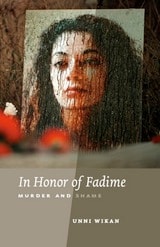
Unni Wikan narrates Fadime’s heartbreaking story through her own eloquent words, along with the testimonies of her father, mother, and two sisters. What unfolds is a tale of courage and betrayal, loyalty and love, power and humiliation, and a nearly unfathomable clash of cultures. Despite enduring years of threats over her emancipated life, Fadime advocated compassion for her killer to the end, believing him to be trapped by an unyielding code of honor. Wikan puts this shocking event in context by analyzing similar honor killings throughout Europe, Canada, and the United States. She also examines the concept of honor in historical and cross-cultural depth, concluding that Islam itself is not to blame—indeed, honor killings occur across religious and ethnic traditions—but rather the way that many cultures have resolutely linked honor with violence.
In Honor of Fadime holds profound and timely insights into conservative Kurdish culture, but ultimately the heart of this powerful book is Fadime’s courageous and tragic story—and Wikan’s telling of it is riveting.
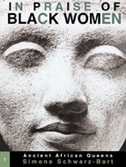
In Praise of Black Women, Volume 1
Ancient African QueensSimone Schwarz-Bart with Andre Schwarz-Bart
University of Wisconsin Press, 2001
Volume 1: Ancient African Queens weaves together oral tradition, folk legends and stories, songs and poems, historical accounts, and travelers’ tales from Egypt to southern Africa, from prehistory to the nineteenth century. These women rulers, warriors, and heroines include Amanirenas, the queen of Kush who battled Roman armies and defeated them at Aswan; Daurama, mother of the seven Hausa kingdoms; Amina Kulibali, founder of the Gabu dynasty in Senegal; Ana de Sousa Nzinga, who resisted the Portuguese conquest of Angola; Beatrice Kimpa Vita, a Kongo prophet burned at the stake by Christian missionaries; Nanda, mother of the famous warrior-king Shaka Zulu; and many others.
These extraordinary women's stories, narrated in the style of African oral tradition, are absorbing, informative, and accessible. The abundant illustrations, many of them rare archival images, depict the diversity among Black women and make this volume a unique treasure for every art lover, every school, and every family.
In Search of Belonging
Latinas, Media, and CitizenshipJillian M Baez
University of Illinois Press, 2018
Innovative and informed by a wealth of new evidence, In Search of Belonging answers important questions about the ways Latinas perform citizenship in today’s America.
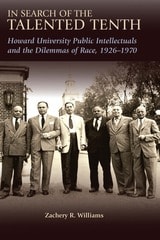
In Search of the Talented Tenth
Howard University Public Intellectuals and the Dilemmas of Race, 1926-1970Zachery R. Williams
University of Missouri Press, 2009
In Search of the Talented Tenth tells how individuals like Rayford Logan, E. Franklin Frazier, John Hope Franklin, Merze Tate, Charles Wesley, and Dorothy Porter left an indelible imprint on academia and black communities alike through their impact on civil rights, anticolonialism, and women’s rights. Zachery Williams explores W. E. B. Du Bois’s Talented Tenth by describing the role of public intellectuals from the Harlem Renaissance to the Black Power movement, in times as trying as the Jim Crow and Cold War eras.
Williams first describes how the years 1890 to 1926 laid the foundation for Howard’s emergence as the “capstone of Negro education” during the administration of university president Mordecai Johnson. He offers a wide-ranging discussion of how the African American community of Washington, D.C., contributed to the dynamism and intellectual life of the university, and he delineates the ties that linked many faculty members to one another in ways that energized their intellectual growth and productivity as scholars. He also discusses the interaction of Howard’s intellectual community with those of the West Indies, Africa, and other places, showing the international impact of Howard’s intellectuals and the ways in which black and brown elites outside the United States stimulated the thought and scholarship of the Howard intellectuals.
In Search of the Talented Tenth marks the first in-depth study of the intellectual activity of this community of scholars and further attests to the historic role of women faculty in shaping the university. It testifies to the impact of this group as a model against which the twenty-first century’s black public intellectuals can be measured.
In Visible Archives
Queer and Feminist Visual Culture in the 1980sMargaret Galvan
University of Minnesota Press, 2023
Analyzing how 1980s visual culture provided a vital space for women artists to theorize and visualize their own bodies and sexualities
In 1982, the protests of antiporn feminists sparked the censorship of the Diary of a Conference on Sexuality, a radical and sexually evocative image-text volume whose silencing became a symbol for the irresolvable feminist sex wars. In Visible Archives documents the community networks that produced this resonant artifact and others, analyzing how visual culture provided a vital space for women artists to theorize and visualize their own bodies and sexualities.
Margaret Galvan explores a number of feminist and cultural touchstones—the feminist sex wars, the HIV/AIDS crisis, the women in print movement, and countercultural grassroots periodical networks—and examines how visual culture interacts with these pivotal moments. She goes deep into the records to bring together a decade’s worth of research in grassroots and university archives that include comics, collages, photographs, drawings, and other image-text media produced by women, including Hannah Alderfer, Beth Jaker, Marybeth Nelson, Roberta Gregory, Lee Marrs, Alison Bechdel, Gloria Anzaldúa, and Nan Goldin.
The art highlighted in In Visible Archives demonstrates how women represented their bodies and sexualities on their own terms and created visibility for new, diverse identities, thus serving as blueprints for future activism and advocacy—work that is urgent now more than ever as LGBTQ+ and women’s rights face challenges and restrictions across the nation.
In Whose Hands
The Home Pregnancy Test and the Politics of ReproductionJoan H. Robinson
Rutgers University Press, 2027
The home pregnancy test is a technology that can be purchased in drug stores, gas stations, and online, and the results are often casually posted to social media. But, as sociologist and attorney Joan Robinson argues, no technology is as simple as it appears. In Whose Hands traces this test from its origin story in a lab to its day-to-day existence in the hands of users, showing that mundane technologies matter, especially when they are used as tools of surveillance and self-surveillance. The book is the result of Robinson's fourteen-year exploration of the social life of the home pregnancy test, and it describes the breadth and beauty of people's messy reproductive lives today. Based on archival and legal research as well as interviews with home pregnancy test users, it shows how even those technologies that we use because they're convenient can be tools of shame, surveillance, and control.
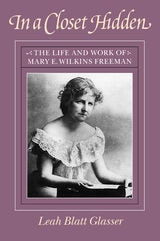
In a Closet Hidden
The Life and Work of Mary E. Wilkins FreemanLeah Blatt Glasser
University of Massachusetts Press, 1996
The first literary biography of a much-neglected American writer, this book explores the multiple tensions at the core of Mary E. Wilkins Freeman's life and work. A prolific short story writer and novelist, Freeman (1852–1930) developed a reputation as a local colorist who depicted the peculiarities of her native New England. Yet as Leah Blatt Glasser shows, Freeman was one of the first American authors to write extensively about the relationships women form outside of marriage and motherhood, the role of work in women's lives, the complexity of women's sexuality, and the interior lives of women who rebel rather than conform to patriarchal strictures.
In a Closet Hidden traces Freeman's evolution as a writer, showing how her own inner conflicts repeatedly found expression in her art. As Glasser demonstrates, Freeman's work examined the competing claims of creativity and convention, self-fulfillment and self-sacrifice, spinsterhood and marriage, lesbianism and heterosexuality.
In an Abusive State
How Neoliberalism Appropriated the Feminist Movement against Sexual ViolenceKristin Bumiller
Duke University Press, 2008
Drawing on archival research, individual case studies, testimonies of rape victims, and interviews with battered women, Bumiller raises fundamental concerns about the construction of sexual violence as a social problem. She describes how placing the issue of sexual violence on the public agenda has polarized gender- and race-based interests. She contends that as the social welfare state has intensified regulation and control, the availability of services for battered women and rape victims has become increasingly linked to their status as victims and their ability to recognize their problems in medical and psychological terms. Bumiller suggests that to counteract these tendencies, sexual violence should primarily be addressed in the context of communities and in terms of its links to social disadvantage. In an Abusive State is an impassioned call for feminists to reflect on how the co-optation of their movement by the neoliberal state creates the potential to inadvertently harm impoverished women and support punitive and racially based crime control efforts.
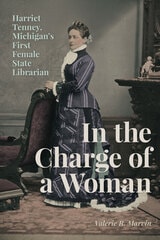
In the Charge of a Woman
Harriet Tenney, Michigan’s First Female State LibrarianValerie R. Marvin
Michigan State University Press, 2027
In 1869, at a moment when women were largely barred from public life and professional opportunities, Harriet Tenney stepped into Michigan’s State Capitol and made history. As the first woman to hold a full-time position in the State of Michigan’s government, she spent the next twenty-two years reshaping not only Michigan’s libraries, but the nation’s understanding of what women could achieve in public service.
Appointed and reappointed by seven governors from both political parties, Tenney built one of the country’s most respected state libraries. She dramatically expanded its collections, established professional standards that became models for libraries across the country, and mentored a generation of women librarians who followed in her path. She also founded Michigan’s first state museum, ensuring that historical artifacts, portraits, and documents would be preserved for future generations; today, tens of thousands of people each year visit and study the objects she collected and curated.
Tenney’s impact radiated far beyond the Capitol. Under her leadership, the state librarianship itself became recognized as a “woman’s position”—a remarkable shift in an era when women's work remained largely invisible. In Lansing, she founded the Woman’s Club as well as the Lansing Library and Literary Association, which evolved into the Capital Area District Library system.
In the Charge of a Woman not only tells the story of Tenney’s achievements in expanding the role of women in the workforce; it also illuminates domestic and political life in nineteenth-century Michigan, revealing how one woman navigated, and transformed, a world built to exclude her.

In the Company of Radical Women Writers
Rosemary Hennessy
University of Minnesota Press, 2023
Recovering the bold voices and audacious lives of women who confronted capitalist society’s failures and injustices in the 1930s—a decade unnervingly similar to our own
In the Company of Radical Women Writers rediscovers the political commitments and passionate advocacy of seven writers—Black, Jewish, and white—who as young women turned to communism around the Great Depression and, over decades of national crisis, spoke to issues of labor, land, and love in ways that provide urgent, thought-provoking guidance for today. Rosemary Hennessy spotlights the courageous lives of women who confronted similar challenges to those we still face: exhausting and unfair labor practices, unrelenting racial injustice, and environmental devastation.
As Hennessy brilliantly shows, the documentary journalism and creative and biographical writings of Marvel Cooke, Louise Thompson Patterson, Claudia Jones, Alice Childress, Josephine Herbst, Meridel Le Sueur, and Muriel Rukeyser recognized that life is sustained across a web of dependencies that we each have a duty to maintain. Their work brought into sharp focus the value and dignity of Black women’s domestic work, confronted the destructive myths of land exploitation and white supremacy, and explored ways of knowing attuned to a life-giving erotic energy that spans bodies and relations. In doing so, they also expanded the scope of American communism.
By tracing the attention these seven women pay to “life-making” as the relations supporting survival and wellbeing—from Harlem to the American South and Midwest—In the Company of Radical Women Writers reveals their groundbreaking reconceptions of the political and provides bracing inspiration in the ongoing fight for justice.
In the Crossfire of History
Women's War Resistance Discourse in the Global SouthLava Asaad
Rutgers University Press, 2022
The transformative mode of these examples expands the definition of heroism and defiance. To prevent these types of heroism from slipping into the abyss of history, this collection brings forth and celebrates women’s fortitude in conflict zones. In the Crossfire of History shines a light onwomen across the globe who are resisting the sociopolitical and economic injustices in their nation-states.

In the Event of Women
Tani Barlow
Duke University Press, 2021
In the Master's Eye
Representations of Women, Blacks, and Poor Whites in Antebellum Southern LiteratureSusan J. Tracy
University of Massachusetts Press, 1995
This book explores the way in which literature can be used to reinforce social power. Through rigorous readings of a series of antebellum plantation novels, Susan J. Tracy shows how the narrative strategies employed by proslavery Southern writers served to justify and perpetuate the oppression of women, blacks, and poor whites.
Tracy focuses on the historical romances of six authors: George Tucker, James Ewell Heath, William Alexander Caruthers, John Pendleton Kennedy, Nathaniel Beverley Tucker, and William Gilmore Simms. Using variations on a recurring plot—in which a young planter/hero rescues a planter's daughter from an “enemy” of her class—each of these novelists reinforced an idealized vision of a Southern civilization based on male superiority, white supremacy, and class inequality. It is a world in which white men are represented as the natural leaders of loyal and dependent women, grateful and docile slaves, and inferior poor whites. According to Tracy, the interweaving of these themes reveals the extent to which the Southern defense of slavery in the years leading up to the Civil War was an argument not only about race relations but about gender and class relations as well.
In the Neighborhood
Women's Publication in Early AmericaCaroline Wigginton
University of Massachusetts Press, 2016
Winner of the 2018 Early American Literature Book Prize
In this compelling and original book, Caroline Wigginton reshapes our understanding of early American literary history. Overturning long-standing connections between the male-dominated print culture of pamphlets, broadsides, and newspapers and the transformative ideas that instigated the American Revolution, Wigginton explores how women's “relational publications”—circulated texts, objects, and performances—transformed their public and intimate worlds. She argues that Native, black, and white women's interpersonal "publications" revolutionized the dynamics of power and connection in public and private spaces, whether those spaces were Quaker meeting houses, Creek talwas, trading posts, burial grounds, or the women's own "neighborhoods."
Informed by deep and rich archival research, Wigginton's case studies explore specific instances of “relational publication.” The book begins with a pairing of examples—the statement a grieving Lenape mother made through a wampum belt and the political affiliations created when a salon hostess shared her poetry. Subsequent chapters trace a history of women's publication practice, including a Creek woman's diplomatic and legal procession-spectacles in the colonial Southeast, a black mother's expression of protest in Newport, Rhode Island, and the resulting evangelical revival, Phillis Wheatley's elegies that refigured neighborhoods of enslaved and free Bostonians, and a Quaker woman's pious and political commonplace book in Revolutionary Philadelphia.
In the Thick of the Fight
The Writing of Emily Wilding Davison, Militant SuffragetteCarolyn P. Collette
University of Michigan Press, 2013
One of the most memorable images of the British women’s suffrage movement occurred on June 4, Derby Day, 1913. As the field of horses approached a turning at Epsom, militant suffragette Emily Wilding Davison ducked out from under the railing and ran onto the track, reaching for the bridle of the King’s horse, and was killed in the collision. While her death transformed her into a heroine, it all but erased her identity. To identify what impelled Davison to suffer multiple imprisonments, to experience the torture of force-feedings and the insults of hostile members of the crowds who came to hear her speak, Carolyn P. Collette explores a largely ignored source—the writing to which Davison dedicated so much time and effort during the years from 1908 to 1913. Davison’s writing is an implicit apologia for why she lived the life of a militant suffragette and where she continually revisits and restates the principles that guided her: that woman suffrage was necessary to improve the lives of men, women, and children; that the freedom and justice women sought was sanctioned by God and unjustly withheld by humans whose opposition constituted a tyranny that had to be opposed; and that the evolution of human progress demanded that women become fully equal citizens of their nation in every respect— politically, economically, and culturally.
In the Thick of the Fight makes available for the first time the archive of published and unpublished writings of Emily Wilding Davison. Collette reorients both scholarly and public attention away from a single, defining event to the complexity of Davison’s contributions to modern feminist discourse, giving the reader a sense of the vibrancy and diversity of Davison’s suffrage writings.
Inconvenient Strangers
Transnational Subjects and the Politics of CitizenshipShui-yin Sharon Yam
The Ohio State University Press, 2019
Inconvenient Strangers: Transnational Subjects and the Politics of Citizenship draws attention to how intersecting networks of power—particularly race and ethnicity, gender, and social class—marginalize transnational subjects who find themselves outside a dominant citizenship that privileges familiarity and socioeconomic and racial superiority. In this study of how neoliberal ideas limit citizenship for marginalized populations in Hong Kong, Shui-yin Sharon Yam examines how three transnational groups—mainland Chinese maternal tourists, Southeast Asian migrant domestic workers, and South Asian permanent residents—engage with the existing citizenry and gain recognition through circulating personal narratives.
Coupling transnational feminist studies with research on emotions, Yam analyzes court cases, interviews, social media discourse, and the personal narratives of Hong Kong’s marginalized groups to develop the concept of deliberative empathy—critical empathy that prompts an audience to consider the structural sources of another’s suffering while deliberating one’s own complicity in it. Yam argues that storytelling and familial narratives can promote deliberative empathy among the audience as both a political and ethical response—carrying the affective power to jolt the dominant citizenry out of their usual xenophobic attitudes and ultimately prompt them to critically consider the human conditions they share with the marginalized and move them toward more ethical coalitions.

Independent Stardom
Freelance Women in the Hollywood Studio SystemBy Emily Carman
University of Texas Press, 2015
Bringing to light an often-ignored aspect of Hollywood studio system history, this book focuses on female stars who broke the mold of a male-dominated, often manipulative industry to dictate the path of their own careers through freelancing.
Runner-up, Richard Wall Memorial Award, Theatre Library Association, 2016
During the heyday of Hollywood’s studio system, stars were carefully cultivated and promoted, but at the price of their independence. This familiar narrative of Hollywood stardom receives a long-overdue shakeup in Emily Carman’s new book. Far from passive victims of coercive seven-year contracts, a number of classic Hollywood’s best-known actresses worked on a freelance basis within the restrictive studio system. In leveraging their stardom to play an active role in shaping their careers, female stars including Irene Dunne, Janet Gaynor, Miriam Hopkins, Carole Lombard, and Barbara Stanwyck challenged Hollywood’s patriarchal structure.
Through extensive, original archival research, Independent Stardom uncovers this hidden history of women’s labor and celebrity in studio-era Hollywood. Carman weaves a compelling narrative that reveals the risks these women took in deciding to work autonomously. Additionally, she looks at actresses of color, such as Anna May Wong and Lupe Vélez, whose careers suffered from the enforced independence that resulted from being denied long-term studio contracts. Tracing the freelance phenomenon among American motion picture talent in the 1930s, Independent Stardom rethinks standard histories of Hollywood to recognize female stars as creative artists, sophisticated businesswomen, and active players in the then (as now) male-dominated film industry.
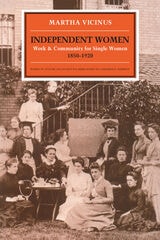
Independent Women
Work and Community for Single Women, 1850-1920Martha Vicinus
University of Chicago Press, 1985
"Feminist insight combines with vast research to produce a dramatic narrative. Independent Women chronicles the energetic lives and imaginative communal structures invented by women who 'pioneered new occupations, new living conditions, and new public roles.'"—Lee R. Edwards, Ms.
"Vicinus is to be congratulated for her brave and unflinching portraits of twisted spinsters as well as stolid saints. That she stretches her net up into the '20s and covers the women's suffrage momement is a brilliant stroke, for one may see clearly how it was possible for women to mount such an enormous and successful political campaign."—Jane Marcus, Chicago Tribune Book World
"Vicinus' beautifully written book abounds in rich historical detail and in subtle psychological insights in the character of its protagonists. The author understands the complexities of the interplay between economic and social conditions, cultural values, and the aims and aspirations of individual personalities who act in history. . . . A superb achievement."—Gerda Lerner, Reviews in American History
"Martha Vicinus has with intelligence and energy paved and landscaped the road on which scholars and students of activist women all travel for many years."—Blanche Wiesen Cook, Women's Review of Books
"Independent Women can be read by anyone with an interest in women's history. But for all contemporary women, unconsciously enjoying privileges and freedoms once bought so dearly, this book should be required reading."—Catharine E. Boyd, History
Indigenous Women and Violence
Feminist Activist Research in Heightened States of InjusticeEdited by Lynn Stephen and Shannon Speed
University of Arizona Press, 2021
Indigenous Women and Violence is built on engaging case studies that highlight the individual and collective struggles that Indigenous women face from the racial and gendered oppression that structures their lives. Gendered violence has always been a part of the genocidal and assimilationist projects of settler colonialism, and it remains so today. These structures—and the forms of violence inherent to them—are driving criminalization and victimization of Indigenous men and women, leading to escalating levels of assassination, incarceration, or transnational displacement of Indigenous people, and especially Indigenous women.
This volume brings together the potent ethnographic research of eight scholars who have dedicated their careers to illuminating the ways in which Indigenous women have challenged communities, states, legal systems, and social movements to promote gender justice. The chapters in this book are engaged, feminist, collaborative, and activism focused, conveying powerful messages about the resilience and resistance of Indigenous women in the face of violence and systemic oppression.
Contributors: R. Aída Hernández-Castillo, Morna Macleod, Mariana Mora, María Teresa Sierra, Shannon Speed, Lynn Stephen, Margo Tamez, Irma Alicia Velásquez Nimatuj
Indigenous Women and Work
From Labor to ActivismEdited by Carol Williams
University of Illinois Press, 2012
Inequalities of Love
College-Educated Black Women and the Barriers to Romance and FamilyAveril Y. Clarke
Duke University Press, 2011
Infamous Bodies
Early Black Women’s Celebrity and the Afterlives of RightsSamantha Pinto
Duke University Press, 2020
Inherited Work
Women and Brewing in Oregon, 1850–1916Tiah Edmunson-Morton
Oregon State University Press, 2027
Following the stories of twenty women connected to Oregon breweries before Prohibition, Inherited Work recognizes the overlooked contributions of the women who inherited, managed, and navigated Oregon’s brewing industry. At a time when recordkeeping and historical memory obscured their authority, these women were negotiating debt, managing workers, protecting property, arranging sales, supporting family wealth, and making strategic decisions about the future of their businesses.
Drawing on census records, probate files, property records, newspapers, court documents, and oral histories, Tiah Edmunson-Morton traces the legal and economic landscape of the time, demonstrating the conditions and decisions these women faced in managing their personal lives and livelihoods. From widows like Victoria Bauerlin, Johanna Behrens, and Mary Meller—who inherited not only property but also the financial terms that shaped what they could do next—to the matriarch of a brewing dynasty, Louisa Weinhard, Inherited Work reveals how their influence endured.
Today, women can be found throughout the industry as brewers and owners, as well as chemists, restaurant managers, bookkeepers, educators, graphic designers, and hop brokers. While their roles are more visible than they once were, the history of women in brewing remains incomplete. Who were these women? What did it mean to be part of the brewing industry at the turn of the century? And what changes when we bring their stories into the history of brewing?
Innocence and Victimhood
Gender, Nation, and Women’s Activism in Postwar Bosnia-HerzegovinaElissa Helms
University of Wisconsin Press, 2013
Innovative Women Poets
An Anthology of Contemporary Poetry and InterviewsElisabeth A. Frost
University of Iowa Press, 2007
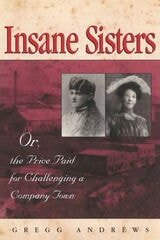
Insane Sisters
Or, the Price Paid for Challenging a Company TownGregg Andrews
University of Missouri Press, 2020
Insane Sisters is the extraordinary tale of two sisters, Mary Alice Heinbach and Euphemia B. Koller, and their seventeen- year property dispute against the nation's leading cement corporation—the Atlas Portland Cement Company.
In 1903, Atlas built a plant on the border of the small community of Ilasco, located just outside Hannibal—home of the infamous cave popularized in Mark Twain's most acclaimed novels. The rich and powerful Atlas quickly appointed itself as caretaker of Twain's heritage and sought to take control of Ilasco. However, its authority was challenged in 1910 when Heinbach inherited her husband's tract of land that formed much of the unincorporated town site. On grounds that Heinbach's husband had been in the advanced stages of alcoholism when she married him the year before, some of Ilasco's political leaders and others who had ties to Atlas challenged the will, charging Heinbach with undue influence.
To help fight against the local lawyers and politicians who wanted Atlas to own the land, Heinbach enlisted the help of her shrewd and combative sister, Euphemia Koller, by making her co-owner of the tract. In a complex case that went to the Missouri Supreme Court four times, the sisters fiercely sought to hang on to the tract. However, in 1921 the county probate court imposed a guardianship over Heinbach and a circuit judge ordered a sheriff's sale of the property. After Atlas purchased the tract, Koller waged a lonely battle to overturn the sale and expose the political conspiracies that had led to Ilasco's conversion into a company town. Her efforts ultimately resulted in her court- ordered confinement in 1927 to Missouri's State Hospital Number One for the Insane, where she remained until her death at age sixty-eight.
Insane Sisters traces the dire consequences the sisters suffered and provides a fascinating look at how the intersection of gender, class, and law shaped the history and politics of Ilasco. The book also sheds valuable new light on the wider consolidation of corporate capitalism and the use of guardianships and insanity to punish unconventional women in the early twentieth century.
Inscribing the Daily
Critical Essays on Women's DiariesSuzanne L. Bunkers
University of Massachusetts Press, 1996
Institutional Sexual Abuse in the #MeToo Era
Edited by Jason D. Spraitz and Kendra N. Bowen
Southern Illinois University Press, 2021
Examining the evolving reach of the #MeToo Movement
In this timely and important collection, editors Jason D. Spraitz and Kendra N. Bowen bring together the work of contributors in the fields of criminal justice and criminology, sociology, journalism, and communications. These chapters show #MeToo is not only a support network of victims’ voices and testimonies but also a revolutionary interrogation of policies, power imbalances, and ethical failures that resulted in decades-long cover-ups and institutions structured to ensure continued abuse. This book reveals #MeToo as so much more than a hashtag.
Contributors discuss how #MeToo has altered the landscape of higher education; detail a political history of sexual abuse in the United States and the UK; discuss a recent grand jury report about religious institutions; and address the foster care and correctional systems. Hollywood instances are noted for their fear of retaliation among victims and continued accolades for alleged abusers. In sports, contributors examine the Jerry Sandusky scandal and the abuse by Larry Nassar. Advertising and journalism are scrutinized for covering the #MeToo disclosures while dealing with their own scandals. Finally, social media platforms are investigated for harassment and threats of violent victimization.
Drawing on the general framework of the #MeToo Movement, contributors look at complex and very different institutions—athletics, academia, religion, politics, justice, childcare, social media, and entertainment. Contributors include revelatory case studies to ensure we hear the victims’ voices; bring to light the complicity and negligence of social institutions; and advocate for systemic solutions to institutional sexual abuse, violence, and harassment.
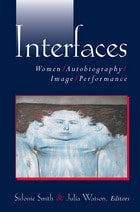
Interfaces
Women, Autobiography, Image, PerformanceSidonie Smith and Julia Watson, Editors
University of Michigan Press, 2002
Editors Sidonie Smith and Julia Watson have been at the vanguard of the study of women's self-representation, and here have collected leading critics' and scholars' thoughts on artistic fusions of the visual and autobiographical. Marianne Hirsch, Linda Hutcheon, Linda Kauffman, Nellie McKay, Marjorie Perloff, Lee Quinby, and the other contributors offer new insights into the work of such artists as Laurie Anderson, Judy Chicago, Frida Kahlo, Orlan, and Cindy Sherman. From a painter's diary to a performance artist's ritualized enactments of kitchen domesticity, the many narratives of the self arising from these artists' negotiations of the visual and textual prove to be goldmines for analysis.
Art historians, artists, critics, literary scholars in women's studies, and anyone interested in the forms and implications of depicting the self will enjoy this richly illustrated collection.
Sidonie Smith is Professor of English, University of Michigan. Julia Watson is Associate Professor of Comparative Studies, The Ohio State University. They also edited Reading Autobiography: A Guide for Interpreting Life Narratives and Women, Autobiography, Theory: A Reader.

International Women Stage Directors
Edited by Anne Fliotsos and Wendy Vierow
University of Illinois Press, 2013
A fascinating study of women in the arts, International Women Stage Directors is a comprehensive examination of women directors in twenty-four diverse countries. Organized by country, chapters provide historical context and emphasize how social, political, religious, and economic factors have impacted women's rise in the theatre, particularly in terms of gender equity. Contributors tell the stories of their home country's pioneering women directors and profile the most influential women directors practicing today, examining their career paths, artistry, and major achievements.
Contributors are Ileana Azor, Dalia Basiouny, Kate Bredeson, Mirenka Cechová, Marié-Heleen Coetzee, May Farnsworth, Anne Fliotsos, Laura Ginters, Iris Hsin-chun Tuan, Maria Ignatieva, Adam J. Ledger, Roberta Levitow, Jiangyue Li, Lliane Loots, Diana Manole, Karin Maresh, Gordon McCall, Erin B. Mee, Ursula Neuerburg-Denzer, Claire Pamment, Magda Romanska, Avra Sidiropoulou, Margaretta Swigert-Gacheru, Alessandra Vannucci, Wendy Vierow, Vessela S. Warner, and Brenda Werth.
Interrogating Postfeminism
Gender and the Politics of Popular CultureYvonne Tasker and Diane Negra, eds.
Duke University Press, 2007
Essays by feminist film, media, and literature scholars based in the United States and United Kingdom provide an array of perspectives on the social and political implications of post-feminism. Examining magazines, mainstream and independent cinema, popular music, and broadcast genres from primetime drama to reality television, contributors consider how postfeminism informs self-fashioning through makeovers and cosmetic surgery, the “metrosexual” male, the “black chick flick,” and more. Interrogating Postfeminism demonstrates not only the viability of, but also the necessity for, a powerful feminist critique of contemporary popular culture.
Contributors. Sarah Banet-Weiser, Steven Cohan, Lisa Coulthard, Anna Feigenbaum, Suzanne Leonard, Angela McRobbie, Diane Negra, Sarah Projansky, Martin Roberts, Hannah E. Sanders, Kimberly Springer, Yvonne Tasker, Sadie Wearing
Intersectional Chicana Feminisms
Sitios y LenguasAída Hurtado
University of Arizona Press, 2020
Aída Hurtado, a leading Chicana feminist and scholar, traces the origins of Chicanas’ efforts to bring attention to the effects of gender in Chicana and Chicano studies. Highlighting the innovative and pathbreaking methodologies developed within the field of Chicana feminisms—such as testimonio, conocimiento, and autohistoria—this book offers an accessible introduction to Chicana theory, methodology, art, and activism. Hurtado also looks at the newest developments in the field and the future of Chicana feminisms.
The book includes short biographies of key Chicana feminists, additional suggested readings, and exercises with each chapter to extend opportunities for engagement in classroom and workshop settings.

Intimate Fathers
The Nature and Context of Aka Pygmy Paternal Infant CareBarry S. Hewlett
University of Michigan Press, 1991
Intimate Inequalities
Millennials' Romantic Relationships in Contemporary TimesCristen Dalessandro
Rutgers University Press, 2021
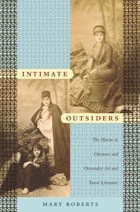
Intimate Outsiders
The Harem in Ottoman and Orientalist Art and Travel LiteratureMary Roberts
Duke University Press, 2007
Roberts draws on a range of sources, including paintings, photographs, and travelogues discovered in archives in Britain, Turkey, Egypt, and Denmark. She rethinks the influential harem works of the realist painter John Frederick Lewis, a British artist living in Cairo during the 1840s, whose works were granted an authoritative status by his British public despite the actual limits of his insider knowledge. Unlike Lewis, British women were able to visit Ottoman harems, and from the mid-nineteenth century on they did so in droves. Writing about their experiences in published travelogues, they undermined the idea that harems were the subject only of male fantasies. The elite Ottoman women who orchestrated these visits often challenged their guests’ misapprehensions about harem life, and a number of them exercised power as patrons, commissioning portraits from European artists. Their roles as art patrons defy the Western idea of the harem woman as passive odalisque.