Results by title
1441 books match the query 'World' and 52 start with i

I Dream a World
The Operas of William Grant StillBeverly Soll
University of Arkansas Press, 2005
I Lived to Tell the World
Stories from Survivors of Holocaust, Genocide, and the Atrocities of WarElizabeth Mehren
Oregon State University Press, 2024
The 2025 Oregon Center for the Book Adult Readers' Selection
The 2025 NYC BIG BOOK AWARD Distinguished Favorite in the category of Cultural and Social Issues
Foreword INDIES 2024 Book of the Year Award Finalist - Multiculturalism & Regional
As Americans increasingly question how each of us fits into our nation's cultural tapestry, I Lived to Tell the World presents thirteen inspiring profiles of refugees who have settled in Oregon. They come from Rwanda, Myanmar, Bosnia, Syria, and more-different stories, different conflicts, but similar paths through loss and violence to a new, not always easy, life in the United States. The in-depth profiles are drawn from hours of interviews and oral histories; journalist Elizabeth Mehren worked collaboratively with the survivors to honor the complexity of their experiences and to ensure that the stories are told with, and not just about, them. Mehren also weaves in historical, cultural, and political context alongside these personal stories of resilience.
In the face of global cruelty and hatred, the courage and fortitude of these individuals illuminate the darkness. Their stories inspire readers to reflect on their own experiences and to view newcomers to America with renewed respect. As more states adopt Holocaust and genocide education curricula and as issues around refugees, immigration, and racial justice gain attention, I Lived to Tell the World highlights the purposeful lives led by these Oregonians despite their painful pasts. Their experiences not only humanize the atrocities often seen in headlines, but also convey a universal message of hope.

I'd Fight the World
A Political History of Old-Time, Hillbilly, and Country MusicPeter La Chapelle
University of Chicago Press, 2019
Icons Axed, Freedoms Lost
Russian Desecularization and a Ukrainian AlternativeVyacheslav Karpov
Rutgers University Press, 2025

Ideology and Superstructure in Historical Materialism
Franz Jakubowski
Pluto Press, 2002
In the same period, only Lukacs and Korsch attempted to deal systemically with these problems, and it is they who are generally recognised as the main inspiration behind what is called Western Marxism, yet Franz Jakubowski is a key figure in the development of Marxist thought. And, unlike the others, Jakubowski was also an activist, and for this reason avoids the unnecessarily dense language of his fellow theoreticians.
Ideology and Superstructure is rare in that it successfully conveys complex problems in a simple and straightforward form. At a time when the literature on Marx has become excessively obscuranist, Jakubowski's work serves as a useful antidote, and is an ideal text for introducing novices to the basics of Marxist theory.
Immanuel Wallerstein and the Problem of the World
System, Scale, CultureDavid Palumbo-Liu, Bruce Robbins, and Nirvana Tanoukhi, eds.
Duke University Press, 2011
Contributors. Gopal Balakrishnan, Tani E. Barlow, Neil Brenner, Richard E. Lee, Franco Moretti, David Palumbo-Liu, Bruce Robbins, Helen Stacy, Nirvana Tanoukhi, Immanuel Wallerstein, Kären Wigen
Impact of Migration on Poland
EU Mobility and Social ChangeAnne White, Izabela Grabowska, Pawel Kaczmarczyk, and Krystyna Slany
University College London, 2018
The Impact of Migration on Poland offers a new approach for understanding how migration affects sending countries and provides a wide-ranging analysis of how Poland has changed, and continues to change, since accession to the European Union in 2004. The authors explore an array of social trends and their causes before using in-depth interview data to illustrate how migration contributes to those causes. They address fundamental questions about whether and how Polish society is becoming more equal and more cosmopolitan, arguing that for particular segments of society migration does make a difference. While the book focuses mainly on those who have stayed in Poland, and their contacts with Poles in other countries, it also analyzes Polish society abroad, a concept that is a far more accurate description than “community” in countries such as the UK.

Imperial Debris
On Ruins and RuinationAnn Laura Stoler, ed.
Duke University Press, 2013
Contributors. Ariella Azoulay, John F. Collins, Sharad Chari, E. Valentine Daniel, Gastón Gordillo, Greg Grandin, Nancy Rose Hunt, Joseph Masco, Vyjayanthi Venuturupalli Rao, Ann Laura Stoler
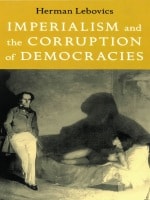
Imperialism and the Corruption of Democracies
Herman Lebovics
Duke University Press, 2006
Some essays explore why modern Western democratic societies needed colonialism. Among these is an examination of the seventeenth-century philosopher John Locke’s prescient conclusion that liberalism could only control democratic forces with the promise of greater wealth enabled by empire. In other essays Lebovics considers the relation between overseas rule and domestic life. Discussing George Orwell’s tale “Shooting an Elephant” and the careers of two colonial officers (one British and one French), he contemplates the ruinous authoritarianism that develops among the administrators of empire. Lebovics considers Pierre Bourdieu’s thinking about how colonialism affected metropolitan French life, and he reflects on the split between sociology and ethnology, which was partly based on a desire among intellectuals to think one way about metropolitan populations and another about colonial subjects. Turning to the arts, Lebovics traces how modernists used the colonial “exotic” to escape the politicized and contested modernity of the urban West. Imperialism and the Corruption of Democracies is a compelling case for cultural history as a key tool for understanding the injurious effects of imperialism and its present-day manifestations within globalization.
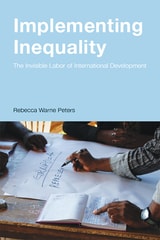
Implementing Inequality
The Invisible Labor of International DevelopmentRebecca Warne Peters
Rutgers University Press, 2020
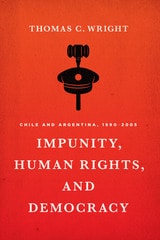
Impunity, Human Rights, and Democracy
Chile and Argentina, 1990-2005By Thomas C. Wright
University of Texas Press, 2014
Universal human rights standards were adopted in 1948, but in the 1970s and 1980s, violent dictatorships in Argentina and Chile flagrantly defied the new protocols. Chilean general Augusto Pinochet and the Argentine military employed state terrorism in their quest to eradicate Marxism and other forms of “subversion.” Pinochet constructed an iron shield of impunity for himself and the military in Chile, while in Argentina, military pressure resulted in laws preventing prosecution for past human rights violations. When democracy was reestablished in both countries by 1990, justice for crimes against humanity seemed beyond reach.
Thomas C. Wright examines how persistent advocacy by domestic and international human rights groups, evolving legal environments, unanticipated events that impacted public opinion, and eventual changes in military leadership led to a situation unique in the world—the stripping of impunity not only from a select number of commanders of the repression but from all those involved in state terrorism in Chile and Argentina. This has resulted in trials conducted by national courts, without United Nations or executive branch direction, in which hundreds of former repressors have been convicted and many more are indicted or undergoing trial.
Impunity, Human Rights, and Democracy draws on extensive research, including interviews, to trace the erosion and collapse of the former repressors’ impunity—a triumph for human rights advocates that has begun to inspire authorities in other Latin American countries, including Peru, Uruguay, Brazil, and Guatemala, to investigate past human rights violations and prosecute their perpetrators.
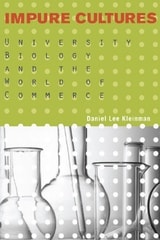
Impure Cultures
University Biology and the World of CommerceDaniel Lee Kleinman
University of Wisconsin Press, 2003
How are the worlds of university biology and commerce blurring? Many university leaders see the amalgamation of academic and commercial cultures as crucial to the future vitality of higher education in the United States. In Impure Cultures, Daniel Lee Kleinman questions the effect of this blending on the character of academic science.
Using data he gathered as an ethnographic observer in a plant pathology lab at the University of Wisconsin–Madison, Kleinman examines the infinite and inescapable influence of the commercial world on biology in academia today. Contrary to much of the existing literature and common policy practices, he argues that the direct and explicit relations between university scientists and industrial concerns are not the gravest threat to academic research. Rather, Kleinman points to the less direct, but more deeply-rooted effects of commercial factors on the practice of university biology. He shows that to truly understand research done at universities today, it is first necessary to explore the systematic, pervasive, and indirect effects of the commercial world on contemporary academic practice.
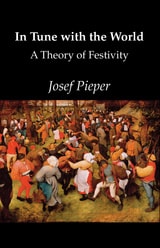
In Tune With The World
Josef Pieper
St. Augustine's Press, 1999
In this stimulating and still-timely study, Josef Pieper takes up a theme of paramount importance to his thinking – that festivals belong by rights among the great topics of philosophical discussion. As he develops his theory of festivity, the modern age comes under close and painful scrutiny. It is obvious that we no longer know what festivity is, namely, the celebration of existence under various symbols
Pieper exposes the pseudo-festivals, in their harmless and their sinister forms: traditional feasts contaminated by commercialism; artificial holidays created in the interest of merchandisers; holidays by coercion, decreed by dictators the world over; festivals as military demonstrations; holidays empty of significance. And lastly we are given the apocalyptic vision of a nihilistic world which would seek its release not in festivities but in destruction.
Formulated with Pieper's customary clarity and elegance, enhanced by brilliantly chosen quotations, this is an illuminating contribution to the understanding of traditional and contemporary experience.
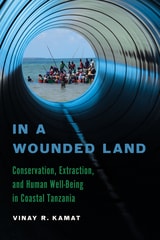
In a Wounded Land
Conservation, Extraction, and Human Well-Being in Coastal TanzaniaVinay R. Kamat
University of Arizona Press, 2024
Focusing on the human element of marine conservation and the extractive industry in Tanzania, this volume illuminates what happens when impoverished people living in underdeveloped regions of Africa are suddenly subjected to state-directed conservation and natural resource extraction projects, implemented in their landscapes of subsistence. In a Wounded Land draws on ethnographically rich case studies and vignettes collected over a ten-year period in several coastal villages on Tanzania’s southeastern border with Mozambique. In seven chapters, the book demonstrates how state power, processes of displacement and dispossession, forms of local resistance and acquiescence, environmental and social justice, and human well-being become interconnected.
Written in lucid, accessible language, this is the first book that reveals the social implications of the co-presence of a marine park and a gas project at a time when internationally funded conservation initiatives and extraction projects among rural African populations are engendering rapid social transformation.

In the Company of Generals
The World War I Diary of Pierpont L. StackpoleEdited & Intro by Robert H. Ferrell
University of Missouri Press, 2009
Pierpont Stackpole was a Boston lawyer who in January 1918 became aide to Lieutenant General Hunter Liggett, soon to be commander of the first American corps in France. Stackpole’s diary, published here for the first time, is a major eyewitness account of the American Expeditionary Forces’ experience on the Western Front, offering an insider’s view into the workings of Liggett’s commands, his day-to-day business, and how he orchestrated his commands in trying and confusing situations.
Hunter Liggett did not fit John J. Pershing’s concept of the trim and energetic officer, but Pershing entrusted to him a corps and then an army command. Liggett assumed leadership of the U.S. First Army in mid-October of 1918, and after reorganizing, reinforcing, and resting, the battle-weary troops broke through the German lines in a fourth attack at the Meuse-Argonne—accomplishing what Pershing had failed to do in three previous attempts. The victory paved the way to armistice on November 11.
Liggett has long been a shadowy figure in the development of the American high command. He was “Old Army,” a veteran of Indian wars who nevertheless kept abreast of changes in warfare and more than other American officers was ready for the novelties of 1914–1918. Because few of his papers have survived, the diary of his aide—who rode in the general’s staff car as Liggett unburdened himself about fellow generals and their sometimes abysmal tactical notions—provides especially valuable insights into command within the AEF.
Stackpole’s diary also sheds light on other figures of the war, presenting a different view of the controversial Major General Clarence Edwards than has recently been recorded and relating the general staff’s attitudes about the flamboyant aviation figure Billy Mitchell. General Liggett built the American army in France, and the best measure of his achievement is this diary of his aide. That record stands here as a fascinating and authentic look at the Great War.
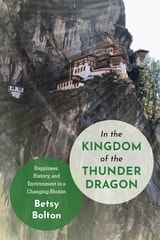
In the Kingdom of the Thunder Dragon
Happiness, History, and Environment in a Changing BhutanBetsy Bolton
Lever Press, 2025
International views on Bhutan tend to be sharply split between admiration for its democratizing development strategies and opposition to its human rights abuses—a division partly maintained by Bhutan’s tight limits on immigration and foreign travel within the country. In the first book-length study of its kind, In the Kingdom of the Thunder Dragon explores the tensions and contradictions of Bhutan’s rapid political and economic transformation from the perspective of a Fulbright scholar helping start a new master’s program in the remote east of the country.
Mingling personal narrative with historical context to engage undergraduate students and general readers, In the Kingdom of the Thunder Dragon explores Bhutan’s Vajrayana Buddhist heritage and ongoing embrace of tradition alongside development, the country’s newly minted democracy amidst a complicated history of citizenship and belonging, and the challenges the nation faces in a period of increasing globalization. Betsy Bolton further explores Bhutan’s recent events surrounding the 1990s expulsion of the Lhotshampa people and the development of GNH in the early 2000s. From here, Bolton illuminates how these historical narratives and issues have impacted Bhutanese citizens and students through stories gathered at educational and artistic institutions, festivals and community events. In the Kingdom of the Thunder Dragon is a fresh, accessible approach to Bhutanese history and will interest general readers as well as scholars of Asia, history, economics, sociology, and environmental studies.
In the Shadow of Tungurahua
Disaster Politics in Highland EcuadorA.J. Faas
Rutgers University Press, 2023
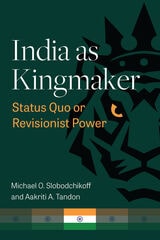
India as Kingmaker
Status Quo or Revisionist PowerMichael O. Slobodchikoff and Aakriti A. Tandon
University of Michigan Press, 2022
As India finds itself in the envious position of kingmaker, both the status quo and revisionist major powers are jockeying for India’s support for either upholding or revising the current world order. Using India’s bilateral treaties as a proxy measure of the strength of its relationship with other major powers, Slobodchikoff and Tandon determine whether India will remain neutral in its foreign policy approach or adopt a more assertive role in shaping the future global order. This book provides an in-depth analysis of India’s bilateral ties with major powers that include the United States, Russia, China, Japan, as well as the European Union (including the United Kingdom, France, and Germany) and uses network analysis to study India’s foreign policy positions with other major powers.
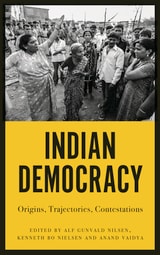
Indian Democracy
Origins, Trajectories, ContestationsEdited by Alf Gunvald Nilsen, Kenneth Bo Nielsen, and Anand Vaidya
Pluto Press, 2019
India’s pluralism has always posed a formidable challenge to its democracy, with many believing that a clash of identities based on region, language, caste, religion, ethnicity, and tribe would bring about its demise. With the meteoric rise to power of the Bharatiya Janata Party, the nation’s solidity is once again called into question: is Modi’s Hindu majoritarianism an anti-democratic attempt to transform India into a monolithic Hindu nation from which minorities and dissidents are forcibly excluded?
With examinations of the way that class and caste power shaped the making of India’s postcolonial democracy, the role of feminism, the media, and the public sphere in sustaining and challenging democracy, this book interrogates the contradictions at the heart of the Indian democratic project, examining its origins, trajectories, and contestations.
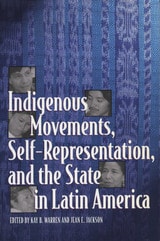
Indigenous Movements, Self-Representation, and the State in Latin America
Edited by Kay B. Warren and Jean E. Jackson
University of Texas Press, 2003
Throughout Latin America, indigenous peoples are responding to state violence and pro-democracy social movements by asserting their rights to a greater measure of cultural autonomy and self-determination. This volume's rich case studies of movements in Colombia, Guatemala, and Brazil weigh the degree of success achieved by indigenous leaders in influencing national agendas when governments display highly ambivalent attitudes about strengthening ethnic diversity.
The contributors to this volume are leading anthropologists and indigenous activists from the United States and Latin America. They address the double binds of indigenous organizing and "working within the system" as well as the flexibility of political tactics used to achieve cultural goals outside the scope of state politics. The contributors answer questions about who speaks for indigenous communities, how indigenous movements relate to the popular left, and how conflicts between the national indigenous leadership and local communities play out in specific cultural and political contexts. The volume sheds new light on the realities of asymmetrical power relations and on the ways in which indigenous communities and their representatives employ Western constructions of subjectivity, alterity, and authentic versus counterfeit identity, as well as how they manipulate bureaucratic structures, international organizations, and the mass media to advance goals that involve distinctive visions of an indigenous future.
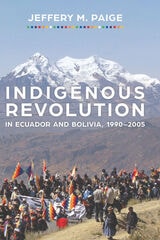
Indigenous Revolution in Ecuador and Bolivia, 1990–2005
Jeffery M. Paige
University of Arizona Press, 2020
Uprisings by indigenous peoples of Ecuador and Bolivia between 1990 and 2005 overthrew the five-hundred-year-old racial and class order inherited from the Spanish Empire. It started in Ecuador with the Great Indigenous Uprising, which was fought for cultural and economic rights. A few years later massive indigenous mobilizations began in Bolivia, culminating in 2005 with the election of Evo Morales, the first indigenous president.
Jeffrey M. Paige, an internationally recognized authority on the sociology of revolutionary movements, interviewed forty-five indigenous leaders who were actively involved in the uprisings. The leaders recount how peaceful protest and electoral democracy paved the path to power. Through the interviews, we learn how new ideologies of indigenous socialism drew on the deep commonalities between the communal dreams of their ancestors and the modern ideology of democratic socialism. This new discourse spoke to the people most oppressed by both withering racism and neoliberal capitalism.
Emphasizing mutual respect among ethnic groups (including the dominant Hispanic group), the new revolutionary dynamic proposes a communal worldview similar to but more inclusive than Western socialism because it adds indigenous cultures and nature in a spiritual whole. Although absent in the major revolutions of the past century, the themes of indigenous revolution—democracy, indigeneity, spirituality, community, and ecology—are critically important.
Paige’s interviews present the powerful personal experiences and emotional intensity of the revolutionary leadership. They share the stories of mass mobilization, elections, and indigenous socialism that created a new form of twenty-first-century revolution with far-reaching applications beyond the Andes.
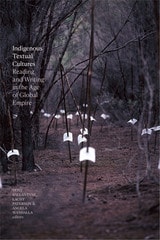
Indigenous Textual Cultures
Reading and Writing in the Age of Global EmpireTony Ballantyne, Lachy Paterson, and Angela Wanhalla, editors
Duke University Press, 2020
Contributors. Noelani Arista, Tony Ballantyne, Alban Bensa, Keith Thor Carlson, Evelyn Ellerman, Isabel Hofmeyr, Emma Hunter, Arini Loader, Adrian Muckle, Lachy Paterson, Laura Rademaker, Michael P. J. Reilly, Bruno Saura, Ivy T. Schweitzer, Angela Wanhalla
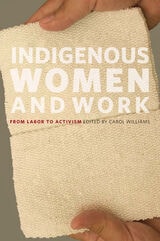
Indigenous Women and Work
From Labor to ActivismEdited by Carol Williams
University of Illinois Press, 2012

Individual Freedoms and State Security in the African Context
The Case of ZimbabweJohn Hatchard
Ohio University Press, 1993
In 1980 the ZANU/PF government of Robert Mugabe came to power after an extended war of liberation. They inherited a cluster of emergency laws similar to those available to the authorities in South Africa. It was also the beginning of the cynical South African state policy of destabilization of the frontline states. This led to a dangerous period of insurrection in Mashonaland and increased activity by Renamo.
Dr. Hatchard uses the case of Zimbabwe to ask questions about the use of authority in contemporary African states. He examines:
1. Whether and in what circumstances the declaration and retention of a state of emergency is justified;
2.The scope of emergency regulations and their impact on individual freedoms;
3.What safeguards are necessary in order to protect those freedoms during a state of emergency.
The relationship is studied from a political as well as a legal perspective. Dr. Hatchard examines the role law has played, is playing and may play. The author concludes that, even if the state of emergency is justified, this does not necessitate the curtailment of the exercise of individual freedoms.
There are many comparisons with the rest of Africa. The book is of practical importance for members of the judiciary, legal practitioners, politicians and human rights organizations. The difficult questions it poses make stimulating teaching material for students of the Third World who want to understand the reality of the exercise of power in fragile situations.
Industry, the State, and Public Policy in Mexico
By Dale Story
University of Texas Press, 1986
The industrialization process in Mexico began before that of any other nation in Latin America except Argentina, with the most rapid expansion of new industrial firms occurring in the 1930s and 1940s, and import substitution in capital goods evident as early as the late 1930s. Though Mexico’s trade relations have always been dependent on the United States, successive Mexican presidents in the postwar period attempted to control the penetration of foreign capital into Mexican markets.
In Industry, the State, and Public Policy in Mexico, Dale Story, recognizing the significance of the Mexican industrial sector, analyzes the political and economic role of industrial entrepreneurs in postwar Mexico. He uses two original data sets—industrial production data for 1929–1983 and a survey of the political attitudes of leaders of the two most important industrial organizations in Mexico—to address two major theoretical arguments relating to Latin American development: the meaning of late and dependent development and the nature of the authoritarian state. Story accepts the general relevance of these themes to Mexico but asserts that the country is an important variant of both.
With regard to the authoritarian thesis, the Mexican authoritarian state has demonstrated some crucial distinctions, especially between popular and elite sectors. The incorporation of the popular sector groups has closely fit the characteristics of authoritarianism, but the elite sectors have operated fairly independently of state controls, and the government has employed incentives or inducements to try to win their cooperation.
In short, industrialists have performed important functions, not only in accumulating capital and organizing economic enterprises but also by bringing together the forces of social change. Industrial entrepreneurs have emerged as a major force influencing the politics of growth, and the public policy arena has become a primary focus of attention for industrialists since the end of World War II.
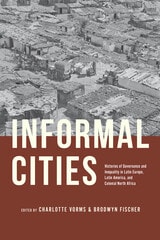
Informal Cities
Histories of Governance and Inequality in Latin Europe, Latin America, and Colonial North AfricaEdited by Charlotte Vorms and Brodwyn Fischer
University of Chicago Press, 2025
An empirically rich reconstruction of how informality became an intrinsic part of urban life across three continents.
Over a quarter of the world’s urban population lives in informal settlements. While informality as a concept has been widely debated, we still know very little about the phenomenon’s urban history or how that history has shaped the evolution of world cities. Spotlighting the historical processes that have created and sustained urban informality for more than a century, editors Charlotte Vorms and Brodwyn Fischer and this volume’s contributors reveal informality as an intrinsic feature of urbanity, shaping not only cities across the globe but also deeper processes of state formation, socioeconomic stratification, and political struggle.
The volume brings together case studies spanning more than a hundred years, drawn from Latin America (Brazil, Chile, Venezuela, and Mexico), Northern Africa (Morocco and Algeria), and Latin Europe (France, Spain, and Italy). Together, they show that informality is neither a contemporary crisis nor a predicament unique to the Global South. Topics include the origins of informal settlements and their relationship with law and institutional power; grassroots efforts to legitimize shantytown communities; mass social movements for rights to the city; the role that shantytown removal campaigns played in populist politics, fascism, and colonialism; and the ways that informality perpetuated racial and ethnic inequalities. Informal Cities is an indispensable guide to the complex and fraught terrain of urban informality in its many historical guises.
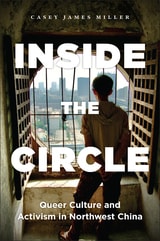
Inside the Circle
Queer Culture and Activism in Northwest ChinaCasey James Miller
Rutgers University Press, 2023

Inspiring Teens, Tweens, and Families to Make a Difference in the World
Programming to Advance the Sustainable Development GoalsAmanda Moss Struckmeyer
American Library Association, 2025
- programs and activities related to such topics as good health and well-being, ending poverty, peace and justice, responsible consumption and production, decent work, and clean water and sanitation;
- ideas perfect for multi-age audiences (families), tweens, and teens that can be tailored for different group sizes, programming spaces, budgets, and time frames;
- a plethora of flexible, cost-effective passive programs that patrons can engage in at any time;
- guidance on outreach opportunities for fostering partnerships with local experts and guest speakers; and
- pointers on additional and supporting resources including books, videos, and websites.
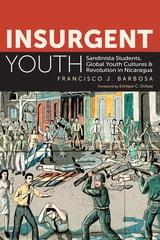
Insurgent Youth
Sandinista Students, Global Youth Cultures, and Revolution in NicaraguaFrancisco J. Barbosa
University Press of Colorado, 2026
This history of the Sandinista student movement is a window into the cultural milieu that produced a revolution where it seemed least likely to occur: among the youth of a country under the firm grip of a US-backed dictatorship whose power was secured by one of the best armed and most highly trained military forces in the region. By examining the articulation of political, gendered, and age-specific identities within the revolutionary process, Insurgent Youth sheds light on the everyday struggles of young Nicaraguans.
In the early 1970s a new emphasis on personal freedom and pleasure, under the influence of a global counterculture, challenged Sandinista gender ideology, especially masculinity, from within. This shift transformed the social world of Nicaraguan youth in general and Sandinista students in particular, eventually affecting the character of clandestine struggle and debates over revolutionary praxis within the Sandinista National Liberation Front (FSLN). Insurgent Youthshows how this new youth identity, which included the classic 1960s triumvirate of “sex, drugs, and rock ‘n’ roll,” constituted a social vernacular among young Nicaraguans of all classes—a common language and array of social practices that ultimately aided FSLN recruitment efforts among working-class youth. At the same time, this new identity posed a danger to the movement in that it embodied a tacit questioning of both mainstream and Sandinista notions of gender and the political, bringing threatening class and ideological contradictions present within the movement to the surface.
Insurgent Youth places what was happening in Nicaragua into the context of the worldwide student movement, challenging patriarchy and colonialism in Latin America and across the globe. This deep dive into the Nicaraguan revolution and the youth culture surrounding it provides a unique perspective on, and understanding of, modern Latin American history.
Intellectuals and Politics in Central Europe
Ivan Bernik
Central European University Press, 1999
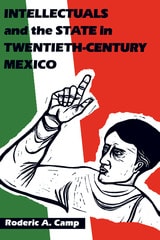
Intellectuals and the State in Twentieth-Century Mexico
By Roderic A. Camp
University of Texas Press, 1986
In developing countries, the extent to which intellectuals disengage themselves in state activities has widespread consequences for the social, political, and economic development of those societies. Roderic Camps’ examination of intellectuals in Mexico is the first study of a Latin American country to detail the structure of intellectual life, rather than merely considering intellectual ideas. Camp has used original sources, including extensive interviews, to provide new data about the evolution of leading Mexican intellectuals and their relationship to politics and politicians since 1920.
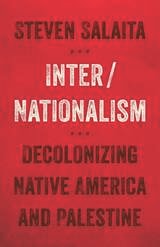
Inter/Nationalism
Decolonizing Native America and PalestineSteven Salaita
University of Minnesota Press, 2016
“The age of transnational humanities has arrived.” According to Steven Salaita, the seemingly disparate fields of Palestinian Studses and American Indian studies have more in common than one may think. In Inter/Nationalism, Salaita argues that American Indian and Indigenous studies must be more central to the scholarship and activism focusing on Palestine.
Salaita offers a fascinating inside account of the Boycott, Divestment, and Sanctions (BDS) movement—which, among other things, aims to end Israel’s occupation of Palestinian land. In doing so, he emphasizes BDS’s significant potential as an organizing entity as well as its importance in the creation of intellectual and political communities that put Natives and other colonized peoples such as Palestinians into conversation. His discussion includes readings of a wide range of Native poetry that invokes Palestine as a theme or symbol; the speeches of U.S. President Andrew Jackson and early Zionist thinker Ze’ev Jabotinsky; and the discourses of “shared values” between the United States and Israel.
Inter/Nationalism seeks to lay conceptual ground between American Indian and Indigenous studies and Palestinian studies through concepts of settler colonialism, indigeneity, and state violence. By establishing Palestine as an indigenous nation under colonial occupation, this book draws crucial connections between the scholarship and activism of Indigenous America and Palestine.
International Perspectives on Contemporary Democracy
Edited by Peter F. Nardulli
University of Illinois Press, 2007
Democracy enjoys unparalleled prestige at the beginning of the twenty-first century as a form of government. Some of the world's most prosperous nations are democracies, and an array of nations in Europe, Africa, and South America have adopted the system. This globalization has also met resistance and provoked concerns about international power exerted by institutions and elites that are beyond the control of existing democratic institutions. In this volume, leading scholars of democracy engage the key questions about how far and how fast democracy can spread, and how international agencies and international cooperation uneasily affect national democracies. At first glance, the efforts of intergovernmental organizations to intervene in a nation's governance seem anything but democratic to that nation. The contributors demonstrate why democracy has been so attractive and so successful, but are also candid about what limits it may reach, and why.
Contributors are Lisa Anderson, Larry Diamond, Zachary Elkins, John R. Freeman, Brian J. Gaines, James H. Kuklinski, Peter F. Nardulli, Melissa A. Orlie, Buddy Peyton, Paul J. Quirk, Wendy Rahn, Bruce Russett, and Beth Simmons.
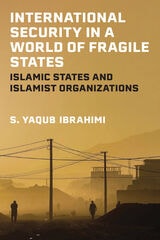
International Security in a World of Fragile States
Islamic States and Islamist OrganizationsS. Yaqub Ibrahimi
University of Michigan Press, 2022
Following the 9/11 attacks on New York and Washington, DC, there has been an increasing interest among scholars, students, and the interested public to study and learn about the Islamist-oriented terrorist organizations called Jihadi Salafi Groups (JSGs). Considering that these organizations emerged in highly fragile states, S. Yaqub Ibrahimi asks: how and why is state fragility linked to the emergence of JSGs?
Ibrahimi bases his study on three events: the establishment of al-Qaeda in Afghanistan in 1998, the rise of Islamic State in the post-Saddam Hussein Iraq, and the failed al-Qaeda effort to establish a base in Saudi Arabia in 2003. These case studies contain major aspects and features of the rise of JSGs and, together, explain the contribution of state fragility to the process of the formation and expansion of these terrorist organizations.
International Security in a World of Fragile States stands out as a pivotal work on the interconnection between the root causes of JSGs and state fragility conditions and their amalgamated role in the formation and evolution of these organizations. It contributes to IR and international security debates by developing a comprehensive but readily understandable narrative of the rise of JSGs in Islamic countries, and examining them in an analytical framework in which their root causes are categorized on individual, group, and international levels.
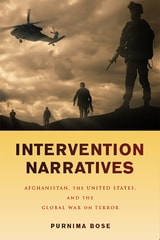
Intervention Narratives
Afghanistan, the United States, and the Global War on TerrorPurnima Bose
Rutgers University Press, 2020
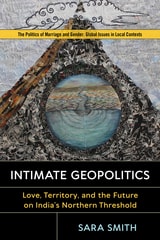
Intimate Geopolitics
Love, Territory, and the Future on India’s Northern ThresholdSara Smith
Rutgers University Press, 2020
2021 Foreword Indies Finalist - Politics and Social Sciences
Intimate Geopolitics begins with a love story set in the Himalayan region of Ladakh, in India’s Jammu and Kashmir State, but this is also a story about territory, and the ways that love, marriage, and young people are caught up in contemporary global processes. In Ladakh, children grow up to adopt a religious identity in part to be counted in the census, and to vote in elections. Religion, population, and voting blocs are implicitly tied to territorial sovereignty and marriage across religious boundaries becomes a geopolitical problem in an area that seeks to define insiders and outsiders in relation to borders and national identity. This book populates territory, a conventionally abstract rendering of space, with the stories of those who live through territorial struggle at marriage and birth ceremonies, in the kitchen and in the bazaar, in heartbreak and in joy. Intimate Geopolitics argues for the incorporation of the role of time–temporality–into our understanding of territory.

Inventing Global Ecology
Tracking the Biodiversity Ideal in India, 1947–1997Michael L. Lewis
Ohio University Press, 2004
Blue jeans, MTV, Coca-Cola, and… ecology? We don't often think of conservation sciences as a U.S. export, but in the second half of the twentieth century an astounding array of scientists and ideas flowed out from the United States into the world, preaching the gospel of conservation-oriented ecology.
Inventing Global Ecology grapples with how we should understand the development of global ecology in the twentieth century—a science that is held responsible for, literally, saving the world. Is the spread of ecology throughout the globe a subtle form of cultural imperialism, as some claim? Or is it a manifestation of an increasingly globalized world, where ideas, people, and things move about with greater freedom than ever before?
Using India as the case study, Professor Michael Lewis considers the development of conservation policies and conservation sciences since the end of World War II and the role of United States scientists, ideas, and institutions in this process. Was India subject to a subtle form of Americanization, or did Indian ecologists develop their own agenda, their own science, and their own way of understanding (and saving) the natural world? Does nationality even matter when doing ecology?
This readable narrative will carry you through the first fifty years of independent India, from the meadows of the Himalayan Mountains to the rainforests of southern India, from Gandhi and Nehru to Project Tiger. Of equal interest to the general reader, to scientists, and to scholars of history and globalization, Inventing Global Ecology combines ethnographic fieldwork and oral history conducted in India and the United States, as well as traditional archival research.
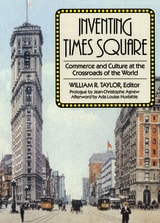
Inventing Times Square
Commerce and Culture at the Crossroads of the WorldWilliam R. Taylor
Russell Sage Foundation, 1991
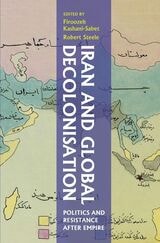
Iran and Global Decolonisation
Politics and Resistance After EmpireEdited by Robert Steele and Firoozeh Kashani-Sabet
Gingko, 2023
How did Iran’s unique position in the world affect and define its treatment of decolonization? During the final decades of Pahlavi rule in the late 1970s, the country sought to establish close relationships with newly independent counterparts in the Global South. Most scholarly work focused on this period is centered around the Cold War and Iran's relations with the United States, Russia, and Europe. Little attention has been paid to how the country interacted with other regions, such as Africa, Asia, and the Americas. Adding to an important and growing body of literature that discusses the profound and lasting impact of decolonization, Iran and Global Decolonisation contributes to the theoretical debates around the re-shaping of the world brought about by the end of an empire. It considers not only the impact of global decolonization on movements and ideas within Iran but also how Iran’s own experiences of imperialism shaped how these ideas were received and developed.
Iran
From Religious Dispute to RevolutionMichael M. J. Fischer
University of Wisconsin Press, 2003
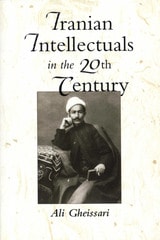
Iranian Intellectuals in the Twentieth Century
By Ali Gheissari
University of Texas Press, 1997
Since the middle of the nineteenth century, Iranian intellectuals have been preoccupied by issues of political and social reform, Iran's relation with the modern West, and autocracy, or arbitrary rule. Drawing from a close reading of a broad array of primary sources, this book offers a thematic account of the Iranian intelligentsia from the Constitutional movement of 1905 to the post-1979 revolution.
Ali Gheissari shows how in Iran, as in many other countries, intellectuals have been the prime mediators between the forces of tradition and modernity and have contributed significantly to the formation of the modern Iranian self image. His analysis of intellectuals' response to a number of fundamental questions, such as nationalism, identity, and the relation between Islam and modern politics, sheds new light on the factors that led to the Iranian Revolution—the twentieth century's first major departure from Western political ideals—and helps explain the complexities surrounding the reception of Western ideologies in the Middle East.
Is There Still a West?
The Future of the Atlantic AllianceEdited & Intro by William Anthony Hay & Harvey Sicherman
University of Missouri Press, 2007

Isaiah Berlin
A CelebrationEdited by Edna Ullmann-Margalit and Avishai Margalit
University of Chicago Press, 1991
"Some [essays], like Joseph Brodsky's tribute, are touchingly personal. Others, like G. A. Cohen's 'Isaiah's Marx, and Mine,' mingle personal reminiscences with a more theoretical look at Berlin's ideas. . . . The volume is a fitting tribute to a thinker famed for his erudition, eclecticism, and clarity of style."—Merle Rubin, The Christian Science Monitor
"One of the many merits of this rich and rewarding collection is the sense-very imperfectly conveyed here-it transmits of the tone of Berlin's writings and conversation, of the multiplicity of his interests and the variety of his achievements. . . . The essays testify to the character of Berlin's mind as a luminous prism, in which the cultural traditions of Russia, England and Judaism are marvelously refracted."—John Gray, Times Literary Supplement
"[T]he collection testifies to the learning and profundity of Berlin's thought and, by way both of reminiscence and influence, to the charm and gaity of its expression."—Anthony Quinton, The Times of London
Islam, Justice, and Democracy
Sabri Ciftci
Temple University Press, 2022
Justice (al-‘adl) is one of the principal values of the Islamic faith. In Islam, Justice, and Democracy, Sabri Ciftci explores the historical, philosophical, and empirical foundations of justice to examine how religious values relate to Muslim political preferences and behavior. He focuses on Muslim agency and democracy to explain how ordinary Muslims use the conceptions of divine justice—either servitude to God or exercising free will against oppressors—to make sense of real-world problems.
Using ethnographic research, interviews, and public opinion surveys as well as the works of Islamist ideologues, archives of Islamist journals, and other sources, Ciftci shows that building contemporary incarnations of Islamist justice is, in essence, a highly practical political project that has formative effects on Muslim political attitudes. Islam, Justice, and Democracy compares the recent Arab Spring protests to the constitutionalist movements of the nineteenth and twentieth centuries in the Middle East to demonstrate the continuities and rifts a century apart.
By putting justice at the center of democratic thinking in the Muslim world, Ciftci reconsiders Islam's potential in engendering both democratic ideals and authoritarian preferences.
Islamic Liberalism
A Critique of Development IdeologiesLeonard Binder
University of Chicago Press, 1988
The Islamic political community presents special problems to the development of an indigenous liberalism. That community is conceived of as divinely ordained, and its notions of the good are to be derived from scriptural revelation, not arrived at through rational discourse. Liberal politics would seem to stand little chance of surviving in such an atmosphere, let alone thriving.
Binder responds to the challenge of Edward Said's critique of Orientalism, of a range of neo-Marxian development theorists, of Sayyid Qutb's fundamentalist vision, of Samir Amin's vision of Egypt's role in the Arab awakening, of Tariq al-Bishri's new populism, of Zaki Najib Mahmud's pragmatism, and the structuralism of Arkoun and Laroui. The deconstruction of these varied texts produces a number of persuasive hermeneutical conclusions that are sequentially woven together in a critical argument that refocuses our attention on the central question of political freedom and democracy. In the course of constructing this argument, Binder reopens the dialogue between Western modernity and Islamic authenticity and reveals the surprising extent to which there is a convergent interest in liberal, democratic, civil society. Finally, in a concluding chapter, he addresses the prospects for liberalism in the three major bourgeois states of Islam—Egypt, Turkey, and Iran.
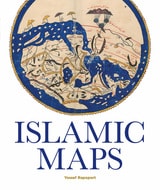
Islamic Maps
Yossef Rapoport
Bodleian Library Publishing, 2019
Islamic Maps examines Islamic visual interpretations of the world in their historical context through the map-makers themselves. What was the purpose of their maps, what choices did they make, and what arguments about the world were they trying to convey? Lavishly illustrated with stunning manuscripts, beautiful instruments, and Qibla charts, this book shows how maps constructed by Muslim map-makers capture the many dimensions of Islamic civilization across the centuries.
Islamic State
Rewriting HistoryMichael Griffin
Pluto Press, 2015
Now, as Islamic State (also known as ISIS) is moving to take over broad swathes of territory throughout the Middle East, Griffin is back once again, ready to offer nuanced insight, analysis, history, and context for readers looking to understand this new and frightening threat.
An experienced journalist, Griffin tells the story of the development of the Islamic State in his usual fast-paced, narrative driven style, helping us to understand the long roots of the Islamic State in Iraq, their quiet involvement in the Arab Spring, and their rapid rise amid the chaos generated by the Syrian war. He clearly and carefully presents the interlocking web of influence, arms, and money from Saudi Arabia, Qatar, Turkey, and Iraq that have fuelled the rise of Islamic State, and highlights the importance of the uprising against Assad in Syria and the West’s relative inability to influence or support it. Ultimately, Griffin offers a portrait of a complicated, multivalent movement, one with roots in numerous real or perceived grievances and historical mistakes and one with the potential to foment unrest and violence throughout the Middle East for some time to come.
Islamists in a Zionist Coalition
The Political and Religious OriginsUriya Shavit
Rutgers University Press, 2025
Island at the End of the World
The Turbulent History of Easter IslandSteven Roger Fischer
Reaktion Books, 2005
A small canoe with Polynesians brought the first humans to Easter Island in 700 CE, and when boat travel in the South Pacific drastically decreased around 1500, the Easter Islanders were forced to adapt in order to survive their isolation. Adaptation, Fischer asserts, was a continuous thread in the life of Easter Island: the first European visitors, who viewed the awe-inspiring monolithic busts in 1722, set off hundreds of years of violent warfare, trade, and disease—from the smallpox, wars, and Great Death that decimated the island to the late nineteenth-century Catholic missionaries who tried to "save" it to a despotic Frenchman who declared sole claim of the island and was soon killed by the remaining 111 islanders. The rituals, leaders, and religions of the Easter Islanders evolved with all of these events, and Fischer is just as attentive to the island's cultural developments as he is to its foreign invasions.
Bringing his history into the modern era, Fischer examines the colonization and annexation of Easter Island by Chile, including the Rapanui people's push for civil rights in 1964 and 1965, by which they gained full citizenship and freedom of movement on the island. As travel to and interest in the island rapidly expand, Island at the End of the World is an essential history of this mysterious site.

It Was Fever That Made The World
Jim Powell
University of Chicago Press, 1989
"I find it difficult to overpraise the ease of this writing, which in one act combines succinct physical presentation and explanation of it. . . . It is perhaps here that Jim Powell, not yet forty, most shows his superiority to many of his contemporaries and seniors. He not only understands the way in which opposites are necessary to one another, he achieves his knowledge in the poem, and so we grasp it as we read. . . . he has tapped a subject matter that is endless and important, and by the thoroughgoingness and the subtlety of his exploration shows he has the power to do almost anything."—Thom Gunn, Shelf Life
"His title burns away everywhere in the volume, in the fevers of eros, divination, memory, destruction, and grief. . . . Page for page, there is more sheer fine, clear, yet syntactically subtle and metaphorically gorgeous writing in Powell than I have seen in some time."—Mary Kinzie, Poetry
"Jim Powell's poems, like those of Thomas Hardy, are haunted forms, full of ghosts and mocking gods, shadows and foreshadowings. But Powell is a Hardy whose poems we've never read, a Hardy with his hand in the blaze, not stirring the ash in a cold and wind-torn grate."—Jennifer Clarvoe, The Threepenny Review