Results by title
331 books match the query 'World Literature' and 6 start with i
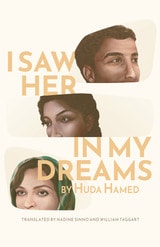
I Saw Her in My Dreams
Huda Hamed, translated by Nadine Sinno & William Taggart
University of Texas Press, 2022
I Saw Her in My Dreams is a powerful novel about interpersonal and systemic violence, examined through the lens of a relationship between Zahiyya, an anxious middle-class Omani artist, and Faneesh, the Ethiopian domestic worker she hires. When Zahiyya’s husband Amer, a novelist, leaves for Zanzibar in search of his biological mother, Zahiyya is left to confront her anxieties and prejudices. Both Zahiyya and Faneesh begin to suffer a recurring nightmare, prompting Zahiyya to read Fanheesh’s diaries in search of answers. Alone and afraid, Zahiyya reads excerpts from Amer’s novel, written from his father’s diaries about living in Zanzibar, where he fell in love with Amer’s mother, a Zanzibari woman whose absence still haunts him. Weaving between multiple perspectives and stories within stories, the novel explores honestly—but without sensationalizing or self-Orientalizing—the anti-Blackness that has endured in the Arab world and elsewhere.
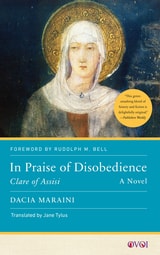
In Praise of Disobedience
Clare of Assisi, A NovelDacia Maraini
Rutgers University Press, 2023
In-House Weddings
Bohumil Hrabal
Northwestern University Press, 2007
The task, taken up by such a rogue comic talent, could be nothing other than strangely delightful; and in In-House Weddings, the first of the trilogy that Hrabal produced, we meet the author through the eyes of his wife Eliska. She narrates his life from his upbringing in Nymburk through his work as a dispatcher in a train station and then in a scrap paper plant, his first publication, his trouble with the authorities, and his association with notable artists and authors such as Jiri Kolar, Vladimir Boudnik, and Arnost Lustig. Hrabal’s bohemian life was itself a source of great interest to the Czech public; transmuted here, it is even more compelling, a wry portrait of artistic life in postwar Eastern Europe and a telling reflection on how such a life might be recast in the light of literary brilliance.
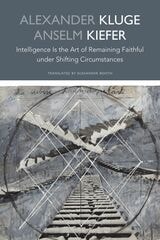
Intelligence Is the Art of Remaining Faithful under Shifting Circumstances
Alexander Kluge and Anselm Kiefer
Seagull Books, 2026
What holds us together in times of uncertainty? For decades, artist Anselm Kiefer and filmmaker-writer Alexander Kluge have explored this question—both as friends and collaborators. This latest volume is a bold and poetic exchange of images and texts in which they delve into the idea of reliability and its relationship to the four great forces that shape our lives: power, love, truth, and money.
Moving across history, myth, and the present day, Kiefer and Kluge ask: What is time? In a world of endless change, how do we hold on to what endures? Inspired by Hölderlin’s call “to remain faithful under shifting circumstances,” they use art to keep memory alive, invite the past into the present, and welcome the future before it arrives. Layered, provocative, and profoundly human, this new collaboration is a powerful meditation on what connects us—and what makes us endure.
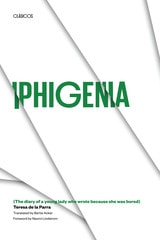
Iphigenia
(The diary of a young lady who wrote because she was bored)By Teresa de la Parra
University of Texas Press, 1994
Winner, Harvey L. Johnson Award, Southwest Council on Latin American Studies, 1994
"...I didn't want to tell you the truth for anything in the world, because it seemed very humiliating to me..." The truth is that Iphigenia is bored and, more than bored, buried alive in her grandmother's house in Caracas, Venezuela. After the excitement of being a beautiful, unchaperoned young woman in Paris, her father's death has sent her back to a forgotten homeland, where rigid decorum governs. Two men—the married man she adores and the wealthy fiancé she abhors—offer her escape from her prison. Which of these impossible suitors will she choose?
Iphigenia was first published in 1924 in Venezuela, where it hit patriarchal society like a bomb. Teresa de la Parra was accused of undermining the morals of young women with this tale of a passionate woman who lacks the money to establish herself in the liberated, bohemian society she craves. Yet readers have kept the novel alive for decades, and this first English translation now introduces its heroine to a wider audience.
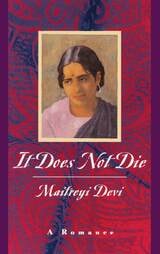
It Does Not Die
A RomanceMaitreyi Devi
University of Chicago Press, 1994
Proud of her intelligence, Maitreyi Devi's father had provided her with a fine and, for that time, remarkably liberal education — and encouraged his brilliant foreign student, Eliade, to study with her. "We were two good exhibits in his museum," Devi writes. They were also, as it turned out, deeply taken with each other. When their secret romance was discovered, Devi's father banished the young Eliade from their home.
Against a rich backdrop of life in an upper-caste Hindu household, Devi powerfully recreates the confusion of an over-educated child simultaneously confronting sex and the differences, not only between European and Indian cultures, but also between her mother's and father's view of what was right. Amid a tangle of misunderstandings, between a European man and an Indian girl, between student and teacher, husband and wife, father and daughter, she describes a romance unfolding in the face of cultural differences but finally succumbing to cultural constraints. On its own, It Does Not Die is a fascinating story of cultural conflict and thwarted love. Read together with Eliade's Bengal Nights, Devi's "romance" is a powerful study of what happens when the oppositions between innocence and experience, enchantment and disillusion, and cultural difference and colonial arrogance collide.
"In two novels written forty years apart, a man and a woman tell stories of their love. . . . Taken together they provide an unusually touching story of young love unable to prevail against an opposition whose strength was tragically buttressed by the uncertainties of a cultural divide."—Isabel Colegate, New York Times Book Review
"Recreates, with extraordinary vividness, the 16-year-old in love that she had been. . . . Maitreyi is entirely, disarmingly open about her emotions. . . . An impassioned plea for truth."—Anita Desai, New Republic
"Something between a reunion and a duel. Together they detonate the classic bipolarities: East-West, life-art, woman-man."—Richard Eder, New York Newsday
"One good confession deserves another. . . . Both books gracefully trace the authors' doomed love affair and its emotional aftermath."—Nina Mehta, Chicago Tribune