Results by title
8642 books match the query '20th century' and 290 start with i
Imagining Judeo-Christian America
Religion, Secularism, and the Redefinition of DemocracyK. Healan Gaston
University of Chicago Press, 2019

Imagining Winnipeg
History Through the Photographs of L.B. FooteEsyllt W. Jones
University of Manitoba Press, 2012

Imagining la Chica Moderna
Women, Nation, and Visual Culture in Mexico, 1917–1936Joanne Hershfield
Duke University Press, 2008
Through her detailed interpretations of visual representations of la chica moderna, Hershfield demonstrates how the images embodied popular ideas and anxieties about sexuality, work, motherhood, and feminine beauty, as well as class and ethnicity. Her analysis takes into account the influence of mexicanidad, the vision of Mexican national identity promoted by successive postrevolutionary administrations, and the fashions that arrived in Mexico from abroad, particularly from Paris, New York, and Hollywood. She considers how ideals of the modern housewife were promoted to Mexican women through visual culture; how working women were represented in illustrated periodicals and in the Mexican cinema; and how images of traditional “types” of Mexican women, such as la china poblana (the rural woman), came to define a “domestic exotic” form of modern femininity. Scrutinizing photographs of Mexican women that accompanied articles in the Mexican press during the 1920s and 1930s, Hershfield reflects on the ways that the real and the imagined came together in the production of la chica moderna.

Imagining the Primitive in Naturalist and Modernist Literature
Gina M. Rossetti
University of Missouri Press, 2006
Imagining the Tropics
Women, Romance, and the Making of Modern TourismElizabeth S. Manley
Rutgers University Press, 2025
Imitations of Life
Fannie Hurst’s Gaslight SonatasAbe C. Ravitz
Southern Illinois University Press, 2009
In the early 1920s, Fannie Hurst’s enormous popularity made her the highest-paid writer in America. She conquered the literary scene at the same time the silent movie industry began to emerge as a tremendously profitable and popular form of entertainment. Abe C. Ravitz parallels Hurst’s growing acclaim with the evolution of silent films, from which she borrowed ideas and techniques that furthered her career. Ravitz notes that Hurst was amazingly adept at anticipating what the public wanted. Sensing that the national interest was shifting from rural to urban subjects, Hurst set her immigrant tales and her "woiking goil" tales in urban America. In her early stories, she tried to bridge the gap between Old World and New World citizens, each somewhat fearful and suspicious of the other. She wrote of love and ethnicity—bringing the Jewish Mother to prominence—of race relations and prejudice, of the woman alone in her quest for selfhood. Ravitz argues, in fact, that her socially oriented tales and her portraits of women in the city clearly identify her as a forerunner of contemporary feminism.
Ravitz brings to life the popular culture from 1910 through the 1920s, tracing the meteoric rise of Hurst and depicting the colorful cast of characters surrounding her. He reproduces for the first time the Hurst correspondence with Theodore Dreiser, Charles and Kathleen Norris, and Gertrude Atherton. Fellow writers Rex Beach and Vachel Lindsay also play important roles in Ravitz’s portrait of Hurst, as does Zora Neale Hurston, who awakened Hurst’s interest in the Harlem Renaissance and in race relations, as shown in Hurst’s novel Imitation of Life.

Imitations of Life
Two Centuries of Melodrama in RussiaLouise McReynolds and Joan Neuberger, eds.
Duke University Press, 2002
Drawing on a wide variety of sources, including plays, lachrymose novels, popular movies, and even highly publicized funerals and political trials, the essays in Imitations of Life argue that melodrama has consistently offered models of behavior for times of transition, and that contemporary televised versions of melodrama continue to help Russians cope with national events that they understand implicitly but are not yet able to articulate. In contrast to previous studies, this collection argues for a reading that takes into account the subtle but pointed challenges to national politics and to gender and class hierarchies made in melodramatic works from both the nineteenth and twentieth centuries. Collectively, the contributors shift and cross borders, illustrating how the cultural dismissal of melodrama as fundamentally escapist and targeted primarily at the politically disenfranchised has subverted the drama’s own intrinsically subversive virtues.
Imitations of Life will interest students and scholars of contemporary Russia, and Russian history, literature, and theater.
Contributors. Otto Boele, Julie Buckler, Julie Cassiday, Susan Costanzo, Helena Goscilo, Beth Holmgren, Lars Lih, Louise McReynolds, Joan Neuberger, Alexander Prokhorov, Richard Stites

Immaterial Archives
An African Diaspora Poetics of LossJenny Sharpe
Northwestern University Press, 2020

Immigrant Acts
On Asian American Cultural PoliticsLisa Lowe
Duke University Press, 1996
Lowe argues that a national memory haunts the conception of Asian American, persisting beyond the repeal of individual laws and sustained by U.S. wars in Asia, in which the Asian is seen as the perpetual immigrant, as the “foreigner-within.” In Immigrant Acts, she argues that rather than attesting to the absorption of cultural difference into the universality of the national political sphere, the Asian immigrant—at odds with the cultural, racial, and linguistic forms of the nation—displaces the temporality of assimilation. Distance from the American national culture constitutes Asian American culture as an alternative site that produces cultural forms materially and aesthetically in contradiction with the institutions of citizenship and national identity. Rather than a sign of a “failed” integration of Asians into the American cultural sphere, this critique preserves and opens up different possibilities for political practice and coalition across racial and national borders.
In this uniquely interdisciplinary study, Lowe examines the historical, political, cultural, and aesthetic meanings of immigration in relation to Asian Americans. Extending the range of Asian American critique, Immigrant Acts will interest readers concerned with race and ethnicity in the United States, American cultures, immigration, and transnationalism.

Immigrants Raising Citizens
Undocumented Parents and Their ChildrenHirokazu Yoshikawa
Russell Sage Foundation, 2011

Immigrants against the State
Yiddish and Italian Anarchism in AmericaKenyon Zimmer
University of Illinois Press, 2015
Zimmer focuses on Italians and Eastern European Jews in San Francisco, New York City, and Paterson, New Jersey. Tracing the movement's changing fortunes from the pre–World War I era through the Spanish Civil War, Zimmer argues that anarchists, opposed to both American and Old World nationalism, severed all attachments to their nations of origin but also resisted assimilation into their host society. Their radical cosmopolitan outlook and identity instead embraced diversity and extended solidarity across national, ethnic, and racial divides. Though ultimately unable to withstand the onslaught of Americanism and other nationalisms, the anarchist movement nonetheless provided a shining example of a transnational collective identity delinked from the nation-state and racial hierarchies.

Impasse Poetics at the Nordic Oil Coast
Contemporary Petrofiction from Denmark and NorwayKarl Emil Rosenbaek Reetz
West Virginia University Press, 2026
Imperfect Fit
Aesthetic Function, Facture, and Perception in Art and Writing since 1950Allen Fisher
University of Alabama Press, 2016
Rethinking art, poetry, and perception through the creative disruptions of contemporary culture.
Imperfect Fit: Aesthetic Function, Facture, and Perception in Art and Writing since 1950 is an expansive and incisive examination of the patterns of connectedness in contemporary art and poetry. Allen Fisher—a highly accomplished poet, painter, critic, and art historian as well as a key figure in the British poetry revival of the 1960s and 1970s—has a close and discerning connection to his subjects.
In Imperfect Fit, Fisher focuses on the role of fracturing, ruptures, and breakages in many traditional ties between art and poetry, as well as the resulting use of collage and assemblage by practitioners of those arts. Fisher addresses, among other subjects, destruction as a signifier in twentieth-century art; the poetic employment of bureaucratic vocabularies and “business speak”; and the roles of public performance and memory loss in the fashioning of human knowledge and art.
Commonplace notions of coherence, logic, and truth are reimagined and deconstructed in this study, and Fisher concludes by suggesting that contemporary culture offers a particularly robust opportunity—and even necessity—to engage in the production of art as a pragmatic act. Scholars of art, poetry, and aesthetics will be engaged and challenged by this insightful work.
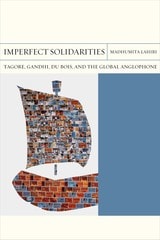
Imperfect Solidarities
Tagore, Gandhi, Du Bois, and the Global AnglophoneMadhumita Lahiri
Northwestern University Press, 2021
A century ago, activists confronting racism and colonialism—in India, South Africa, and Black America—used print media to connect with one another. Then, as now, the most effective medium for their undertakings was the English language. Imperfect Solidarities: Tagore, Gandhi, Du Bois, and the Global Anglophone tells the story of this interconnected Anglophone world. Through Rabindranath Tagore’s writings on China, Mahatma Gandhi’s recollections of South Africa, and W. E. B. Du Bois’s invocations of India, Madhumita Lahiri theorizes print internationalism. This methodology requires new terms within the worldwide hegemony of the English language (“the global Anglophone”) in order to encourage alternate geographies (such as the Global South) and new collectivities (such as people of color).
The women of print internationalism feature prominently in this account. Sonja Schlesin, born in Moscow, worked with Indians in South Africa. Sister Nivedita, an Irish woman in India, collaborated with a Japanese historian. Jessie Redmon Fauset, an African American, brought the world home to young readers through her work as an author and editor.
Reading across races and regions, genres and genders, Imperfect Solidarities demonstrates the utility of the neologism for postcolonial literary studies.

Imperial Affects
Sensational Melodrama and the Attractions of American CinemaEagle, Jonna
Rutgers University Press, 2017

Imperial Blues
Geographies of Race and Sex in Jazz Age New YorkFiona I. B. Ngô
Duke University Press, 2013

Imperial Material
National Symbols in the US Colonial EmpireAlvita Akiboh
University of Chicago Press, 2023
In Imperial Material, Alvita Akiboh reveals how US national identity has been created, challenged, and transformed through embodiments of empire found in US territories, from the US dollar bill to the fifty-star flag. These symbolic objects encode the relationships between territories—including the Philippines, the Hawaiian Islands, Puerto Rico, and Guam—and the empire with which they have been entangled. Akiboh shows how such items became objects of local power, their original intent transmogrified. For even if imperial territories were not always front and center for federal lawmakers and administrators, their inhabitants remained continuously aware of the imperial United States, whose presence announced itself on every bit of currency, every stamp, and the local flag.

Imperial Plots
Women, Land, and the Spadework of British Colonialism on the Canadian PrairiesSarah Carter
University of Manitoba Press, 2016

Imperial Science, the Organic Movement and the Path to Shangri La, 1900–1969
Ashok Malhotra
University College London, 2026
A global history project that examines the diffusion of scientific and environmental discourses from India to Britain and the US.
This book examines how imperial agendas and colonial stereotyping shaped dietary and agricultural research carried out in the 1920s in British India, from soil protection initiatives to studies of diet and healthy living. It also discusses how a selective interpretation of this research, which focused on the supposed vigor of one community, the Hunzas, influenced the organic and lifestyles movements that later emerged in Britain and the US from the 1940s to the 1960s.
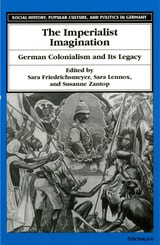
Imperialist Imagination
German Colonialism and Its LegacySara Friedrichsmeyer, Sara Lennox, and Susanne Zantop, Editors
University of Michigan Press, 1998
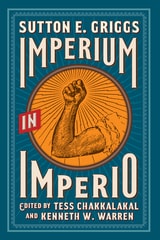
Imperium in Imperio
Tess Chakkalakal
University of Delaware Press, 0
Edited and introduced by Tess Chakkalakal and Kenneth W. Warren, this new critical edition offers not only an incisive biographical and historical introduction to the novel and its author but also a wealth of references that make the events and characters of Griggs’s Imperium in Imperio, and its aftermath, accessible to readers today.

Impossible Stories
On the Space and Time of Black Destructive CreationJohn Murillo III
The Ohio State University Press, 2021
Taking as his lens the fragment—fragmented bodies, fragments of memories, fragments of texts—Murillo theorizes new directions for Black identity and cultural production. Combining a critical engagement of physics and metaphysics with innovative readings of Gayl Jones’s Corregidora, Octavia Butler’s Kindred, Toni Morrison’s Beloved, Kiese Laymon’s Long Division, Dionne Brand’s A Map to the Door of No Return, and Paul Beatty’s The Sellout, he offers new ways to think about anti-Black racism and practice Black creativity. Ultimately, in his equally creative and analytical responses to depictions of Black people left out of history and barred from spaces, Murillo argues that through Afro-pessimism, Black people can fight the anti-Black cosmos.
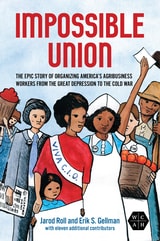
Impossible Union
The Epic Story of Organizing America’s Agribusiness Workers from the Great Depression to the Cold WarJarod Roll and Erik S. Gellman
University of Illinois Press, 2027
Workers of many racial, ethnic, and social identities united under the UCAPAWA-FTA banner. Their grassroots activism and bold national leadership fueled the union’s success despite opposition from employers, the government, and other labor groups. The union’s common sense anti-fascist ideology empowered workers to forge solidarities across their vast differences and linked workers’ rights to campaigns against racism and inequality. UCAPAWA-FTA advocated for an inclusive American democracy that can inform today’s struggles for dignity and security. This unique volume includes a special collection of essays by affiliated scholars that explore specific aspects of the union’s larger history.
Expansive and monumental, Impossible Union chronicles the labor organization that brought personhood and power to America’s marginal yet essential workers.
Additional contributors: Benjamin Makani Fortun, Dorothy Fujita-Rony, Robert Korstad, Bernadette Pérez, Michael Pierce, Charles Romney, Vicki L. Ruiz, Dan Sidorick, Dwana Waugh, John Weber, and Lane Windham
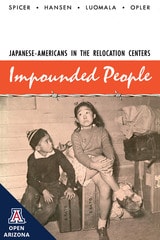
Impounded People
Japanese-Americans in the Relocation CentersEdward H. Spicer, Asael T. Hansen, Katherine Luomala, and Marvin K. Opler
University of Arizona Press, 1969

Impressionist Subjects
Gender, Interiority, and Modernist Fiction in EnglandTamar Katz
University of Illinois Press, 2000
Sophisticated and tightly argued, Impressionist Subjects is a substantial contribution to the reassessment and expansion of the modernist fiction canon.
Impure Migration
Jews and Sex Work in Golden Age ArgentinaMir Yarfitz
Rutgers University Press, 2019
In Another Time
Harold Schindler
Utah State University Press, 1998
An illustrated collection of historical articles originally published in the Salt Lake Tribune from 1993 to 1996, In
Another Time provides both an entertaining introduction to Utah and a distinguished and popular historian's summary views of the state's peculiar history.
Another Time will entertain and inform newcomers seeking an introductory understanding of what has made Utah different, old hands wanting to know more about the rich complexity of the state's past, and anyone who enjoys well-told historical tales.

In Babel's Shadow
Multilingual Literatures, Monolingual StatesBrian Lennon
University of Minnesota Press, 2010
In Contempt
Defending Free Speech, Defeating HUACEd Yellin and Jean Fagan Yellin
University of Michigan Press, 2022
So began a decade of hardship for Ed and Jean Yellin and their three young children as the repressive weight of the U.S. government, caught up in the throes of McCarthyism, crashed down upon their careers, their daily household budget, and their relationships to colleagues, neighbors, and their country. In Contempt is a faithful, factual testament to the enduring quality of patriotic dissent in our evolving democracy—and a loving reconstruction of what it meant to be labeled “unAmerican” for defending the Constitution.

In Defense of American Liberties, Second Edition
A History of the ACLUSamuel Walker
Southern Illinois University Press, 1999
This updated comprehensive history of the American Civil Liberties Union recounts the ACLU's stormy history since its founding in 1920 to fight for free speech and explores its involvement in some of the most famous causes in American history, including the Scopes "monkey trial," the internment of Japanese Americans during World War II, the Cold War anti-Communist witch hunts, and the civil rights movement. The new introduction covers the history of the organization and developments in civil liberties in the 1990s, including the U.S. Supreme Court's declaration of the Communications Decency Act as unconstitutional in ACLU v. Reno.

In Defense of Honor
Sexual Morality, Modernity, and Nation in Early-Twentieth-Century BrazilSueann Caulfield
Duke University Press, 2000
While some Brazilian elites used the issue of sexual purity to boast of their country’s moral superiority, others claimed that the veneration of such concepts as virginity actually frustrated efforts at modernization. Moreover, although individuals of all social classes invoked values they considered “traditional,” such as the confinement of women’s sexuality within marriage, these values were at odds with social practices—such as premarital sex, cohabitation, divorce, and female-headed households—that had been common throughout Brazil’s history. The persistence of these practices, together with post-World War I changes in both official and popular moral ideals, presented formidable obstacles to the Estado Novo’s renewed drive to define and enforce public morality and private family values in the late 1930s.
With sophisticated theoretical underpinnings, In Defense of Honor is written in a clear and lively manner, making it accessible to students and scholars in a variety of disciplines, including Brazilian and Latin American studies, gender studies, and legal history.

In Defense of Justice
Joseph Kurihara and the Japanese American Struggle for EqualityEileen H. Tamura
University of Illinois Press, 2013

In Defense of La Raza
The Los Angeles Mexican Consulate and the Mexican Community, 1929 to 1936Francisco E. Balderrama
University of Arizona Press, 1982
Los Angeles’s consulate was confronted with the country’s largest concentration of Mexican Americans, for whom the consuls often assumed a position of community leadership. Whether helping the unemployed secure repatriation and relief or intervening in labor disputes, consuls uniquely adapted their roles in international diplomacy to the demands of local affairs.
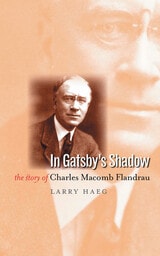
In Gatsby's Shadow
The Story of Charles Macomb FlandrauLarry Haeg
University of Iowa Press, 2004
Flandrau, a model of style and worldly sophistication and destined, almost everyone agreed, for greatness, was among the most talented young writers of his generation. His short stories about Harvard in the 1890s were called “the first realistic description of undergraduate life in American colleges” and sold out of the first printing in a few weeks. From 1899 to 1902 Flandrau was among the most popular contributors to the Saturday Evening Post. Alexander Woollcott rated him the best essayist in America. And Viva Mexico!, Flandrau’s account of life on a Mexican coffee plantation, is a classic, perhaps the best travel book ever written by an American. Yet Flandrau turned his back on it all. Financially independent, he chose a solitary, epicurean life in St. Paul, Mexico, Majorca, Paris, and Normandy. In later years, he confined his writing to local newspaper pieces and letters to his small circle of family and friends.
Using excerpts from these newspaper columns and unpublished letters, Larry Haeg has painstakingly recreated the story of this urbane, talented, witty, lazy, enigmatic, supremely private man who never reached the peak of literary success to which his talent might have taken him.
This very readable biography provides a detailed and honest portrayal of Flandrau and his times. It will fascinate readers interested in writers’ life stories and scholars of American literature as well as general readers interested in midwestern literary history.

In Idi Amin’s Shadow
Women, Gender, and Militarism in UgandaAlicia C. Decker
Ohio University Press, 2014
Finalist for the 2015 Aidoo-Snyder Prize
In Idi Amin’s Shadow is a rich social history examining Ugandan women’s complex and sometimes paradoxical relationship to Amin’s military state. Based on more than one hundred interviews with women who survived the regime, as well as a wide range of primary sources, this book reveals how the violence of Amin’s militarism resulted in both opportunities and challenges for women. Some assumed positions of political power or became successful entrepreneurs, while others endured sexual assault or experienced the trauma of watching their brothers, husbands, or sons “disappeared” by the state’s security forces. In Idi Amin’s Shadow considers the crucial ways that gender informed and was informed by the ideology and practice of militarism in this period. By exploring this relationship, Alicia C. Decker offers a nuanced interpretation of Amin’s Uganda and the lives of the women who experienced and survived its violence.
Each chapter begins with the story of one woman whose experience illuminates some larger theme of the book. In this way, it becomes clear that the politics of military rule were highly relevant to women and gender relations, just as the politics of gender were central to militarism. By drawing upon critical security studies, feminist studies, and violence studies, Decker demonstrates that Amin’s dictatorship was far more complex and his rule much more strategic than most observers have ever imagined.

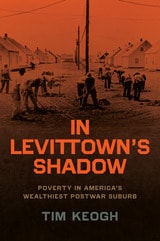
In Levittown’s Shadow
Poverty in America's Wealthiest Postwar SuburbTim Keogh
University of Chicago Press, 2023
Highlights how low-wage residents have struggled to live and work in a place usually thought of as affluent: suburbia.
There is a familiar narrative about American suburbs: after 1945, white residents left cities for leafy, affluent subdivisions and the prosperity they seemed to embody. In Levittown’s Shadow tells us there’s more to this story, offering an eye-opening account of diverse, poor residents living and working in those same neighborhoods. Tim Keogh shows how public policies produced both suburban plenty and deprivation—and why ignoring suburban poverty doomed efforts to reduce inequality.
Keogh focuses on the suburbs of Long Island, home to Levittown, often considered the archetypal suburb. Here military contracts subsidized well-paid employment welding airplanes or filing paperwork, while weak labor laws impoverished suburbanites who mowed lawns, built houses, scrubbed kitchen floors, and stocked supermarket shelves. Federal mortgage programs helped some families buy orderly single-family homes and enter the middle class but also underwrote landlord efforts to cram poor families into suburban attics, basements, and sheds. Keogh explores how policymakers ignored suburban inequality, addressing housing segregation between cities and suburbs rather than suburbanites’ demands for decent jobs, housing, and schools.
By turning our attention to the suburban poor, Keogh reveals poverty wasn’t just an urban problem but a suburban one, too. In Levittown’s Shadow deepens our understanding of suburbia’s history—and points us toward more effective ways to combat poverty today.
In Levittown’s Shadow
Poverty in America’s Wealthiest Postwar SuburbTim Keogh
University of Chicago Press, 2023
There is a familiar narrative about American suburbs: after 1945, white residents left cities for leafy, affluent subdivisions and the prosperity they seemed to embody. In Levittown’s Shadow tells us there’s more to this story, offering an eye-opening account of diverse, poor residents living and working in those same neighborhoods. Tim Keogh shows how public policies produced both suburban plenty and deprivation—and why ignoring suburban poverty doomed efforts to reduce inequality.
Keogh focuses on the suburbs of Long Island, home to Levittown, often considered the archetypal suburb. Here military contracts subsidized well-paid employment welding airplanes or filing paperwork, while weak labor laws impoverished suburbanites who mowed lawns, built houses, scrubbed kitchen floors, and stocked supermarket shelves. Federal mortgage programs helped some families buy orderly single-family homes and enter the middle class but also underwrote landlord efforts to cram poor families into suburban attics, basements, and sheds. Keogh explores how policymakers ignored suburban inequality, addressing housing segregation between cities and suburbs rather than suburbanites’ demands for decent jobs, housing, and schools.
By turning our attention to the suburban poor, Keogh reveals poverty wasn’t just an urban problem but a suburban one, too. In Levittown’s Shadow deepens our understanding of suburbia’s history—and points us toward more effective ways to combat poverty today.

In Lincoln's Shadow
The 1908 Race Riot in Springfield, IllinoisRoberta Senechal de la Roche
Southern Illinois University Press, 2008
Winner of the Gustavus Myers Center Award for the Study of Human Rights in the United States!
Winner of the Illinois State Historical Society Superior Achievement Award!
This detailed case study of the 1908 race riot in Springfield, Illinois, which began only a few blocks from Abraham Lincoln’s family home, explores the social origins of rioting by whites against the city’s African American community after a white woman alleged that a black man had raped her. Over two days rioters wrecked black-owned businesses, burned neighborhoods to the ground, killed two black men, and injured many others.
Author Roberta Senechal de la Roche draws from a wide range of sources to describe the riot, identify the rioters and their victims, and challenge previous interpretations that attribute rioting to interracial competition for jobs, housing, or political influence. Written in a direct and clear style, In Lincoln’s Shadow documents a violent explosion of racial hatred that shocked the nation and reveals the complexity of white racial attitudes in the early twentieth century.
In Praise of Antiheroes
Figures and Themes in Modern European Literature, 1830-1980Victor Brombert
University of Chicago Press, 1999
Though they fail, by design, to live up to conventional expectations of mythic heroes, antiheroes are not necessarily "failures." They display different kinds of courage more in tune with our time and our needs: deficiency translated into strength, failure experienced as honesty, dignity achieved through humiliation. Brombert explores these paradoxes in the works of Büchner, Gogol, Dostoevsky, Flaubert, Svevo, Hašek, Frisch, Camus, and Levi. Coming from diverse cultural and linguistic traditions, these writers all use the figure of the antihero to question handed-down assumptions, to reexamine moral categories, and to raise issues of survival and renewal embodying the spirit of an uneasy age.

In Praise of the Impure
Poetry and the Ethical Imagination: Essays, 1980-1991Alan Shapiro
Northwestern University Press, 1993
In Pursuit of German Memory
History, Television, and Politics after AuschwitzWulf Kansteiner
Ohio University Press, 2006
The collective memories of Nazism that developed in postwar Germany have helped define a new paradigm of memory politics. From Europe to South Africa and from Latin America to Iraq, scholars have studied the German case to learn how to overcome internal division and regain international recognition.
In Pursuit of German Memory: History, Television, and Politics after Auschwitz examines three arenas of German memory politics—professional historiography, national politics, and national public television—that have played key roles in the reinvention of the Nazi past in the last sixty years. Wulf Kansteiner shows that the interpretations of the past proposed by historians, politicians, and television producers reflect political and generational divisions and an extraordinary concern for Germany's image abroad. At the same time, each of these theaters of memory has developed its own dynamics and formats of historical reflection.
Kansteiner’s analysis of the German scene reveals a complex social geography of collective memory. In Pursuit of German Memory underscores the fact that German memories of Nazism, like many other collective memories, combine two seemingly contradictory qualities: They are highly mediated and part of a global exchange of images and story fragments but, at the same time, they can be reproduced only locally, in narrowly circumscribed networks of communication.

In Rare Form
A Pictorial History of Baseball Evangelist Billy SundayW. A. Firstenberger
University of Iowa Press, 2005
Through an organizational scheme that incorporates memorabilia from childhood (samplers, Civil War badges), baseball (Billy’s 1891 Philadelphia contract, scorecards), evangelism (cartoons, books such as Monkeys and Missing Links), social issues (KKK ads endorsing Sunday, his Women's Christian Temperance life membership certificate), life style (Arts and Crafts decorative pieces, extensive photos of the family's Mount Hood bungalow), and family relations (his personal possessions and those of his wife, Nell, and their children), In Rare Form brings together the inconsistencies between Sunday’s material world and his spiritual world.
Since Sunday might have objected to a materialistic analysis of his life, Firstenberger has allowed him a say: each section of the book begins with an apt quote from Sunday’s sermons and writings. Firstenberger also includes appendixes providing detailed information on Sunday’s revivals and speaking appearances, his 870,075 documented converts, the members of his evangelistic team, the overall structure of his family, and an extensive bibliography. Acknowledging Sunday’s faults and contradictions alongside his heroic accomplishments, the author presents a wryly insightful and innovative perspective on this larger-than-life figure.

In Search of "Aryan Blood"
Serology in Interwar and National Socialist GermanyRachel E. Boaz
Central European University Press, 2012
In Search of Admiration and Respect
Chinese Cultural Diplomacy in the United States, 1875–1974Yanqui Zheng
University of Michigan Press, 2024
In Search of Admiration and Respect uses the Chinese case to underscore what Zheng calls “infrastructure of persuasion,” in which American philanthropy, museums, exhibitions, and show business had disproportionate power in setting the agenda of unequal intercultural encounters. This volume also provides historical insights into China’s ongoing quest for international recognition. Drawing upon diverse archival sources, Zheng expands the contours of cultural diplomacy beyond established powers and sheds light on the limited agency of peripheral nations in their self-representation.

In Search of Our Warrior Mothers
Women Dramatists of the Black Arts MovementLa Donna L. Forsgren
Northwestern University Press, 2018
The Black Arts Movement (1965–76) consisted of artists across the United States deeply concerned with the relationship between politics and the black aesthetic. In Search of Our Warrior Mothers examines the ways in which black women playwrights in the movement advanced feminist and womanist perspectives from within black nationalist discourses. La Donna L. Forsgren recuperates the careers, artistic theories, and dramatic contributions of four leading playwrights: Martie Evans-Charles, J.e. Franklin, Sonia Sanchez, and Barbara Ann Teer. Using original interviews, production recordings, playbills, and unpublished manuscripts, she investigates how these women, despite operating within a context that equated the collective well-being of black people with black male agency, created works that validated black women's aspirations for autonomy and explored women's roles in the struggle for black liberation.
In Search of Our Warrior Mothers demonstrates the powerful contributions of women to the creation, interpretation, and dissemination of black aesthetic theory, thus opening an interdisciplinary conversation at the intersections of theater, performance, feminist, and African American studies and identifying and critiquing the gaps and silences within these fields.

In Search of Providence
Transnational Mayan Identities, Updated EditionPatricia Foxen
Vanderbilt University Press, 2020
In the mid-1990s, Patricia Foxen traveled back and forth between the Guatemalan highlands and Providence, Rhode Island, to understand the migration paths of K'iche' Mayan Indians who had fled the Guatemalan civil war to work in the factories and fisheries of New England. More than two decades later, many Mayans are still migrating to the US. As Foxen argues, the recent surge in Mayan border crossings must be contextualized within both the longer history of violence, marginality, and exclusion that has long led Guatemala's Indigenous populations to be "survivors on the move," as well as contemporary push factors such as climate change and growing inequality that have forced people from their communities.
And yet one of the most significant drivers of continued emigration today, ironically, is the very culture of migration (described in the book) that has accelerated social change within many Indigenous communities, setting in motion a complex series of economic and cultural shifts that have compelled a continuous movement of people and generations to the US. Reading this story in 2020—at a time of massive growth in flows of irregular migrations around the world—can help us better understand the highly complex set of factors that propel long-term migrations and that shape transnational communities on both sides of the border.
In Search of Providence offers a layered, historically grounded perspective that speaks to the local specificity behind the migration experience in order to point to the universal themes and contradictions of contemporary global displacements.

In Search of the Amazon
Brazil, the United States, and the Nature of a RegionSeth Garfield
Duke University Press, 2013
In Search of the Black Panther Party
New Perspectives on a Revolutionary MovementJama Lazerow and Yohuru Williams, eds.
Duke University Press, 2006
One contributor evaluates the legal basis of the Panthers’ revolutionary struggle, explaining how they utilized and critiqued the language of the Constitution. Others explore the roles of individuals, looking at a one-time Panther imprisoned for a murder he did not commit and an FBI agent who monitored the activities of the Panthers’ Oakland branch. Contributors assess the Panthers’ relations with Students for a Democratic Society, the Young Lords, the Brown Berets, and the Peace and Freedom Party. They discuss the Party’s use of revolutionary aesthetics, and they show how the Panthers manipulated and were manipulated by the media. Illuminating some of the complexities involved in placing the Panthers in historical context, this collection demonstrates that the scholarly search for the Black Panthers has only just begun.
Contributors. Bridgette Baldwin, Davarian L. Baldwin, David Barber, Rod Bush, James T. Campbell, Tim Lake, Jama Lazerow, Edward P. Morgan, Jeffrey O. G. Ogbar, Roz Payne, Robert O. Self, Yohuru Williams, Joel Wilson

In Search of the Mexican Beverly Hills
Latino Suburbanization in Postwar Los AngelesGonzález, Jerry
Rutgers University Press, 2018
In Search of the Perfect Romanian
National Specificity, Racial Degeneration, and Social Selection in Modern RomaniaMarius Turda
Central European University Press, 2026
The book centers on debates about the Romanian national character and race between 1880s and 1950s. It also argues that during the early 1940s anti-Semitism and anti-Roma racism contributed directly to the programme of ethnic purification pursued by the Antonescu regime. Racism and eugenics explain not just the deportation and murder of the Jews but also the deportation and murder of the Roma. The Holocaust in Romania should therefore be understood as the result not just of anti-Semitism but also of biopolitical nationalism. Finally, the book suggests that the eugenic ideal of the ‘perfect’ Romanian did not disappear in 1945 but was embedded in the socialist definitions of the ‘new man’ and ‘perfect’ society emerging under communism.