Results by title
3071 books match the query 'Business & Economics' and 131 start with i

Information and Democratic Processes
Edited by John A. Ferejohn and James H. Kuklinski
University of Illinois Press, 1990
The golden democratic tradition of an informed and involved electorate freely and rationally choosing its public officials seems to be at odds with American political reality. Thus the questions: On what basis do people vote and form opinions? How does the lack of information at the individual level affect system performance?
In this collection twenty-six distinguished political scientists discuss, debate, and define the relationship between information and the democracy it supposedly serves. The contributors address both the empirical and normative aspects of governing in the United States, employing psychological, sociological, and economic perspectives.
Information, Incentives, and Economics Mechanisms
Essays in Honor of Leonid HurwiczTheodore Groves
University of Minnesota Press, 1987

Innovating Higher Education at a Small University
Navigating Shifting Paradigms with Humanity and HeartMatthew E. Gordley
Rutgers University Press, 2027
Higher education is at a moment of real uncertainty. Colleges and universities are being asked to respond to changing student needs, financial pressure, and growing questions about value and purpose. Innovating Higher Education at a Small University offers a grounded and hopeful response to these challenges. Through a series of real, lived case studies, the book shows how one small, mission driven institution is rethinking how it teaches, partners, and serves its community. Spanning interdisciplinary work across teacher preparation, literacy, healthcare, and the arts, the chapters highlight what becomes possible when faculty and leaders are trusted to innovate with intention and care. Each chapter shares not only what was built, but also what was learned along the way, offering clear insights that others can adapt to their own contexts. Not a book about abstract trends or emerging technologies, it is grounded in program design, relationships, and project implementation. It is a book about people doing the work, and a reminder that meaningful change in higher education is already happening in places willing to lead with both humanity and purpose.
Innovation Equity
Assessing and Managing the Monetary Value of New Products and ServicesElie Ofek, Eitan Muller, and Barak Libai
University of Chicago Press, 2016
In Innovation Equity, Elie Ofek, Eitan Muller, and Barak Libai analyze how a vast array of past innovations performed in the marketplace—from their launch to the moment they became everyday products to the phase where consumers moved on to the “next big thing.” They identify key patterns in how consumers adopt innovations and integrate these with marketing scholarship on how companies manage their customer base by attracting new customers, keeping current customers satisfied, and preventing customers from switching to competitors’ products and services. In doing so, the authors produce concrete models that powerfully predict how the marketplace will respond to innovations, providing a much more authoritative way to estimate their potential monetary value, as well as a framework for making it possible to achieve that value.

Innovation and Public Policy
Austan Goolsbee and Benjamin F. Jones
University of Chicago Press, 2021
In advanced economies like the United States, innovation has long been recognized as a central force for increasing economic prosperity and human welfare. Today, the US government promotes innovation through various mechanisms, including tax credits for private-sector research, grant support for basic and applied research, and institutions like the Small Business Innovation Research Program of the National Science Foundation. Drawing on the latest empirical and conceptual research, Innovation and Public Policy surveys the key components of innovation policy and the social returns to innovation investment. It examines mechanisms that can advance the pace of invention and innovative activity, including expanding the research workforce through schooling and immigration policy and funding basic research. It also considers scientific grant systems for funding basic research, including those at institutions like the National Institutes of Health and the National Science Foundation, and investigates the role of entrepreneurship policy and of other institutions that promote an environment conducive to scientific breakthroughs.
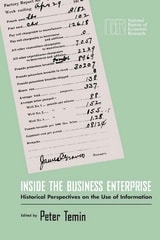
Inside the Business Enterprise
Historical Perspectives on the Use of InformationEdited by Peter Temin
University of Chicago Press, 1991
Because business enterprises are complex institutions, these questions can prove difficult to address. All too often, firms are treated as the atoms of economics, the irreducible unit of analysis. This accessible volume, suitable for course use, looks more closely at the American firm—into its internal workings and its genesis in the Gilded Age. Focusing on the crucial role of imperfect and asymmetric information in the operation of enterprises, Inside the Business Enterprise forges an innovative link between modern economic theory and recent business history.

Inside the TV Newsroom
Profession Under PressureLine Hassall Thomsen
Intellect Books, 2018
This book, built on years of unique access to the newsrooms of BBC News and ITV News in the United Kingdom and DR TV Avisen and TV2 Nyhedeme in Denmark, answers those questions and more. Exploring the shared professional ideals of journalists, the study analyzes how they conceive of stories as important, and how their ideals relating to their work are expressed and aspired to in everyday practice.

Insights in Decision Making
A Tribute to Hillel J. EinhornEdited by Robin M. Hogarth
University of Chicago Press, 1990
The volume is based on a recent conference held to honor the work and memory of the late Hillel J. Einhorn, a pioneering scholar in behavioral decision research. Composed of contributions by leading researchers, Insights in Decision Making provides a state-of-the-art image of work in this field.
The range of topics covered includes conceptual and technical issues the bridge the gap between theory and the practical concern of improving decision making, difficulties in statistical thinking, experimental studies of processes of judgment and choice, and the emergence of new paradigms for studying decision behavior.
Providing many avenues for future research, Insights in Decision Making will be essential reading for students of the psychology of decision making and will prove valuable to readers in psychology, economics, statistics, and management.

Insights in the Economics of Aging
Edited by David A. Wise
University of Chicago Press, 2017
The contributions to Insights in the Economics of Aging uncover how financial, physical, and emotional well-being are integrally related. The authors consider the interactions between financial circumstances in later life, such as household savings and home ownership, physical circumstances such as health and disability, and emotional well-being, including happiness and mental health.

Institutional Adjustment
A Challenge to a Changing EconomyEdited by Carey C. Thompson
University of Texas Press, 1967
This collection of essays presents a stimulating and challenging examination of the nature of institutional adjustment, its history and its future, its problems and its purposes. The focus is on the pioneer work done by the late Clarence Ayres, of the University of Texas, in the study of the processes of change and growth and the nature of modern industrialized economies. The opening essay, a provocative discussion of “The Theory of Institutional Adjustment,” is Ayres’s contribution.
The succeeding essays examine several aspects of institutional adjustment:
- Kenneth H. Parsons discusses “The Institutional Basis of a Progressive Approach to Economic Development.”
- Wendell Gordon considers “Orthodox Economics and Institutionalized Behavior.”
- Gunnar Myrdal brings the breadth of his knowledge of many different economies and the institutional contexts within which they operate to a study of the “Adjustment of Economic Institutions in Contemporary America.”
- Forest Hill provides a historical survey of the process of growth and change in his essay “The Government and Institutional Adjustment: The American Experience.”
- Wolfgang Friedmann discusses some legal aspects of the subject in “Creative Legal Interpretation and the Process of Institutional Adjustment.”
- Rounding out this collection of essays, Morris A. Copeland and Gardiner C. Means offer proposals for guiding adjustment and change in specific areas: “Implementing the Objective of Full Employment in Our Free Enterprise System” and “Monetary Institutions to Serve the Modern Economy.”
These essays were originally read at a conference sponsored by the Department of Economics of the University of Texas at Austin in April and May of 1965.
Institutional Change, Discretion, and the Making of Modern Congress
An Economic InterpretationGlenn R. Parker
University of Michigan Press, 1992
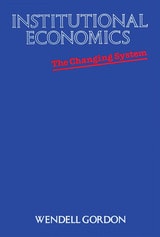
Institutional Economics
The Changing SystemBy Wendell Gordon
University of Texas Press, 1980
Wendell Gordon presents the philosophy of economic institutionalism clearly and evocatively, in the tradition of the pragmatism of Peirce, James, and Dewey. In Gordon's view, the institutionalism of Veblen and Ayres, the only indigenous American school of economic thought, offered the most hope for understanding and solving the economic problems of the twentieth century.
The institutional approach—long known as the Texas School—looks at social order as ongoing process. The effort to explain how our attitudes have developed and how they are changed is central to this approach. Gordon argues that the dynamics of technical change, the institutionalism of behavior norms, human biology, and the resource endowment of the universe interact to create and change these attitudes.
Gordon thoroughly analyzes both orthodox and Marxist economic approaches with regard to institutional economics. He also examines such other radical approaches as underconsumption and the single tax. There is a discussion of the procedures and problems involved in testing for the validity of institutional theory and the analysis of economic problems in the institutional frame of reference. In addition, inflation, energy, multinationals, property rights, business organization, unemployment, and other issues are considered from an institutional perspective.

Institutional Foundations of Impersonal Exchange
Theory and Policy of Contractual RegistriesBenito Arruñada
University of Chicago Press, 2012
Benito Arruñada aims to avoid such failures by deepening our understanding of both the value of registries and the organizational requirements for constructing them. Presenting a theory of how registries strengthen property rights and reduce transaction costs, he analyzes the major trade-offs and proposes principles for successfully building registries in countries at different stages of development. Arruñada focuses on land and company registries, explaining the difficulties they face, including current challenges like the subprime mortgage crisis in the United States and the dubious efforts made in developing countries toward universal land titling. Broadening the account, he extends his analytical framework to other registries, including intellectual property and organized exchanges of financial derivatives. With its nuanced presentation of the theoretical and practical implications, Institutional Foundations of Impersonal Exchange significantly expands our understanding of how public registries facilitate economic growth.

Institutional trust and economic policy Lessons from the history of the Euro
Lessons from the history of the EuroDóra Gyorffy
Central European University Press, 2013
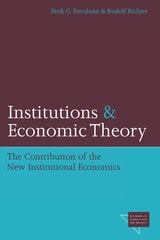
Institutions and Economic Theory
The Contribution of the New Institutional EconomicsEirik Furubotn and Rudolf Richter
University of Michigan Press, 2005
This second edition assesses some of the major refinements, extensions, and useful applications that have developed in neoinstitutionalist thought in recent years. More attention is given to the overlap between the New Institutional Economics and developments in economic history and political science. In addition to updated references, new material includes analysis of parallel developments in the field of economic sociology and its attacks on representatives of the NIE as well as an explanation of the institution-as-an-equilibrium-of-game approach.
Already an international best seller, Institutions and Economic Theory is essential reading for economists and students attracted to the NIE approach. Scholars from such disciplines as political science, sociology, and law will find the work useful as the NIE continues to gain wide academic acceptance. A useful glossary for students is included.
Eirik Furubotn is Honorary Professor of Economics, Co-Director of the Center for New Institutional Economics, University of Saarland, Germany and Research Fellow, Private Enterprise Research Center, Texas A&M University.
Rudolph Richter is Professor Emeritus of Economics and Director of the Center for New Institutional Economics, University of Saarland, Germany.
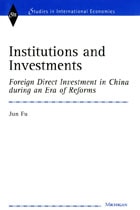
Institutions and Investments
Foreign Direct Investment in China during an Era of ReformsJun Fu
University of Michigan Press, 2000

Institutions and Social Order
Karol Soltan, Virginia Haufler, and Eric M. Uslaner, Editors
University of Michigan Press, 1998

Insufficient Funds
Savings, Assets, Credit, and Banking Among Low-Income HouseholdsRebecca M. Blank
Russell Sage Foundation, 2009

Insurance Era
Risk, Governance, and the Privatization of Security in Postwar AmericaCaley Horan
University of Chicago Press, 2021
Actuarial thinking is everywhere in contemporary America, an often unnoticed byproduct of the postwar insurance industry’s political and economic influence. Calculations of risk permeate our institutions, influencing how we understand and manage crime, education, medicine, finance, and other social issues. Caley Horan’s remarkable book charts the social and economic power of private insurers since 1945, arguing that these institutions’ actuarial practices played a crucial and unexplored role in insinuating the social, political, and economic frameworks of neoliberalism into everyday life.
Analyzing insurance marketing, consumption, investment, and regulation, Horan asserts that postwar America’s obsession with safety and security fueled the exponential expansion of the insurance industry and the growing importance of risk management in other fields. Horan shows that the rise and dissemination of neoliberal values did not happen on its own: they were the result of a project to unsocialize risk, shrinking the state’s commitment to providing support, and heaping burdens upon the people often least capable of bearing them. Insurance Era is a sharply researched and fiercely written account of how and why private insurance and its actuarial market logic came to be so deeply lodged in American visions of social welfare.

Insuring Inequality
Administrative Leadership in Social Security, 1935-54Jerry R. Cates
University of Michigan Press, 1983
Integrated Water Development
Water Use and Conservation Practice in Western ColoradoJames L. Wescoat Jr.
University of Chicago Press, 1984

Integrating the Rural World
Economy, Society and Politics in Central and South-Eastern Europe, 1848-1939Sorin Radu
Central European University Press, 2026

Integrity and Agreement
Economics When Principles Also MatterLanse Minkler
University of Michigan Press, 2009
"Two impressive features of this book are its clarity of purpose and the breadth of disciplinary resources to which it appeals."
---Geoffrey Brennan, Professor of Economics, Australian National University
"Facing massive evidence that people do not act generally as self-regarding payoff maximizers, economists have become increasingly interested in issues of cooperation, altruism, identity, and morality. Lanse Minkler's contribution is particularly important because of his powerful argument that the evidence of cooperation cannot be explained adequately by a more complicated preference function. A disposition for honesty is not simply a matter of preference---it is an issue of personal integrity, identity, and commitment. This has major implications. In particular we have to reconstruct the theory of the firm from first principles. No economist committed to the pursuit of truth should ignore this volume."
---Geoffrey Hodgson, Research Professor in Business Studies, University of Hertfordshire, United Kingdom, and Editor in Chief of the Journal of Institutional Economics
"This is an interesting account of the role of integrity---preference-integrity and commitment-integrity---on economic behavior. While drawing knowledge from traditional subfields of economics, it also includes insights gleaned from psychology and philosophy, showing their effects in varied areas such as political behavior, the employment relation, religion, and human rights. In this exciting volume Lanse Minkler does an excellent job of incorporating various newer concepts of fairness and integrity into economic analysis."
---Ernst Fehr, Professor and Head of the Chair of Microeconomics and Experimental Economic Research and Director of the Institute for Empirical Research in Economics, University of Zurich
Social scientists who treat humans as rational beings driven exclusively by self-interest ignore a key factor shaping human behavior: the influence of moral principles. Starting with the elementary principle "lying is wrong," economic theorist Lanse Minkler examines the ways in which a sense of morality guides real-life decision making.
Whether one feels committed to specific or general moral principles, Minkler explains, integrity demands consistently acting on that commitment. Because truthfulness is the most basic moral principle, integrity means honesty. And honesty extends beyond truth-telling. It requires good faith when entering an agreement and then standing by one's word. From this premise, Minkler explores the implications of integrity for contracts between buyers and sellers and understandings between employers and employees. He also finds a role for integrity in an individual's religious vows, an elected official's accountability to constituents, and a community's obligation to human rights.
Integrity and Agreement reintroduces morality as a factor for economists, sociologists, psychologists, and political scientists to consider in their efforts to comprehend human behavior.
Lanse Minkler is Associate Professor of Economics at the University of Connecticut.

Intellectual Commons and the Law
A Normative Theory for Commons-Based Peer ProductionAntonios Broumas
University of Westminster Press, 2020
‘With clarity and sophistication, Antonios Broumas presents a bold new theory of intellectual commons and powerful arguments for a new body of supportive law. This book not only reveals the misleading logic of intellectual property law in our time; it reveals the rich possibilities for constructive change that legally protected commoning can bring. Highly recommended!’ — David Bollier, Director, Reinventing the Commons Program, Schumacher Center for a New Economics.
‘Liberating the Intellectual Commons from the fetters of capital accumulation and appropriation, would give us a renaissance of creative energies and empowered communities: exactly what the world needs to move away from the social and ecological devastations of our times. This book is a thoughtful and compelling argument for making this possible through the works of the law and the redesign of public domain as a common space.’ — Massimo De Angelis, Professor of Political Economy and Social Change, Co-director of the Centre for Social Justice and Change, University of East London.
‘In this pioneering book, Antonios Broumas argues that philosophically, morally, politically and economically we are in urgent need of a new legal regime that recognizes the intellectual commons, peer production and sharing as the primary practices of intellectual production, distribution and consumption. I cannot imagine a more urgent task today. A legally protected intellectual commons will lead to greater scientific and cultural innovation and creativity and will lead to an urgently needed second Enlightenment. This book should be read by lawyers, critical theorists, economists and the many professionals of science, culture and the academy.’ — Costas Douzinas, Professor of Law, Birkbeck, University of London.
‘Antonios Broumas’ book is an excellent critical analysis of the cultural commons and a must-read for everyone interested in understanding what the commons, the cultural commons, and the digital commons are all about. This work brilliantly outlines the foundations of an empirically grounded critical theory of the commons and the cultural commons in the context of the interactions of law and society.’ — Christian Fuchs, Professor of Media and Communication Studies, author of Communication and Capitalism: A Critical Theory (2020).
‘Broumas takes us on a spellbinding tour of how and why the law could and should change to accommodate the creative multitude, which engages into an emerging mode of production. He tells a vibrant story that makes us shout: “Lawmakers of the world, unite!”’ — Vasilis Kostakis, Professor of P2P Governance, Tallinn University of Technology, Faculty Associate at Harvard Law School.
At the cutting edge of contemporary wealth creation people form self-governed communities of collaborative innovation in conditions of relative equipotency and produce resources with free access to all. The emergent intellectual commons have the potential to commonify intellectual production and distribution, unleash human creativity through collaboration and democratise innovation with wider positive effects for our societies. Contemporary intellectual property laws fail to address this potential. We are, therefore, in pressing need of an institutional alternative beyond the inherent limitations of intellectual property law. This book offers an overall analysis of the moral significance of the intellectual commons and outlines appropriate modes for their regulation. Its principal thesis is that our legal systems are in need of an independent body of law for the protection and promotion of the intellectual commons, in parallel to intellectual property law. In this context, the author of the book proposes the reconstruction of the doctrine of the public domain and the exceptions and limitations of exclusive intellectual property rights into an intellectual commons law, which will underpin a vibrant non-commercial zone of creativity and innovation in intellectual production, distribution and consumption alongside commodity markets enabled by intellectual property law.

Intellectual Property
Trade, Competition, and Sustainable Development The World Trade Forum, Volume 3Thomas Cottier and Petros C. Mavroidis, Editors
University of Michigan Press, 2003
Largely a victory for OECD countries, the present state of intellectual property rights has important implications for developing countries. The incorporation of intellectual property rights into the WTO system will eventually change the relationship of trade, competition, and intellectual property. It will equally have to assist in providing equitable sharing of benefits in the use of plant genetic resources. All of these issues are essential for the revision of exclusions from patenting in TRIPs. This volume offers insights into how this difficult task could and should be approached in a balanced manner and will be essential reading for economists and trade and intellectual property lawyers interested in the subject. Moreover, the volume will be relevant to agricultural economists as it addresses complex problems in the interstices of trade, intellectual property, plant genetic resources, and sustainable development.
Thomas Cottier is Professor of European and International Economic Law, University of Bern, and Managing Director, World Trade Institute, University of Bern.
Petros C. Mavroidis is Professor of Law, University of Neuchâtel. He formerly worked in the Legal Affairs Division of the World Trade Organization.
Marion Panizzon is Research Fellow, University of Bern.
Simon Lacey is Research Fellow, University of Bern.

Interactive Journalism
Hackers, Data, and CodeNikki Usher
University of Illinois Press, 2016
Nikki Usher brings together a comprehensive portrait of nothing less than a new journalistic identity. Usher provides a history of the impact of digital technology on reporting, photojournalism, graphics, and other disciplines that define interactive journalism. Her eyewitness study of the field's evolution and accomplishments ranges from the interactive creation of Al Jazeera English to the celebrated data desk at the Guardian to the New York Times' Pulitzer-endowed efforts in the new field. What emerges is an illuminating, richly reported profile of the people coding a revolution that may reverse the decline and fall of traditional journalism.
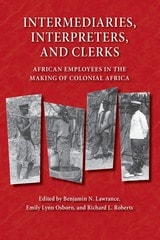
Intermediaries, Interpreters, and Clerks
African Employees in the Making of Colonial AfricaEdited by Benjamin N. Lawrance, Emily Lynn Osborn, and Richard L. Roberts
University of Wisconsin Press, 2006
By uncovering the role of such men (and a few women) in the construction, function, and legal apparatus of colonial states, the essays in this volume highlight a new perspective. They offer important insights on hegemony, collaboration, and resistance, structures and changes in colonial rule, the role of language and education, the production of knowledge and expertise in colonial settings, and the impact of colonization in dividing African societies by gender, race, status, and class.
International Aspects of Fiscal Policies
Edited by Jacob A. Frenkel
University of Chicago Press, 1988
The studies analyze national fiscal policies within the context of the international economic order. Malcolm D. Knight and Paul R. Masson use an empirical model to show that fiscal changes in recent years in the United States, West Germany, and Japan have caused major disturbances in net savings and investment flows. Linda S. Kole uses a two-country simulation model to examine the effects of a large nation's expansion on exchange rates, interest rates, and the balance of payments. In other studies, Warwick J. McKibbin and Jeffrey D. Sachs discuss the influences of different currency regimes on the international transmission of inflation; Kent P. Kimbrough analyzes the interaction between optimal tax policies and international trade; Sweder van Wijnbergen investigates the interrelation of fiscal policies, trade intervention, and world interest rates; and Willem H. Buiter uses an analytical model to look at fiscal interdependence and optimal policy design. David Backus, Michael Devereux, and Douglas Purvis develop a theoretical model to investigate effects of different fiscal policies in an open economy. Alan C. Stockman looks at the influence of policy anticipation in the private sector, while Lawrence H. Summers shows the effects of differential tax policy on international competitiveness.
International Bankruptcy
The Challenge of Insolvency in a Global EconomyJodie Adams Kirshner
University of Chicago Press, 2018
With International Bankruptcy, Jodie Adams Kirshner explores the issues involved in determining which courts should have jurisdiction and which laws should apply in addressing problems within. Kirshner brings together theory with the discussion of specific cases and legal developments to explore this developing area of law. Looking at the key issues that arise in cross-border proceedings, International Bankruptcy offers a guide to this legal environment. In addition, she explores how globalization has encouraged the creation of new legal practices that bypass national legal systems, such as the European Insolvency Framework and the Model Law on Cross-Border Insolvency of the United Nations Commission on International Trade Law. The traditional comparative law framework misses the nuances of these dynamics. Ultimately, Kirshner draws both positive and negative lessons about regulatory coordination in the hope of finding cleaner and more productive paths to wind down or rehabilitate failing international companies.
International Capital Flows
Edited by Martin Feldstein
University of Chicago Press, 1999
But, as was underscored recently by the economic and financial crises in several Asian countries, capital flows can also bring risks. Although there is no simple explanation of the currency crisis in Asia, it is clear that fixed exchange rates and chronic deficits increased the likelihood of a breakdown. Similarly, during the 1970s, the United States and other industrial countries loaned OPEC surpluses to borrowers in Latin America. But when the U.S. Federal Reserve raised interest rates to control soaring inflation, the result was a widespread debt moratorium in Latin America as many countries throughout the region struggled to pay the high interest on their foreign loans.
International Capital Flows contains recent work by eminent scholars and practitioners on the experience of capital flows to Latin America, Asia, and eastern Europe. These papers discuss the role of banks, equity markets, and foreign direct investment in international capital flows, and the risks that investors and others face with these transactions. By focusing on capital flows' productivity and determinants, and the policy issues they raise, this collection is a valuable resource for economists, policymakers, and financial market participants.

International Capital Flows in Calm and Turbulent Times
The Need for New International ArchitectureStephany Griffith-Jones, Ricardo Gottschalk, and Jacques Cailloux, Editors
University of Michigan Press, 2003
The book is unique in its scrutiny of the type of lenders and investors that triggered and deepened the crises, focusing particularly on institutional investors and banks; allocation of their assets; the criteria used in this process; and the impact of the nature of the investor on the volatility of different types of capital flow. It addresses such questions as: What determines or triggers massive changes in perceptions and sentiment by different investors and leaders? To what extent does contagion spread not just among countries but between actors? What are the policy implications of this analysis? The book concludes by examining the asymmetries in the financial architecture discussions and implementation and by offering policy proposals.

International Comparisons of Household Saving
Edited by James M. Poterba
University of Chicago Press, 1994
Each of the six chapters examines micro data sets of household saving within a particular country and summarizes statistics on patterns of saving by age, income, and other demographic factors. The authors provide age-earning profiles and analyses of the accumulation of wealth over the lifetime in a clear way that allows quick comparisons between earning, consumption, and saving in the six countries.
Designed as a companion to Public Policies and Household Saving (1994), which addresses saving policies in the G-7 nations, this volume offers detailed descriptions of saving behavior in all G-7 nations except France.

International Development Policies
Perspectives for Industrial CountriesSidney Dell
Duke University Press, 1991
Tracing the fundamental changes of the last forty years in international development policies toward the Third World, Dell details the transformation from a policy of collective responsibility on the part of the international community to the current status, in which the commitment of governments of industrial countries to Third World development is greatly diluted. He examines the growing conflicts in world trade and analyzes the failure of the international economic community to develop a long-run strategy for dealing with the world debt crisis.
Other topics addressed include the future of the international monetary system, the viability of small countries, strategies for development of basic needs, and the prospects for foreign private investment.

International Differences in Entrepreneurship
Edited by Josh Lerner and Antoinette Schoar
University of Chicago Press, 2010
Often considered one of the major forces behind economic growth and development, the entrepreneurial firm can accelerate the speed of innovation and dissemination of new technologies, thus increasing a country's competitive edge in the global market. As a result, cultivating a strong culture of entrepreneurial thinking has become a primary goal throughout the world.
Surprisingly, there has been little systematic research or comparative analysis to show how the growth of entrepreneurship differs among countries in various stages of development. International Differences in Entrepreneurship fills this void by explaining how a country's institutional differences, cultural considerations, and personal characteristics can affect the role that entrepreneurs play in its economy. Developing an understanding of the origins of entrepreneurs as well as the choices they make and the complexity of their activities across countries and industries are of central importance to this volume. In addition, contributors consider how environmental factors of individual economies, such as market regulation, government subsidies for banks, and support for entrepreneurial culture affect the industry and the impact that entrepreneurs have on growth in developing nations.

International Differences in the Business Practices and Productivity of Firms
Edited by Richard B. Freeman and Kathryn L. Shaw
University of Chicago Press, 2009
In recent years, globalization and the expansion of information technologies have reshaped managerial practices, forcing multinational firms to adjust business practices to different environments and domestic companies to adjust to their foreign competitors. In International Differences in the Business Practices and Productivity of Firms, a distinguished group of contributors examines the phenomenon of widespread differences in managerial practices across firms, establishments within firms, and countries.
This volume brings together eight studies that combine qualitative and quantitative insider analysis of business practices such as the use of teams, incentive pay, lean manufacturing, and quality control, revealing the elements that determine which practices are adopted and why. International Differences in the Business Practices and Productivity of Firms offers a much-needed model for measuring the productivity and performance of international firms in a fast-paced global economy.
International Dimensions of Monetary Policy
Edited by Jordi Galí and Mark Gertler
University of Chicago Press, 2010
United States monetary policy has traditionally been modeled under the assumption that the domestic economy is immune to international factors and exogenous shocks. Such an assumption is increasingly unrealistic in the age of integrated capital markets, tightened links between national economies, and reduced trading costs. International Dimensions of Monetary Policy brings together fresh research to address the repercussions of the continuing evolution toward globalization for the conduct of monetary policy.
In this comprehensive book, the authors examine the real and potential effects of increased openness and exposure to international economic dynamics from a variety of perspectives. Their findings reveal that central banks continue to influence decisively domestic economic outcomes—even inflation—suggesting that international factors may have a limited role in national performance. International Dimensions of Monetary Policy will lead the way in analyzing monetary policy measures in complex economies.
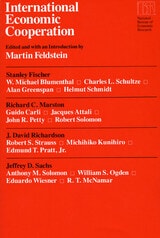
International Economic Cooperation
Edited by Martin Feldstein
University of Chicago Press, 1988

International Economic Relations
Commission of Inquiry into National Policy in International Economic Relations
University of Minnesota Press, 1934
International Economic Relations was first published in 1934. Minnesota Archive Editions uses digital technology to make long-unavailable books once again accessible, and are published unaltered from the original University of Minnesota Press editions.
International Economic Transactions
Issues in Measurement and Empirical ResearchEdited by Peter Hooper and J. David Richardson
University of Chicago Press, 1991
Questioning the quality of current data and analytical procedures, this ambitious volume proposes innovative research designs and methods for data enhancement, and offers new data on trade prices and service transactions for future studies. Leading researchers address the measurement of international trade flows and prices, including the debate over measurement of computer prices and national productivity; compare international levels of manufacturing output; and assess the extent to which the United States has fallen into debt to the rest of the world.
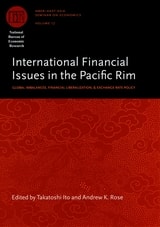
International Financial Issues in the Pacific Rim
Global Imbalances, Financial Liberalization, and Exchange Rate PolicyEdited by Takatoshi Ito and Andrew K. Rose
University of Chicago Press, 2008

International Financial Markets
The Challenge of GlobalizationEdited by Leonardo Auernheimer
University of Chicago Press, 2003
After a guided tour by the editor and a historical exploration, some of the world's leading theorists and policy analysts examine the benefits and pitfalls of capital movements and controls. In the second portion, papers examine the recent experiences of Argentina and Mexico, with Charles Calomiris—whose proposals for a new world financial architecture have elicited wide attention—contributing a response. The volume concludes with a roundtable discussion of the report of the International Financial Institutions Advisory Commission, in which the chair of the commission, Allan H. Meltzer, both comments on the report and responds to questions about it.
The material presented here will become a standard reference for analysts, policymakers, and the interested general public.
Contributors:
Leonardo Auernheimer, Matthew Bishop, Michael D. Bordo, Charles Calomiris, Guillermo A. Calvo, Augustin Carstens, Michael P. Dooley, Pablo E. Guidotti, T. Britton Harris, John P. Lipsky, Guillermo Ortiz Martinez, Allan H. Meltzer, Andrew Powell, Rene Stulz, Carl E. Walsh
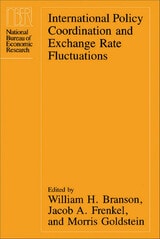
International Policy Coordination and Exchange Rate Fluctuations
Edited by William H. Branson, Jacob A. Frenkel, and Morris Goldstein
University of Chicago Press, 1990
In these papers and comments, prominent international economists consider past and present interpretations of the meaning of international policy coordination; conditions necessary for coordination to be beneficial both to the direct participants and the global economy; influential factors for the quantitative impact of coordination; obstacles to coordination; the most—and least—effective methods of coordination; and future directions of the coordination process, including processes associated with greater fixity of exchange rates.
These studies will be readily accessible to policymakers, while offering sophisticated analyses to interested scholars of the global economy.

International Taxation and Multinational Activity
Edited by James R. Hines Jr.
University of Chicago Press, 2001

International Trade and Human Rights
Foundations and Conceptual Issues (World Trade Forum, Volume 5)Frederick M. Abbott, Christine Breining-Kaufmann and Thomas Cottier, Editors
University of Michigan Press, 2005
The missing link between the international trade regime and human rights has become one of the key concerns of critics of the WTO. The World Trade Forum 2001 at the World Trade Institute in Berne provided a unique framework for considering the manifold issues relevant to this topic. This book goes beyond listing the different arguments in favor of or against globalization and offers recommendations to the international community for possible reforms so as to better account for the human rights interests affected by the process of globalization.
Frederick M. Abbott is the Edward Ball Eminent Scholar Professor of International Law at Florida State University College of Law. He is the editor of China in the World Trading System: Defining the Principles of Engagement (1998) and author of The International Intellectual Property System: Commentary and Materials (with Thomas Cottier and Francis Gurry, 1999).
Christine Breining-Kaufmann is Professor of Law at the University of Zurich and Senior Research Fellow as well as a member of the Board of the World Trade Institute in Berne. Her publications include Hunger als Rechtsproblem: Völkerrechtliche Aspekte eines Rechtes auf Nahrung (1991) and Globalization and Labour Rights: The Conflicting Relationship between Core Labour Rights and International Economic Institutions (2006).
Thomas Cottier is Managing Director of the World Trade Institute and Professor of Law at the University of Berne. He has co-edited the previous four volumes of the World Trade Forum series.

International Trade in East Asia
Edited by Takatoshi Ito and Andrew K. Rose
University of Chicago Press, 2005
Comprised of twelve fascinating studies, International Trade in East Asia highlights many of the trading practices between countries within the region as well as outside of it. The contributors bring into focus some of the region's endemic and external barriers to international trade and discuss strategies for improving productivity and fostering trade relationships. Studies on some of the factors that drive exports, the influence of research and development, the effects of foreign investment, and the ramifications of different types of protectionism will particularly resonate with the financial and economic communities who are trying to keep pace with this dramatically altered landscape.
International Trade in Services and Intangibles in the Era of Globalization
Edited by Marshall B. Reinsdorf and Matthew J. Slaughter
University of Chicago Press, 2009
Quantitative measures of international exchange have historically focused on trade in tangible products or capital. However, services have recently become a larger portion of developed economies and international trade, and will only increase in the future. In International Trade in Services and Intangibles in the Era of Globalization, Marshall Reinsdorf and Matthew J. Slaughter examine new and emerging patterns of trade, especially the growing importance of transactions involving services or intangible assets such as intellectual property.
A distinguished team of contributors analyzes the challenges involved in measuring trade in intangibles, the comparative advantages enjoyed by United States service industries, and the heightened international competition for jobs, capital investment, economic growth, and tax revenue that results from trade in services. This comprehensive volume will be necessary reading for scholars seeking to understand the rapidly changing global economy.
International and Interarea Comparisons of Income, Output, and Prices
Edited by Alan Heston and Robert E. Lipsey
University of Chicago Press, 1999
International and Interarea Comparisons of Income, Output, and Prices includes discussions of developments in the United Nations International Comparison Program, the largest effort in this field, and in the ICOP program on the production side, including efforts in both to extend the comparisons to the formerly planned economies. Other papers in this volume explore new programs on interspatial comparisons within the United States. There are also theoretical papers on how interspatial comparisons should be made and several examples of uses of such comparisons.

Internet Spaceships Are Serious Business
An EVE Online ReaderMarcus Carter
University of Minnesota Press, 2016
EVE Online is a socially complex, science-fiction-themed universe simulation and massively multiplayer online game (MMOG) first released in 2003. Notorious for its colossal battles and ruthless player culture, it has hundreds of thousands of players today. In this fascinating book, scholars, players, and EVE’s developer (CCP Games) examine the intricate world of EVEOnline--providing authentic accounts of lived experience within a game with more than a decade of history and millions of “real” dollars behind it.
Internet Spaceships Are Serious Business features contributions from outstanding EVE Online players, such as The Mittani, an infamous member of the game’s community, as well as academics from around the globe. They cover a wide range of subjects: the game’s technicalities and its difficulty; its projection of humanity’s future in space; the configuration of its unique, single-server game world; the global nature of warfare in its “nullsec” territory (and how EVE players have formed a global concept of time); stereotypes of Russian players; espionage play; in-game memorials to Vile Rat (aka U.S. State Department official Sean Smith, murdered in the 2012 Benghazi attack); its gendered playing experience; and CCP Games’ relationship with players; and its history and legacy.
Internet Spaceships Are Serious Business is a must for EVE Online players interested in a broad perspective on their all-consuming game. It is also accessible to scholars, game designers seeking to understand and replicate the successful aspects unique to EVE Online, and even those who have never played this notoriously complex game.
Contributors: William Sims Bainbridge, National Science Foundation; Chribba; Jedrzej Czarnota; Kjartan Pierre Emilsson; Dan Erdman; Rebecca Fraimow; Martin R. Gibbs, U of Melbourne; Catherine Goodfellow; Kathryn Gronsbell; Keith Harrison; Kristin MacDonough; Mantou (Zhang Yuzhou); Oskar Milik; The Mittani (Alexander Gianturco); Joji Mori; Richard Page; Christopher Paul, Seattle U; Erica Titkemeyer, U of North Carolina at Chapel Hill; Nick Webber, Birmingham City U.

Internships in the Private Sector
How You Can Find, Prepare for, and Thrive in ThemCharles A. Fishkin
University of Chicago Press, 2026
Every year, college students across the country seek internships to build experience in their chosen fields. In this highly competitive job market, students and recent graduates need to seek out every possible opportunity to differentiate themselves and demonstrate that they are ready to roll up their sleeves and get to work. One important way to do so is an internship in the private sector, which can lead to a full-time job with a well-regarded organization. Yet the process of finding an internship can appear challenging. This book can make it easier.
For more than a decade, finance professional Charles Fishkin has been preparing students to thrive in internship programs. In this book, he shares his advice for those who are seeking a private-sector internship. With insights relevant to a variety of fields—from finance to the tech sector—he covers the process from start to finish, beginning with exploring the range of internship opportunities available. Several chapters offer advice on best practices for crafting effective resumes, networking, and interviewing to get the position. Fishkin offers checklists, action items, real-life scenarios, and practical suggestions, each arising from the experiences of former interns and hiring managers. The heart of the book focuses on the nine to twelve weeks of the internship itself, with tips on how to interact with supervisors and colleagues, how to learn and apply new skills, and how to solve problems and address challenges that arise.
Internships in the Private Sector is the first full-length guide to securing and making the most of an internship. This book will help level the playing field, providing students with the tools and support they need to perform to the fullest extent of their abilities and lay the foundation for a strong start to their careers.

Intersecting Journeys
The Anthropology of Pilgrimage and TourismEdited by Ellen Badone and Sharon R. Roseman
University of Illinois Press, 2004