Results by title
3390 books match the query 'Fiction' and 83 start with i
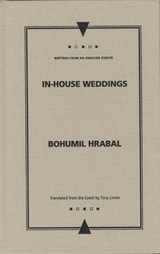
In-House Weddings
Bohumil Hrabal
Northwestern University Press, 2007
The task, taken up by such a rogue comic talent, could be nothing other than strangely delightful; and in In-House Weddings, the first of the trilogy that Hrabal produced, we meet the author through the eyes of his wife Eliska. She narrates his life from his upbringing in Nymburk through his work as a dispatcher in a train station and then in a scrap paper plant, his first publication, his trouble with the authorities, and his association with notable artists and authors such as Jiri Kolar, Vladimir Boudnik, and Arnost Lustig. Hrabal’s bohemian life was itself a source of great interest to the Czech public; transmuted here, it is even more compelling, a wry portrait of artistic life in postwar Eastern Europe and a telling reflection on how such a life might be recast in the light of literary brilliance.
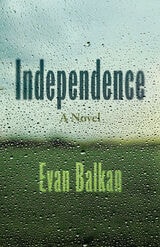
Independence
A NovelEvan Balkan
University of Wisconsin Press, 2021
New Orleans, Louisiana, autumn 1992. Fifteen-year-old Lindsey has just learned that her father is not, in fact, dead—but will be shortly if the state of South Dakota has its way. As she and her mother embark on a long bus ride north, Lilly slowly opens up, revealing to her daughter the true story of her past: why she and Lee went on the run, how Lindsey came to be, and the reason Lee is about to be executed for a crime of passion. Independence is an evocative story of true love, youthful mistakes, desperation, and breath-taking betrayal.
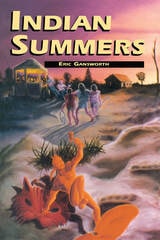
Indian Summers
Eric Gansworth
Michigan State University Press, 1998
The first work of fiction published in the MSU Press American Indian Studies Series, Indian Summers concerns issues of identity for Native Americans. Set against the backdrop of a contemporary reservation that has had its own losses to the dominant culture—a third of its total land mass taken earlier in the century for a New York State water reservoir, its only religious structures Christian churches—Indian Summers introduces these identity conflicts through the lives and circumstances of its major characters. This is a time when belonging to a tribe is difficult, when dominant societal forces encourage either the acts of abandoning a perceived anachronistic lifestyle or of embracing one of a number of simplistic, prescribed, false identities: warrior, environmentalist, crystal-carrying shaman. None of these options is real for the individuals who populate these pockets of different—not alternative—societies. The people who live these lives do not explore alternatives, nor do they necessarily have the desire to—inextricably entwined as they are with their families, culture, history, and land.
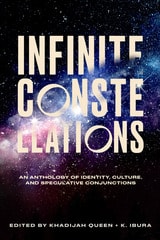
Infinite Constellations
An Anthology of Identity, Culture, and Speculative ConjunctionsEdited by Khadijah Queen and K. Ibura
University of Alabama Press, 2023
A galaxy of voices. A universe of belonging.
The innovative fictions in Infinite Constellations showcase the voices and visions of 30 remarkable writers, both new and established, from the global majority: Native American/First Nation writers, South Asian writers, East Asian writers, Black American writers, Latinx writers, and Caribbean and Middle Eastern writers. These are visions both familiar and strange, but always rooted in the mystery of human relationships, the deep honoring of memory, and the rootedness to place and the centering of culture.
The writers in this anthology mirror, instruct, bind and unbind, myth-make and myth-invert, transform and transmute, make us belly-laugh or hum our understanding, gasp or whisper gently, and remember that sometimes we need to holler and fight as we grieve. Any dangers herein, imagined or observed in poem and story, transport us: moving from latent to extant, then unleashed.
This work does not presume; it presents and blossoms, creating a constellation of appearances, a symphony of belonging.
“In collecting this work,” note editors Khadijah Queen and K. Ibura, “we felt humbled by the love threaded throughout the voices speaking to us in stories and poems that vault beyond expectation and settle in our consciousness as an expansion of what’s possible when we tend to one another with intention. We felt lifted, held aloft in these arrangements of language. We hope that as you read each story and poem, you will find the same sense of empowerment and celebration that we know has sustained us over countless generations, and in their beauty and humor and intelligence and complexity, continue to enrich us still.”
CONTRIBUTORS
George Abraham / Kenzie Allen / Shreya lla Anasuya / Thea Anderson / Wendy Chin-Tanner / Alton Melvar M. Depanas / Yohanca Delgado / Jennifer Elise Foerster / Aerik Francis / André O. Hoilette / Brian K. Hudson / K. Ibura / Pedro Iniguez / Ruth Ellen Kocher / Ra’Niqua Lee / Tonya Liburd / Kenji C. Liu / Shalewa Mackall / Lucien Darjeun Meadows / Melanie Merle / Juan J. Morales / Thirii Myo Kyaw Myint / Cindy Juyound Ok / Daniel José Older / Soham Patel / Lynn C. Pitts/ Khadijah Queen / Sheree Renée Thomas / Sarah Sophia Yanni / dg nanouk okpik / shakirah peterson
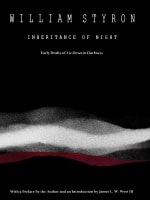
Inheritance of Night
Early Drafts of Lie Down in DarknessWilliam Styron
Duke University Press, 1993
Although Styron began the narrative twice, he realized both times that his writing was derivative and his characters not yet fully conceived. These drafts show young Stryon feeling his way into the story with various narrative voices and strategies, and attempting to work out his plot. Influence from William Faulkner, F. Scott Fitzgerald, and Robert Penn Warren is apparent in the text, and there is a character present named Marcus Bonner who is an early rendition of Stingo in Sophie's Choice.
The typescript drafts of Inheritance of Night for many years were thought to have been lost, but in 1980 were discovered in the files of one of Styron's former literary agents. These drafts, eventually made their way to the archive of Styron's papers assembled at Duke University Library. This facsimile is published here in two different limited editions for collectors: a lettered, signed, and boxed edition (26 copies) and a numbered, signed edition (250). A general interest trade volume is also available.
With a preface by Styron and an introduction by James L. W. West III, these drafts afford much insight into the creation of Lie Down in Darkness and the writing of a major twentieth-century American writer.
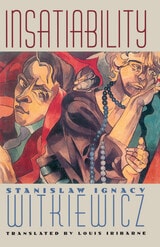
Insatiability
Stanislaw Ignacy Witkiewicz, translated from the Polish by Louis Iribarne
Northwestern University Press, 1994
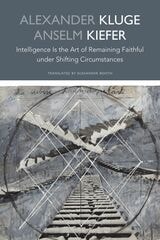
Intelligence Is the Art of Remaining Faithful under Shifting Circumstances
Alexander Kluge and Anselm Kiefer
Seagull Books, 2026
What holds us together in times of uncertainty? For decades, artist Anselm Kiefer and filmmaker-writer Alexander Kluge have explored this question—both as friends and collaborators. This latest volume is a bold and poetic exchange of images and texts in which they delve into the idea of reliability and its relationship to the four great forces that shape our lives: power, love, truth, and money.
Moving across history, myth, and the present day, Kiefer and Kluge ask: What is time? In a world of endless change, how do we hold on to what endures? Inspired by Hölderlin’s call “to remain faithful under shifting circumstances,” they use art to keep memory alive, invite the past into the present, and welcome the future before it arrives. Layered, provocative, and profoundly human, this new collaboration is a powerful meditation on what connects us—and what makes us endure.
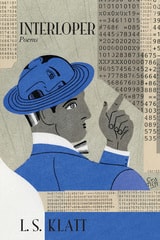
Interloper
PoemsL. S. Klatt
University of Massachusetts Press, 2009
The poems in Interloper unsettle frontiers between disparate worlds so that the imagination is given room to roam: pears become guitars, racks of ribs are presented as steamboats, and helicopters transmute into diesel seraphs. The poetry aspires acrobatically in the manner of prayers and pilots, but adventure throughout the book is viewed as precarious and the will to conquest leads to apocalypse and ruin. The interloper wanders through crime scenes and crash sites as he glosses the landscape—at home and not at home with the America of yesterday and tomorrow. In symbols that scat and ricochet, the interloper scores a new song, one that composes—and decomposes—on the page.

Intimacy
A NovelStanley Crawford
University of Alabama Press, 2016
In this melancholy novel about a man on the brink of suicide, Stanley Crawford allows readers to question what it really means to be close to a person. Intimacy follows an unnamed narrator planning his own death. His preparations become a trigger and occasion for him to revisit key moments in his life and his material possessions, which are the solid artifacts from his life’s journey.
As sparrows in flight might form a single arrow, the life of the narrator comes into focus as a collage of fleeting events and images. Readers gain insights into tiny moments that slowly build into a picture of a man who seems to have very little, aside from material possessions, to lose.
The narrative pulls the reader along a trail of digressions—about running shoes, about the symbolism of rings—that lead down a proverbial rabbit hole until we realize the narrator’s intentions. Despite our lack of concrete knowledge about the narrator’s life, he allows us to share his thought processes: how every thought leads to the next, how memories seep upward when he picks up a particular T-shirt, or when he glimpses his car keys. And alongside our growing understanding of the narrator comes a recognition of our own thought processes: how we, like him, relate to our bodies; how we, too, cannot break away from the constant motion of our thoughts.
Intimacy is a brief, intense novel charged with the heightened sense of closeness that comes from watching a man’s last hours. It illuminates how brief snapshots of memory can trace the outline of an entire life.
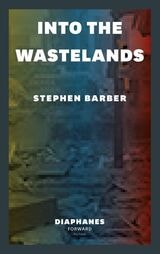
Into the Wastelands
Stephen Barber
Diaphanes, 2025
An urban investigator has been commissioned by a global corporation to determine how cities worldwide are being engulfed and destroyed by the wastelands that are mysteriously appearing at their heart. They are being "wastelanded," generating turmoil and catastrophic technological meltdown in every global megalopolis. Throughout his inquiries he discovers that the world’s cities are becoming apocalyptic, experiencing ecocide. The investigator himself will have to travel to the "true north" to escape that endpoint.
Today, urban imaginaries and speculative fictions often depict abandoned wastelands and ruinous cities that hold the expansive potential to engulf all urban and environmental space and render it entirely apocalyptic.
In his novel Into the Wastelands Stephen Barber examines urgent aspects of our wasted realities through fictional narratives: How does the figure of the proliferating, infinitely expansive wasteland enable us to understand that point of rupture for urban futures? Does the wasteland allow us to accurately assess the contemporary dynamic between the apocalyptic and the urban?
Introducing Don DeLillo
Frank Lentricchia
Duke University Press, 1991
Diversity is the key to this striking assemblage of cultural criticism edited by Frank Lentricchia. Special features include an expanded version of the Rolling Stone interview with the author (“An Outsider in this Society”) and the extraordinary tenth chapter of DeLillo’s Ratner’s Star. Accessibly written and entertaining, the collection will be of great interest to both students and scholars of contemporary American literature as well as to general readers interested in DeLillo’s work.
Contributors. Frank Lentricchia, Anthony Decurtis, Daniel Aaron, Hal Crowther, John A. McClure, Eugene Goodheart, Charles Molesworth, Dennis A. Foster, and John Frow

Introducing Don DeLillo
Frank Lentricchia
Duke University Press, 0
Diversity is the key to this striking assemblage of cultural criticism edited by Frank Lentricchia. Special features include an expanded version of the Rolling Stone interview with the author (“An Outsider in this Society”) and the extraordinary tenth chapter of DeLillo’s Ratner’s Star. Accessibly written and entertaining, the collection will be of great interest to both students and scholars of contemporary American literature as well as to general readers interested in DeLillo’s work.
Contributors. Frank Lentricchia, Anthony Decurtis, Daniel Aaron, Hal Crowther, John A. McClure, Eugene Goodheart, Charles Molesworth, Dennis A. Foster, and John Frow
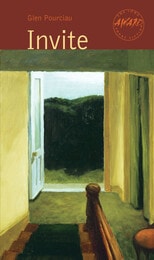
Invite
Glen Pourciau
University of Iowa Press, 2008
Inhabiting an outwardly bland landscape that overlays internal questions and recurring confusion, the narrators of these ten intensely felt stories strive to understand their varied predicaments. Conflicts with neighbors arise, troubling memories return, suspicions and fears lead people into isolated corners as distances open up inside them and around them. And in those open spaces, the sometimes humorous, sometimes obsessive voices continue their quest. In the final story, “Deep Wilderness,” the voices seem to fragment as a family comes apart.
While his characters struggle to come to terms with their inner wilderness, Glen Pourciau’s spare, riveting voice maintains a constant presence. Invite is a debut collection that speaks volumes.
Iphigenia
(The diary of a young lady who wrote because she was bored)By Teresa de la Parra
University of Texas Press, 1994
Winner, Harvey L. Johnson Award, Southwest Council on Latin American Studies, 1994
"...I didn't want to tell you the truth for anything in the world, because it seemed very humiliating to me..." The truth is that Iphigenia is bored and, more than bored, buried alive in her grandmother's house in Caracas, Venezuela. After the excitement of being a beautiful, unchaperoned young woman in Paris, her father's death has sent her back to a forgotten homeland, where rigid decorum governs. Two men—the married man she adores and the wealthy fiancé she abhors—offer her escape from her prison. Which of these impossible suitors will she choose?
Iphigenia was first published in 1924 in Venezuela, where it hit patriarchal society like a bomb. Teresa de la Parra was accused of undermining the morals of young women with this tale of a passionate woman who lacks the money to establish herself in the liberated, bohemian society she craves. Yet readers have kept the novel alive for decades, and this first English translation now introduces its heroine to a wider audience.
Irish Girl
StoriesTim Johnston
University of North Texas Press, 2009
Irrawaddy Tango
Wendy Law-Yone
Northwestern University Press, 2003
Irrawaddy Tango, a pepper-tongued, tango-dancing Asian beauty rises from a village girlhood to become the wife of her country's dictator and then a leader of the rebel forces arrayed against him. Tango captures the attention of an ambitious colonel --the self-proclaimed Supremo--while dancing at a talent contest. Once married, she is forced to endure the cruelties of a ruthless and foolish husband, is kidnapped by rebel forces, recaptured and brutally punished by her husband's military clique, and eventually exiled to America. Her return to the fictional Republic of Daya (clearly Burma) brings about the destruction of her husband and his dictatorship. Irrawaddy Tango tells the unsettling tale of powerful men and powerless women. It evokes as well the harshness of exile, revealing the misunderstandings between East and West and by doing so captures the intensity of living between the two.
Is It Good for the Jews?
More Stories from the Old Country and the NewAdam Biro
University of Chicago Press, 2009
“Jewish stories,” writes Adam Biro, “resemble every people’s stories.” Yet at the same time there is no better way to understand the soul, history, millennial suffering, or, crucially, the joys of the Jewish people than through such tales—“There’s nothing,” writes Biro, “more revelatory of the Jewish being.”
With Is It Good for the Jews? Biro offers a sequel to his acclaimed collection of stories Two Jews on a Train. Through twenty-nine tales—some new, some old, but all finely wrought and rich in humor—Biro spins stories of characters coping with the vicissitudes and reverses of daily life, while simultaneously painting a poignant portrait of a world of unassimilated Jewish life that has largely been lost to the years. From rabbis competing to see who is the most humble, to the father who uses suicide threats to pressure his children into visiting, to three men berated by the Almighty himself for playing poker, Biro populates his stories with memorable characters and absurd—yet familiar—situations, all related with a dry wit and spry prose style redolent of the long tradition of Jewish storytelling.
A collection simultaneously of foibles and fables, adversity and affection, Is It Good for the Jews? reminds us that if in the beginning was the word, then we can surely be forgiven for expecting a punch line to follow one of these days.
Is It Sexual Harassment Yet?
short fictionCris Mazza
University of Alabama Press, 1991
Back in print with a preface by Allan Kornblum and a new introduction by Pamela Caughe.
Satire meets discomfort in a feminist reckoning.
These stories convey a powerful, convincing sense of the bewilderment and excitement of sexual desires. Mazza describes a world that resembles a shopping mall gone mad, populated by ordinary, normal people behaving in ways that mock the very concept of normality. By describing these lives with an acute sense of the absurd, Mazza produces a dark, sometimes hilarious comedy that undercuts the shaky compromise of the consensus we call reality.
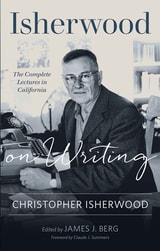
Isherwood on Writing
The Complete Lectures in CaliforniaChristopher Isherwood
University of Minnesota Press, 2022
Isherwood’s lectures on writing and writers, now all available for the first time
In the 1960s, Christopher Isherwood gave an unprecedented series of lectures at California universities about his life and work. During this time Isherwood, who would liberate the memoir and become the founding father of modern gay writing, spoke openly for the first time about his craft—on writing for film, theater, and novels—and spirituality. Isherwood on Writing brings these free-flowing, wide-ranging public addresses together to reveal a distinctly American Isherwood at the top of his form.
This updated edition contains the long-lost conclusion to the second lecture, published here for the first time, including its discussion of A Single Man, his greatest novel, and A Meeting by the River, his final novel.
Islam and Modernity
Transformation of an Intellectual TraditionFazlur Rahman
University of Chicago Press, 1984
"In this work, Professor Fazlur Rahman presents a positively ambitious blueprint for the transformation of the intellectual tradition of Islam: theology, ethics, philosophy and jurisprudence. Over the voices advocating a return to Islam or the reestablishment of the Sharia, the guide for action, he astutely and soberly asks: What and which Islam? More importantly, how does one get to 'normative' Islam? The author counsels, and passionately demonstrates, that for Islam to be actually what Muslims claim it to be—comprehensive in scope and efficacious for every age and place—Muslim scholars and educationists must reevaluate their methodology and hermeneutics. In spelling out the necessary and sound methodology, he is at once courageous, serious and profound."—Wadi Z. Haddad, American-Arab Affairs
Island Between
Margaret E. Murie with Illustrations by Olaus J. Murie
University of Alaska Press, 2008
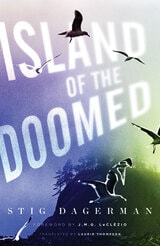
Island of the Doomed
Stig Dagerman
University of Minnesota Press, 2012
In the summer of 1946, while secluded in August Strindberg’s small cabin in the Stockholm archipelago, Stig Dagerman wrote Island of the Doomed. This novel was unlike any other yet seen in Sweden and would establish him as the country’s brightest literary star. To this day it is a singular work of fiction—a haunting tale that oscillates around seven castaways as they await their inevitable death on a desert island populated by blind gulls and hordes of iguanas. At the center of the island is a poisonous lagoon, where a strange fish swims in circles and devours anything in its path. As we are taken into the lives of each castaway, it becomes clear that Dagerman’s true subject is the nature of horror itself.
Island of the Doomed is a chilling profile of terror and guilt and a stunning exploration—written under the shadow of the Nuremberg Trials—of the anxieties of a generation in the postwar nuclear age.
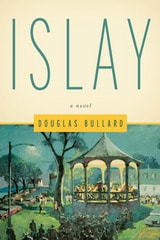
Islay
A NovelDouglas Bullard
Gallaudet University Press, 2013
Now, a new edition of the classic novel Islay promises to entertain a contemporary audience with its Deaf American dream first conceived by Douglas Bullard in 1986. Islay is the name of an imaginary island state coveted by Lyson Sulla, a Deaf man who is tired of feeling that “hearing think deaf means dumb, pat head.” Sulla signs this to his wife Mary in explanation of his desire to tum Islay into a state solely for Deaf people, with himself as governor. From there, his peripatetic quest begins.
Sulla initiates his plan by driving to Islay to survey the lay of the land. There, he meets Gene Owls, another Deaf man who also has designs on the island. Sulla then embarks on travels around the nation recruiting Deaf people to join his crusade. Along the way, he meets a Deaf doctor, a bowling alley owner, a family of peddlers, a Deaf minister, and a willing businessman. Far from a heroic character, Sulla engages in each encounter in an earthy, self-sewing fashion that sends up all parties involved, hearing and Deaf.
Islay uniquely blends classic English forms of satire with the direct, down-to-earth expression of American Sign Language ingenuously rendered throughout. Deaf himself, Bullard has created a wonderfully amusing story that features Deaf people seeking their American dream in a manner both serious and joyous at the same time.
Israel Potter
His Fifty Years of Exile, Volume EightHerman Melville
Northwestern University Press, 1997
This edition is an Approved Text of the Center for Editions of American Authors (Modern Language Association of America).
Israel Potter
His Fifty Years of Exile, Volume Eight, Scholarly EditionHerman Melville
Northwestern University Press, 1982
This edition is an Approved Text of the Center for Editions of American Authors (Modern Language Association of America).
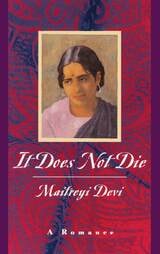
It Does Not Die
A RomanceMaitreyi Devi
University of Chicago Press, 1994
Proud of her intelligence, Maitreyi Devi's father had provided her with a fine and, for that time, remarkably liberal education — and encouraged his brilliant foreign student, Eliade, to study with her. "We were two good exhibits in his museum," Devi writes. They were also, as it turned out, deeply taken with each other. When their secret romance was discovered, Devi's father banished the young Eliade from their home.
Against a rich backdrop of life in an upper-caste Hindu household, Devi powerfully recreates the confusion of an over-educated child simultaneously confronting sex and the differences, not only between European and Indian cultures, but also between her mother's and father's view of what was right. Amid a tangle of misunderstandings, between a European man and an Indian girl, between student and teacher, husband and wife, father and daughter, she describes a romance unfolding in the face of cultural differences but finally succumbing to cultural constraints. On its own, It Does Not Die is a fascinating story of cultural conflict and thwarted love. Read together with Eliade's Bengal Nights, Devi's "romance" is a powerful study of what happens when the oppositions between innocence and experience, enchantment and disillusion, and cultural difference and colonial arrogance collide.
"In two novels written forty years apart, a man and a woman tell stories of their love. . . . Taken together they provide an unusually touching story of young love unable to prevail against an opposition whose strength was tragically buttressed by the uncertainties of a cultural divide."—Isabel Colegate, New York Times Book Review
"Recreates, with extraordinary vividness, the 16-year-old in love that she had been. . . . Maitreyi is entirely, disarmingly open about her emotions. . . . An impassioned plea for truth."—Anita Desai, New Republic
"Something between a reunion and a duel. Together they detonate the classic bipolarities: East-West, life-art, woman-man."—Richard Eder, New York Newsday
"One good confession deserves another. . . . Both books gracefully trace the authors' doomed love affair and its emotional aftermath."—Nina Mehta, Chicago Tribune
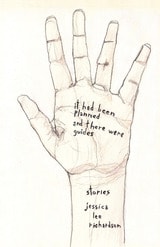
It Had Been Planned and There Were Guides
StoriesJessica Lee Richardson
University of Alabama Press, 2015
Jessica Lee Richardson’s debut collection It Had Been Planned and There Were Guides teems with double magic—families of spiders, monsters in triplicate, and panels of bleacher-sitting grandfathers (who live in a diaphragm!) cohabitate with a starker, more familiar kind of strange in a hyper real and living tapestry of teenage porn stars, lovelorn factory workers, and art world auctioneers. From a woman who awakes from a short kidnapping with an unquenchable need for risk to a concrete boat ride gone off the rails, from Los Angeles to the Bronx, from the Midwest to North Korea, these stories explore the absurd in real spaces and the real in absurd spaces, seeking a way into something else entirely.
Here, environments participate in agency, and voice compels movement forward, through, and in. Richly patterned language refuses singularity and the finger trap of the binary, seeking permeability in its reflection, a soft net to catch collective echoes. The collection begins and ends with stories that literalize descent and ascent, bookending the mirrored shape of the book’s arrangement as a vision of an inverted arc. The shape of story is literalized. We slide down from a mountaintop all the way to the inside of a womb and back, slipping on slopes unmarked by signs, catching stunning glimpses along the way. The journey along the track of desire might be frightening if it weren’t for all the water, if it weren’t for the bounce of the ride.
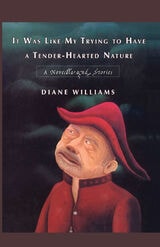
It Was Like My Trying to Have a Tender-Hearted Nature
A Novella and StoriesDiane Williams
University of Alabama Press, 2007
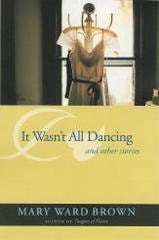
It Wasn't All Dancing and Other Stories
Mary Ward Brown
University of Alabama Press, 2001
This eagerly anticipated second volume of short stories is offered by nationally acclaimed writer Mary Ward Brown, often referred to as the “first lady” of Alabama letters
With the 11 stories in this long-awaited collection, Mary Ward Brown once again offers her devoted fans a palette of new literary pleasures. The hallmarks of her style, so finely wrought in the award-winning Tongues of Flame (1986)—the fully realized characters, her deep sensitivity, a defining sense of place and time—are back in all their richness to involve and enchant the reader.
All but one of the stories are set in Alabama. They deal with dramatic turning points in the lives of characters who happen to be southerners, many jaxtaposed between Old South sensibility and manners and New South modernity and expectations. Among these is a new widow who is not consoled by well-meaning, proselytizing Christians; a middle-aged waitress in love with the town “catch”; a bedridden belle dependent upon her black nurse; a “special” young man in a newspaper shop; a young faculty wife who attempts generosity with a lower-class neighbor; and a lawyer caught in the dilemma of race issues. Through their diverse voices, Brown proves herself a graceful and gifted storyteller who writes with an authoritative pen, inventing and inhabiting the worlds of her set of characters with insight, compassion, and wit.
Most of the stories in It Wasn't All Dancing have appeared previously in prominent national magazines and literary journals, including the Atlantic Monthly, Grand Street, and Threepenny Review. This fine collection should appeal to a wide audience among writers, literature scholars, and general readers alike.
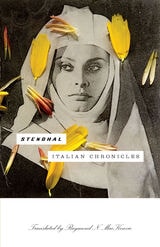
Italian Chronicles
Raymond N. Stendhal
University of Minnesota Press, 2017
Nineteenth-century French writer Marie-Henri Beyle, better known by his pen name Stendhal, is one of the earliest leading practitioners of realism, his stories filled with sharp analyses of his characters’ psychology. This translation of Stendhal’s Chroniques italiennes is a collection of nine tales written between 1829 and 1840, many of which were published only after his death. Together these collected tales reveal a great novelist working with highly dramatic subject matter to forge a vision of life lived at its most intense.
The setting for these tales is a romanticized Italy, a place Stendhal viewed as unpolluted by bourgeois inhibitions and conformism. From the hothouse atmosphere of aristocratic convents to the horrors of the Cenci family, the tales in Italian Chronicles all feature passionate, transgressive characters engaged in “la chasse au bonheur”—the quest for happiness. Most of the tragic, violent tales are based on historical events, with Stendhal using history to validate his characters’ extreme behaviors as they battle literal and figurative oppression and try to break through to freedom.
Complete with revenge, bloody daggers, poisonings, and thick-walled nunneries, this new translation of Italian Chronicles includes four never-before-translated stories and a fascinating introduction detailing the origins of the book. It is sure to gratify established Stendhal fans as well as readers new to the writer.
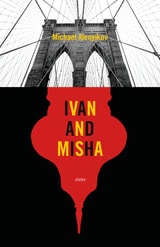
Ivan and Misha
StoriesMichael Alenyikov
Northwestern University Press, 2010
Socially adrift, father and sons search for meaning in their divergent romantic relationships. Louie embarks on a traditional heterosexual dating relationship late in life, while Ivan is sexually opportunistic and omnivorous, and Misha,a young gay man, is torn between his family and the prospect of a committed relationship. The brothers’ search for connection leads them through a multitude of subcultures, all depicted in vivid detail. An evocative and frank exploration of identity, loss, dislocation, and sexuality, Ivan and Misha marks the arrival of a unique, authentic voice.
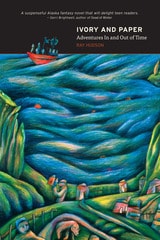
Ivory and Paper
Adventures In and Out of TimeRay Hudson
University of Alaska Press, 2018
Thirteen-year-old Booker leads a sheltered life in Vermont—until a spellbinding relic throws him skidding into a world of magic and myths come to life. Anna is an Unangax̂ teenager looking for answers after her long-absent mother reappears in her life. When a mysterious bookmark brings them together on the Aleutian Islands, they’re sent on a dangerous quest to return a magical amulet to Anna’s Unangan ancestors. As they adventure across islands that glow like moonstones, they cross paths with nineteenth-century chiefs, the mysterious Woman of the Volcano, and the sinister Real Raven. While their journey is tinged with the fantastic, it’s based in real depictions of Unangan culture and history—the first historical novel set in Unangan folklore. It’s a coming-of-age-story that will resonate with young adult readers on their own journeys to discover their personal and cultural identities.
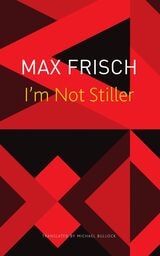
I’m Not Stiller
Max Frisch
Seagull Books, 1958
Arrested and imprisoned in a small Swiss town, a prisoner begins this book with an exclamation: “I'm not Stiller!” He claims that his name is Jim White, and that he has been jailed under false charges and under the wrong identity. To prove he is who he claims to be, he confesses to three unsolved murders and recalls in great detail an adventuresome life in America and Mexico among cowboys and peasants, in back alleys and docks. He is consumed by “the morbid impulse to convince,” but no one believes him.
This is a harrowing account—part Kafka, part Camus—of the power of self-deception and the freedom that ultimately lies in self-acceptance. Simultaneously haunting and humorous, I'm Not Stiller has come to be recognized as one of the major post-war works of fiction and a masterpiece of German literature.