Results by title
1668 books match the query 'Popular culture' and 70 start with i
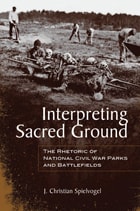
Interpreting Sacred Ground
The Rhetoric of National Civil War Parks and BattlefieldsJ. Christian Spielvogel
University of Alabama Press, 2013
A rhetorical analysis of Civil War battlefields and parks, and the ways various commemorative traditions—and their ideologies of race, reconciliation, emancipation, and masculinity—compete for dominance.
The National Park Service (NPS) is known for its role in the preservation of public sites deemed to have historic, cultural, and natural significance. In Interpreting Sacred Ground, J. Christian Spielvogel studies the NPS’s secondary role as an interpreter or creator of meaning at such sites, specifically Gettysburg National Military Park, Harpers Ferry National Historical Park, and Cold Harbor Visitor Center.
Spielvogel studies in detail the museums, films, publications, tours, signage, and other media at these sites, and he studies and analyzes how they shape the meanings that visitors are invited to construct. Though the NPS began developing interpretive exhibits in the 1990s that highlighted slavery and emancipation as central facets to understanding the war, Spielvogel argues that the NPS in some instances preserves outmoded narratives of white reconciliation and heroic masculinity, obscuring the race-related causes and consequences of the war as well as the war’s savagery.
The challenges the NPS faces in addressing these issues are many, from avoiding unbalanced criticism of either the Union or the Confederacy, to foregrounding race and violence as central issues, preserving clear and accurate renderingsof battlefield movements and strategies, and contending with the various public constituencies with their own interpretive stakes in the battle for public memory.
Spielvogel concludes by arguing for the National Park Service’s crucial role as a critical voice in shaping twentieth-first-century Civil War public memory and highlights the issues the agency faces as it strives to maintain historical integrity while contending with antiquated renderings of the past.

Interpreting and Experiencing Disney
Mediating the MouseEdited by Priscilla Hobbs
Intellect Books, 2022
It would be difficult to go through life without ever encountering a Disney product. Since the first Mickey Mouse cartoon premiered in 1928, Disney has played a central role in shaping American popular culture, and it has expanded to the global market. The company positioned itself as a titan of family entertainment, and many of its offerings, from films to consumable products, have become embedded in the minds of children and adults, woven into many of our life experiences. Fans of Disney build connections with their favorite characters and franchises, fueled by Disney’s marketing practices. Others have developed a near-cult-like relationship with the brand, equating its products with religious icons and theme park visits with pilgrimages.
This edited volume looks beyond the movies and merchandise to peer into the very heart of the Disney phenomenon: how the fan response drives the corporation’s massive marketing machine and how the corporate response, in turn, shapes the fan experience.
Interrogating Postfeminism
Gender and the Politics of Popular CultureYvonne Tasker and Diane Negra, eds.
Duke University Press, 2007
Essays by feminist film, media, and literature scholars based in the United States and United Kingdom provide an array of perspectives on the social and political implications of post-feminism. Examining magazines, mainstream and independent cinema, popular music, and broadcast genres from primetime drama to reality television, contributors consider how postfeminism informs self-fashioning through makeovers and cosmetic surgery, the “metrosexual” male, the “black chick flick,” and more. Interrogating Postfeminism demonstrates not only the viability of, but also the necessity for, a powerful feminist critique of contemporary popular culture.
Contributors. Sarah Banet-Weiser, Steven Cohan, Lisa Coulthard, Anna Feigenbaum, Suzanne Leonard, Angela McRobbie, Diane Negra, Sarah Projansky, Martin Roberts, Hannah E. Sanders, Kimberly Springer, Yvonne Tasker, Sadie Wearing

Intertextual Encounters in American Fiction, Film, and Popular Culture
Michael Dunne
University of Wisconsin Press, 2001
Intimate Communities
Representation and Social Transformation in Women's College Fiction, 1895–1910Sherrie A. Inness
University of Wisconsin Press, 1995
While other scholars have argued that the Progressive Era was the “golden age” for women’s single-sex education, pointing to the many positive depictions of the women’s college student, Inness suggests that these representations actually helped to perpetuate the status quo and did little to advance women’s social rights.
Intoxication
An Ethnography of Effervescent RevelrySébastien Tutenges
Rutgers University Press, 2023
For two decades, Sébastien Tutenges has conducted research in bars, nightclubs, festivals, drug dens, nightlife resorts, and underground dance parties in a quest to answer a fundamental question: Why do people across cultures gather regularly to intoxicate themselves?
Vivid and at times deeply personal, this book offers new insights into a wide variety of intoxicating experiences, from the intimate feeling of connection among concertgoers to the adrenaline-fueled rush of a fight, to the thrill of jumping off a balcony into a swimming pool. Tutenges shows what it means and feels to move beyond the ordinary into altered states in which the transgressive, spectacular, and unexpected take place.
He argues that the primary aim of group intoxication is the religious experience that Émile Durkheim calls collective effervescence, the essence of which is a sense of connecting with other people and being part of a larger whole. This experience is empowering and emboldening and may lead to crime and deviance, but it is at the same time vital to our humanity because it strengthens social bonds and solidarity.
The book fills important gaps in Durkheim’s social theory and contributes to current debates in micro-sociology as well as cultural criminology and cultural sociology. Here, for the first time, readers will discover a detailed account of collective effervescence in contemporary society that includes: an explanation of what collective effervescence is; a description of the conditions that generate collective effervescence; a typology of the varieties of collective effervescence; a discussion of how collective effervescence manifests in the realm of nightlife, politics, sports, and religion; and an analysis of how commercial forces amplify and capitalize on the universal human need for intoxication.
This book is also freely available online as an open access digital edition.
Download the open access ebook here. (https://www.rutgersuniversitypress.org/media/wysiwyg/documents/intoxication.pdf)
Introductory Nutrition
Manual of Basic Nutrition ExercisesSooja K. Kim
University of Wisconsin Press, 1987
Inventing High and Low
Literature, Mass Culture, and Uneven Modernity in SpainStephanie Sieburth
Duke University Press, 1994
Choosing two historical moments of sweeping material and cultural change in Spanish history, Sieburth reads two novels from the 1880s (by Benito Pérez Galdós) and two from the 1970s (by Juan Goytisolo and Carmen Martín Gaite) as fictional theories about the impact of modernity on culture and politics. Her analysis reveals that the high/low division in the cultural sphere reinforces other kinds of separations—between social classes or between men and women—dear to the elite but endangered by progress. This tension, she shows, is particularly evident in Spain, where modernization has been a contradictory and uneven process, rarely accompanied by political freedom, and where consumerism and mass culture coexist uneasily with older ways of life.
Weaving together a wide spectrum of diverse material, her work will be of interest to readers concerned with Spanish history and literature, literary theory, popular culture, and the relations between politics, economics, gender, and the novel.
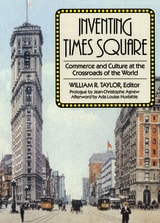
Inventing Times Square
Commerce and Culture at the Crossroads of the WorldWilliam R. Taylor
Russell Sage Foundation, 1991
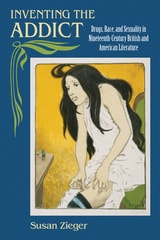
Inventing the Addict
Drugs, Race, and Sexuality in Nineteenth-Century British and American LiteratureSusan Zieger
University of Massachusetts Press, 2008
The notion of addiction has always conjured first-person stories, often beginning with an insidious seduction, followed by compulsion and despair, culminating in recovery and tentative hope for the future. We are all familiar with this form of individual life arrative, Susan Zieger observes, but we know far less about its history. “Addict” was not an available identity until the end of the nineteenth century, when a modernizing medical establishment and burgeoning culture of consumption updated the figure of the sinful drunkard popularized by the temperance movement.
In Inventing the Addict, Zieger tells the story of how the addict, a person uniquely torn between disease and desire, emerged from a variety of earlier figures such as drunkards, opium-eating scholars, vicious slave masters, dissipated New Women, and queer doctors. Drawing on a broad range of literary and cultural material, including canonical novels such as Uncle Tom's Cabin, The Strange Case of Dr. Jekyll and Mr. Hyde, and Dracula, she traces the evolution of the concept of addiction through a series of recurrent metaphors: exile, self-enslavement, disease, and vampirism. She shows how addiction took on multiple meanings beyond its common association with intoxication or specific habit-forming substances—it was an abiding desire akin to both sexual attraction and commodity fetishism, a disease that strangely failed to meet the requirements of pathology, and the citizen's ironic refusal to fulfill the promise of freedom.
Nor was addiction an ideologically neutral idea. As Zieger demonstrates, it took form over time through specific, shifting intersections of gender, race, class, and sexuality, reflecting the role of social power in the construction of meaning.
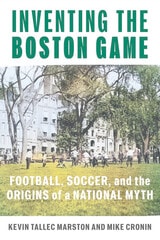
Inventing the Boston Game
Football, Soccer, and the Origins of a National MythKevin Tallec Marston and Mike Cronin
University of Massachusetts Press, 2024
Honorable Mention, 2025 North American Society for Sport History Book Award
On Boston Common stands a monument dedicated to the Oneida Football Club. It honors the site where, in the 1860s, sixteen boys played what was then called the “Boston game”—an early version of football in the United States. The boys were largely the sons of upper-class Boston Brahmins, and they lived through the transformative periods of the Civil War, Reconstruction, and the Gilded Age. Later as they grew old, in the 1920s, a handful of them orchestrated a series of commemorative events about their boyhood game. Benefitting from elite networks developed through the city’s social and educational institutions, including Harvard University, they donated artifacts (such as an oddly shaped, battered black ball) to museums, deposited self-penned histories into libraries and archives, and erected bronze and stone memorials, all to elevate themselves as the inventors of American football (and later, by extension, soccer). But was this origin story of what, by then, had become one of America’s favorite games as straightforward as they made it seem or a myth-making hoax?
In Inventing the Boston Game, Kevin Tallec Marston and Mike Cronin investigate the history of the Oneida Football Club and reveal what really happened. In a compelling, well told narrative that is informed by sports history, Boston history, and the study of memory, they posit that these men engaged in self-memorialization to reinforce their elite cultural status during a period of tremendous social and economic change, and particularly increased immigration. This exploration of the Club’s history provides fascinating insight into how and why origin stories are created in the first place.
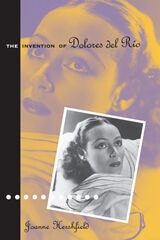
Invention Of Dolores Del Rio
Joanne Hershfield
University of Minnesota Press, 2000
Dolores del Río first came to Hollywood from Mexico in 1925 and within a year had become an international star for her role in Raoul Walsh's 1926 film What Price Glory. She would go on to work with Hollywood’s top directors, including John Ford and King Vidor, and star opposite such leading men as Henry Fonda, Fred Astaire, Orson Welles (with whom she had a scandalous affair), and Elvis Presley. Voted by Photoplay magazine in 1933 as having "the most perfect feminine figure in Hollywood," del Río was billed as one of cinema’s most "exotic" and "aristocratic" beauties. This image-carefully crafted by her producers, her studio publicists, and by del Río herself-reveals many fascinating insights into Hollywood’s evolving attitudes toward race and femininity.
In The Invention of Dolores del Río, Joanne Hershfield explores the intersection of ethnicity, gender, and stardom in American popular culture through the lens of del Río’s successful and unusually lengthy career, which lasted until the 1960s. Hershfield offers close readings of del Río’s films—discussing in detail the roles she played, her costumes and makeup, the music and mise-en-scène, advertising, publicity, and reviews—that provide a nuanced understanding of how Hollywood constructed del Río as an exotic commodity and blunted the inherent challenge her sexual and ethnic image posed to both prevailing standards of white femininity and widespread injunctions against miscegenation. Throughout this astute and imaginative case study, Hershfield looks at del Río’s Hollywood films in relation to shifting ideologies about nationality, gender, and race between the 1920s and 1960s, offering an important contribution to the debate surrounding Hollywood’s ability to both reflect the nation’s racial and sexual obsessions and influence its perceptions about ethnic and gender identity.

Iron Dads
Managing Family, Work, and Endurance Sport IdentitiesDiana Tracy Cohen
Rutgers University Press, 2016
Irvin S. Cobb
Anita Lawson
University of Wisconsin Press, 0
The story of Irvin S. Cobb is a fascinating one for many reasons. His life was not unusual at the time: a Horatio Alger rise from poor boy to world authority through hard work. Associate of celebrities of all kinds for two decades, he died in Hollywood virtually forgotten, having outlived the world he grew up in and which appreciated him.

Is There God after Prince?
Dispatches from an Age of Last ThingsPeter Coviello
University of Chicago Press, 2023
This is a book about loving things—books, songs, people—in the shadow of a felt, looming disaster. Through lyrical, funny, heart-wrenching essays, Peter Coviello considers pieces of culture across a fantastic range, setting them inside the vivid scenes of friendship, dispute, romance, talk, and loss, where they enter our lives. Alongside him, we reencounter movies like The Shining, shows like The Sopranos; videos; poems; novels by Sam Lipsyte, Sally Rooney, and Paula Fox; as well as songs by Joni Mitchell, Gladys Knight, Steely Dan, Pavement, and the much-mourned saint of Minneapolis, Prince.
Navigating an overwhelming feeling that Coviello calls “endstrickenness,” he asks what it means to love things in calamitous times, when so much seems to be shambling toward collapse. Balancing comedy and anger, exhilaration and sorrow, Coviello illuminates the strange ways the things we cherish help us to hold on to life and to its turbulent joys. Is There God after Prince? shows us what twenty-first-century criticism can be, and how it might speak to us, in a time of ruin, in an age of “Last Things.”
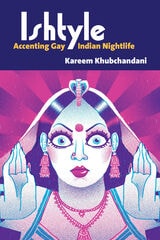
Ishtyle
Accenting Gay Indian NightlifeKareem Khubchandani
University of Michigan Press, 2020
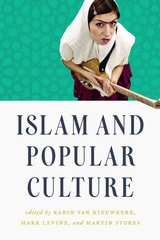
Islam and Popular Culture
Edited by Karin van Nieuwkerk, Mark LeVine, and Martin Stokes
University of Texas Press, 2016
Popular culture serves as a fresh and revealing window on contemporary developments in the Muslim world because it is a site where many important and controversial issues are explored and debated. Aesthetic expression has become intertwined with politics and religion due to the uprisings of the “Arab Spring,” while, at the same time, Islamist authorities are showing increasingly accommodating and populist attitudes toward popular culture. Not simply a “westernizing” or “secularizing” force, as some have asserted, popular culture now plays a growing role in defining what it means to be Muslim.
With well-structured chapters that explain key concepts clearly, Islam and Popular Culture addresses new trends and developments that merge popular arts and Islam. Its eighteen case studies by eminent scholars cover a wide range of topics, such as lifestyle, dress, revolutionary street theater, graffiti, popular music, poetry, television drama, visual culture, and dance throughout the Muslim world from Indonesia, Africa, and the Middle East to Europe. The first comprehensive overview of this important subject, Islam and Popular Culture offers essential new ways of understanding the diverse religious discourses and pious ethics expressed in popular art productions, the cultural politics of states and movements, and the global flows of popular culture in the Muslim world.
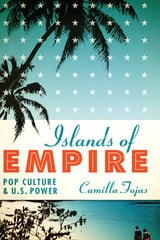
Islands of Empire
Pop Culture and U.S. PowerBy Camilla Fojas
University of Texas Press, 2014
Camilla Fojas explores a broad range of popular culture media—film, television, journalism, advertisements, travel writing, and literature—with an eye toward how the United States as an empire imagined its own military and economic projects. Impressive in its scope, Islands of Empire looks to Cuba, Guam, Hawai‘i, Puerto Rico, and the Philippines, asking how popular narratives about these island outposts expressed the attitudes of the continent throughout the twentieth century. Through deep textual readings of Bataan, Victory at Sea, They Were Expendable, and Back to Bataan (Philippines); No Man Is an Island and Max Havoc: Curse of the Dragon (Guam); Cuba, Havana, and Dirty Dancing: Havana Nights (Cuba); Blue Hawaii, Gidget Goes Hawaiian, and Paradise, Hawaiian Style (Hawai‘i); and West Side Story, Fame, and El Cantante (Puerto Rico), Fojas demonstrates how popular texts are inseparable from U.S. imperialist ideology.
Drawing on an impressive array of archival evidence to provide historical context, Islands of Empire reveals the role of popular culture in creating and maintaining U.S. imperialism. Fojas’s textual readings deftly move from location to location, exploring each island’s relationship to the United States and its complementary role in popular culture. Tracing each outpost’s varied and even contradictory political status, Fojas demonstrates that these works of popular culture mirror each location’s shifting alignment to the U.S. empire, from coveted object to possession to enemy state.
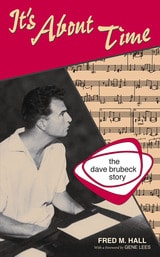
It's About Time
The Dave Brubeck StoryFred Hall
University of Arkansas Press, 1996
A much-revered icon of jazz, Dave Brubeck is, as Doug Ramsey calls him, “one of the most celebrated and successful jazz musicians of all time.”
It’s About Time, Fred Hall’s biography, explores the many influences on Brubeck’s life and music: his youth on a cattle ranch in the foothills of the Sierras; a stint in Europe with Patton’s army during World War II; the development of the West Coast jazz scene and the rise of the Dave Brubeck Quartet; musical relationships with Paul Desmond, Eugene Wright, Joe Morello, and many more jazz greats; his phenomenal experiments with polytonality and polyrhythm; his fifty-three-year marriage to Iola, manager, collaborator, and mother of their six children; and important career breakthroughs, such as the first-ever million-selling jazz single, “Take Five.”
Including an annotated discography, It’s About Time is much more than an upbeat examination of the Brubeck phenomenon. It is also a penetrating view of the culture, the music, the musicians, the recording industry, and race relations of the country and the century that gave birth to jazz.
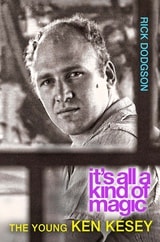
It’s All a Kind of Magic
The Young Ken KeseyRick Dodgson
University of Wisconsin Press, 2013
“Rick Dodgson has pored over Kesey’s published and unpublished writings, interviews, and historical records to write a colorful biography of this charismatic American character. The resulting portrayal challenges assumptions about Kesey’s place in the counterculture.”—Journal of American History
“Dodgson’s painstaking research unearths hidden gems of Kesey’s life that marked him as a fascinating figure.”—H-Net