Results by title
1214 books match the query 'Subjects & Themes' and 58 start with i
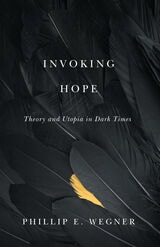
Invoking Hope
Theory and Utopia in Dark TimesPhillip E. Wegner
University of Minnesota Press, 2020
An appeal for the importance of theory, utopia, and close consideration of our contemporary dark times
What does any particular theory allow us to do? What is the value of doing so? And who benefits? In Invoking Hope, Phillip E. Wegner argues for the undiminished importance of the practices of theory, utopia, and a deep and critical reading of our current situation of what Bertolt Brecht refers to as finsteren Zeiten, or dark times.
Invoking Hope was written in response to three events that occurred in 2016: the five hundredth anniversary of the publication of Thomas More’s Utopia; the one hundredth anniversary of the founding text in theory, Ferdinand de Saussure’s Course in General Linguistics; and the rise of the right-wing populism that culminated in the election of Donald Trump. Wegner offers original readings of major interventions in theory alongside dazzling utopian imaginaries developed from classical Greece to our global present—from Theodor Adorno, Ernst Bloch, Alain Badiou, Jacques Derrida, Fredric Jameson, Sarah Ahmed, Susan Buck-Morss, and Jacques Lacan to such works as Plato’s Republic, W. E. B. Du Bois’s John Brown, Isak Dinesen’s “Babette’s Feast,” Kim Stanley Robinson’s 2312, and more. Wegner comments on an expansive array of modernist and contemporary literature, film, theory, and popular culture.
With Invoking Hope, Wegner provides an innovative lens for considering the rise of right-wing populism and the current crisis in democracy. He discusses challenges in the humanities and higher education and develops strategies of creative critical reading and hope against the grain of current trends in scholarship.

Iowa's Wild Places
Carl Kurtz
University of Iowa Press, 1996
Is There Room for Another Horse on Your Horse Ranch?
Cyrus Cassells
Four Way Books, 2024
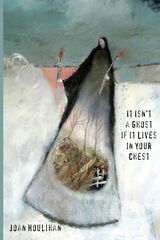
It Isn’t a Ghost if It Lives in Your Chest
Joan Houlihan
Four Way Books, 2021
Houlihan’s sixth collection of lyric poems reflects upon the persistence of what is lost and the accidental ruptures of trauma that allow re-entry into our world. These poems are at once despairing and hopeful.
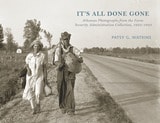
It's All Done Gone
Arkansas Photographs from the Farm Security Administration Collection, 1935-1943Patsy Watkins
University of Arkansas Press, 2018
Of the roughly one thousand FSA photographs taken in Arkansas, approximately two hundred have been selected for inclusion in this volume. Portraying workers picking cotton for five cents an hour, families evicted from homes for their connection with the Southern Tenant Farmers Union, and the effects of flood and drought that cruelly exacerbated the impact of economic disaster, these remarkable black-and-white images from Ben Shahn, Arthur Rothstein, Dorothea Lange, Walker Evans, Russell Lee, and other acclaimed photographers illustrate the extreme hardships that so many Arkansans endured throughout this era.
These powerful photographs continue to resonate, providing a glimpse of life in Arkansas that will captivate readers as they connect to a shared past.
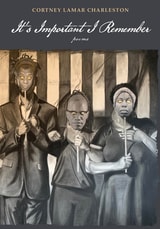
It's Important I Remember
PoemsCortney Lamar Charleston
Northwestern University Press, 2026
An incantation of strength and solace for persisting in twenty-first-century America
“History doesn’t repeat, it rhymes.” In his sweeping third collection, Charleston brings a poet’s ear for echo and rhythm to bear on American history and life after 2016. For Charleston, these rhymes cut two ways: the long tradition of American racism and fascism, and the steady pulse of Black persistence. The collection’s titular invocation frames each poem, at times an oratory to rally a crowd, in other moments a private prayer whispered as the speaker gathers himself to face another day. Charleston insists that should we cede memory of our national biography—whether to repression or indifference—we will witness the country’s dissolution into something unrecognizable to many, yet all too familiar to its most marginalized people. But with each reiteration and riff, he also invokes a tenuous hope—that if we summon an American history of Black resistance, we might still make a more perfect union.
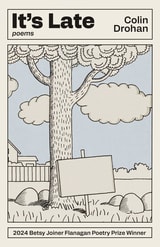
It’s Late
PoemsColin Drohan
University of Nevada Press, 2026
It’s Late approaches the world with openness and affection, prioritizing wonder about plants, animals, and other people, as well as individual and communal pasts, presents, and futures as a guiding force. The voices behind these poems dwell in a state of perpetual curiosity. Colin Drohan’s writing is full of awe but he also asks difficult questions about the world we inhabit and its present ecological crises, often discovering humor as a mechanism for real hope. It's Late imagines readers as close friends and confidants, written with a conversational quality that welcomes the absurdity of our daily lives.
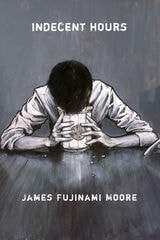
indecent hours
James Fujinami Moore
Four Way Books, 2022
For award-winning poet James Fujinami Moore, the past is never past. In this brutal debut, sensual, political, and imagined worlds collide, tracing a history of diaspora and trauma that asks: what do we do in the aftermath of violence, and why do we long to inflict it? From Vegas boxing rings and the restless sands of Manzanar to the scrolling horrors of a Facebook feed, Moore’s poems trace over intimate details with surprising humor, fierce eroticism, and a restless eye.