Results by title
3258 books match the query 'Art' and 118 start with i

Invented Skins
Epidermal Readings in Brazilian Art and LiteratureEduardo Jorge De Oliveira
Diaphanes, 2023
Skin is unique to each individual. Acting as a record, it details aspects of a person and a collective memory. Each skin possesses a sensitivity that touches and it is touched by the world. It mediates temperature fluctuations and is marked by cuts, accidents, and its own history. Skin marks us in the world, giving us the outline of individuals. Invented Skins focuses on the skin to consider the social dimension of texts and images throughout cultural memory, showing that skin is a biological reality that occupies a physical and psychic space but also unfolds in the imagination.
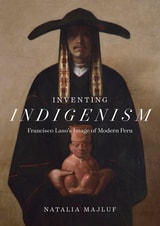
Inventing Indigenism
Francisco Laso's Image of Modern PeruNatalia Majluf
University of Texas Press, 2021
2023 ALAA Book Award, Association for Latin American Art/Arvey Foundation
A fascinating account of the modern reinvention of the image of the Indian in nineteenth-century literature and visual culture, seen through the work of Peruvian painter Francisco Laso.
One of the outstanding painters of the nineteenth century, Francisco Laso (1823–1869) set out to give visual form to modern Peru. His solemn and still paintings of indigenous subjects were part of a larger project, spurred by writers and intellectuals actively crafting a nation in the aftermath of independence from Spain. In this book, at once an innovative account of modern indigenism and the first major monograph on Laso, Natalia Majluf explores the rise of the image of the Indian in literature and visual culture. Reading Laso’s works through a broad range of sources, Majluf traces a decisive break in a long history of representations of indigenous peoples that began with the Spanish conquest. She ties this transformation to the modern concept of culture, which redefined both the artistic field and the notion of indigeneity. As an abstraction produced through indigenist discourse, an icon of authenticity, and a densely racialized cultural construct, the Indian would emerge as a central symbol of modern Andean nationalisms.
Inventing Indigenism brings the work and influence of this extraordinary painter to the forefront as it offers a broad perspective on the dynamics of art and visual culture in nineteenth-century Latin America.
Inventing Masks
Agency and History in the Art of the Central PendeZ. S. Strother
University of Chicago Press, 1998
"Its presentation, its exceptionally lively style, the perfection of its illustrations make this a stunning book, perfectly fitting for the study of a performing art and its content is indeed seminal. . . . A breakthrough."—Jan Vansina, African Studies Review
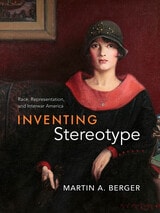
Inventing Stereotype
Race, Representation, and Interwar AmericaMartin A. Berger
University of Chicago Press, 2025
Upending a century of scholarly and popular thinking about stereotype, Martin A. Berger traces our current understanding of it to the 1920s, when American journalist and public intellectual Walter Lippmann borrowed the term from printmaking techniques and defined it as a shared mental picture that simplified a person, event, group, or thing so it could be easily grasped. Berger uncovers stereotype’s intellectual debts to philosophy, psychology, political science, and, in particular, art history and interwar racial theories.
Inventing Stereotype analyzes a series of plays, novels, and paintings from the 1920s and 1930s that sparked fierce debate about whether they employed racial stereotypes in the depiction of Black, Jewish, and other characters. Through careful attention to audience responses—parsed by race, political leanings, religion, and class—the book illustrates how artistic depictions are categorized as either stereotyped or not, relative to current representational norms, rather than to their success in conveying the authentic identities of individuals or racial groups.
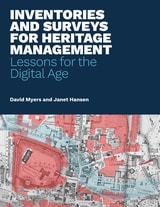
Inventories and Surveys for Heritage Management
Lessons for the Digital AgeDavid Myers
J. Paul Getty Trust, The, 2024
A critical first step in the conservation of cultural heritage is to identify and understand the places we want to protect. Inventories and surveys are essential tools in this effort, and their use in managing national, regional, and local heritage is mandated in heritage-related legislation across the globe. Despite the widespread understanding of the importance of inventories and surveys, however, practical, up-to-date guidance on how they should be created, implemented, and maintained has been substantially lacking—until now.
This publication draws from the Getty Conservation Institute’s ongoing work with heritage inventories and on the Los Angeles Office of Historic Resources’ experience with SurveyLA. It provides technical advice, guidance, and lessons learned for employing inventories and surveys as tools for heritage conservation and management.
The free online edition of this open-access publication is available at www.getty.edu/publications/inventories-and-surveys. Also available are free PDF and EPUB downloads of the book.
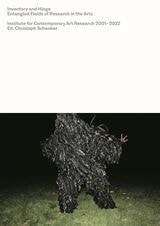
Inventory and Hinge
Entangled Fields of Research in the Arts. Institute for Contemporary Art Research 2001–2022Edited by Christoph Schenker
Diaphanes, 2023
Artistic work connects multiple competencies, areas of knowledge, and ways of life. The Institute for Contemporary Art Research (IFCAR) has made this principle its guiding ethos through organizing research projects in correspondence with this transgressive gesture, manifesting as interdisciplinary, networked knowledge production.
Inventory and Hinge offers an overview of the research projects performed over the last two decades at IFCAR through project descriptions, plentiful illustrations, and, most importantly, links and QR codes that grant access to nearly all publications and websites that were created by the individual projects he discusses.
Although art as research has a long tradition outside of institutions, Inventory and Hinge chronicles IFCAR’s drive to introduce this new discipline and establish a new artistic genre.
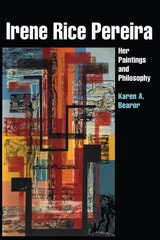
Irene Rice Pereira
Her Paintings and PhilosophyBy Karen Bearor
University of Texas Press, 1993
Artist Irene Rice Pereira was a significant figure in the New York art world of the 1930s and 1940s, who shared an interest in Jungianism with the better-known Abstract Expressionists and with various women artists and writers seeking "archetypal" imagery. Yet her artistic philosophy and innovative imagery elude easy classification with her artistic contemporaries. In consequence, her work is rarely included in studies of the period and is almost unknown to the general public. This first intellectual history of the artist and her work seeks to change that.
Karen A. Bearor thoroughly re-creates the artistic and philosophical milieu that nourished Pereira’s work. She examines the options available to Pereira as a woman artist in the first half of the twentieth century and explores how she used those options to contribute to the development of modernism in the United States. Bearor traces Pereira’s interest in the ideas of major thinkers of the period—among them, Spengler, Jung, Einstein, Cassirer, and Dewey—and shows how Pereira incorporated their ideas into her art. And she demonstrates how Pereira’s quest to understand something of the nature of ultimate reality led her from an early utopianism to a later interest in spiritualism and the occult.
This lively intellectual history amplifies our knowledge of a time of creative ferment in American art and society. It will appeal to a wide range of readers interested in the modernist period.

Irina Nakhova
Museum on the EdgeJane A. Sharp
Rutgers University Press, 2019
Released in conjunction with Nakhova’s first museum retrospective exhibition in the United States, this book includes many full-color illustrations of her work, spanning the entirety of her forty-year career and demonstrating her facility with a variety of media. It also includes essays by a variety of world-renowned curators and art historians, each cataloging Nakhova’s artistic innovations and exploring how she deals with themes of everyday life, memory, viewer engagement, and moral responsibility. It concludes with a new interview with Nakhova herself, giving new insight into her creative process and artistic goals. Irina Nakhova: Museum on the Edge provides a vivid look at the work of a visionary artist. Published in partnership with the Zimmerli Museum.

Iris Murdoch and the Search for Human Goodness
Edited by Maria Antonaccio and William Schweiker
University of Chicago Press, 1996
Inspired by Murdoch's tenacious wrestling with basic questions of human existence, these essays not only clarify her thoughts on human goodness, but also move beyond the academy to reflect on how we can and ought to undertake the human adventure in our daily lives.
Contributors are Charles Taylor, Martha Nussbaum, David Tracy, Cora Diamond, Maria Antonaccio, Elizabeth Dipple, Franklin I. Gamwell, Stanley Hauerwas, and William Schweiker. This volume also includes "Metaphysics and Ethics," a classic essay by Iris Murdoch.
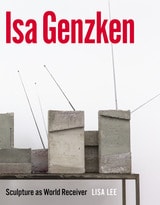
Isa Genzken
Sculpture as World ReceiverLisa Lee
University of Chicago Press, 2017
Through penetrating analyses of individual works as well as archival and interview material from the artist herself, Lee establishes four major themes in Genzken’s oeuvre: embodied perception, architecture and built space, the commodity, and the body. Contextualizing the sculptor’s engagement with fellow artists, such as Joseph Beuys and Bruce Nauman, Lee situates Genzken within a critical and historical framework that begins in politically fraught 1960s West Germany and extends to the globalized present. Here we see how Genzken tests the relevance of the utopian aspirations and formal innovations of the early twentieth century by submitting them to homage and travesty. Sure to set the standard for future studies of Genzken’s work, Isa Genzken is essential for anyone interested in contemporary art.

Issues in Curating Contemporary Art and Performance
Edited by Judith Rugg and Michèle Sedgwick
Intellect Books, 2007
To stay relevant, art curators must keep up with the rapid pace of technological innovation as well as the aesthetic tastes of fickle critics and an ever-expanding circle of cultural arbiters. Issues in Curating Contemporary Art and Performance argues that, despite these daily pressures, good curating work also requires more theoretical attention.
In four thematic sections, a distinguished group of contributors consider curation in light of interdisciplinary and emerging practices, examine conceptions of curation as intervention and contestation, and explore curation’s potential to act as a reconsideration of conventional museum spaces. Against the backdrop of cutting-edge developments in electronic art, art/science collaboration, nongallery spaces, and virtual fields, contributors propose new approaches to curating and new ways of fostering critical inquiry. Now in paperback, this volume is an essential read for scholars, curators, and art enthusiasts alike.

It Was Always About the Work
A Photojournalist's MemoirMelvin Grier
Ohio University Press, 2023
Over the last six decades, Melvin Grier’s work has vividly portrayed community, humanity, irony, fear, war, elegance, art, and, most notably, the unexpected. It Was Always About the Work includes nearly one hundred black-and-white and color photographs, including photographs from Grier’s most famous exhibitions and news stories. Whether covering local events, Cincinnati life, impoverished villages overseas, young future Marines on their way to their first post, or high fashion, Grier's photos are unmistakable and evocative.
Starting with his early years as a boy growing up in Cincinnati, this book tells the story of a young man who won his first photo contest while in the Air Force. He came home determined to make a career as a photographer, and, despite his lack of formal training and experience, he secured a job as a photographer for the Cincinnati Post. After the closure of the Cincinnati Post in 2007, Grier continued his career as an independent artist, featuring work in exhibitions such as “White People: A Retrospective” and “Clothes Encounters.” In collaboration with one of his journalist partners, reporter Molly Kavanaugh, Grier shares why it was always about the work.

It Will Be Fun and Terrifying
Nationalism and Protest in Post-Soviet RussiaFabrizio Fenghi
University of Wisconsin Press, 2021
To illuminate the role of these right-wing ideas in contemporary Russian society, Fabrizio Fenghi examines the public pronouncements and aesthetics of this influential movement. He analyzes a diverse range of media, including novels, art exhibitions, performances, seminars, punk rock concerts, and even protest actions. His interviews with key figures reveal an attempt to create an alternative intellectual class, or a “counter-intelligensia.” This volume shows how certain forms of art can transform into political action through the creation of new languages, institutions, and modes of collective participation.
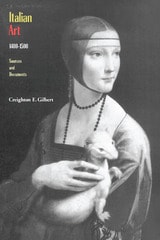
Italian Art 1400-1500
Sources and DocumentsCreighton Gilbert
Northwestern University Press, 1980
Italian Art 1500–1600
Sources and DocumentsRobert Klein and Henri Zerner
Northwestern University Press, 1966
Italian and Spanish Art 1600-1750
Sources and DocumentsRobert Enggass
Northwestern University Press, 1993

Izabela Czartoryska and the Art of Persuation in Polish Visual Culture
Agnieszka Whelan
Central European University Press, 2026
As a prominent and outspoken member of the Commonwealth’s most influential political family, Czartoryska played a significant role in shaping the public image of the reformist movement through carefully orchestrated communal and cultural displays. The book examines social interactions within the public spaces of theatres and landscape gardens, highlighting the relationship between historical events and their visual and cultural responses.
By tracing the intersections of politics, sociability, and visual culture, the study demonstrates how the life of a single individual can illuminate the broader complexities of political transformation and cultural change at the end of the eighteenth century.
Iznik Ceramics at the Benaki Museum
John Carswell, Mina Moraitou, and Melanie Gibson
Gingko, 2023
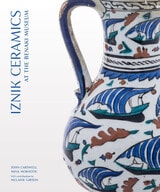
The Benaki Museum of Islamic Art in Athens has a substantial collection of Iznik ceramics, intricate works created in the city of Iznik in Asia Minor that are decorated with vibrant colors and designs. Although well known to many who visit the museum, this collection—which includes tableware, tiles, and sherds—has never before been published in its entirety.
Archaeologist, scholar, and curator John Carswell first began studying and cataloging these objects in the 1980s. This project has since been revived and guided to fruition by the curator of the Benaki Museum of Islamic Art, Mina Moraitou, who has also contributed a chapter on the Museum’s founder Antonis Benakis and the formation of its Iznik collection. The catalog brings together these admired and sought-after ceramics, featuring over three hundred illustrations of pieces from the Museum’s collection.