5159 books match the query 'Biography' and 159 start with i
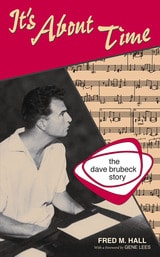
cover of It's About Time: The Dave Brubeck Story

It's About Time

The Dave Brubeck Story

Fred Hall

University of Arkansas Press, 1996

A much-revered icon of jazz, Dave Brubeck is, as Doug Ramsey calls him, “one of the most celebrated and successful jazz musicians of all time.”

It’s About Time, Fred Hall’s biography, explores the many influences on Brubeck’s life and music: his youth on a cattle ranch in the foothills of the Sierras; a stint in Europe with Patton’s army during World War II; the development of the West Coast jazz scene and the rise of the Dave Brubeck Quartet; musical relationships with Paul Desmond, Eugene Wright, Joe Morello, and many more jazz greats; his phenomenal experiments with polytonality and polyrhythm; his fifty-three-year marriage to Iola, manager, collaborator, and mother of their six children; and important career breakthroughs, such as the first-ever million-selling jazz single, “Take Five.”

Including an annotated discography, It’s About Time is much more than an upbeat examination of the Brubeck phenomenon. It is also a penetrating view of the culture, the music, the musicians, the recording industry, and race relations of the country and the century that gave birth to jazz.
[more]
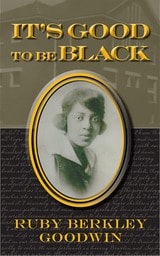
cover of It's Good to Be Black

It's Good to Be Black

Ruby Berkley Goodwin

Southern Illinois University Press, 1953

From the preface by Carmen Kenya Wadley:

“Is it good to be black? To Ruby Berkley Goodwin it was....The black she writes about has nothing to do with skin color, but it does have a great deal to do with self images, values, spiritual strength, and most of all love. Unlike the contradicting definitions of blackness we see reflected in today's crime statistics, movies, television, newspapers, political speeches, advertisements, and sociological reports, Ruby Berkley Goodwin's definition of blackness is simple and to the point: black is good. It's Good to be Black is more than the story (history) of a black family living in Du Quoin, Illinois, during the early 1900s; it is a reaffirmation for all of us who know in our hearts that there is still good in the world and that some of that good is black.”
 

[more]
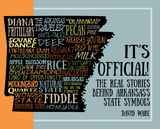
cover of It's Official!: The Real Stories behind Arkansas’s State Symbols

It's Official!

The Real Stories behind Arkansas’s State Symbols

David Ware

Butler Center for Arkansas Studies, 2015
Since Arkansas’s creation as an independent territory in 1819, its legislature has officially designated a wide assortment of symbols. Some of these refer to economic mainstays while others attest to the aspirations of those who saw a bright future for their extensive and varied community. This volume’s essays examine each of Arkansas’s officially designated symbols, outlining their genesis, their significance at the time of their adoption, and their place in modern Arkansas. Combining political narratives, natural history, and the occasional “shaggy dog” story, Ware makes a case for considering the symbols as useful keys to understanding both the Arkansas that has been and the one it hopes to be.
[more]
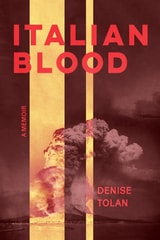
cover of Italian Blood: A Memoir

Italian Blood

A Memoir

Denise Tolan

CavanKerry Press, 2023

A memoir dealing with the aftermath of abuse.

“I’ve heard that some volcanic eruptions are soft with oozing streams of lava dancing down the side of the volcano like a Las Vegas chorus line. My father’s eruptions were quick, like bricks being thrown through a window.”

Denise Tolan’s memoir-in-essay traces the legacy of violence in an Italian American family, showing how abuse reverberates both in the body and mind of a family. The book’s first part, “Blood is Not Water,” lays out how the origins of violence can infect the roots of a family tree. The second part, “Good Blood Doesn’t Lie,” shows what grows from those roots. Italian Blood is a raw, heartbreaking series of essays where everything is connected through literal and metaphorical blood. These essays offer a connection to anyone who suffered childhood shame, violence, or fear and provide reassurance that they are not alone.
[more]
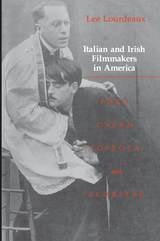
cover of Italian Irish Filmmakers

Italian Irish Filmmakers

Lee Lourdeaux

Temple University Press, 1993
"This penetrating study examines how these filmmakers confronted their cultural heritage and used it as a counterpoint to their depiction of mainstream America." --American Cinematographer In this unique film history, Lee Lourdeaux traces the impact of Irish and Italian cultures on four major American directors and their work. Defining the core values and tensions within each culture, and especially focusing on the influence of American Catholicism, he presents John Ford, Frank Capra, Francis Coppola, and Martin Scorsese as ethnic Americans and film artists. Lourdeaux shows each filmmaker on set with writers and actors, learning to bypass stereotypes in order to develop a shrewd reciprocal assimilation between his ethnic background and Anglo America. Beginning with D. W. Griffith's depiction of Irish and Italian immigrants, the author discusses Hollywood's stereotypical portrayals of ethnic priests, cops, politicians, and gangsters, as well as their surface acculturation in the movies of the 1920s. By the decade's end, John Ford was using all-American stories to embody the basic myths and tensions of Irish-American life. In his later westerns and foreign films, he tried to understand both Irish political strife and the key figures of Irish liturgy. Frank Capra pitted Italian family values against the Anglo success ethic, turning out social comedies about oppressed little people. Several decades later, Martin Scorsese and Francis Coppola were highly critical of their religio-ethnic heritage, though they gradually discovered that to outline its weaknesses, like the blind pursuit of success, was to fashion a critical mirror of mainstream America. Lourdeaux discusses a number of recent films by Coppola and by Scorsese that have not yet been analyzed in any book. And, in the chapter on Scorsese, a personal interview with the director reveals how his ethnic childhood shaped his work in film. Examining the conflicts within American culture, Lourdeaux shows how the filmmakers themselves had to confront the self-destructive aspects of their ethnic background, not only to accommodate WASP audiences but to better understand their own heritage. He also observes that ethnicity is a strong draw at the box office, as in The Godfather, because it creates a sense of the Other who can both be admired and at the same time ridiculed. Illustrated with scenes of the movies discussed, this fascinating film history tells how four of America's most famous filmmakers assimilated their ethnic backgrounds on set and on screen. "Mr. Lourdeaux walks a tricky path in analyzing the films of each [director]: avoiding the trap of excessively detailing their lives and many films, while steering clear of ethnic stereotyping. Those interested in ethnic influences on outstanding persons or in the production of films by four of the best will find the book enjoyable." --The Baltimore Sun "This is an invaluable book because it arouses critical awareness of the ethnicity underlying many Hollywood movies that might otherwise appear merely to represent American archetypes." --Journal of American Studies "A valuable addition to the literature on ethnic identity in film. The insights Lourdeaux offers into major figures like Griffith, Ford, Capra, Coppola, and Scorsese contribute significantly to our understanding of their films." --Virginia Wright Wexman, University of Illinois at Chicago "For a number of years now, church historians have been giving us an account of American Catholicism that is much richer and more varied than the older institutional accounts of the Catholic Church ever let on. In this comprehensive and insightful study, Lee Lourdeaux shows us how much the ethnic movies of directors like Ford and Capra, Coppola and Scorsese have to teach us as well about Irish- and Italian-Catholic mores and instincts." --John B. Breslin, S.J., Director "A wonderfully sensitive, intelligent study of the complex issue of how the Catholic imagination works in the creative personalities of those raised in the Catholic heritage." --Andrew M. Greeley
[more]
cover of Italian Signs, American Streets: The Evolution of Italian American Narrative

Italian Signs, American Streets

The Evolution of Italian American Narrative

Fred L. Gardaphé

Duke University Press, 1996

In the first major critical reading of Italian American narrative literature in two decades, Fred L. Gardaphé presents an interpretive overview of Italian American literary history. Examining works from the turn of the twentieth century to the present, he develops a new perspective—variously historical, philosophical, and cultural—by which American writers of Italian descent can be read, increasing the discursive power of an ethnic literature that has received too little serious critical attention.
Gardaphé draws on Vico’s concept of history, as well as the work of Gramsci, to establish a culture-specific approach to reading Italian American literature. He begins his historical reading with narratives informed by oral traditions, primarily autobiography and autobiographical fiction written by immigrants. From these earliest social–realist narratives, Gardaphé traces the evolution of this literature through tales of “the godfather” and the mafia; the “reinvention of ethnicity” in works by Helen Barolini, Tina DeRosa, and Carole Maso; the move beyond ethnicity in fiction by Don DeLillo and Gilbert Sorrentino; to the short fiction of Mary Caponegro, which points to a new direction in Italian American writing.
The result is both an ethnography of Italian American narrative and a model for reading the signs that mark the “self-fashioning” inherent in literary and cultural production. Italian Signs, American Streets promises to become a landmark in the understanding of literature and culture produced by Italian Americans. It will be of interest not only to students, critics, and scholars of this ethnic experience, but also to those concerned with American literature in general and the place of immigrant and ethnic literatures within that wide framework.
[more]
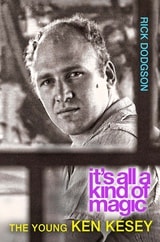
cover of It’s All a Kind of Magic: The Young Ken Kesey

It’s All a Kind of Magic

The Young Ken Kesey

Rick Dodgson

University of Wisconsin Press, 2013

Counterculture icon and best-selling author of the anti-authoritarian novels One Flew Over the Cuckoo’s Nest and Sometimes a Great Notion, Ken Kesey said he was “too young to be a beatnik and too old to be a hippie.” It’s All a Kind of Magic is the first biography of Kesey. It reveals a youthful life of brilliance and eccentricity that encompassed wrestling, writing, farming, magic and ventriloquism, CIA-funded experiments with hallucinatory drugs, and a notable cast of characters that would come to include Wallace Stegner, Larry McMurtry, Tom Wolfe, Neal Cassady, Timothy Leary, the Grateful Dead, and Hunter S. Thompson.
            Based on meticulous research and many interviews with friends and family, Rick Dodgson’s biography documents Kesey’s early life, from his time growing up in Oregon through his college years, his first drug experiences, and the writing of his most famous books. While a graduate student in creative writing at Stanford University in the late 1950s and early 1960s, Kesey worked the night shift at the Menlo Park Veterans Administration hospital, where he earned extra money taking LSD and other psychedelic drugs for medical studies. Soon he and his bohemian crowd of friends were using the same substances to conduct their own experiments, exploring the frontiers of their minds and testing the boundaries of their society.
            With the success of One Flew Over the Cuckoo’s Nest, Kesey moved to La Honda, California, in the foothills of San Mateo County, creating a scene that Hunter S. Thompson remembered as the “world capital of madness.” There, Kesey and his growing band of Merry Prankster friends began hosting psychedelic parties and living a “hippie” lifestyle before anyone knew what that meant. Tom Wolfe’s book The Electric Kool-Aid Acid Test mythologized Kesey’s adventures in the 1960s.
            Illustrated with rarely seen photographs, It’s All a Kind of Magic depicts a precocious young man brimming with self-confidence and ambition who—through talent, instinct, and fearless spectacle—made his life into a performance, a wild magic act that electrified American and world culture.

“Rick Dodgson has pored over Kesey’s published and unpublished writings, interviews, and historical records to write a colorful biography of this charismatic American character. The resulting portrayal challenges assumptions about Kesey’s place in the counterculture.”—Journal of American History
 
“Dodgson’s painstaking research unearths hidden gems of Kesey’s life that marked him as a fascinating figure.”—H-Net



[more]
cover of Izzy: A Biography of I. E. Stone

Izzy

A Biography of I. E. Stone

Cottrell, Robert

Rutgers University Press, 1993
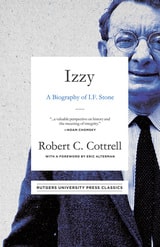
America's foremost left-wing journalist of the post-World War I era was I.F. "Izzy" Stone. At the time of his death in 1989, Stone had completed the passage he once predicted to his wife "from pariah to a character and then . . . a national institution." Now Robert Cottrell provides the first full-length biography of Stone, a fascinating story which parallels the story of the American Left. 12 illustrations.
[more]
cover of Izzy: A Biography of I. F. Stone

Izzy

A Biography of I. F. Stone

Robert C. Cottrell

Rutgers University Press, 2020

This is the classic story of the life and times of I. F. “Izzy” Stone. Robert Cottrell weaves together material from interviews, letters, archival materials, and government documents, and Stone’s own writings to tell the tale of one of the most significant journalists, intellectuals, and political mavericks of the twentieth century. The story of I. F. Stone is the tale of the American left over the course of his lifetime, of liberal and radical ideals which carried such weight throughout the twentieth century, and of journalism of the politically committed variety. Now available in a handsome new Rutgers University Press Classic edition, it is an examination of the life and career of a gregarious yet frequently grumpy loner who became his nation’s foremost radical commentator provides a window through which to examine American radicalism, left-wing journalism, and the evolution of key strands of Western intellectual thought in the twentieth century.
[more]