Results by title
4531 books match the query 'Cultural & Ethnic Studies' and 165 start with i

Irish in Wisconsin
David G. Holmes
Wisconsin Historical Society Press, 2004

Is It Good for the Jews?
More Stories from the Old Country and the NewAdam Biro
University of Chicago Press, 2009
“Jewish stories,” writes Adam Biro, “resemble every people’s stories.” Yet at the same time there is no better way to understand the soul, history, millennial suffering, or, crucially, the joys of the Jewish people than through such tales—“There’s nothing,” writes Biro, “more revelatory of the Jewish being.”
With Is It Good for the Jews? Biro offers a sequel to his acclaimed collection of stories Two Jews on a Train. Through twenty-nine tales—some new, some old, but all finely wrought and rich in humor—Biro spins stories of characters coping with the vicissitudes and reverses of daily life, while simultaneously painting a poignant portrait of a world of unassimilated Jewish life that has largely been lost to the years. From rabbis competing to see who is the most humble, to the father who uses suicide threats to pressure his children into visiting, to three men berated by the Almighty himself for playing poker, Biro populates his stories with memorable characters and absurd—yet familiar—situations, all related with a dry wit and spry prose style redolent of the long tradition of Jewish storytelling.
A collection simultaneously of foibles and fables, adversity and affection, Is It Good for the Jews? reminds us that if in the beginning was the word, then we can surely be forgiven for expecting a punch line to follow one of these days.
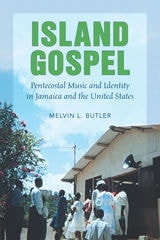
Island Gospel
Pentecostal Music and Identity in Jamaica and the United StatesMelvin L. Butler
University of Illinois Press, 2019
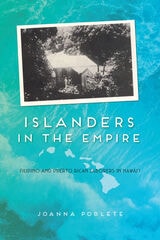
Islanders in the Empire
Filipino and Puerto Rican Laborers in Hawai'iJoAnna Poblete
University of Illinois Press, 2014
JoAnna Poblete's Islanders in the Empire: Filipino and Puerto Rican Laborers in Hawai'i takes an in-depth look at how the two groups fared in a third new colony, Hawai'i. Using plantation documents, missionary records, government documents, and oral histories, Poblete analyzes how the workers interacted with Hawaiian government structures and businesses, how U.S. policies for colonial workers differed from those for citizens or foreigners, and how policies aided corporate and imperial interests.
A rare tandem study of two groups at work on foreign soil, Islanders in the Empire offers a new perspective on American imperialism and labor issues of the era.
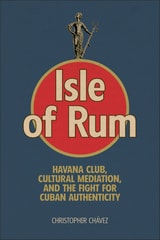
Isle of Rum
Havana Club, Cultural Mediation, and the Fight for Cuban AuthenticityChristopher Chávez
Rutgers University Press, 2024
Rather than laying claim to authentic Cuban culture, Chávez explores which aspects of Cuban culture are deemed most compelling and, therefore, most profitable by corporate marketers. As a joint venture between the Cuban state and Pernod Ricard, a global spirits marketer based in Paris, Havana Club embodies the larger process of economic reform, which was meant to reintegrate Cuba into global markets during Cuba’s Special Period in a Time of Peace.
Israel's Dead Soul
Authored by Steven Salaita
Temple University Press, 2011
In his courageous book, Israel's Dead Soul, Steven Salaita explores the failures of Zionism as a political and ethical discourse. He argues that endowing nation-states with souls is a dangerous phenomenon because it privileges institutions and corporations rather than human beings.
Asserting that Zionism has been normalized--rendered "benign" as an ideology of "multicultural conviviality"—Salaita critiques the idea that Zionism, as an exceptional ideology, leads to a lack of critical awareness of the effects of the Israeli occupation in Palestinian territory and to an unquestioning acceptance of Israel as an ethnocentric state.
Salaita's analysis targets the Anti-Defamation League, films such as Munich and Waltz with Bashir, intellectuals including Cornel West and Michael Eric Dyson, gay rights activists, and other public figures who mourn the decline of Israel's "soul." His pointed account shows how liberal notions of Zionism are harmful to various movements for justice.

Issei Buddhism in the Americas
Edited by Duncan Ryuken Williams and Tomoe Moriya
University of Illinois Press, 2010
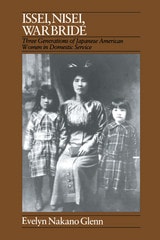
Issei, Nisei, War Bride
Three Generations of Japanese American Women in Domestic ServiceEvelyn Nakano Glenn
Temple University Press, 1988

Issues and Options for U.S.-Japan Trade Policies
Robert M. Stern, Editor
University of Michigan Press, 2002
The chapters represent a spectrum of approaches, including theoretical analysis, quantitative measurement, and evaluations of policies and institutions from economic and legal perspectives. The multi-lateral issues cover the analysis of the economic effects of a new WTO negotiating round and the range of issues that are to be addressed there, including reform of Japan's agricultural policies, services liberalization, antidumping, intellectual property rights, and trade and the environment. The regional issues include theoretical and simulation analysis of the benefits of preferential trading arrangements and the policy of open regionalism that is being sought by APEC members. U.S.-Japan bilateral relations are studied by analyzing the major actions and positions taken by the two nations in the context of their national trade laws and policies, how trade policies are implemented, the effects of bilateral trade agreements on the United States and Japan, and the interplay of legal decisions reached in WTO actions with bilateral and unilateral measures undertaken by the two nations.
The book is designed for a broad audience consisting of academic economists, lawyers, policymakers, and students interested in U.S.-Japan international economic relations.
Robert M. Stern is Professor Emeritus of Economics and Public Policy, University of Michigan.
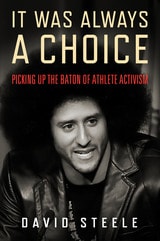
It Was Always a Choice
Picking Up the Baton of Athlete ActivismDavid Steele
Temple University Press, 2022
The recent flashpoint of Colin Kaepernick taking a knee renews a long tradition of athlete-activists speaking out against racism, injustice, and oppression. Like Kaepernick, Jackie Robinson, Paul Robeson, Muhammad Ali, Bill Russell, Tommie Smith, and John Carlos—among many others, of all races, male and female, pro and amateur—all made the choice to take a side to command public awareness and attention rather than “shut up and play,” as O. J. Simpson, Michael Jordan, and Tiger Woods did. Using their celebrity to demand change, these activists inspired fans but faced great personal and professional risks in doing so. It Was Always a Choice traces the history and impact of these decisive moments throughout the history of U.S. sports.
David Steele identifies the resonances and antecedents throughout the twentieth century of the choices faced by athletes in the post-Kaepernick era, including the advance of athletes’ political organizing in the era of activism following the death of George Floyd. He shows which athletes chose silence instead of action—“dropping the baton,” as it were—in the movement to end racial inequities and violence against Black Americans. The examples of courageous athletes multiply as LeBron James, Megan Rapinoe and the activist-athletes of the NBA, WNBA, and NFL remain committed to fighting daily and vibrantly for social change.
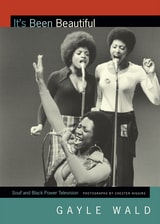
It's Been Beautiful
Soul! and Black Power TelevisionGayle Wald
Duke University Press, 2015
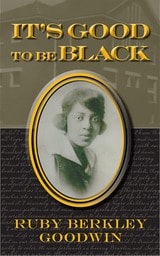
It's Good to Be Black
Ruby Berkley Goodwin
Southern Illinois University Press, 1953
From the preface by Carmen Kenya Wadley:
“Is it good to be black? To Ruby Berkley Goodwin it was....The black she writes about has nothing to do with skin color, but it does have a great deal to do with self images, values, spiritual strength, and most of all love. Unlike the contradicting definitions of blackness we see reflected in today's crime statistics, movies, television, newspapers, political speeches, advertisements, and sociological reports, Ruby Berkley Goodwin's definition of blackness is simple and to the point: black is good. It's Good to be Black is more than the story (history) of a black family living in Du Quoin, Illinois, during the early 1900s; it is a reaffirmation for all of us who know in our hearts that there is still good in the world and that some of that good is black.”

It's a Small World
International Deaf Spaces and EncountersMichele Friedner
Gallaudet University Press, 2015
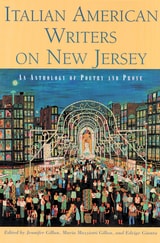
Italian American Writers on New Jersey
An Anthology of Poetry and ProseEdited by Jennifer Gillan, Maria Mazziotti Gillan, and Edvige Giunta
Rutgers University Press, 2003
This anthology gathers fiction, poetry, memoirs, oral histories, and journalistic pieces by some of the best writers to chronicle the Italian American experience in the Garden State. These works focus on ethnic identity and the distinctive culture of New Jersey, which has long been home to a large and vital Italian American community.
Filled with passion, humor, and grace, these writings depict a variety of experiences, including poignant but failed attempts at conformity and the alienation often felt by ethnic Americans. The authors also speak of the strength gained through the preservation of their communities and the realization that it is often the appreciation of their heritage that helps them to succeed. Although presented from the vantage point of only one ethnic group, this book addresses in microcosm the complexities of American identity, depicting situations and conveying emotions that will resonate with people of all immigrant ancestries.
Among the many writers featured are Gay Talese, Bill Ervolino, Tom Perrotta, Louise DeSalvo, Carole Mazo, Diane di Prima, and Maria Laurino. Each of the contributors provides a fresh perspective on the diversity, complexity, and richness of the Italian American experience.
Publication of this book is made possible in part by a grant from the Institute of Italian and Italian American Heritage Studies, State of New Jersey.

i used to love to dream
A.D. Carson
University of Michigan Press, 2020
Finalist: 2024 ACLS Open Access Book Prize Multimodal Category Finalist
“i used to love to dream” is a mixtap/e/ssay that performs hip-hop scholarship using sampled and live instrumentation; repurposed music, film, and news clips; and original rap lyrics. As a genre, the mixtap/e/ssay brings together the mixtape—a self-produced or independently released album issued free of charge to gain publicity—and the personal and scholarly essays. “i used to love to dream” names Decatur, Illinois—the author's hometown—as a reference point for place- and time-specific rapped ruminations about the ideas of growing up, moving away, and pondering one's life choices. At the same time, the tracks attempt to account for moral, philosophical, and ethical dimensions undergirding unease about authenticity, or staying true to oneself and to one’s city or neighborhood, as well as the external factors that contribute to such feelings. Using the local to ask questions about the global, “i used to love to dream” highlights outlooks on Black life generally, and Black manhood in particular, in the United States.
The tracks are presented along with liner notes and a short documentary about the making of the mixtap/e/ssay, and accompanying articles to provide context for the tracks for listeners both in classrooms and outside of them.