Results by title
4743 books match the query 'Religion' and 175 start with i
Islamic Africa 2.1
Muhammad S. Umar
Northwestern University Press, 2011
Islamic Africa promotes interaction between scholars of Islam and Africa across all continents and across historical periods. We welcome papers on any aspect of Islam and Muslim life pertaining to Africa and/or Africans from the humanities and the social sciences, especially those originating from the African continent.
Islamic Africa 2.2
Muhammad Sani Umar
Northwestern University Press, 2011
Islamic Africa promotes interaction between scholars of Islam and Africa across all continents and across historical periods. We welcome papers on any aspect of Islam and Muslim life pertaining to Africa and/or Africans from the humanities and the social sciences, especially those originating from the African continent.
Islamic Africa 3.1
Muhammad Sani Umar
Northwestern University Press, 2012
Islamic Africa promotes interaction between scholars of Islam and Africa across all continents and across historical periods. We welcome papers on any aspect of Islam and Muslim life pertaining to Africa and/or Africans from the humanities and the social sciences, especially those originating from the African continent.
Islamic Africa 3.2
Scott Reese
Northwestern University Press, 2012
Islamic Africa promotes interaction between scholars of Islam and Africa across all continents and across historical periods. We welcome papers on any aspect of Islam and Muslim life pertaining to Africa and/or Africans from the humanities and the social sciences, especially those originating from the African continent.
Islamic Africa 4.1
Scott Reese
Northwestern University Press, 2013
Islamic Africa promotes interaction between scholars of Islam and Africa across all continents and across historical periods. We welcome papers on any aspect of Islam and Muslim life pertaining to Africa and/or Africans from the humanities and the social sciences, especially those originating from the African continent.
Islamic Africa Electronic Journal
Volume 4, Issue 1 Spring 2013
Islamic Africa 4.2
Scott Reese
Northwestern University Press, 2013
Islamic Africa promotes interaction between scholars of Islam and Africa across all continents and across historical periods. We welcome papers on any aspect of Islam and Muslim life pertaining to Africa and/or Africans from the humanities and the social sciences, especially those originating from the African continent.
Islamic Africa 5.1
Scott Reese
Northwestern University Press, 2014
Islamic Africa promotes interaction between scholars of Islam and Africa across all continents and across historical periods. We welcome papers on any aspect of Islam and Muslim life pertaining to Africa and/or Africans from the humanities and the social sciences, especially those originating from the African continent.
Islamic Africa 5.2
Scott Reese
Northwestern University Press, 2014
Islamic Africa promotes interaction between scholars of Islam and Africa across all continents and across historical periods. We welcome papers on any aspect of Islam and Muslim life pertaining to Africa and/or Africans from the humanities and the social sciences, especially those originating from the African continent.
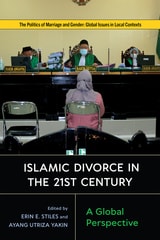
Islamic Divorce in the Twenty-First Century
A Global PerspectiveErin E. Stiles
Rutgers University Press, 2022
Islamic Reform and Political Change in Northern Nigeria
Roman Loimeier
Northwestern University Press, 2011
Loimeier's careful scholarship combines astute readings of the work of previous scholars--both published and unpublished--with archival material and the findings of his own fieldwork in Nigeria. His work fills a substantial gap in contemporary Nigerian studies. This book provides invaluable and essential reading for serious students of Nigerian politics and of Islamic movements in Africa.

Islamic Spain, 1250 to 1500
L. P. Harvey
University of Chicago Press, 1990
"Harvey not only examines the politics of the Nasrids, but also the Islamic communities in the Christian kingdoms of the peninsula. This innovative approach breaks new ground, enables the reader to appreciate the situation of all Spanish Muslims and is fully vindicated. . . . An absorbing and thoroughly informed narrative."—Richard Hitchcock, Times Higher Education Supplement
"L. P. Harvey has produced a beautifully written account of an enthralling subject."—Peter Linehan, The Observer
Islamically Integrated Psychotherapy
Uniting Faith and Professional PracticeCarrie York Al-Karam
Templeton Press, 2018
Integrating the Islamic faith with modern psychotherapy is at the forefront of the spiritually integrated psychotherapy movement. To bring this work to wider attention and to promote its continuation, Dr. Carrie York Al-Karam has brought together the present volume of nine essays, each of which is written by a Muslim clinician who practices Islamically integrated psychotherapy (IIP)—a modern approach that unites the teachings, principles, and interventions of the faith with Western therapeutic approaches.
As delineated in the Introduction, IIP has emerged from a variety of domains including the psychology of religion and spirituality, multicultural psychology and counseling, transpersonal psychology, Muslim Mental Health, and Islamic Psychology. The individual chapters then describe a variety of ways IIP is practiced by Muslim clinicians in their service provision with Muslim clients.
The contributors discuss a wide range of topics, such as how Islam can be viewed as a system for psychological wellbeing, or a “science of the soul”; what marital counseling can look like from an Islamically-integrated perspective; Prophet Mohammed as a psycho-spiritual exemplar in a new approach called The HEART Method; the use of Quranic stories in family therapy; as well as using Islamic teachings when working with Muslim children and adolescents.
A description of the various approaches is supplemented with discussions of their theoretical underpinnings as well as research-based recommendations for advancing clinical application. What emerges is a vital resource for Muslim and non-Muslim clinicians alike as well as the lay Muslim reader wanting to know more about how the Islamic faith and psychotherapy are engaging with each other in a modern clinical context.
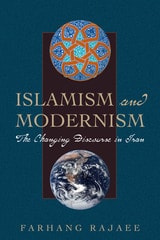
Islamism and Modernism
The Changing Discourse in IranBy Farhang Rajaee
University of Texas Press, 2007
While many previous books have probed the causes of Iran's Islamic Revolution of 1979, few have focused on the power of religion in shaping a national identity over the decades leading up to it. Islamism and Modernism captures the metamorphosis of the Islamic movement in Iran, from encounters with Great Britain and the United States in the 1920s through twenty-first-century struggles between those seeking to reform Islam's role and those who take a hardline defensive stance.
Capturing the views of four generations of Muslim activists, Farhang Rajahee describes how the extremism of the 1960s brought more confidence to concerned Islam-minded Iranians and radicalized the Muslim world while Islamic alternatives to modernity were presented. Subsequent ideologies gave rise to the revolution, which in turn has fed a restructuring of Islam as a faith rather than as an ideology.
Presenting thought-provoking discussions of religious thinkers such as Ha'eri, Burujerdi, Bazargan, and Shari'ati, along with contemporaries such as Kadivar, Soroush, and Shabestari, the author sheds rare light on the voices fueling contemporary Islamic thinking in Iran. A comprehensive study of these interwoven aspects of politics, religion, society, and identity, Islamism and Modernism offers crucial new insight into the aftermath of the Iranian Constitutional Revolution fought one hundred years ago—and its ramifications for the newest generation to face the crossroads of modernity and Islamic discourse in modern Iran today.
Islamism in the Shadow of al-Qaeda
By François Burgat
University of Texas Press, 2008
A renowned authority on Islamic movements, François Burgat lived for eighteen years in the Arab world, including his time as director of the French Center for Archaeology and Social Sciences at Yemen. He also dedicated many months to fieldwork in North Africa. Bringing Burgat's decades of expertise to the complex dialogues that have marked the post-9/11 world, Islamism in the Shadow of al-Qaeda delivers much-needed clarity and historical perspective.
In Burgat's eyes, most of the West's political and media rhetoric has only fueled al-Qaeda's case, revealing a woeful lack of comprehension regarding the violent authoritarianism that divides the Middle East and creates a breeding ground for terrorism. Islamism in the Shadow of al-Qaeda provides a primer of the three eras of political Islam, from the 1928 founding of the Muslim Brothers to the rise of post-colonial dictatorships and the current radicalization of "Generation al-Qaeda." Offering a new roadmap for stability, Burgat bridges the ideologies—political, religious, and cultural—that must be traversed if the deadly sectarianism is to be superseded.
Islamists in a Zionist Coalition
The Political and Religious OriginsUriya Shavit
Rutgers University Press, 2025
Island Gospel
Pentecostal Music and Identity in Jamaica and the United StatesMelvin L. Butler
University of Illinois Press, 2019
Islands, Islanders, and the Bible
RumInationsJione Havea
SBL Press, 2015
Explore theories, readings and interpretations from island perspectives
In this collection the authors focus on contextual, cultural, and postcolonial criticisms. This work seeks to move beyond simply reacting to, rejecting, or recasting biblical interpretations that misunderstand or mischaracterize island space. Instead it serves as an entry point to thinking biblically through the island. The contributors are Margaret Aymer, Randall C. Bailey, Roland Boer, Steed Vernyl Davidson, Jione Havea, Hisako Kinukawa, Grant Macaskill, Mosese Ma'ilo, J. Richard Middleton, Althea Spencer Miller, Aliou C. Niang, Andrew Mein, Daniel Smith-Christopher, Nasili Vaka'uta, and Elaine M. Wainwright.
Features:
- Sixteen essays by islanders rooted in Asia, America, the Caribbean, Europe, and Oceania
- Essays that invite a conversation on how being islanders and islandedness condition the way islanders read biblical texts
- Three sections of articles, two of which engage the first
Isolated Islands in Medieval Nature, Culture and Mind
Gerhard Jaritz
Central European University Press, 2011
The volume contains selected papers from an international workshop in 2005, at the Hungarian Academy in Rome. They aim at investigating the registers of fifteenth-century supplications to the Apostolic Penitentiary of the Holy See and to analyze the multiplicity of issues in which a context of the local needs of Western Christians and the central power of the Pope had been occurring.
The contributions make clear that local and individual factors and practice of Christian faith and religion must not be seen as separated from the global power of the Roman curia. The latter’s influence could become directly important for any individual in any local space, also … et usque ad ultimum terrae (Acts 1:8), in the utmost peripheries of the Christian world. The assistance by the Apostolic Penitentiary was indispensable in a large variety of cases. The occupation with such cases happened in the local and regional space as well as in the globalized centre of the Holy See.
Israel and the Assyrians
Deuteronomy, the Succession Treaty of Esarhaddon, and the Nature of SubversC. L. Crouch
SBL Press, 2014
Was Deuteronomy created to be a subversive text based on Assyian treaties?
In this new book Crouch focuses on Deuteronomy’s subversive intent, asking what would be required in order for Deuteronomy to successfully subvert either a specific Assyrian source or Assyrian ideology more generally. The book reconsiders the nature of the relationship between Deuteronomy and Assyria, Deuteronomy’s relationship to ancient Near Eastern and biblical treaty and loyalty oath traditions, and the relevance of Deuteronomy’s treaty affinities to discussions of its date.
Features:
- A thorough investigation of the nature and requirements of subversion
- A focused examination of the context in which Deuteronomy would have functioned
- An appendix focused on redactional questions related to Deuteronoy 13 and 28

Israelite Prophecy and the Deuteronomistic History
Portrait, Reality, and the Formation of a HistoryMignon R. Jacobs
SBL Press, 2013
Issei Buddhism in the Americas
Edited by Duncan Ryuken Williams and Tomoe Moriya
University of Illinois Press, 2010

It Comes From The People
Community Development and Local TheologyMary Hinsdale
Temple University Press, 1995
It Will Yet Be Heard
A Polish Rabbi's Witness of the Shoah and SurvivalIsaac Bashevis Singer
Rutgers University Press, 2019
Rabbi Thorne composed his memoir under extraordinary conditions, confined to a small underground bunker below a Polish peasant’s pigsty. But, It Will Yet Be Heard is remarkable not only for the story of its composition, but also for its moral clarity and complexity. A deeply religious man, Rabbi Thorne bore witness to forced labor camps, human degradation, and the murders of entire communities. And once he emerged from hiding, he grappled not only with survivor’s guilt, but also with the lingering antisemitism and anti-Jewish violence in Poland even after the war ended. Harrowing, moving, and deeply insightful, Rabbi Thorne’s firsthand account offers a rediscovered perspective on the twentieth century’s greatest tragedy.
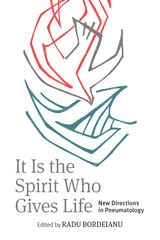
It is the Spirit Who Gives Life
New Directions in PneumatologyRadu Bordeianu
Catholic University of America Press, 2022
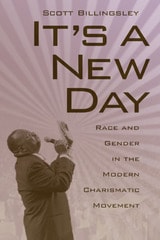
It's a New Day
Race and Gender in the Modern Charismatic MovementScott Billingsley
University of Alabama Press, 2008