Results by title
805 books match the query '18th century' and 23 start with j

Jan Compagnie in the Straits of Malacca, 1641–1795
Mis Sea#96Dianne Lewis
Ohio University Press, 1995
In 1500 Malay Malacca was the queen city of the Malay Archipelago, one of the great trade centers of the world. Its rulers, said to be descendents of the ancient line of Srivijaya, dominated the lands east and west of the straits. The Portuguese, unable to compete in the marketplace, captured the town. They were followed a hundred years later by the Dutch who, lured in their turn by Malacca as symbol of the wealth and luxury of the east, were to rule this port city for more than a hundred and fifty years.
It proved to be, in many ways, an empty conquest. Portuguese and Dutch governments imposed restrictions on Malacca’s trade, driving it to the newer ports in the north and south. Moreover, by the time the Dutch finally secured the town, they had established their own port at Batavia, in Java. Dutch Malacca was, by 1701, “a place of little trade.” Why then did the Dutch maintain their occupation of the port? Lewis draws on the extensive correspondence of the Dutch East India Company to examine the role the Dutch played as Malacca’s rulers in the eighteenth-century Malay world, arguing that their presence, though generally too weak to secure their own interests, disrupted the traditional political and economic organization of the Malay polities, contributing significantly to the disarray that beset the Malay world at the beginning of the nineteenth century.
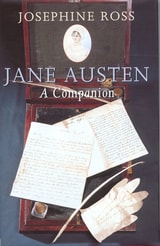
Jane Austen
A CompanionRoss, Josephine
Rutgers University Press, 2003
This illuminating, entertaining, up-to-date companion is the only general guide to Jane Austen, her work, and her world. Josephine Ross explores the literary scene during the time Austen's works first appeared: the books considered classics then, the "horrid novels" and romances, and the grasping publishers. She looks at the architecture and décor of Austen's era that made up "the profusion and elegance of modern taste." Regency houses for instance, Chippendale furniture, and "picturesque scenery." On a smaller scale she answers questions that may baffle modern readers. What, for example, was "hartshorn"? How did Lizzy Bennet "let down" her gown to hide her muddy petticoat? Ross shows us the fashions, and the subtle ways Jane Austen used clothes to express character. Courtship, marriage, adultery, class and "rank," mundane tasks of ordinary life, all appear, as does the wider political and military world.
This book will add depth to all readers' enjoyment of Jane Austen, whether confirmed addicts or newcomers wanting to learn about one of the world's most popular and enduring writers.
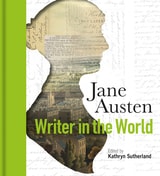
Jane Austen
Writer in the WorldEdited by Kathryn Sutherland
Bodleian Library Publishing, 2017
Brilliantly edited by Kathryn Sutherland, Jane Austen: Writer in the World offers a life story told through the author's personal possessions. In her teenage notebooks, literary jokes give a glimpse of her family’s shared love of reading and satire, which can be seen in the subtler humor of Austen’s published work. Pieces from Austen’s hand-copied collection of sheet music reveal how music was used to create networks far more intricate than the simple pleasures of home recital. A beautiful brown silk pelisse-coat, together with lively letters between Austen and Cassandra, give insight into her views on fashion. All feature in this lavishly illustrated collection, along with homemade booklets in which she composed her novels, portraits made of Austen during her lifetime, and much more. Also included are objects associated with the era in which Austen lived: newspaper articles, naval logbooks, and contemporary political cartoons, shedding light on Austen’s wider social and political worlds.
This collection makes a delightful modern-day keepsake from one of the world’s best-loved writers on the two-hundredth anniversary of her death.
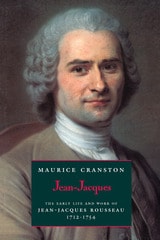
Jean-Jacques
The Early Life and Work of Jean-Jacques Rousseau, 1712-1754Maurice Cranston
University of Chicago Press, 1991
"[An] admirable biography which is as meticulous, calm, reasonable, and judicious as its subject is passionate and tumultuous."—Keith Michael Baker, Washington Post Book World
"The definitive biography, as scholarly as it is entertaining."—The Economist
"Exceptionally fresh . . . . [Cranston] seems to know exactly what his readers need to know, and thoughtfully enriches the background—both physical and intellectual—of Rousseau's youthful peregrinations . . . . He makes the first part of Rousseau's life as absorbing as a picaresque novel. His fidelity to Rousseau's ideas and to his life as it was lived is a triumph of poise."—Naomi Bliven, The New Yorker
"The most outstanding achievement of Professor Cranston's own distinguished career."—Robert Wokler, Times Literary Supplement
Maurice Cranston (1920-1993), a distinguished scholar and recipient of the James Tait Black Memorial Prize for his biography of John Locke, was professor of political science at the London School of Economics. His numerous books include The Romantic Movement and Philosophers and Pamphleteers, and translations of Rousseau's The Social Contract and Discourse on the Origins of Inequality.
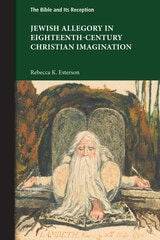
Jewish Allegory in Eighteenth-Century Christian Imagination
Rebecca K. Esterson
SBL Press, 2023
Rebecca K. Esterson explores how Christian methods of biblical interpretation shifted during the eighteenth century, producing a rhetorical rejection of allegory while embracing literalism. Under the influence of Enlightenment concepts of human reason and advances in the experimental sciences, Christian interpreters began casting Jewish biblical interpretation as allegorical, while presenting Christian interpretation as literal. This shift in self-understanding allowed Christians to portray their own interpretations as scientifically, philosophically, and historically superior, resulting in a new way of othering the Jewish people. This study of biblical exegesis, theology, philosophy, and the arts in English, Swedish, and German contexts is an essential resource for scholars interested in biblical reception history and the history of Jewish-Christian relations.
Jewish Philosophical Politics in Germany, 1789–1848
Sven-Erik Rose
Brandeis University Press, 2014
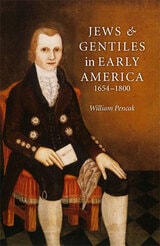
Jews and Gentiles in Early America
1654-1800William Pencak
University of Michigan Press, 2005
Jews at the Crossroads
Tradition and Accomodation during the Golden Age of the Hungarian NobilityHoward N. Lupovitch
Central European University Press, 2007
Jihad in West Africa during the Age of Revolutions
Paul E. Lovejoy
Ohio University Press, 2016
In Jihād in West Africa during the Age of Revolutions, a preeminent historian of Africa argues that scholars of the Americas and the Atlantic world have not given Africa its due consideration as part of either the Atlantic world or the age of revolutions. The book examines the jihād movement in the context of the age of revolutions—commonly associated with the American and French revolutions and the erosion of European imperialist powers—and shows how West Africa, too, experienced a period of profound political change in the late eighteenth through the mid-nineteenth centuries. Paul E. Lovejoy argues that West Africa was a vital actor in the Atlantic world and has wrongly been excluded from analyses of the period.
Among its chief contributions, the book reconceptualizes slavery. Lovejoy shows that during the decades in question, slavery expanded extensively not only in the southern United States, Cuba, and Brazil but also in the jihād states of West Africa. In particular, this expansion occurred in the Muslim states of the Sokoto Caliphate, Fuuta Jalon, and Fuuta Toro. At the same time, he offers new information on the role antislavery activity in West Africa played in the Atlantic slave trade and the African diaspora.
Finally, Jihād in West Africa during the Age of Revolutions provides unprecedented context for the political and cultural role of Islam in Africa—and of the concept of jihād in particular—from the eighteenth century into the present. Understanding that there is a long tradition of jihād in West Africa, Lovejoy argues, helps correct the current distortion in understanding the contemporary jihād movement in the Middle East, Afghanistan, Pakistan, and Africa.

Johann Scheibe
Organ Builder in Leipzig at the Time of BachLynn Edwards Butler
University of Illinois Press, 2022
Drawing on extensive research and previously untapped archival materials, Lynn Edwards Butler explores Scheibe's professional relationships and the full range of his projects. These assignments included the three-manual organ for St. Paul’s Church, renovations of the organs in the important churches of St. Thomas and St. Nicholas, and the lone surviving example of Scheibe's craft, a small organ in the nearby village of Zschortau. Viewing Scheibe within the context of the era, Butler illuminates the music scene of Bach's time as she follows the life of a gifted craftsman and his essential work on an instrument that anchored religious musical practice and community.
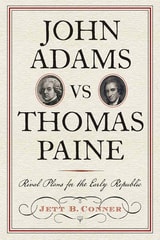
John Adams vs Thomas Paine
Rival Plans for the Early RepublicJett B. Conner
Westholme Publishing, 2018
Initially admiring Thomas Paine’s efforts for independence, John Adams nevertheless was rattled by the political philosophy of Common Sense and responded to it by publishing his Thoughts on Government to counteract Paine’s proposals, which Adams said were far too “democratical.” Although John Adams is given credit for his substantive contributions to American constitutionalism, especially his notions of separation of powers, checks and balances, and representation, in John Adams vs Thomas Paine: Rival Plans for the Early Republic, historian Jett B. Conner makes the case that Thomas Paine was more than just a revolutionary figure who spurred Americans toward declaring independence. Common Sense made important contributions to American constitutional thought, too, particularly its call for more equal representation, popular sovereignty, a constitutional convention, and a federal system of governance with a strong central government. The book explores how the two rivals helped shape America’s first constitutions—the Articles of Confederation and those of several states— and how they continued contributing to American political thought as it developed during the so-called “critical period” between the adoption of the Articles of Confederation and the start of the Constitutional Convention of 1787. It also focuses on the creation of our democratic republic and compares Paine’s and Adams’s approaches to structuring constitutions to ensure free government while guarding against abuses of power and the excesses of democratic majorities. An abridged version of Common Sense and the short but complete Thoughts on Government are included in an appendix for easy reader reference.
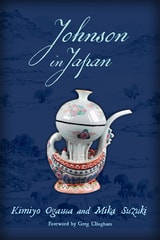
Johnson in Japan
Kimiyo Ogawa
Bucknell University Press, 2021
Published by Bucknell University Press. Distributed worldwide by Rutgers University Press.

Jonathan Odell
The Loyalist Poet of the American RevolutionCynthia Dubin Edelberg
Duke University Press, 1987
One of the best-educated of the colonialists, Odell, a physician turned Anglican minister and then writer, lived the gamut of experience: powerful friends sustained him and the British commanders-in-chief Sir William Howe, Henry Clinton, and Sir Guy Carleton employed him; nevertheless, during the war he was a lonely exile ("Tory hunters" forced him from his home in 1775), and, at the end of the war, when his hope for reconciliation between the Loyalists and the Americans came to nothing, he reluctantly emigrated to Canada.
Here is a voice, all but silenced for over two hundred years, that must now be heard if we are to better understand the American Revolution.
Jonathan Swift
Irish Blow-InEugene Hammond
University of Delaware Press, 2016
Jonathan Swift: Irish Blow-in covers the arc of the first half of Jonathan Swift’s life, offering fresh details of the contentment and exuberance of his childhood, of the support he received from his grandmother, of his striking affection for Esther Johnson from the time she was ten years old (his pet name for her in her twenties was “saucebox”), of his precocious entry into English politics with his Contests and Dissensions pamphlet, of his brilliant and much misunderstood Tale of a Tub, and of his naive determination to do well both as a vicar of the small parish of Laracor in Ireland and as a writer for the Tory administration trying to pull England out of debt by ending the war England was engaged in with France.
I do not share with past biographers the sense that Swift had a deprived childhood. I do not share the suspicion that most of Swift’s enmities were politically motivated. I do not feel critical of him because he was often fastidious with his money. I do not think he was insincere about his religious faith. His pride, his sexual interests, his often shocking or uninhibited language, his instinct for revenge – emphasized by many previous biographers – were all fundamental elements of his being, but elements that he either used for rhetorical effect, or that he tried to keep in check, and that he felt that religion helped him to keep in check. Swift had as firm a conviction as did Freud that we are born with wayward tendencies; unlike Freud, though, he saw both religion and civil society as necessary and helpful checks on those wayward tendencies, and he (frequently, but certainly not always) acknowledged that he shared those tendencies with the rest of us.
This biography, in two books, Jonathan Swift: Irish Blow-in and Jonathan Swift: Our Dean, will differ from most literary biographies in that it does not aim to show how Swift’s life illuminates his writings, but rather how and why Swift wrote in order to live the life he wanted to live. I have liberally quoted Swift’s own words in this biography because his inventive expression of ideas, both in his public works and in his private letters, was what has made him a unique and compelling figure in the history of literature. I hope in these two books to come closer than past biographies to capturing how it felt to Swift himself to live his life.
Published by University of Delaware Press. Distributed worldwide by Rutgers University Press.
Jonathan Swift
Our DeanEugene Hammond
University of Delaware Press, 2016
Jonathan Swift: Our Dean details the political climax of his remarkable career—his writing and publication of The Drapier’s Letters (1724), Gulliver’s Travels (1726), and A Modest Proposal (1729)—stressing the relentless political opposition he faced and the numerous ways, including through his sermons, that he worked from his political base as Dean of St. Patrick’s Cathedral, psychologically as well as physically just outside the Dublin city walls, to attempt to rouse the Irish people to awareness of the ways that England was abusing them.
This book faces squarely the likelihood that Swift had a physical affair with Esther Vanhomrigh between 1719 and 1723, and reassesses in the light of that likelihood his conflicting relations with Esther Vanhomrigh and Esther Johnson. It traces the many loving friendships with both men and women in Ireland that sustained Swift during the years when his health gradually failed him, enabling him to continue indefatiguably, both through his writings and his authority as Dean of St. Patrick’s, to contribute to the public welfare in the face of relentless British attempts to squeeze greater and greater profits out of their Irish colony. Finally, it traces how Swift’s political indignation led to his treating many people, friends and enemies, cruelly during the 1730s, even while his humor and his ability to make and attract new friends sustained themselves until his memory finally failed him in 1742.
This biography, in two books, Jonathan Swift: Irish Blow-in and Jonathan Swift:Our Dean, comes closer than past biographies to capturing how it felt to Swift himself to live his life.
Published by University of Delaware Press. Distributed worldwide by Rutgers University Press.
Journal of the American Revolution 2015
Annual VolumeTodd Andrlik
Westholme Publishing, 2015
The Journal of the American Revolution, Annual Volume 2015, presents the journal’s best historical research and writing over the past calendar year. The volume is designed for institutions, scholars, and enthusiasts to provide a convenient overview of the latest research and scholarship in American Revolution studies. The sixty articles in the 2015 edition include:
How Samuel Adams Recruited Sons of Liberty by J. L. Bell
A Patriot–Loyalist: Playing Both Sides by Todd W. Braisted
How Old Were Redcoats? Age and Experience of British Soldiers in America by Don N. Hagist
The Great West Point Chain by Hugh T. Harrington
Raid Across the Ice: The British Operation to Capture Washington by Benjamin Huggins
So Heavy a Trial: The Burning of New York’s First Capital by Jack Kelly
An Elegant Dinner with General Washington at Valley Forge Headquarters by Nancy K. Loane
Mount Vernon: A Landscape for the New Cincinnatus by Joseph Manca
The British Spy Plot to Capture Fort Ticonderoga by John A. Nagy
The Top Ten British Losers by Andrew O’Shaughnessy
Honorable Lords and Pretend Barons: Sorting Out the Noblemen of the American Revolution by Jim Piecuch
Paul Revere’s Other Riders and Rides by Ray Raphael
William Lee and Oney Judge: A Look at George Washington and Slavery by Mary V. Thompson.
Journal of the American Revolution 2016
Annual VolumeTodd Andrlik
Westholme Publishing, 2016
Journal of the American Revolution 2017
Annual VolumeTodd Andrlik
Westholme Publishing, 2017
The forty-six articles in the 2017 edition include:
Why the British Lost the Battle of Sullivan’s Island by C. L. Bragg
The Tiger Aids the Eaglet: How India Secured America’s Independence by Richard Sambasivam
How Yorktown Almost Couldn’t Afford to Happen by John Smith
Was Richard Stockton a Hero? by Christian M. McBurney
The Southern Expedition of 1776: The American Revolution’s Best Kept Secret by Roger Smith
Religious Liberty and Its Virginia Roots by Alex Colvin
Mount Vernon During the American Revolution by Mary V. Thompson
Why God is in the Declaration but not the Constitution by Anthony J. Minna
Colonel Tench Tilghman: George Washington’s Eyes and Ears by Jeff Dacus
The Stockbridge-Mohican Community, 1775–1783 by Bryan Rindfleisch
Two Years Aboard the Welcome: The American Revolution on Lake Huron by Tyler Rudd Putman
Journal of the American Revolution 2018
Annual VolumeDon N. Hagist
Westholme Publishing, 2018
The Journal of the American Revolution, Annual Volume 2018, presents the journal’s best historical research and writing over the past calendar year. The volume is designed for institutions, scholars, and enthusiasts to provide a convenient overview of the latest research and scholarship in American Revolution studies. The forty-one articles in the 2018 edition include:
Anti-Indian Radicalization in the Early American West, 1774–1795 by Darren R. Reid
The Setauket Raid, December 1777 by Phillip R. Giffin
The 3rd New Jersey Regiment’s Plundering of Johnson Hall by Philip D. Weaver
A Proposed Alliance of the Knights of Malta and the United States of America by Bruce Ware Allen
Country Crowds in Revolutionary Massachusetts: Mobs and Militia by Ray Raphael
Lafayette: An Acerbic Tongue or an Incisive Judge of Character? by Gene Procknow
Admiral Rodney Ousts the Jews from St. Eustatius by Louis Arthur Norton
Preventing Slave Insurrection in South Carolina & Georgia, 1775–1776 by Jim Piecuch
The “P” is for Profit: Revolutionary War Privateers and the Slave Trade by Michael Thomin
The Remarkable Spanish Pilgrimage of John Adams by John L. Smith, Jr.
Thomas Paine, Deism, and the Masonic Fraternity by Shai Afsai
A Fresh Look at Major Patrick Ferguson by Wayne Lynch
Displaced: The Donation People of 1775 by Katie Turner Getty
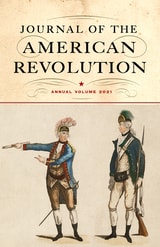
Journal of the American Revolution 2021
Annual VolumeDon N. Hagist
Westholme Publishing, 2021
The Journal of the American Revolution, Annual Volume 2021, presents the journal’s best historical research and writing over the past calendar year. The volume is designed for institutions, scholars, and enthusiasts to provide a convenient overview of the latest research and scholarship in American Revolution and Founding Era studies. The thirty-four articles in the 2021 edition include:
Alexander Hamilton’s Missing Years: New Discoveries and Insights into the Little Lion’s Caribbean Childhood by Ruud Stelten and Alexandre Hinton
The Lenape Origins of an Independent America: The Catalyst of Pontiac’s War, 1763–1765 by Kevin A. Conn
Impeachment: The Framers Debate and Discuss by Ray Raphael
The First Efforts to Limit the African Slave Trade by Christian M. McBurney
What Killed Prisoners of War?—A Medical Investigation by Brian Patrick O'Malley
The Mysterious March of Horatio Gates by Andrew Waters
Minorcans, New Smyrna, and the American Revolution in East Florida by George Kotlik
Stony Point: The Second Occupation, July–October 1779 by Michael J. F. Sheehan
A Demographic View of North Carolina Militia and State Troops, 1775–1783 by Douglas R. Dorney, Jr.
The Revolutionary War Origin of the Whistleblower Law by Louis Arthur Norton
Mapping the Battle of Eutaw Springs: Modern GIS Solves a Historic Mystery by Stephen John Katzberg
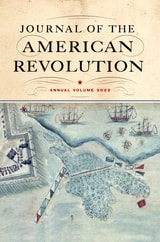
Journal of the American Revolution 2022
Annual VolumeDon N. Hagist
Westholme Publishing, 2022
The year’s best articles from the leading on-line source of new research on the Revolution and Founding eras
The Journal of the American Revolution, Annual Volume 2022, presents the journal’s best historical research and writing over the past calendar year. The volume is designed for institutions, scholars, and enthusiasts to provide a convenient overview of the latest research and scholarship in American Revolution and Founding Era studies. This year's articles are:
Massachusettensis and Novanglus: The Last Great Debate Prior to the War by James M. Smith
Wampum Belts to Canada: Stockbridge Indian Ambassadors’ Dangerous 1775 Peace Mission by Mark R. Anderson
Ethan Allen’s “Motley Parcel of Soldiery” at Montreal by Mark R. Anderson
The Devil at the Helm: A Quote That Went Astray by Don N. Hagist
Thomas Knowlton’s Revolution by David Price
Major Robert Rogers and the American Revolution by Scott M. Smith
La Petite Guerre and Indian Irregular Manner of War: Siblings, But Not Twins by Brian Gerring
George Washington and the First Mandatory Immunization by Richard J. Werther
French Adventurers, Patriots, and Pretentious Imposters in the Fight for American Independence by Arthur S. Lefkowitz
The Cherokee-American War from the Cherokee Perspective by Jordan Baker
The Numerical Strength of George Washington’s Army During the 1777 Philadelphia Campaign by Gary Ecelbarger and Michael C. Harris
A Reconsideration of Continental Army Numerical Strength at Valley Forge by Gary Ecelbarger and Michael C. Harris
American Indians at Valley Forge by Joseph Lee Boyle
The Discovery of a Letter from a Soldier of the First Rhode Island Regiment by Christian McBurney
“The Predicament We Are In”: How Paperwork Saved the Continental Army by Mike Matheny
Sir Henry Clinton’s Generalship by John Ferling
The Varick Transcripts and the Preservation of the War by Justin McHenry
“A Mere Youth”: James Monroe’s Revolutionary War by John A. Ruddima
Haitian Soldiers at the Siege of Savannah by Robert S. Davis
George Washington’s Culper Spy Ring: Separating Fact from Fiction by Bill Bleyer
Texas, Cattle, Cowboys, Ranchers, Indian Raids, and the American Revolution by George Kotlik
The Odyssey of Loyalist Colonel Samuel Bryan by Douglas R. Dorney, Jr.
“She Had Gone to the Army . . . to Her Husband”: Judith Lines’s Unremarked Life by John U. Rees
The Yorktown Tragedy: George Washington’s Slave Roundup by Gregory J. W. Urwin
Such as are Absolutely Free: Benjamin Thompson’s Black Troopers by Todd W. Braisted
The King of Sweden: Friendly Foe of the United States by Richard Werther
Shifting Indian Policy of the Articles of Confederation by John DeLee
Justice, Mercy, and Treason: John Marshall’s and Mercy Otis Warren’s Treatments of Benedict Arnold by Ray Mirante
A Chance Amiss: George Washington and the Fiasco of Spain’s Gift Diplomacy by Elisa Vargas
The Constitutional Convention Debates the Electoral College by Jason Yonce
Respected Citizen of Washington City: The Mystery of Will Costin, Freed Mount Vernon Slave by David O. Stewart
The Impeachment of Senator William Blount by Andrew A. Zellers-Frederick
Instinctive Temporary Unity: Examining Public Opinion During the Whiskey Rebellion by Jonathan Curran
“Good and Sufficient Testimony”: The Development of the Revolutionary War Pension Plan by Michael Barbieri
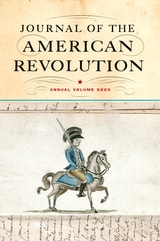
Journal of the American Revolution 2023
Annual VolumeDon N. Hagist
Westholme Publishing, 2023
The year’s best articles from the leading on-line source of new research on the American Revolution and Founding Eras
The Journal of the American Revolution, Annual Volume 2023, presents the journal’s best historical research and writing over the past calendar year. The volume is designed for institutions, scholars, and enthusiasts to provide a convenient overview of the latest research and scholarship in American Revolution and Founding Era studies. Chosen by the Journal's editorial board, this year's articles are:
Charles Thomson and the Delaware by James M. Smith
Benjamin Franklin’s Unconventional Marriage to Deborah Read by Nancy Rubin Stuart
Governor William Franklin: Sagorighweyoghsta, “Great Arbiter” or “Doer of Justice” by Joseph E. Wroblewski
One of the “Powers for Good in the World:” Mercy Otis Warren by James M. Deitch
The British Soldiers Who Marched to Concord, April 19, 1775 by Don N. Hagist
Virginian Ned Streater, African American Minute Man by Patrick H. Hannum
The 1775 Duel Between Henry Laurens and John Faucheraud Grimké by Aaron J. Palmer
Washington’s Final Retreat: Asylum? by Alexander Lenarchyk
George III’s (Implicit) Sanction of the American Revolution by M. Andrew Holowchak
Edward Hand’s American Journey by David Price
Jemima Howe, Frontier Pioneer to Wealthy Widow by Jane Strachan
Hell’s Half-Acre: The Fall of Loyalist Crean Brush by Eric Wiser
Thomas Plumb, British Soldier, Writes Home from Rhode Island by Don N. Hagist
Unraveling the Beginning and Final Phasesin the Emergence of the French Alliance by Marvin L. Simner
Marinus Willett: The Exploits of an Unheralded War Hero by Richard J. Werther
Point/Counterpoint, 1777 Style: Dueling Proclamations from Israel Putnam and William Tryon by Todd W. Braisted
Did George Washington Swear at Charles Lee During the Battle of Monmouth? by Christian McBurney
Black Drummers in a Redcoat Regiment by Don N. Hagist
Under the Banner of War: Frontier Militia and Uncontrolled Violence by Timothy C. Hemmis
Rhode Island Acts to Prevent an Enslaved Family from Being Transported to the South by Christian McBurney
British Soldier John Ward Wins Back His Pocketbook by Don N. Hagist
Anthony Wayne’s Repulse at Bull’s Ferry, July 21, 1780 by Jim Piecuch
Two Hurricanes One Week Apart in 1780 by Bob Ruppert
Top Ten Weather Interventions by Don N. Hagist
The Fruits of Victory: Loyalist Prisoners in the Aftermath of Kings Mountain by William Caldwell
Top Ten Quotes by Francis Lord Rawdon by Todd W. Braisted
Russia and the Armed Neutrality of 1780 by Eric Sterner
Prelude to Yorktown: Washington and Rochambeau in New York by Benjamin Huggins
The Abdication(s) of King George III by Bob Ruppert
Jemima Howe: Two Competing Captivity Narratives by Jane Strachan
The Articles of Confederation—A Silver Lining by Richard J. Werther
Undeceived: Who Would Write the Political Story of the Revolution? by James M. Smith
Partisan Politics and the Laws Which Shaped the First Congress by Samuel T. Lair
“Characters Pre-eminent for Virtue and Ability”: The First Partisan Application of the Electoral College by Shawn David McGhee
Weaponizing Impeachment: Justice Samuel Chase and President Thomas Jefferson’s Battle Over the Process by Al Dickenson
Insurrection and Speculation: A Farmer, Financier, and a Surprising “Sharper” Seeded the Constitution by Scott M. Smith
Natural History in Revolutionary and Post-Revolutionary America by Matteo Giuliani
A Great Englishman? British Views of George Washington, from Revolution to Rapprochement by Sam Edwards
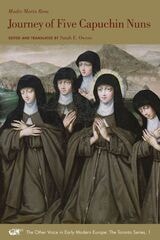
Journey of Five Capuchin Nuns
Madre María Rosa
Iter Press, 2009
Journey of Five Capuchin Nuns contains all the elements of a riveting adventure story. Through the eyes of the Mother Abbess, María Rosa, the reader is taken along on this journey through wars, pirates, disease, travel on the high seas, and treacherous mountain passes in the Andes. Five nuns set out in the early 1700s from their cloistered convent in Madrid, Spain, to travel halfway around the world to Lima, Peru. The journey lasted three years—an odyssey not all of them would complete. Yet, this unique historical document is so much more than a typical travel narrative. It illuminates the eighteenth-century way of life of religious women on both sides of the Atlantic basin. María Rosa’s lively prose attests to the literary connection among women religious writers of Spain and Latin America. This annotated edition and first-ever English translation of the manuscript will be of interest to scholars, students and anyone who wants to learn more about women’s history.