Results by title
3703 books match the query '19th century' and 53 start with j
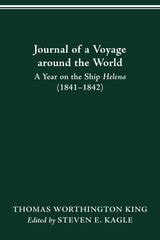
JOURNAL OF A VOYAGE AROUND THE WORLD
A YEAR ON THE SHIP HELENA (1841-1842)THOMAS WORTHINGTON KING
The Ohio State University Press, 2002
In 1841 Thomas Worthington King accepted a position as supercargo on the Helena, a ship some have called “the first American clipper,” as it was about to make its maiden voyage to China. Journal of a Voyage around the World recounts the travel of Thomas Worthington King on the Helena from 1841 to 1842.
In full and well-written entries, King recounts the routines and surprises of life at sea, where storms and calms could be equally threatening, and the next day might bring a stop at St. Helena to see Napoleon’s tomb or an encounter with pirates. King provides details often missing from histories that give a real sense of the period. In his description of Chile and Peru we learn about activities as diverse as cockfighting and courtship. We learn about produce and prisons, mints and monasteries, fruits and fashions. In his account of China, King vividly describes rivers so full of boats that one could “see no water—nothing but the large mat sales” and calm groves of “green lychee, or broad leaved & rustling plantain.”
Perhaps the most important subject of the diary is the diarist himself, whose talent and confidence develop on the pages of his record. Thomas Worthington King was born and raised in Chillicothe, Ohio, and was the grandson of two Ohio Senators: Rufus King and Thomas Worthington.

Jack London and the Sea
Anita Duneer
University of Alabama Press, 2022
The first book-length study of London as a maritime writer
Jack London’s fiction has been studied previously for its thematic connections to the ocean, but Jack London and the Sea marks the first time that his life as a writer has been considered extensively in relationship to his own sailing history and interests. In this new study, Anita Duneer claims a central place for London in the maritime literary tradition, arguing that for him romance and nostalgia for the Age of Sail work with and against the portrayal of a gritty social realism associated with American naturalism in urban or rural settings. The sea provides a dynamic setting for London’s navigation of romance, naturalism, and realism to interrogate key social and philosophical dilemmas of modernity: race, class, and gender. Furthermore, the maritime tradition spills over into texts that are not set at sea.
Jack London and the Sea does not address all of London’s sea stories, but rather identifies key maritime motifs that influenced his creative process. Duneer’s critical methodology employs techniques of literary and cultural analysis, drawing on extensive archival research from a wealth of previously unpublished biographical materials and other sources. Duneer explores London’s immersion in the lore and literature of the sea, revealing the extent to which his writing is informed by travel narratives, sensational sea yarns, and the history of exploration, as well as firsthand experiences as a sailor in the San Francisco Bay and Pacific Ocean.
Organized thematically, chapters address topics that interested London: labor abuses on “Hell-ships” and copra plantations, predatory and survival cannibalism, strong seafaring women, and environmental issues and property rights from San Francisco oyster beds to pearl diving in the Paumotos. Through its examination of the intersections of race, class, and gender in London’s writing, Jack London and the Sea plumbs the often-troubled waters of his representations of the racial Other and positions of capitalist and colonial privilege. We can see the manifestation of these socioeconomic hierarchies in London’s depiction of imperialist exploitation of labor and the environment, inequities that continue to reverberate in our current age of global capitalism.

Jacksonian America
Society, 0ality, and PoliticsEdward Pessen
University of Illinois Press, 1985
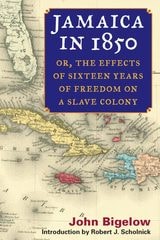
Jamaica in 1850
or, The Effects of Sixteen Years of Freedom on a Slave ColonyJohn Bigelow Introduction by Robert J. Scholnick
University of Illinois Press, 2000
A reporter's firsthand portrait of formerly enslaved Jamaicans in the years after emancipation
John Bigelow’s Jamaica in 1850 provided an important document in the antislavery movement in the United States and Great Britain. Jamaica’s economy had collapsed after the 1838 emancipation. American supporters of enslavement used the Jamaican example to argue that abolition at home would unleash economic and social chaos. Bigelow’s vivid eyewitness reporting undermined that widely held view by proving Jamaica’s problems originated in the incompetence of absentee white planters and an obsolete colonial system. As Bigelow showed, many once-enslaved Jamaicans had in fact become successful small-scale landowners in the twelve years after emancipation while the large plantations languished.
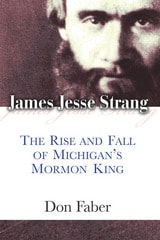
James Jesse Strang
The Rise and Fall of Michigan's Mormon KingDon Faber
University of Michigan Press, 2016
This captivating new biography by Don Faber recounts the fascinating story of Strang’s path from impoverished New York farm boy to one of the most colorful and contentious personalities in Michigan history. Avoiding the nonsense, misinformation, and twisted facts so prevalent about the man, readers meet the historical Strang stripped of myth, demonization, and popular fancy—a true celebrity of the mid-nineteenth century who both shaped and was shaped by the colorful times in which he lived. This book will appeal to readers interested in the history of Michigan, the nineteenth century, and the Second Great Awakening.
James the Minimalist
An Essay on the Late NovelsJohn Brenkman
University of Chicago Press, 2026
An experiment in criticism that explores Henry James’s late works through the lens of minimalism.
Henry James’s last completed novels—The Ambassadors, The Wings of the Dove, and The Golden Bowl—are among the greatest and most demanding achievements of modern fiction. The stories they tell are perverse: characters are compelling even at their most cruel, their actions often calculating and loving at the same time. The novels draw on deep-seated myths but end with an unsettling lack of finality. And their dense, involuted language tracks the movements of consciousness with uncompromising artistry—the ultimate flowering of the late James style.
In this work of experimental criticism, John Brenkman is concerned with minimalism in two senses. First, with James’s own minimalism—his intense scrutiny of couples and their erotic energies to the exclusion of so much else. And second, through a kind of minimalization in literary critical reading, Brenkman cuts through James’s amplifications to find the essence that churns beneath the intricate prose of the late novels. Showing how James evokes not only protagonists’ subjectivity but more importantly what only exists in between—that is, between lovers, between spouses, between rivals—Brenkman reveals James’s transformation of the marriage novel and excavation of the couple form itself.
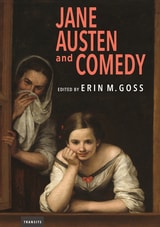
Jane Austen and Comedy
Erin Goss
Bucknell University Press, 2019
Published by Bucknell University Press. Distributed worldwide by Rutgers University Press.

Jane Austen's Cults and Cultures
Claudia L. Johnson
University of Chicago Press, 2012
Jane Austen completed only six novels, but enduring passion for the author and her works has driven fans to read these books repeatedly, in book clubs or solo, while also inspiring countless film adaptations, sequels, and even spoofs involving zombies and sea monsters. Austen’s lasting appeal to both popular and elite audiences has lifted her to legendary status. In Jane Austen’s Cults and Cultures, Claudia L. Johnson shows how Jane Austen became “Jane Austen,” a figure intensely—sometimes even wildly—venerated, and often for markedly different reasons.
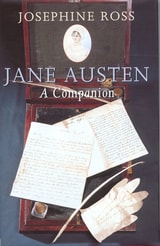
Jane Austen
A CompanionRoss, Josephine
Rutgers University Press, 2003
This illuminating, entertaining, up-to-date companion is the only general guide to Jane Austen, her work, and her world. Josephine Ross explores the literary scene during the time Austen's works first appeared: the books considered classics then, the "horrid novels" and romances, and the grasping publishers. She looks at the architecture and décor of Austen's era that made up "the profusion and elegance of modern taste." Regency houses for instance, Chippendale furniture, and "picturesque scenery." On a smaller scale she answers questions that may baffle modern readers. What, for example, was "hartshorn"? How did Lizzy Bennet "let down" her gown to hide her muddy petticoat? Ross shows us the fashions, and the subtle ways Jane Austen used clothes to express character. Courtship, marriage, adultery, class and "rank," mundane tasks of ordinary life, all appear, as does the wider political and military world.
This book will add depth to all readers' enjoyment of Jane Austen, whether confirmed addicts or newcomers wanting to learn about one of the world's most popular and enduring writers.
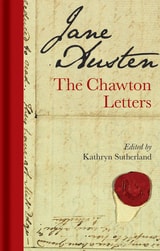
Jane Austen
The Chawton LettersEdited by Kathryn Sutherland
Bodleian Library Publishing, 2017
Brilliantly edited by Kathryn Sutherland, Jane Austen: The Chawton Letters uses Austen’s letters drawn from the collection held at Jane Austen’s House Museum at her former home in Chawton, Hampshire, to tell her life story. At age twenty-five, Austen left her first home, Steventon, Hampshire, for Bath. In 1809, she moved to Chawton, which was to be her home for the remainder of her short life. In her correspondence, we discover Austen’s relish for her regular visits to the shops and theaters of London, as well as the quieter routines of village life. We learn of her anxieties about the publication of Pride and Prejudice, her care in planning Mansfield Park, and her hilarious negotiations over the publication of Emma. (To her sister, Cassandra, Austen calls her publisher John Murray, “a Rogue, of course, but a civil one.”) Throughout, the Chawton letters testify to Jane’s close ties with her family, especially her sister, and the most moving letter is written by Cassandra just days after Jane’s death. The collection also reproduces pages from the letters in Austen’s own distinctive hand.
This collection makes a delightful modern-day keepsake from one of the world’s best-loved writers on the two-hundredth anniversary of her death.
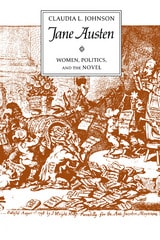
Jane Austen
Women, Politics, and the NovelClaudia L. Johnson
University of Chicago Press, 1990
"By looking at the ways in which Austen domesticates the gothic in Northanger Abbey, examines the conventions of male inheritance and its negative impact on attempts to define the family as a site of care and generosity in Sense and Sensibility, makes claims for the desirability of 'personal happiness as a liberating moral category' in Pride and Prejudice, validates the rights of female authority in Emma, and stresses the benefits of female independence in Persuasion, Johnson offers an original and persuasive reassessment of Jane Austen's thought."—Kate Fullbrook, Times Higher Education Supplement
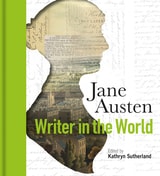
Jane Austen
Writer in the WorldEdited by Kathryn Sutherland
Bodleian Library Publishing, 2017
Brilliantly edited by Kathryn Sutherland, Jane Austen: Writer in the World offers a life story told through the author's personal possessions. In her teenage notebooks, literary jokes give a glimpse of her family’s shared love of reading and satire, which can be seen in the subtler humor of Austen’s published work. Pieces from Austen’s hand-copied collection of sheet music reveal how music was used to create networks far more intricate than the simple pleasures of home recital. A beautiful brown silk pelisse-coat, together with lively letters between Austen and Cassandra, give insight into her views on fashion. All feature in this lavishly illustrated collection, along with homemade booklets in which she composed her novels, portraits made of Austen during her lifetime, and much more. Also included are objects associated with the era in which Austen lived: newspaper articles, naval logbooks, and contemporary political cartoons, shedding light on Austen’s wider social and political worlds.
This collection makes a delightful modern-day keepsake from one of the world’s best-loved writers on the two-hundredth anniversary of her death.
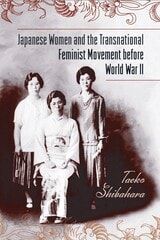
Japanese Women and the Transnational Feminist Movement before World War II
Taeko Shibahara
Temple University Press, 2014
This book traces the development of feminist consciousness in Japan from 1871 to 1941. Taeko Shibahara uncovers some fascinating histories as she examines how middle-class women navigated between domestic and international influences to form ideologies and strategies for reform. They negotiated a humanitarian space as Japan expanded its nationalist, militarist, imperialist, and patriarchal power.
Focusing on these women's political awakening and activism, Shibahara shows how Japanese feminists channeled and adapted ideas selected from international movements and from interactions with mainly American social activists.
Japanese Women and the Transnational Feminist Movement before World War II also connects the development of international contacts with the particular contributions of Ichikawa Fusae to the suffrage movement, Ishimoto Shidzue to the birth control movement, and Gauntlett Tsune to the peace movement by touching on issues of poverty, prostitution, and temperance. The result provides a window through which to view the Japanese women's rights movement with a broader perspective.
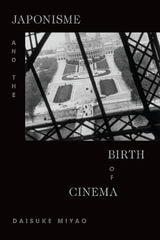
Japonisme and the Birth of Cinema
Daisuke Miyao
Duke University Press, 2020
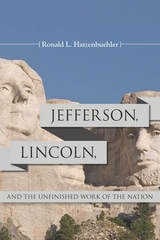
Jefferson, Lincoln, and the Unfinished Work of the Nation
Ronald L. Hatzenbuehler
Southern Illinois University Press, 2016
In this groundbreaking new study—the first extended examination of the ideas of Lincoln and Jefferson—Hatzenbuehler provides readers with a succinct guide to their opinions, comparing and contrasting their reasoned judgments on America’s republican form of government. Each chapter is devoted to one key area of common interest: race and slavery, the pros and cons of political parties, state rights versus federal authority, religion and the presidency, presidential powers under the Constitution, or the proper political economy for a republic. Relying on the pair’s own words in their letters, writings, and speeches, Hatzenbuehler explores similarities and differences between the two men on contentious issues. Both, for instance, wrote that they were antislavery, but Jefferson never acted on this belief, while Lincoln moved toward a constitutional amendment banning slavery. The book’s title, taken from the Gettysburg Address, builds on both presidents’ expectations that Americans should dedicate themselves to the unfinished work of returning the nation to its founding principles.
Jefferson and Lincoln wrestled with many of the same issues and ideas that intrigue and divide Americans today. In his thought-provoking work, Hatzenbuehler details how the two presidents addressed these issues and ideas, which are essential to understanding not only America’s history but also the continuing influence of the past on the present.
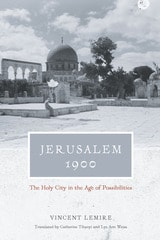
Jerusalem 1900
The Holy City in the Age of PossibilitiesVincent Lemire
University of Chicago Press, 2017
In this masterly history, Lemire uses newly opened archives to explore how Jerusalem’s elite residents of differing faiths cooperated through an intercommunity municipal council they created in the mid-1860s to administer the affairs of all inhabitants and improve their shared city. These residents embraced a spirit of modern urbanism and cultivated a civic identity that transcended religion and reflected the relatively secular and cosmopolitan way of life of Jerusalem at the time. These few years would turn out to be a tipping point in the city’s history—a pivotal moment when the horizon of possibility was still open, before the council broke up in 1934, under British rule, into separate Jewish and Arab factions. Uncovering this often overlooked diplomatic period, Lemire reveals that the struggle over Jerusalem was not historically inevitable—and therefore is not necessarily intractable. Jerusalem 1900 sheds light on how the Holy City once functioned peacefully and illustrates how it might one day do so again.
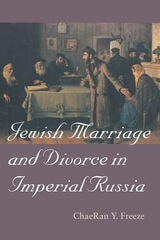
Jewish Marriage and Divorce in Imperial Russia
ChaeRan Y. Freeze
Brandeis University Press, 2001
Jewish Philosophical Politics in Germany, 1789–1848
Sven-Erik Rose
Brandeis University Press, 2014
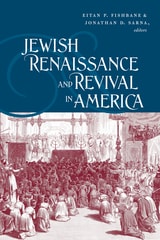
Jewish Renaissance and Revival in America
Edited by Eitan P. Fishbane and Jonathan D. Sarna
Brandeis University Press, 2011
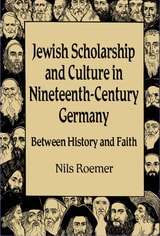
Jewish Scholarship and Culture in Nineteenth-Century Germany
Between History and FaithNils Roemer
University of Wisconsin Press, 2005
German Jews were fully assimilated and secularized in the nineteenth century—or so it is commonly assumed. In Jewish Scholarship and Culture in the Nineteenth Century, Nils Roemer challenges this assumption, finding that religious sentiments, concepts, and rhetoric found expression through a newly emerging theological historicism at the center of modern German Jewish culture.
Modern German Jewish identity developed during the struggle for emancipation, debates about religious and cultural renewal, and battles against anti-Semitism. A key component of this identity was historical memory, which Jewish scholars had begun to infuse with theological perspectives beginning in the 1850s. After German reunification in the early 1870s, Jewish intellectuals reevaluated their enthusiastic embrace of liberalism and secularism. Without abandoning the ideal of tolerance, they asserted a right to cultural religious difference for themselves--an ideal they held to even more tightly in the face of growing anti-Semitism. This newly re-theologized Jewish history, Roemer argues, helped German Jews fend off anti-Semitic attacks by strengthening their own sense of their culture and tradition.
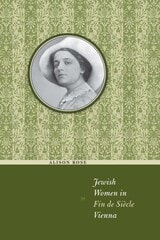
Jewish Women in Fin de Siècle Vienna
By Alison Rose
University of Texas Press, 2008
Despite much study of Viennese culture and Judaism between 1890 and 1914, little research has been done to examine the role of Jewish women in this milieu. Rescuing a lost legacy, Jewish Women in Fin de Siècle Vienna explores the myriad ways in which Jewish women contributed to the development of Viennese culture and participated widely in politics and cultural spheres.
Areas of exploration include the education and family lives of Viennese Jewish girls and varying degrees of involvement of Jewish women in philanthropy and prayer, university life, Zionism, psychoanalysis and medicine, literature, and culture. Incorporating general studies of Austrian women during this period, Alison Rose also presents significant findings regarding stereotypes of Jewish gender and sexuality and the politics of anti-Semitism, as well as the impact of German culture, feminist dialogues, and bourgeois self-images.
As members of two minority groups, Viennese Jewish women nonetheless used their involvement in various movements to come to terms with their dual identity during this period of profound social turmoil. Breaking new ground in the study of perceptions and realities within a pivotal segment of the Viennese population, Jewish Women in Fin de Siècle Vienna applies the lens of gender in important new ways.
Jews and Race
Writings on Identity and Difference, 1880–1940Edited by Mitchell B. Hart
Brandeis University Press, 2011
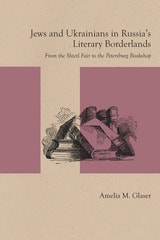
Jews and Ukrainians in Russia's Literary Borderlands
From the Shtetl Fair to the Petersburg BookshopAmelia M. Glaser
Northwestern University Press, 2011
Studies of Eastern European literature have largely confined themselves to a single language, culture, or nationality. In this highly original book, Glaser shows how writers working in Russian, Ukrainian, and Yiddish during much of the nineteenth century and the early part of the twentieth century were in intense conversation with one another. The marketplace was both the literal locale at which members of these different societies and cultures interacted with one another and a rich subject for representation in their art. It is commonplace to note the influence of Gogol on Russian literature, but Glaser shows him to have been a profound influence on Ukrainian and Yiddish literature as well. And she shows how Gogol must be understood not only within the context of his adopted city of St. Petersburg but also that of his native Ukraine. As Ukrainian and Yiddish literatures developed over this period, they were shaped by their geographical and cultural position on the margins of the Russian Empire. As distinctive as these writers may seem from one another, they are further illuminated by an appreciation of their common relationship to Russia. Glaser’s book paints a far more complicated portrait than scholars have traditionally allowed of Jewish (particularly Yiddish) literature in the context of Eastern European and Russian culture.
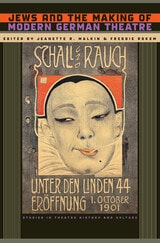
Jews and the Making of Modern German Theatre
Jeanette R. Malkin
University of Iowa Press, 2010
While it is common knowledge that Jews were prominent in literature, music, cinema, and science in pre-1933 Germany, the fascinating story of Jewish co-creation of modern German theatre is less often discussed. Yet for a brief time, during the Second Reich and the Weimar Republic, Jewish artists and intellectuals moved away from a segregated Jewish theatre to work within canonic German theatre and performance venues, claiming the right to be part of the very fabric of German culture. Their involvement, especially in the theatre capital of Berlin, was of a major magnitude both numerically and in terms of power and influence. The essays in this stimulating collection etch onto the conventional view of modern German theatre the history and conflicts of its Jewish participants in the last third of the nineteenth and first third of the twentieth centuries and illuminate the influence of Jewish ethnicity in the creation of the modernist German theatre.
The nontraditional forms and themes known as modernism date roughly from German unification in 1871 to the end of the Weimar Republic in 1933. This is also the period when Jews acquired full legal and trade equality, which enabled their ownership and directorship of theatre and performance venues. The extraordinary artistic innovations that Germans and Jews co-created during the relatively short period of this era of creativity reached across the old assumptions, traditions, and prejudices that had separated people as the modern arts sought to reformulate human relations from the foundations to the pinnacles of society.
The essayists, writing from a variety of perspectives, carve out historical overviews of the role of theatre in the constitution of Jewish identity in Germany, the position of Jewish theatre artists in the cultural vortex of imperial Berlin, the role played by theatre in German Jewish cultural education, and the impact of Yiddish theatre on German and Austrian Jews and on German theatre. They view German Jewish theatre activity through Jewish philosophical and critical perspectives and examine two important genres within which Jewish artists were particularly prominent: the Cabaret and Expressionist theatre. Finally, they provide close-ups of the Jewish artists Alexander Granach, Shimon Finkel, Max Reinhardt, and Leopold Jessner. By probing the interplay between “Jewish” and “German” cultural and cognitive identities based in the field of theatre and performance and querying the effect of theatre on Jewish self-understanding, they add to the richness of intercultural understanding as well as to the complex history of theatre and performance in Germany.
Jews at the Crossroads
Tradition and Accomodation during the Golden Age of the Hungarian NobilityHoward N. Lupovitch
Central European University Press, 2007

Jihad in West Africa during the Age of Revolutions
Paul E. Lovejoy
Ohio University Press, 2016
In Jihād in West Africa during the Age of Revolutions, a preeminent historian of Africa argues that scholars of the Americas and the Atlantic world have not given Africa its due consideration as part of either the Atlantic world or the age of revolutions. The book examines the jihād movement in the context of the age of revolutions—commonly associated with the American and French revolutions and the erosion of European imperialist powers—and shows how West Africa, too, experienced a period of profound political change in the late eighteenth through the mid-nineteenth centuries. Paul E. Lovejoy argues that West Africa was a vital actor in the Atlantic world and has wrongly been excluded from analyses of the period.
Among its chief contributions, the book reconceptualizes slavery. Lovejoy shows that during the decades in question, slavery expanded extensively not only in the southern United States, Cuba, and Brazil but also in the jihād states of West Africa. In particular, this expansion occurred in the Muslim states of the Sokoto Caliphate, Fuuta Jalon, and Fuuta Toro. At the same time, he offers new information on the role antislavery activity in West Africa played in the Atlantic slave trade and the African diaspora.
Finally, Jihād in West Africa during the Age of Revolutions provides unprecedented context for the political and cultural role of Islam in Africa—and of the concept of jihād in particular—from the eighteenth century into the present. Understanding that there is a long tradition of jihād in West Africa, Lovejoy argues, helps correct the current distortion in understanding the contemporary jihād movement in the Middle East, Afghanistan, Pakistan, and Africa.
Johann Most
Life of a RadicalTom Goyens
University of Illinois Press, 2025
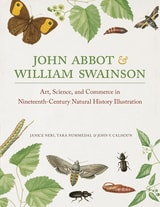
John Abbot and William Swainson
Art, Science, and Commerce in Nineteenth-Century Natural History IllustrationJanice Neri, Tara Nummedal, and John V. Calhoun
University of Alabama Press, 2019
During his lifetime (1751–ca. 1840), English-born naturalist and artist John Abbot rendered more than 4,000 natural history illustrations and profoundly influenced North American entomology, as he documented many species in the New World long before they were scientifically described. For sixty-five years, Abbot worked in Georgia to advance knowledge of the flora and fauna of the American South by sending superbly mounted specimens and exquisitely detailed illustrations of insects, birds, butterflies, and moths, on commission, to collectors and scientists all over the world.
Between 1816 and 1818, Abbot completed 104 drawings of insects on their native plants for English naturalist and patron William Swainson (1789–1855). Both Abbot and Swainson were artists, naturalists, and collectors during a time when natural history and the sciences flourished. Separated by nearly forty years in age, Abbot and Swainson were members of the same international communities and correspondence networks upon which the study of nature was based during this period.
The relationship between these two men—who never met in person—is explored in John Abbot and William Swainson: Art, Science, and Commerce in Nineteenth-Century Natural History Illustration. This volume also showcases, for the first time, the complete set of original, full-color illustrations discovered in 1977 in the Alexander Turnbull Library in Wellington, New Zealand. Originally intended as a companion to an earlier survey of insects from Georgia, the newly rediscovered Turnbull manuscript presents beetles, grasshoppers, butterflies, moths, and a wasp. Most of the insects are pictured with the flowering plants upon which Abbot thought them to feed. Abbot’s journal annotations about the habits and biology of each species are also included, as are nomenclature updates for the insect taxa.
Today, the Turnbull drawings illuminate the complex array of personal and professional concerns that informed the field of natural history in the eighteenth and nineteenth centuries. These illustrations are also treasured artifacts from times past, their far-flung travels revealing a world being reshaped by the forces of global commerce and information exchange even then. The shared project of John Abbot and William Swainson is now brought to completion, signaling the beginning of a new phase of its significance for modern readers and scholars.
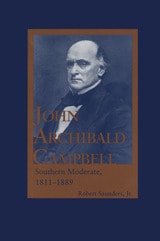
John Archibald Campbell
Southern Moderate, 1811–1889Robert Saunders Jr.
University of Alabama Press, 1997
The first full biography of the southern U.S. Supreme Court justice who championed both the U.S. Constitution and states’ rights.
The life of John Archibald Campbell reflects nearly every major development of 19th-century American history. He participated either directly or indirectly in events ranging from the Indian removal process of the 1830s, to sectionalism and the Civil War, to Reconstruction and redemption. Although not a defender of slavery, he feared that abrupt abolition would produce severe economic and social dislocation. He urged southerners to reform their labor system and to prepare for the eventual abolition of slavery. In the early 1850s he proposed a series of reforms to strengthen slave families and to educate the slaves to prepare them for assimilation into society as productive citizens. These views distinguished him from many southerners who steadfastly maintained the sanctity of the peculiar institution.
Born and schooled in Georgia, Campbell moved to Montgomery, Alabama, in the early 1830s, where he joined a successful law practice. He served in the Alabama legislature for a brief period and then moved with his family to Mobile to establish a law practice. In 1853 Campbell was appointed an associate justice of the U.S. Supreme Court. His concurring opinion in the Dred Scott case in 1857 derived not from the standpoint of protecting slavery but from an attempt to return political power to the states. As the sectional crisis gathered heat, Campbell counseled moderation. He became widely detested in the North because of his defense of states’ rights, and he was distrusted in the South because of his moderate views on slavery and secession. In May 1861 Campbell resigned from the Court and later became the Confederacy's assistant secretary of war. After the war, Campbell moved his law practice to New Orleans. Upon his death in 1889, memorial speakers in Washington, D.C., and New Orleans recognized him as one of the nation's most gifted lawyers and praised his vast learning and mastery of both the common law and the civil law.
In this first full biography of Campbell, Robert Saunders, Jr., reveals the prevalence of anti-secession views prior to the Civil War and covers both the judicial aspects and the political history of this crucial period in southern history.

John B. Denton
The Bigger-Than-Life Story of the Fighting Parson and Texas RangerMike Cochran
University of North Texas Press, 2021
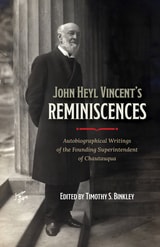
John Heyl Vincent's Reminiscences
Autobiographical Writings of the Founding Superintendent of ChautauquaTimothy S. Binkley
Bridwell Press, 2024
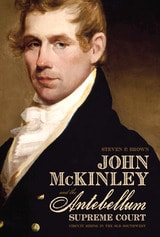
John McKinley and the Antebellum Supreme Court
Circuit Riding in the Old SouthwestSteven P. Brown
University of Alabama Press, 2012
A Southern voice on a national bench—McKinley’s legacy in antebellum law.
John McKinley and the Antebellum Supreme Court offers the first comprehensive biography of Justice John McKinley (1780–1852), a largely forgotten figure in American legal history who played a pivotal role during a formative period of the U.S. Supreme Court. Steven P. Brown rescues McKinley from historical obscurity, presenting a compelling portrait of a man deeply embedded in the political, legal, and financial life of the early 19th-century South.
Born in Kentucky and later settling in northern Alabama, McKinley served in both the U.S. Senate and House of Representatives before being appointed to the Supreme Court by President Martin Van Buren in 1837. His tenure on the bench coincided with the creation of the Ninth Circuit, a vast and challenging judicial territory encompassing Alabama, Arkansas, Louisiana, and Mississippi. Brown details McKinley’s arduous circuit-riding duties, which required extensive travel and exposed him to the legal complexities of a rapidly expanding frontier.
More than a biography, the book provides a penetrating analysis of antebellum legal culture, Alabama state politics, and the internal workings of the Supreme Court during a time of national transformation. Brown challenges the prevailing view of McKinley as a mediocre jurist, arguing instead that his contributions—particularly his dissents defending states’ rights—deserve renewed scholarly attention. With rich historical context and meticulous research, John McKinley and the Antebellum Supreme Court sheds light on the burdens of justice in a divided nation and the legacy of a justice whose career mirrored the tensions of his time.
John Mercer Langston and the Fight for Black Freedom, 1829-65
William and Aimee Lee Cheek
University of Illinois Press, 1989
Privileged beyond other members of his race, yet sharing their disadvantages, the young John Mercer Langston stood in an uncertain position in the years before the Civil War. His confrontation with a critical personal question was tempered by a crucial national reality: from what sources could he derive his model of manhood and human dignity? This book explores John Mercer Langston's decisions to work out his destiny through the resources and fortunes of the northern black community.
Although Langston, who died in 1897, was a black Politician, orator, lawyer, intellectual, diplomat, and congressman, he has never before been accorded fullscale biographical treatment. Born free on a Virginia plantation, Langston graduated from Oberlin College in 1849, gained admission to the Ohio bar, and by the age of twenty-five, became the first black American to hold elective office. Still in the years of his political apprenticeship, he promoted black civil rights, helped shape the nascent Republican party, aided in the Oberlin-Wellington Rescue and John Brown's raid, and recruited black soldier for the Union cause. In 1864 he became the first president of the National Equal Rights League.
From an extensive search of primary sources, the authors construct a richly textured picture of the beginnings of Langston's career as a national black leader. More than a biography, the work also incorporates social and political history. Embedded firmly in a study of northern black community life and activism, it reveals the degree to which Langston and his cohorts set the terms of the fight for freedom and citizenship.
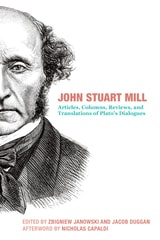
John Stuart Mill
Articles, Columns, Reviews and Translations of Plato's DialoguesJohn Stuart Mill
St. Augustine's Press, 2021
The contribution of Mill’s most authoritative biographer, Nicholas Capaldi, is a singular and unmatched highlight. The tenor of St. Augustine’s Press volumed on Mill is distinct in its intention to place his work in the framework of political philosophy and the conversation of the viability of liberalism as a tradition of thought.
John Xántus
The Fort Tejon Letters, 1857–1859Ann Zwinger
University of Arizona Press, 1986

Jonathan Fisher of Blue Hill, Maine
Commerce, Culture, and Community on the Eastern FrontierKevin D. Murphy
University of Massachusetts Press, 2010
Murphy shows how Fisher, as pastor of the Congregational church in Blue Hill from 1796 to 1837, helped spearhead the transformation of a frontier settlement on the eastern shores of the Penobscot Bay into a thriving port community; how he used his skills as an architect, decorative painter, surveyor, and furniture maker not only to support himself and his family, but to promote the economic growth of his village; and how the fluid professional identity that enabled Fisher to prosper on the eastern frontier could only have existed in early America where economic relations were far less rigidly defined than in Europe.
Among the most important artifacts of Jonathan Fisher's life is the house he designed and built in Blue Hill. The Jonathan Fisher Memorial, as it is now known, serves as a point of departure for an examination of social, religious, and cultural life in a newly established village at the turn of the nineteenth century. Fisher's house provided a variety of spaces for agricultural and domestic work, teaching, socializing, artmaking, and more.
Through the eyes of Jonathan Fisher, we see his family grow and face the challenges of the new century, responding to religious, social, and economic change—sometimes succeeding and sometimes failing. We appreciate how an extraordinarily energetic man was able to capitalize on the wide array of opportunities offered by the frontier to give shape to his personal vision of community.
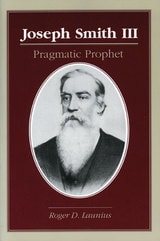
Joseph Smith III
PRAGMATIC PROPHETRoger D. Launius
University of Illinois Press, 1999
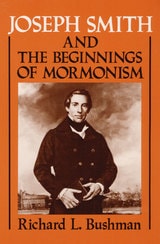
Joseph Smith and the Beginnings of Mormonism
Richard L. Bushman
University of Illinois Press, 1984
Winner of the David Woolley Evans and Beatrice Evans Biography Award and a History Book Club selection, 1985.
The core of Mormon belief was a conviction about actual events. The test of faith was not adherence to a certain confession of faith but belief that Christ was resurrected, that Joseph Smith saw God, that the Book of Mormon was true history, and that Peter, James, and John restored the apostleship. Mormonism was history, not philosophy.
It is as history that Richard L. Bushman analyzes the emergence of Mormonism in the early nineteenth century. Bushman, however, brings to his study a unique set of credentials--he is both a prize-winning historian and a faithful member of the Latter-day Saints church. For Mormons and non-Mormons alike, his book provides a very special perspective on an endlessly fascinating subject.
Building upon previous accounts and incorporating recently discovered contemporary sources, Bushman focuses on the first twenty-five years of Joseph Smith's life--up to his move to Kirtland, Ohio, in 1831. Bushman shows how the rural Yankee culture of New England and New York--especially evangelical revivalism, Christian rationalism, and folk magic--both influenced and hindered the formation of Smith's new religion.
Mormonism, Bushman argues, must be seen not only as the product of this culture, but also as an independent creation based on the revelations of its charismatic leader. In the final analysis, it was Smith's ability to breathe new life into the ancient sacred stories and to make a sacred story out of his own life which accounted for his own extraordinary influence. By presenting Smith and his revelations as they were viewed by the early Mormons themselves, Bushman leads us to a deeper understanding of their faith.
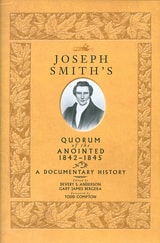
Joseph Smith's Quorum of the Anointed, 1842-1845
A Documentary HistoryDevery S. Anderson
Signature Books, 2005
Preparations to initiate the first members of Joseph Smith’s Quorum of the Anointed, or Holy Order, as it was also known, were made on May 3, 1842. The walls of the second level of the Red Brick Store were painted with garden-themed murals, the rooms fitted with carpets, potted plants, and a veil hung from the ceiling. All the while, the ground level continued to operate as Joseph Smith’s general mercantile.
In this companion volume to The Nauvoo Endowment Companies and The Development of LDS Temple Worship, 1846-2000: A Documentary History, the editors have assembled all available primary references to the Anointed Quorum and its regular gatherings, both in the Red Brick Store and elsewhere (women were initially washed and anointed in Emma Smith’s bedroom and then escorted to the store) prior to the opening of the Nauvoo Temple. The sources include excerpts from the diaries of William Clayton, Joseph Fielding, Zina D. H. Jacobs, Heber C. Kimball, John Taylor, Willard Richards, George A. Smith, Joseph Smith, Wilford Woodruff, and Brigham Young; autobiographies and reminiscences by Joseph C. Kingsbury, George Miller, and Mercy Fielding Thompson; letters from Vilate Kimball and Lucius N. Scoville; the Manuscript History of Brigham Young; General Record of the Seventies, Book B; Bathsheba W. Smith’s unedited testimony from the 1892 Temple Lot Case; other manuscripts such as the Historian’s Office Journal and “Meetings of Anointed Quorum”; and published records such as the History of the Church, Latter Day Saints’ Messenger and Advocate and Times and Seasons.
from the jacket flap:
Despite the secrecy imposed upon members of the Anointed Quorum, word of the gatherings above Joseph Smith’s store soon spread. In one instance, housekeeper Maria Jane Johnston helped prepare the special ceremonial clothing for John Smith to wear at the group’s meetings. In another, Ebenezer Robinson innocently opened the upstairs door at the mercantile and was startled to see church apostle John Taylor in a long white robe and “turban,” carrying a sword. Only Nauvoo’s elite were invited to participate in these new ceremonies?never more than ninety individuals and even fewer during Joseph Smith’s lifetime?and, as the editors of the current volume write, only those who had been introduced to the prophet’s doctrine of plural marriage.
An unusual aspect of the Quorum of the Anointed, compared to the membership in the Nauvoo Masonic Lodge, was that women were initiated as regular members. However, the women effectively disappear after Brigham Young’s assumption of leadership in 1844, following Joseph Smith’s death, and remain virtually absent until the Nauvoo Temple is completed nearly a year and a half later. Readers will also note some of the differences in protocol between what Smith instigated and what Young eventually settled on, for instance that members could be washed and anointed repeatedly but were “endowed” only once. There were not yet proxy ordinances.
Among Latter-day Saints today, temple worship is a sensitive topic; but the editors of this volume do not reveal anything that would be considered invasive or indelicate. In fact, the accounts, which come almost exclusively from the early LDS leadership itself, manifest discretion about what to report.
Never before have these primary, authoritative sources been correlated by date for comparison and fuller understanding of the gradual development of the temple ceremonies. Readers may find an added benefit in discovering some of their own ancestors’ names included in these records; but in fact, anyone interested in LDS temple worship will find this compilation of primary documents to be invaluable.
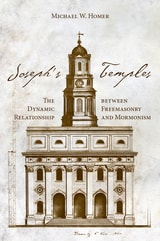
Joseph’s Temples
The Dynamic Relationship between Freemasonry and MormonismMichael W. Homer
University of Utah Press, 2014
There are indications that Freemasonry was a pervasive foundational element in Mormonism and that its rituals and origin legends influenced not just the secret ceremonies of the LDS temples but also such important matters as the organization of the Mormon priesthood, the foundation of the women’s Relief Society, the introduction and concealment of polygamy, and the church’s position on African Americans’ full membership. Freemasonry was also an important facet of Mormons’ relations with broader American society.
The two movements intertwined within a historical context of early American intellectual, social, and religious ferment, which influenced each of them and in varying times and situations placed them either in the current or against the flow of mainstream American culture and politics. Joseph’s Temples provides a comprehensive examination of a dynamic relationship and makes a significant contribution to the history of Mormonism, Freemasonry, and their places in American history.
Recipient of the Meritorious Book Award from the Utah Division of State History
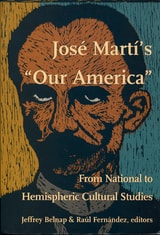
José Martí's Our America
From National to Hemispheric Cultural StudiesJeffrey Belnap and Raúl Fernández, eds.
Duke University Press, 1998
A Cuban exile from 1881 to 1895, Martí was a correspondent writing in New York for various Latin American newspapers. Grasping the significance of rising U.S. imperial power, he came to understand the Americas as a complex system of kindred—but not equal—national formations whose cultural and political integrity was threatened by the overbearing aggressiveness of the United States. This collection explores how in his journalistic work Martí critiques U.S. racism, imperialism, and capitalism; warns Latin America of impending U.S. geographical, cultural, and economic annexation; and calls for recognition of the diversity of America’s cultural voices. Reinforcing Martí’s hemispheric vision with essays by a wide range of scholars who investigate his analysis of the United States, his significance as a Latino outsider, and his analyses of Latin American cultural politics, this volume explores the affinities between Martí’s thought and current reexaminations of what it means to study America.
José Martí’s Our America offers a new understanding of Martí’s ambiguous and problematic relation with the United States and will engage scholars and students in American, Latin American, and Latino studies as well as those interested in cultural, postcolonial, gender, and ethnic studies.
Contributors. Jeffrey Belnap, Raúl Fernández, Ada Ferrer, Susan Gillman, George Lipsitz, Oscar Martí, David Noble, Donald E. Pease, Beatrice Pita, Brenda Gayle Plummer, Susana Rotker, José David Saldívar, Rosaura Sánchez, Enrico Mario Santí, Doris Sommer, Brook Thomas
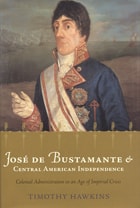
José de Bustamante and Central American Independence
Colonial Administration in an Age of Imperial CrisisTimothy Hawkins
University of Alabama Press, 2004
Reassessing the colonial official at the center of Central America's turbulent path to independence.
Latin American independence histories of the last 150 years have tended to stereotype Captain General Bustamante, governor of the Spanish colony of Guatemala from 1811 to 1818, as a tyrannical arch-villain who personified colonial oppression. Timothy Hawkins, in contrast, examines Bustamante and his administration within the context of preservation of empire, the effort by colonial officials and partisans to maintain the integrity of the Spanish empire in spite of internal and external unrest.
Based on extensive primary research in the archives of Guatemala, Mexico, and Spain, Hawkins’s approach links the Central American experience to that of areas such as Peru, Venezuela, and Mexico, that also responded equivocally and haphazardly to rebellious uprisings against colonial rule. While conceding that Bustamante’s role in the suppression of unrest turned him into one of the more controversial figures in Latin American history, Hawkins argues that the Bustamante administration should not be seen as an isolated and perverse case of Spanish repression but as an example of a relatively successful, if short lived, campaign by Spain to preserve its empire.
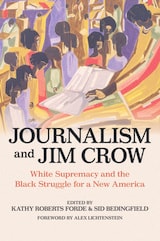
Journalism and Jim Crow
White Supremacy and the Black Struggle for a New AmericaEdited by Kathy Roberts Forde and Sid Bedingfield
University of Illinois Press, 2021
White publishers and editors used their newspapers to build, nurture, and protect white supremacy across the South in the decades after the Civil War. At the same time, a vibrant Black press fought to disrupt these efforts and force the United States to live up to its democratic ideals. Journalism and Jim Crow centers the press as a crucial political actor shaping the rise of the Jim Crow South. The contributors explore the leading role of the white press in constructing an anti-democratic society by promoting and supporting not only lynching and convict labor but also coordinated campaigns of violence and fraud that disenfranchised Black voters. They also examine the Black press’s parallel fight for a multiracial democracy of equality, justice, and opportunity for all—a losing battle with tragic consequences for the American experiment.
Original and revelatory, Journalism and Jim Crow opens up new ways of thinking about the complicated relationship between journalism and power in American democracy.
Contributors: Sid Bedingfield, Bryan Bowman, W. Fitzhugh Brundage, Kathy Roberts Forde, Robert Greene II, Kristin L. Gustafson, D'Weston Haywood, Blair LM Kelley, and Razvan Sibii
Journalism and Realism
Rendering American LifeThomas B Connery
Northwestern University Press, 2011
Journals
Volume FifteenHerman Melville
Northwestern University Press, 1989
The editors supply full annotations of Melville's allusions and terse entries and an exhaustive index makes available the range of his acquaintance with people, places, and works of art. Also included are related documents, illustrations, maps, and many pages and passages reproduced from the journals. This scholarly edition aims to present a text as close to the author's intention as his difficult handwriting permits. It is an Approved Text of the Center for Editions of American Authors (Modern Language Association of America).

Journey
The Gateway Theatre Building and Company, 1884-1965Ian Brown
Intellect Books, 2013
Juana Briones of Nineteenth-Century California
Jeanne Farr McDonnell
University of Arizona Press, 2008
Juana Briones was born in 1802 and spent her early youth in Santa Cruz, a community of retired soldiers who had helped found Spanish California, Native Americans, and settlers from Mexico. In 1820, she married a cavalryman at the San Francisco Presidio, Apolinario Miranda. She raised her seven surviving sons and daughters and adopted an orphaned Native American girl. Drawing on knowledge she gained about herbal medicine and other cures from her family and Native Americans, she became a highly respected curandera, or healer.
Juana set up a second home and dairy at the base of then Loma Alta, now Telegraph Hill, the first house in that area. After gaining a church-sanctioned separation from her abusive husband, she expanded her farming and cattle business in 1844 by purchasing a 4,400-acre ranch, where she built her house, located in the present city of Palo Alto. She successfully managed her extensive business interests until her death in 1889. Juana Briones witnessed extraordinary changes during her lifetime. In this fascinating book, readers will see California’s history in a new and revelatory light.
Jubal Early's Raid on Washington
Benjamin Franklin Cooling
University of Alabama Press, 2008
The raid that exposed the Union capital’s greatest danger.
The definitive description of the last Confederate invasion of the Union in 1864. The Civil War was in its fourth year, and the Union’s victory was not at all certain. The Lincoln administration seemed weak as the autumn election approached. Lee’s army remained strong in Virginia while Johnston’s forces feinted and dodged in north Georgia to shield Atlanta. The Union army and navy grew in strength, but Confederate forces continued to fight tenaciously.
Amid an air of stalemate, the Confederates planned a bold move to strike at Washington, DC and capture or scatter Lincoln and his cabinet. In command of the operation was the colorful and unpredictable Jubal “Old Jube” Anderson Early, brought in to replace the fallen Stonewall Jackson. Less well known than the bloodier Antietam and Gettysburg, Early's campaign, Cooling argues, had greater significance.
In addition to the persnickety bachelor Anderson, this account introduces many colorful participants, including railroad president John W. Garrett, the politically influential Blair family, and Elizabeth “Aunt Betty” Thomas, a free Black woman, who was said to have saved Lincoln’s life by shouting at him: “Get down, you fool!” when he came under fire at Fort Stevens. Exciting and comprehensive, Civil War scholars and readers will delight in this masterful account.
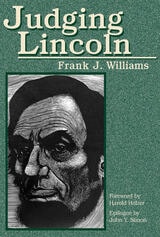
Judging Lincoln
Frank J. Williams. Foreword by Harold Holzer. Epilogue by John Y. Simon
Southern Illinois University Press, 2007
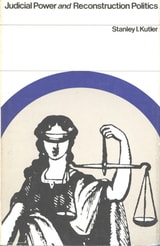
Judicial Power and Reconstruction Politics
Stanley I. Kutler
University of Chicago Press, 1968
This book investigates the political and public standing of the Supreme Court following the Dred Scott decision. Arguing against interpretations by previous historians, Kutler asserts instead that the "Chase Court" was neither enfeebled by the decision itself, nor by congressional Republicans during reconstruction. Instead, Kutler suggests that during reconstruction, the Court was characterized by forcefulness and judicious restraint rather than timidity and cowardice, holding a creative and determining role rather than abdicating its rightful powers. This volume assembles a series of essays by Kutler arguing for this characterization. Provocative and persuasive at turns, this collection of essays provides a bold and innovative reinterpretation of the Supreme Court after the Civil War.