Results by title
1713 books match the query '21st century' and 12 start with j
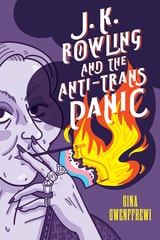
J. K. Rowling and the Anti-Trans Panic
Gina Gwenffrewi
The Ohio State University Press, 2026
In J. K. Rowling and the Anti-Trans Panic, Gina Gwenffrewi weaves her own experience as a trans woman living in Edinburgh, Scotland, with analysis of political and pop cultural discourses and artifacts to deliver a trenchant study of how fellow Edinburgh resident J. K. Rowling’s emergence as a major anti-trans campaigner and the years-long entrenchment of existing anti-trans forces have converged. Analyzing Rowling’s output since 2020, a series of anti-trans events at the University of Edinburgh, the transphobic comedy of Ricky Gervais within the British media landscape, YouTube commentaries, and more, Gwenffrewi creates a potent taxonomy of the rhetorical devices and foundational assumptions of anti-trans discourse. While the 2020s UK has proved fertile ground for “gender-critical” feminism, she argues, it has also provided the foundation for sites of resistance and for bolstering transgender voices worldwide. In celebrating trans activism and trans joy amid adversity, Gwenffrewi beautifully captures the light and dark of being out as trans in the city that—if it can fairly be called ground zero for anti-trans fervor—also embodies liberatory possibilities for trans people worldwide.
Jamón and Halal
Lessons in Tolerance from Rural AndalucíaChristina Civantos
Amherst College Press, 2022
“This is a book that is both a personal account and a rigorous academic study. It is a model for the kind of engaged humanistic work we are now beginning to see as a hallmark of the post-theory moment, and one that remembers the hard lessons of ethnographic fieldwork as well as the challenging foundational work from philosophically-tinged theory.” —Debra A. Castillo, Cornell University
“Filled with rich descriptions and interwoven personal anecdotes of both Civantos and her interlocuters that complement scholarly analysis.” —Jessica R. Boll, Carroll University
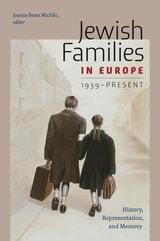
Jewish Families in Europe, 1939-Present
History, Representation, and MemoryEdited by Joanna Beata Michlic
Brandeis University Press, 2017
Jewish Peoplehood
An American InnovationPianko, Noam
Rutgers University Press, 2015
Although fewer American Jews today describe themselves as religious, they overwhelmingly report a strong sense of belonging to the Jewish people. Indeed, Jewish peoplehood has eclipsed religion—as well as ethnicity and nationality—as the essence of what binds Jews around the globe to one another. In Jewish Peoplehood, Noam Pianko highlights the current significance and future relevance of “peoplehood” by tracing the rise, transformation, and return of this novel term.
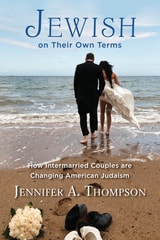
Jewish on Their Own Terms
How Intermarried Couples are Changing American JudaismThompson, Jennifer A
Rutgers University Press, 0
Over half of all American Jewish children are being raised by intermarried parents. This demographic group will have a tremendous impact on American Judaism as it is lived and practiced in the coming decades. To date, however, in both academic studies about Judaism and in the popular imagination, such children and their parents remain marginal.
Jennifer A. Thompson takes a different approach. In Jewish on Their Own Terms, she tells the stories of intermarried couples, the rabbis and other Jewish educators who work with them, and the conflicting public conversations about intermarriage among American Jews. Thompson notes that in the dominant Jewish cultural narrative, intermarriage symbolizes individualism and assimilation. Talking about intermarriage allows American Jews to discuss their anxieties about remaining distinctively Jewish despite their success in assimilating into American culture.
In contrast, Thompson uses ethnography to describe the compelling concerns of all of these parties and places their anxieties firmly within the context of American religious culture and morality. She explains how American and traditional Jewish gender roles converge to put non-Jewish women in charge of raising Jewish children. Interfaith couples are like other Americans in often harboring contradictory notions of individual autonomy, universal religious truths, and obligations to family and history.
Focusing on the lived experiences of these families, Jewish on Their OwnTerms provides a complex and insightful portrait of intermarried couples and the new forms of American Judaism that they are constructing.
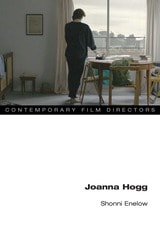
Joanna Hogg
Shonni Enelow
University of Illinois Press, 2024
Films like The Eternal Daughter and the diptych The Souvenir and The Souvenir Part II have cemented Joanna Hogg’s reputation as an original voice in contemporary cinema. Her rigorous and quiet style draws on the histories of film and art to tell stories that weave autobiography with studies in human opacity.
Shonni Enelow analyzes Hogg’s six feature films around the concepts of turning away, the reality effect, and the impossible encounter. Throughout, Enelow explores the tension between absorption, in which characters are immersed in a diegetic fiction, and self-reflexivity, as the filmmaker comments on her techniques of representation. An in-depth interview with Hogg delves into the director’s process, approach to creating character, and use of artistic and literary references.
Sophisticated and innovative, Joanna Hogg illuminates the work of one of today’s most original filmmakers.
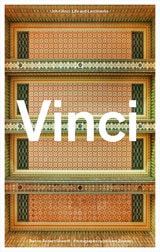
John Vinci
Life and LandmarksText by Robert Sharoff, Photographs by William Zbaren
Northwestern University Press, 2017
This illustrated biography traces Vinci’s origins as a child of Italian immigrants on Chicago’s South Side and his coming of age at the Illinois Institute of Technology, which was then under the direction of the legendary Modernist architect Ludwig Mies van der Rohe. It follows his career through his subsequent immersion in the historic preservation movement and the work of such early Chicago architects as Louis Sullivan, Frank Lloyd Wright, and John Wellborn Root.
Vinci’s pioneering restoration projects include Frank Lloyd Wright’s Robie House and Home Studio, Sullivan’s Chicago Stock Exchange Trading Room and the Carson Pirie Scott Building, and Root’s Monadnock Building. His original work, meanwhile, includes notable buildings such as the Arts Club of Chicago, numerous award-winning residences, and more than fifty major exhibitions at the Art Institute of Chicago and other museums.
John Vinci: Life and Landmarks also features portraits and profiles of Vinci’s friends and mentors over the years, including the architectural photographer Richard Nickel, the landscape designer Alfred Caldwell, the Art Institute curators James Speyer and Anne Rorimer, the architects Crombie Taylor and Myron Goldsmith, and the City of Chicago’s cultural historian Tim Samuelson.
The book includes new photos of twenty projects by noted architectural photographer William Zbaren as well as more than one hundred vintage photos and floorplans from Vinci’s personal archives, many never before published. A comprehensive catalogue raisonné rounds out this handsome and definitive work.
John le Carré’s Post–Cold War Fiction
Robert Lance Snyder
University of Missouri Press, 2017
This is an analysis of the first 10 post—Cold War novels of one of the most significant ethicists in contemporary fiction.
This book challenges distinctions between “popular” and “serious” literature by recognizing le Carré as one of the most significant ethicists in contemporary fiction, contributing to an overdue reassessment of his literary stature. Le Carré’s ten post–Cold War novels constitute a distinctive subset of his espionage fiction in their response to the momentous changes in geopolitics that began in the 1990s. Through a close reading of these novels, Snyder traces how—amid the “War on Terror” and transnationalism—le Carré weighs what is at stake in this conflict of deeply invested ideologies.
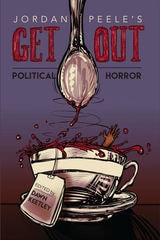
Jordan Peele's Get Out
Political HorrorEdited by Dawn Keetley
The Ohio State University Press, 2020
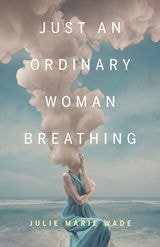
Just an Ordinary Woman Breathing
Julie Marie Wade
The Ohio State University Press, 2020
Finalist for the Publishing Triangle's Judy Grahn Award for Lesbian Nonfiction
You have a history, and a body. You are a history, and a body. Your body has (is) a history, too. As a girl, Julie Marie Wade was uninterested in makeup, boy-watching, and other trappings of conventional girlhood, much to her mother’s disappointment. Grace Kelly and Marilyn Monroe—movie stars immortalized as feminine ideals, even as they both died tragically and young—were lodestars that threw Wade’s own definition of beauty into relief as she stumbled into adulthood.
Now, in Just an Ordinary Woman Breathing, Wade traces the intimate story of coming of age in one particular body (as a lesbian, an only child, a Protestant attending Catholic school). She uses the language and tenets of music, math, religion, fairy tales, poetry, and art to reckon with the many facets of embodiment, sexuality, and love in our contemporary world. The diet industry, popular culture, and her own family all provide rich material for what is ultimately a lyrical and unflinching investigation into the questions that prickle deep within the human heart.
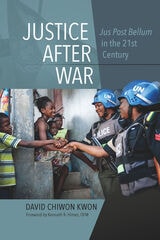
Justice After War
<i>Jus Post Bellum</i> in the 21st CenturyDavid Chiwon Kwon
Catholic University of America Press, 2023
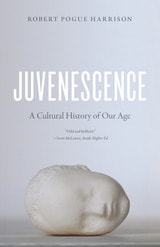
Juvenescence
A Cultural History of Our AgeRobert Pogue Harrison
University of Chicago Press, 2014
Like all of Robert Pogue Harrison's books, Juvenescence ranges brilliantly across cultures and history, tracing the ways that the spirits of youth and age have inflected each other from antiquity to the present. Drawing on the scientific concept of neotony, or the retention of juvenile characteristics through adulthood, and extending it into the cultural realm, Harrison argues that youth is essential for culture’s innovative drive and flashes of genius. At the same time, however, youth—which Harrison sees as more protracted than ever—is a luxury that requires the stability and wisdom of our elders and the institutions. “While genius liberates the novelties of the future,” Harrison writes, “wisdom inherits the legacies of the past, renewing them in the process of handing them down.”
A heady, deeply learned excursion, rich with ideas and insights, Juvenescence could only have been written by Robert Pogue Harrison. No reader who has wondered at our culture's obsession with youth should miss it.