Results by title
1048 books match the query 'African American & Black' and 23 start with j
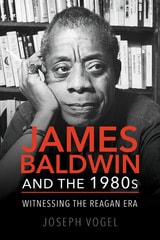
James Baldwin and the 1980s
Witnessing the Reagan EraJoseph Vogel
University of Illinois Press, 2018
Joseph Vogel offers the first in-depth look at Baldwin's dynamic final decade of work. Delving into the writer's creative endeavors, crucial essays and articles, and the impassioned polemic The Evidence of Things Not Seen, Vogel finds Baldwin as prescient and fearless as ever. Baldwin's sustained grappling with "the great transforming energy" of mass culture revealed his gifts for media and cultural criticism. It also brought him into the fray on issues ranging from the Reagan-era culture wars to the New South, from the deterioration of inner cities to the disproportionate incarceration of black youth, and from pop culture gender-bending to the evolving women's and gay rights movements.
Astute and compelling, James Baldwin and the 1980s revives and redeems the final act of a great American writer.
James Baldwin and the Heavenly City
Prophecy, Apocalypse, and DoubtChristopher Z. Hobson
Michigan State University Press, 2018
James Baldwin and the Queer Imagination
Matt Brim
University of Michigan Press, 2014

James Baldwin and the Queer Imagination
Matt Brim
University of Michigan Press, 2014
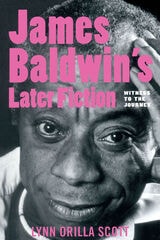
James Baldwin's Later Fiction
Witness to the JourneyLynn O. Scott
Michigan State University Press, 2002
James Baldwin’s Later Fiction examines the decline of Baldwin’s reputation after the middle 1960s, his tepid reception in mainstream and academic venues, and the ways in which critics have often mis-represented and undervalued his work. Scott develops readings of Tell Me How Long the Train’s Been Gone, If Beale Street Could Talk, and Just Above My Head that explore the interconnected themes in Baldwin’s work: the role of the family in sustaining the arts, the price of success in American society, and the struggle of black artists to change the ways that race, sex, and masculinity are represented in American culture.
Scott argues that Baldwin’s later writing crosses the cultural divide between the 1950s and 1960s in response to the civil rights and black power movements. Baldwin’s earlier works, his political activism and sexual politics, and traditions of African American autobiography and fiction all play prominent roles in Scott’s analysis.

James Baldwin's Turkish Decade
Erotics of ExileMagdalena J. Zaborowska
Duke University Press, 2008
Following Baldwin’s footsteps through Istanbul, Ankara, and Bodrum, Zaborowska presents many never published photographs, new information from Turkish archives, and original interviews with Turkish artists and intellectuals who knew Baldwin and collaborated with him on a play that he directed in 1969. She analyzes the effect of his experiences on his novel Another Country (1962) and on two volumes of his essays, The Fire Next Time (1963) and No Name in the Street (1972), and she explains how Baldwin’s time in Turkey informed his ambivalent relationship to New York, his responses to the American South, and his decision to settle in southern France. James Baldwin’s Turkish Decade expands the knowledge of Baldwin’s role as a transnational African American intellectual, casts new light on his later works, and suggests ways of reassessing his earlier writing in relation to ideas of exile and migration.
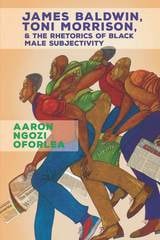
James Baldwin, Toni Morrison, and the Rhetorics of Black Male Subjectivity
Aaron Ngozi Oforlea
The Ohio State University Press, 2017
Oforlea’s book offers new analyses of the character dynamics in Baldwin’s Go Tell It on the Mountain, Tell Me How Long the Train’s Been Gone, and If Beale Street Could Talkand Morrison’s Beloved, Song of Solomon, and Tar Baby. The black male characters in these novels encounter the discursive divide, or a cultural dissonance, when they encounter dominant representations of black male identities. They use these opportunities to construct a counter-discourse about black male subjectivity. Ultimately, Oforlea argues, these characters are strategic about when and how they want to appropriate and subvert dominant ideologies. Their awareness that post-racial discourses perpetuate racial inequality serves as a gateway toward participation in collective struggles for racial justice.
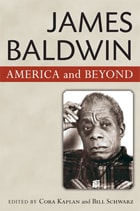
James Baldwin
America and BeyondBill Schwarz and Cora Kaplan, editors
University of Michigan Press, 2011
"This fine collection of essays represents an important contribution to the rediscovery of Baldwin's stature as essayist, novelist, black prophetic political voice, and witness to the Civil Rights era. The title provides an excellent thematic focus. He understood both the necessity, and the impossibility, of being a black 'American' writer. He took these issues 'Beyond'---Paris, Istanbul, various parts of Africa---but this formative experience only returned him to the unresolved dilemmas. He was a fine novelist and a major prophetic political voice. He produced some of the most important essays of the twentieth century and addressed in depth the complexities of the black political movement. His relative invisibility almost lost us one of the most significant voices of his generation. This welcome 'revival' retrieves it. Close call."
---Stuart Hall, Professor Emeritus, Open University
This interdisciplinary collection by leading writers in their fields brings together a discussion of the many facets of James Baldwin, both as a writer and as the prophetic conscience of a nation. The core of the volume addresses the shifting, complex relations between Baldwin as an American—“as American as any Texas GI” as he once wryly put it—and his life as an itinerant cosmopolitan. His ambivalent imaginings of America were always mediated by his conception of a world “beyond” America: a world he knew both from his travels and from his voracious reading. He was a man whose instincts were, at every turn, nurtured by America; but who at the same time developed a ferocious critique of American exceptionalism. In seeking to understand how, as an American, he could learn to live with difference—breaking the power of fundamentalisms of all stripes—he opened an urgent, timely debate that is still ours. His America was an idea fired by desire and grief in equal measure. As the authors assembled here argue, to read him now allows us to imagine new possibilities for the future.
With contributions by Kevin Birmingham, Douglas Field, Kevin Gaines, Briallen Hopper, Quentin Miller, Vaughn Rasberry, Robert Reid-Pharr, George Shulman, Hortense Spillers, Colm Tóibín, Eleanor W. Traylor, Cheryl A. Wall, and Magdalena Zaborowska.
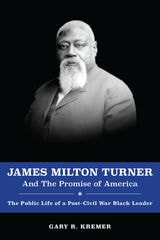
James Milton Turner and the Promise of America
The Public Life of a Post-Civil War Black LeaderGary R. Kremer
University of Missouri Press, 2020
Born a slave, Turner gained freedom when he was a child and received his education in clandestine St. Louis schools, later briefly attending Oberlin College. A self-taught lawyer, Turner earned a statewide reputation and wielded power far out of proportion to Missouri's relatively small black population.
After working nearly a decade in Liberia, Turner never regained the prominence he had enjoyed during Reconstruction.
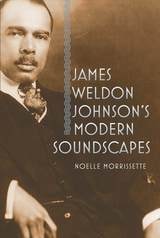
James Weldon Johnson's Modern Soundscapes
Noelle Morrissette
University of Iowa Press, 2013
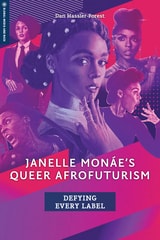
Janelle Monáe's Queer Afrofuturism
Defying Every LabelDan Hassler-Forest
Rutgers University Press, 2022
Janelle Monáe is all these things and more, making her one of the most fascinating artists to emerge in the twenty-first century. This provocative new study explores how Monáe’s work has connected different media platforms to strengthen and enhance new movements in art, theory, and politics. It considers not only Monáe’s groundbreaking albums The ArchAndroid, The Electric Lady, and Dirty Computer, but also Monáe’s work as an actress in such films as Hidden Figures and Antebellum, as well as her soundtrack appearances in socially-engaged projects ranging from I May Destroy You to Us. Examining Monáe as a cultural icon whose work is profoundly intersectional, this book maps how she is actively reshaping discourses around race, gender, sexuality, and capitalism. Tracing Monáe’s performances of joy, desire, pain, and hope across a wide range of media forms, it shows how she imagines Afrofuturist, posthumanist, and postcapitalist utopias, while remaining grounded in the realities of being a Black woman in a white-dominated industry. This is an exciting introduction to an audacious innovator whose work offers us fresh ways to talk about identity, desire, and power.
Jazz Country
Ralph Ellison in AmericaHorace A. Porter
University of Iowa Press, 2001
Jazz Internationalism
Literary Afro-Modernism and the Cultural Politics of Black MusicJohn Lowney
University of Illinois Press, 2017
Jazz Internationalism offers a bold reconsideration of jazz's influence in Afro-modernist literature. Ranging from the New Negro Renaissance through the social movements of the 1960s, John Lowney articulates nothing less than a new history of Afro-modernist jazz writing. Jazz added immeasurably to the vocabulary for discussing radical internationalism and black modernism in leftist African American literature. Lowney examines how Claude McKay, Ann Petry, Langston Hughes, and many other writers employed jazz as both a critical social discourse and mode of artistic expression to explore the possibilities—and challenges—of black internationalism. The result is an expansive understanding of jazz writing sure to spur new debates.
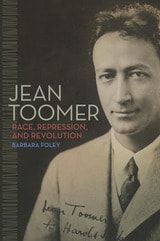
Jean Toomer
Race, Repression, and RevolutionBarbara Foley
University of Illinois Press, 2019
The 1923 publication of Cane established Jean Toomer as a modernist master and one of the key literary figures of the emerging Harlem Renaissance. Though critics and biographers alike have praised his artistic experimentation and unflinching eyewitness portraits of Jim Crow violence, few seem to recognize how much Toomer's interest in class struggle, catalyzed by the Russian Revolution and the post–World War One radical upsurge, situate his masterwork in its immediate historical context. In Jean Toomer: Race, Repression, and Revolution, Barbara Foley explores Toomer's political and intellectual connections with socialism, the New Negro movement, and the project of Young America. Examining his rarely scrutinized early creative and journalistic writings, as well as unpublished versions of his autobiography, she recreates the complex and contradictory consciousness that produced Cane. Foley's discussion of political repression runs parallel with a portrait of repression on a personal level. Examining family secrets heretofore unexplored in Toomer scholarship, she traces their sporadic surfacing in Cane. Toomer's text, she argues, exhibits a political unconscious that is at once public and private.

Jesse Crosse
a novelMichael J. Moran
Parkhurst Brothers, Inc., 2011
Mike Moran first attended Little Rock Catholic High School for Boys-all four years. On the basketball team, he was a point guard. Then, as "Mr. Moran," he taught English for forty years, also at Little Rock Catholic High School for Boys. Recently retired, Moran wrote the boys a novel. The tale revolves around a struggling small-town basketball team with a nerdy manager and a Walter Mittyesque coach. Presented with too few players to scrimmage in practice, the manager takes it upon himself to spread the word throughout the school: "We need you on the team." Three young students appear, diminutive in stature and with scrawny chests, unimpressive at first sight. But with the trio, and their fleet leader Jesse Crosse, the team first experiences shock, then inspiration and constant surprises. The team bonds, leading to stories that will be retold a very long time in a small, out-of-the-way town. It's not a long novel; like one's high school years, it goes by before you know it. Only the message is eternal.
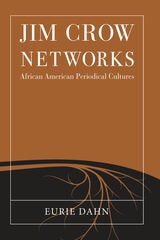
Jim Crow Networks
African American Periodical CulturesEurie Dahn
University of Massachusetts Press, 2021
As Eurie Dahn demonstrates, authors like James Weldon Johnson, Nella Larsen, William Faulkner, and Jean Toomer wrote in the context of interracial and black periodical networks, which shaped the literature they produced and their concerns about racial violence. This original study also explores the overlooked intersections between the black press and modernist and Harlem Renaissance texts, and highlights key sites where readers and writers worked toward bottom-up sociopolitical changes during a period of legalized segregation.

John Mercer Langston and the Fight for Black Freedom, 1829-65
William and Aimee Lee Cheek
University of Illinois Press, 1989
Privileged beyond other members of his race, yet sharing their disadvantages, the young John Mercer Langston stood in an uncertain position in the years before the Civil War. His confrontation with a critical personal question was tempered by a crucial national reality: from what sources could he derive his model of manhood and human dignity? This book explores John Mercer Langston's decisions to work out his destiny through the resources and fortunes of the northern black community.
Although Langston, who died in 1897, was a black Politician, orator, lawyer, intellectual, diplomat, and congressman, he has never before been accorded fullscale biographical treatment. Born free on a Virginia plantation, Langston graduated from Oberlin College in 1849, gained admission to the Ohio bar, and by the age of twenty-five, became the first black American to hold elective office. Still in the years of his political apprenticeship, he promoted black civil rights, helped shape the nascent Republican party, aided in the Oberlin-Wellington Rescue and John Brown's raid, and recruited black soldier for the Union cause. In 1864 he became the first president of the National Equal Rights League.
From an extensive search of primary sources, the authors construct a richly textured picture of the beginnings of Langston's career as a national black leader. More than a biography, the work also incorporates social and political history. Embedded firmly in a study of northern black community life and activism, it reveals the degree to which Langston and his cohorts set the terms of the fight for freedom and citizenship.
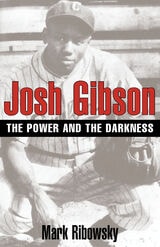
Josh Gibson
The Power and the DarknessMark Ribowsky
University of Illinois Press, 1996
Though Gibson is best remembered as "the black Babe Ruth," Ruth became a beloved symbol of the national pastime, while Gibson lived a life veiled in the darkness that came both from the shadow world of the Negro leagues and from within his own tortured soul.
Mark Ribowsky, the widely acclaimed biographer of Satchel Paige, pulls no punches in his portrait of this magnificent, troubled athlete. This is the most complete, thorough, and authoritative account of the life of black ball's greatest hitter, and one of its most important stars.
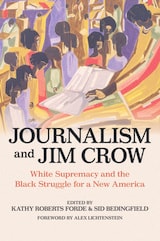
Journalism and Jim Crow
White Supremacy and the Black Struggle for a New AmericaEdited by Kathy Roberts Forde and Sid Bedingfield
University of Illinois Press, 2021
White publishers and editors used their newspapers to build, nurture, and protect white supremacy across the South in the decades after the Civil War. At the same time, a vibrant Black press fought to disrupt these efforts and force the United States to live up to its democratic ideals. Journalism and Jim Crow centers the press as a crucial political actor shaping the rise of the Jim Crow South. The contributors explore the leading role of the white press in constructing an anti-democratic society by promoting and supporting not only lynching and convict labor but also coordinated campaigns of violence and fraud that disenfranchised Black voters. They also examine the Black press’s parallel fight for a multiracial democracy of equality, justice, and opportunity for all—a losing battle with tragic consequences for the American experiment.
Original and revelatory, Journalism and Jim Crow opens up new ways of thinking about the complicated relationship between journalism and power in American democracy.
Contributors: Sid Bedingfield, Bryan Bowman, W. Fitzhugh Brundage, Kathy Roberts Forde, Robert Greene II, Kristin L. Gustafson, D'Weston Haywood, Blair LM Kelley, and Razvan Sibii
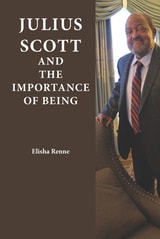
Julius Scott and the Importance of Being
Elisha P. Renne
Michigan Publishing Services, 2024
This biography of Julius Scott is based on primary and secondary sources and focuses on aspects of Julius’s life in order to underscore the personal connection between scholarly achievement, his experiences of living the United States as an African American, and the relentless consequences of having type 1 diabetes. The book, Julius Scott and the Importance of Being, also underscores the importance of documenting the continuing significance of race and religion in political life in the US and the Caribbean.
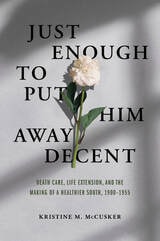
Just Enough to Put Him Away Decent
Death Care, Life Extension, and the Making of a Healthier South, 1900-1955Kristine M. McCusker
University of Illinois Press, 2023
Kristine McCusker charts the dramatic transformation that took place when southerners in particular and Americans in general changed their thinking about when one should die, how that death could occur, and what decent burial really means. As she shows, death care evolved from being a community act to a commercial one where purchasing a purple coffin and hearse ride to the cemetery became a political statement and the norm. That evolution also required interactions between perfect strangers, especially during the world wars as families searched for their missing soldiers. In either case, being put away decent, as southerners called burial, came to mean something fundamentally different in 1955 than it had just fifty years earlier.
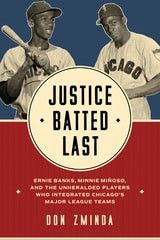
Justice Batted Last
Ernie Banks, Minnie Miñoso, and the Unheralded Players Who Integrated Chicago's Major League TeamsDon Zminda
University of Illinois Press, 2025
Don Zminda’s account looks at these interconnected events alongside the little-known chronicle of Chicago’s slow track to integrating major league baseball. By the early 1950s, the Cubs and White Sox organizations had become rich in Black and Afro-Latino stars and talented prospects. Unlike Miñoso and Banks, however, most of these minor leaguers never advanced to the majors or, if they did, it was for little more than a cup of coffee. Zminda also profiles these players, from Charles Pope, the Cubs’ first Black signee, to larger-than-life fireballer Blood Burns.
Essential and dramatic, Justice Batted Last uses the lives and careers of two Chicago legends to tell a story of integration on and off the diamond.
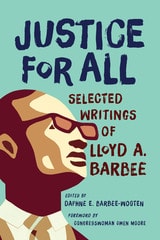
Justice for All
Selected Writings of Lloyd A. BarbeeLloyd A Barbee
Wisconsin Historical Society Press, 2017
Civil rights leader and legislator Lloyd A. Barbee frequently signed his correspondence with "Justice for All," a phrase that embodied his life’s work of fighting for equality and fairness. An attorney most remembered for the landmark case that desegregated Milwaukee Public Schools in 1972, Barbee stood up for justice throughout his career, from defending University of Wisconsin students who were expelled after pushing the school to offer black history courses, to representing a famous comedian who was arrested after stepping out of a line at a protest march. As the only African American in the Wisconsin legislature from 1965 to 1977, Barbee advocated for fair housing, criminal justice reform, equal employment opportunities, women’s rights, and access to quality education for all, as well as being an early advocate for gay rights and abortion access.
This collection features Barbee’s writings from the front lines of the civil rights movement, along with his reflections from later in life on the challenges of legislating as a minority, the logistics of coalition building, and the value of moving the needle on issues that would outlast him. Edited by his daughter, civil rights lawyer Daphne E. Barbee-Wooten, these documents are both a record of a significant period of conflict and progress, as well as a resource on issues that continue to be relevant to activists, lawmakers, and educators.