Results by title
1218 books match the query 'African Americans' and 16 start with j
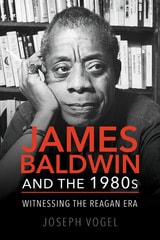
James Baldwin and the 1980s
Witnessing the Reagan EraJoseph Vogel
University of Illinois Press, 2018
Joseph Vogel offers the first in-depth look at Baldwin's dynamic final decade of work. Delving into the writer's creative endeavors, crucial essays and articles, and the impassioned polemic The Evidence of Things Not Seen, Vogel finds Baldwin as prescient and fearless as ever. Baldwin's sustained grappling with "the great transforming energy" of mass culture revealed his gifts for media and cultural criticism. It also brought him into the fray on issues ranging from the Reagan-era culture wars to the New South, from the deterioration of inner cities to the disproportionate incarceration of black youth, and from pop culture gender-bending to the evolving women's and gay rights movements.
Astute and compelling, James Baldwin and the 1980s revives and redeems the final act of a great American writer.

James Baldwin's Turkish Decade
Erotics of ExileMagdalena J. Zaborowska
Duke University Press, 2008
Following Baldwin’s footsteps through Istanbul, Ankara, and Bodrum, Zaborowska presents many never published photographs, new information from Turkish archives, and original interviews with Turkish artists and intellectuals who knew Baldwin and collaborated with him on a play that he directed in 1969. She analyzes the effect of his experiences on his novel Another Country (1962) and on two volumes of his essays, The Fire Next Time (1963) and No Name in the Street (1972), and she explains how Baldwin’s time in Turkey informed his ambivalent relationship to New York, his responses to the American South, and his decision to settle in southern France. James Baldwin’s Turkish Decade expands the knowledge of Baldwin’s role as a transnational African American intellectual, casts new light on his later works, and suggests ways of reassessing his earlier writing in relation to ideas of exile and migration.
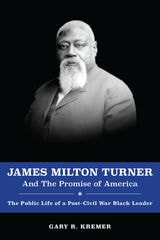
James Milton Turner and the Promise of America
The Public Life of a Post-Civil War Black LeaderGary R. Kremer
University of Missouri Press, 2020
Born a slave, Turner gained freedom when he was a child and received his education in clandestine St. Louis schools, later briefly attending Oberlin College. A self-taught lawyer, Turner earned a statewide reputation and wielded power far out of proportion to Missouri's relatively small black population.
After working nearly a decade in Liberia, Turner never regained the prominence he had enjoyed during Reconstruction.
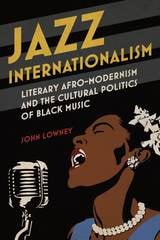
Jazz Internationalism
Literary Afro-Modernism and the Cultural Politics of Black MusicJohn Lowney
University of Illinois Press, 2017
Jazz Internationalism offers a bold reconsideration of jazz's influence in Afro-modernist literature. Ranging from the New Negro Renaissance through the social movements of the 1960s, John Lowney articulates nothing less than a new history of Afro-modernist jazz writing. Jazz added immeasurably to the vocabulary for discussing radical internationalism and black modernism in leftist African American literature. Lowney examines how Claude McKay, Ann Petry, Langston Hughes, and many other writers employed jazz as both a critical social discourse and mode of artistic expression to explore the possibilities—and challenges—of black internationalism. The result is an expansive understanding of jazz writing sure to spur new debates.
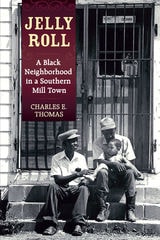
Jelly Roll
A Black Neighborhood in a Southern Mill TownCharles Thomas
University of Arkansas Press, 2012
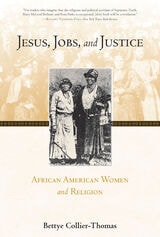
Jesus, Jobs, and Justice
African American Women and ReligionBettye Collier-Thomas
Temple University Press, 2013
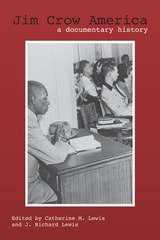
Jim Crow America
A Documentary HistoryCatherine M. Lewis
University of Arkansas Press, 2009
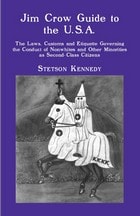
Jim Crow Guide to the U.S.A.
The Laws, Customs and Etiquette Governing the Conduct of Nonwhites and Other Minorities as Second-Class CitizensStetson Kennedy
University of Alabama Press, 2011
“A history of the United States that is almost incredible.” —Jean-Paul Sartre, Les Temps Modernes
Jim Crow Guide to the U.S.A. by Stetson Kennedy is a bold exposé of America’s institutionalized racism, originally published in 1959 and hailed as a landmark in civil rights literature. With unflinching clarity, Kennedy documents the laws, customs, and social codes that relegated nonwhite citizens to second-class status under the Jim Crow system. From the mistreatment of Native Americans to the exclusionary immigration policies targeting Asians and Africans, the book maps the presence of race-based politics across every facet of American life—housing, education, employment, and even burial.
What makes this work especially influential is its international resonance. The famed French existentialist Jean-Paul Sartre championed the book’s publication in Europe, recognizing its power to illuminate the contradictions between American democratic ideals and racial realities. Sartre’s endorsement helped position the book as a global indictment of racial injustice, aligning it with anti-colonial and human rights movements worldwide. Provocative, meticulously researched, and deeply human, Jim Crow Guide to the U.S.A. remains a vital historical document and a call to conscience. It is not merely a guide—it is a mirror held up to a nation, reflecting truths that later generations were called on to address.
Jim Crow Networks
African American Periodical CulturesEurie Dahn
University of Massachusetts Press, 2021
As Eurie Dahn demonstrates, authors like James Weldon Johnson, Nella Larsen, William Faulkner, and Jean Toomer wrote in the context of interracial and black periodical networks, which shaped the literature they produced and their concerns about racial violence. This original study also explores the overlooked intersections between the black press and modernist and Harlem Renaissance texts, and highlights key sites where readers and writers worked toward bottom-up sociopolitical changes during a period of legalized segregation.
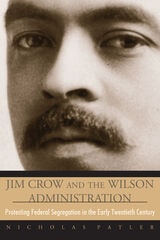
Jim Crow and the Wilson Administration
Protesting Federal Segregation in the Early Twentieth CenturyNicholas Patler
University Press of Colorado, 2007
This protest campaign, carried out on a level not seen since the abolitionist movement, galvanized a vast community of men and women. Blacks and whites, professionals and laymen, signed petitions, wrote protest letters, participated in organized mass meetings, lobbied public officials, directly confronted Wilson, made known their plight through publicity campaigns, and, in at least one case, marched to express their opposition. Patler provides a thorough examination of the two national organizations that led these protests efforts - the National Association for the Advancement of Colored People and William Monroe Trotter's National Equal Rights League - and deftly contextualizes the movement, while emphasizing the tragic, enduring consequences of the Wilson administration's actions.

John Mercer Langston and the Fight for Black Freedom, 1829-65
William and Aimee Lee Cheek
University of Illinois Press, 1989
Privileged beyond other members of his race, yet sharing their disadvantages, the young John Mercer Langston stood in an uncertain position in the years before the Civil War. His confrontation with a critical personal question was tempered by a crucial national reality: from what sources could he derive his model of manhood and human dignity? This book explores John Mercer Langston's decisions to work out his destiny through the resources and fortunes of the northern black community.
Although Langston, who died in 1897, was a black Politician, orator, lawyer, intellectual, diplomat, and congressman, he has never before been accorded fullscale biographical treatment. Born free on a Virginia plantation, Langston graduated from Oberlin College in 1849, gained admission to the Ohio bar, and by the age of twenty-five, became the first black American to hold elective office. Still in the years of his political apprenticeship, he promoted black civil rights, helped shape the nascent Republican party, aided in the Oberlin-Wellington Rescue and John Brown's raid, and recruited black soldier for the Union cause. In 1864 he became the first president of the National Equal Rights League.
From an extensive search of primary sources, the authors construct a richly textured picture of the beginnings of Langston's career as a national black leader. More than a biography, the work also incorporates social and political history. Embedded firmly in a study of northern black community life and activism, it reveals the degree to which Langston and his cohorts set the terms of the fight for freedom and citizenship.

Joseph Carter Corbin
Educator Extraordinaire and Founder of the University of Arkansas at Pine BluffGladys Turner Finney
Butler Center for Arkansas Studies, 2017
Having operated now for more than 140 years, the University of Arkansas at Pine Bluff (UAPB) was founded in 1875 as Branch Normal College by Joseph Carter Corbin, a native of Ohio and the son of former slaves. Corbin, who had a classical education, was the first African American superintendent of public education in Arkansas and literally built the school from the ground up. There was a desperate need for teachers in Arkansas, as there was a great desire for education by former slaves who had been prohibited from learning to read and write.
Corbin himself cleared the land that would soon house the college and then set about to create a school that would produce the first African American teachers following the Reconstruction years. For almost three decades, he worked tirelessly on behalf of Arkansas’s black community to meet the need for educators.
In the early days, Corbin worked both as the president and the janitor so that he could control costs and keep the school going. He often waived matriculation fees and other expenses to allow impoverished students the opportunity to graduate and become qualified to teach throughout Arkansas.
Although he might not have realized it at the time, Corbin was a member of the so-called aristocrats of color, the African American elite of national prominence and a group that included such luminaries as Booker T. Washington. Corbin was a true giant in the history of education in Arkansas. His story, told by a former UAPB student, is monumental for the scope of what one man was able to accomplish.
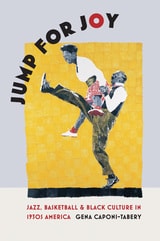
Jump for Joy
Jazz, Basketball, and Black Culture in 1930s AmericaGena Caponi-Tabery
University of Massachusetts Press, 2008
If the 1930s was the Swing Era, then the years from 1937 on might well be called the Jump Era. That summer Count Basie recorded “Jumping at the Woodside,” and suddenly jump tunes seemed to be everywhere. Along with the bouncy beat came a new dance step—the high-flying aerials of the jitterbuggers—and the basketball games that took place in the dance halls of African America became faster, higher, and flashier. Duke Ellington and a cast of hundreds put the buoyant spirit of the era on stage with their 1941 musical revue, Jump for Joy, a title that captured the momentum and direction of the new culture of exuberance.
Several high-profile public victories accompanied this increasing optimism: the spectacular successes of African American athletes at the 1936 Olympics, the 1937 union victory of the Brotherhood of Sleeping Car Porters, and Joe Louis's 1937 and 1938 heavyweight championship fights. For the first time in history, Black Americans emerged as cultural heroes and ambassadors, and many felt a new pride in citizenship.
In this book, Gena Caponi-Tabery chronicles these triumphs and shows how they shaped American music, sports, and dance of the 1930s and beyond. But she also shows how they emboldened ordinary African Americans to push for greater recognition and civil liberties—how cultural change preceded and catalyzed political action.
Tracing the path of one symbolic gesture—the jump—across cultural and disciplinary boundaries, Caponi-Tabery provides a unique political, intellectual, and artistic analysis of the years immediately preceding World War II.

Just Neighbors?
Research on African American and Latino Relations in the United StatesEdward Telles
Russell Sage Foundation, 2012
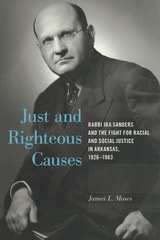
Just and Righteous Causes
Rabbi Ira Sanders and the Fight for Racial and Social Justice in Arkansas, 1926-1963James L. Moses
University of Arkansas Press, 2018
Winner, 2019 Booker Worthen Prize from the Central Arkansas Library System.
A dedicated advocate for social justice long before the term entered everyday usage, Rabbi Ira Sanders began striving against the Jim Crow system soon after he arrived in Little Rock from New York in 1926. Sanders, who led Little Rock’s Temple B’nai Israel for nearly forty years, was a trained social worker as well as a rabbi and his career as a dynamic religious and community leader in Little Rock spanned the traumas of the Great Depression, World War II and the Holocaust, and the social and racial struggles of the 1950s and 1960s.
Just and Righteous Causes—a full biographical study of this bold social-activist rabbi—examines how Sanders expertly navigated the intersections of race, religion, and gender to advocate for a more just society. It joins a growing body of literature about the lives and histories of Southern rabbis, deftly balancing scholarly and narrative tones to provide a personal look into the complicated position of the Southern rabbi and the Jewish community throughout the political struggles of the twentieth-century South.
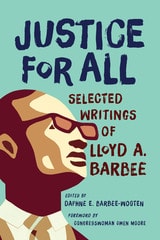
Justice for All
Selected Writings of Lloyd A. BarbeeLloyd A Barbee
Wisconsin Historical Society Press, 2017
Civil rights leader and legislator Lloyd A. Barbee frequently signed his correspondence with "Justice for All," a phrase that embodied his life’s work of fighting for equality and fairness. An attorney most remembered for the landmark case that desegregated Milwaukee Public Schools in 1972, Barbee stood up for justice throughout his career, from defending University of Wisconsin students who were expelled after pushing the school to offer black history courses, to representing a famous comedian who was arrested after stepping out of a line at a protest march. As the only African American in the Wisconsin legislature from 1965 to 1977, Barbee advocated for fair housing, criminal justice reform, equal employment opportunities, women’s rights, and access to quality education for all, as well as being an early advocate for gay rights and abortion access.
This collection features Barbee’s writings from the front lines of the civil rights movement, along with his reflections from later in life on the challenges of legislating as a minority, the logistics of coalition building, and the value of moving the needle on issues that would outlast him. Edited by his daughter, civil rights lawyer Daphne E. Barbee-Wooten, these documents are both a record of a significant period of conflict and progress, as well as a resource on issues that continue to be relevant to activists, lawmakers, and educators.