Results by title
266 books match the query 'Anecdotes' and 2 start with j
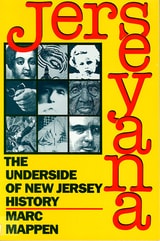
Jerseyana
The Underside of New Jersey HistoryMappen, Marc
Rutgers University Press, 1992
Readers of the New Jersey section of the Sunday New York Times eagerly look forward to Marc Mappen's astonishing tales of New Jersey history. Jerseyana is his first collection of these popular monthly columns. Here you will meet villains like Dutch Schultz, the mobster gunned down in a Newark gangland rubout, and heroes like Minerva Miller, a black woman who fought segregation at the turn of the century. There are famous events, like the explosion of Hindenburg, and obscure ones, like the assassination of the king of Italy by an anarchist from Paterson. There are amusing stories, like a buried treasure hoax in Morristown after the Revolutionary War, bizarre stories like the fact that the discoverer of New Jersey was allegedly devoured by cannibals, and dramatic stories, like the Jersey woman who survived Indian captivity.
Arranged chronologically, these columns constitute a lively New Jersey perspective on American history. Individual essays deal with major themes in American history and how they affected New Jersey: the colonial era, the Revolution, Civil War and Reconstruction, the Gilded Age, the Progressive Era, World War I, the '20s and '30s, World War II, McCarthyism, women's history, and black history.
Each of the fifty-four columns in this book stands as a colorful exploration in history. Together they constitute a sweeping survey of our state's rich heritage.
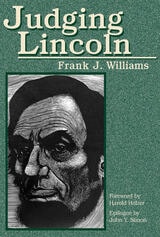
Judging Lincoln
Frank J. Williams. Foreword by Harold Holzer. Epilogue by John Y. Simon
Southern Illinois University Press, 2007