Results by title
282 books match the query 'Caribbean & West Indies' and 4 start with j
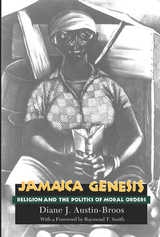
Jamaica Genesis
Religion and the Politics of Moral OrdersDiane J. Austin-Broos
University of Chicago Press, 1997
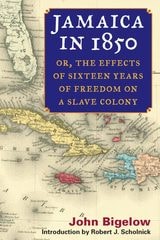
Jamaica in 1850
or, The Effects of Sixteen Years of Freedom on a Slave ColonyJohn Bigelow Introduction by Robert J. Scholnick
University of Illinois Press, 2000
A reporter's firsthand portrait of formerly enslaved Jamaicans in the years after emancipation
John Bigelow’s Jamaica in 1850 provided an important document in the antislavery movement in the United States and Great Britain. Jamaica’s economy had collapsed after the 1838 emancipation. American supporters of enslavement used the Jamaican example to argue that abolition at home would unleash economic and social chaos. Bigelow’s vivid eyewitness reporting undermined that widely held view by proving Jamaica’s problems originated in the incompetence of absentee white planters and an obsolete colonial system. As Bigelow showed, many once-enslaved Jamaicans had in fact become successful small-scale landowners in the twelve years after emancipation while the large plantations languished.
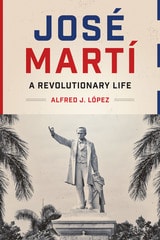
José Martí
A Revolutionary LifeBy Alfred J. López
University of Texas Press, 2014
José Martí (1853–1895) was the founding hero of Cuban independence. In all of modern Latin American history, arguably only the “Great Liberator” Simón Bolívar rivals Martí in stature and legacy. Beyond his accomplishments as a revolutionary and political thinker, Martí was a giant of Latin American letters, whose poetry, essays, and journalism still rank among the most important works of the region. Today he is revered by both the Castro regime and the Cuban exile community, whose shared veneration of the “apostle” of freedom has led to his virtual apotheosis as a national saint.
In José Martí: A Revolutionary Life, Alfred J. López presents the definitive biography of the Cuban patriot and martyr. Writing from a nonpartisan perspective and drawing on years of research using original Cuban and U.S. sources, including materials never before used in a Martí biography, López strips away generations of mythmaking and portrays Martí as Cuba’s greatest founding father and one of Latin America’s literary and political giants, without suppressing his public missteps and personal flaws. In a lively account that engrosses like a novel, López traces the full arc of Martí’s eventful life, from his childhood and adolescence in Cuba, to his first exile and subsequent life in Spain, Mexico City, and Guatemala, through his mature revolutionary period in New York City and much-mythologized death in Cuba on the battlefield at Dos Ríos. The first major biography of Martí in over half a century and the first ever in English, José Martí is the most substantial examination of Martí’s life and work ever published.
José Martí’s Liberative Political Theology
Miguel A. De La Torre
Vanderbilt University Press, 2021
Miguel De La Torre has authored the most comprehensive text written thus far concerning Martí's religious views and how they affected his political thought. The few similar texts that exist are written in Spanish, and most of them romanticize Martí's spirituality in an attempt to portray him as a “Christian believer.” Only a handful provide an academic investigation of Martí's theological thought based solely on his writings, and those concentrate on just one aspect of Martí's religious influences. José Martí's Liberative Political Theology allows for mutual influence between Martí's political and religious views, rather than assuming one had precedence over the other.