Results by title
603 books match the query 'Description and travel' and 9 start with j

Jacques de Coutre's Singapore and Johor 1594-c. 1625
Edited by Peter Borschberg
National University of Singapore Press, 2015
The manuscripts come from a bundle of documents preserved at the National Library of Spain in Madrid that includes De Coutre’sautobiography and several memorials to the Crowns of Spain and Portugal. Chapters from the autobiography have been excerpted from book I, which covers the writer’s life in Southeast Asia between 1593 and 1603. A glossary and list of place names provide information about officials, goods and places mentioned in the text that will be unfamiliar to readers of English.
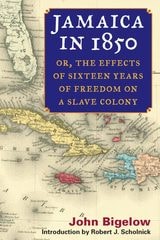
Jamaica in 1850
or, The Effects of Sixteen Years of Freedom on a Slave ColonyJohn Bigelow Introduction by Robert J. Scholnick
University of Illinois Press, 2000
A reporter's firsthand portrait of formerly enslaved Jamaicans in the years after emancipation
John Bigelow’s Jamaica in 1850 provided an important document in the antislavery movement in the United States and Great Britain. Jamaica’s economy had collapsed after the 1838 emancipation. American supporters of enslavement used the Jamaican example to argue that abolition at home would unleash economic and social chaos. Bigelow’s vivid eyewitness reporting undermined that widely held view by proving Jamaica’s problems originated in the incompetence of absentee white planters and an obsolete colonial system. As Bigelow showed, many once-enslaved Jamaicans had in fact become successful small-scale landowners in the twelve years after emancipation while the large plantations languished.
Jersey Genesis
The Story of the Mullica RiverBeck, Henry
Rutgers University Press, 1983
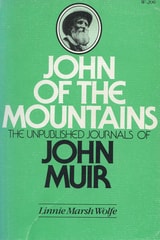
John of the Mountains
The Unpublished Journals of John MuirEdited by Linnie Marsh Wolfe
University of Wisconsin Press, 1979
The sixty extant journals and numerous notes in this volume were written from 1867 to 1911. They start seven years after the time covered in The Story of My Boyhood and Youth, Muir’s uncompleted autobiography. The earlier journals capture the essence of the Sierra Nevada and Alaska landscapes. The changing appearance of the Sierras from Sequoia north and beyond the Yosemites enthralled Muir, and the first four years of the journals reveal his dominating concern with glacial action. The later notebooks reflect his changes over the years, showing a mellowing of spirit and a deep concern for human rights.
Like all his writings, the journals concentrate on his observations in the wilderness. His devotion to his family, his many warm friendships, and his many-sided public life are hardly mentioned. Very little is said about the quarter-century battle for national parks and forest reserves. The notebooks record, in language fuller and freer than his more formal writings, the depth of his love and transcendental feeling for the wilderness. The rich heritage of his native Scotland and the unconscious music of the poetry of Burns, Milton, and the King James Bible permeate the language of his poetic fancy.
In his later life, Muir attempted to sort out these journals and, at the request of friends, published a few extracts. A year after his death in 1914, his literary executor and biographer, William Frederick Badè, also published episodes from the journals. Linnie Marsh Wolfe set out to salvage the best of his writings still left unpublished in 1938 and has thus added to our understanding of the life and thought of a complex and fascinating American figure.
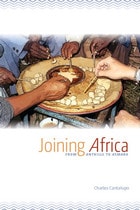
Joining Africa
From Anthills to AsmaraCharles Cantalupo
Michigan State University Press, 2012
This eye-opening personal history tells the story of an American college professor’s twenty-year engagement with a thriving Africa rarely encountered by Western visitors, including an extraordinary connection to poets across the continent. At once adventurous, spiritual, political, dreamlike, and humorous, Joining Africa is a unique documentary of a journey through the continent, including an intense five-year encounter with economically struggling but culturally fertile Eritrea. The Africa presented here is neither a postcolonial study nor an exotic tourist destination. It is rich with the voices of its people, whose languages, Cantalupo argues, have greater potential to effect change than any NGO or high-profile celebrity. In vibrant prose, Cantalupo’s book extends a stirring invitation to reevaluate how we engage—both individually and collectively—with this remarkable part of the world.
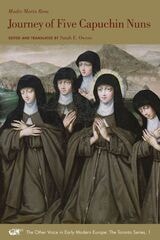
Journey of Five Capuchin Nuns
Madre María Rosa
Iter Press, 2009
Journey of Five Capuchin Nuns contains all the elements of a riveting adventure story. Through the eyes of the Mother Abbess, María Rosa, the reader is taken along on this journey through wars, pirates, disease, travel on the high seas, and treacherous mountain passes in the Andes. Five nuns set out in the early 1700s from their cloistered convent in Madrid, Spain, to travel halfway around the world to Lima, Peru. The journey lasted three years—an odyssey not all of them would complete. Yet, this unique historical document is so much more than a typical travel narrative. It illuminates the eighteenth-century way of life of religious women on both sides of the Atlantic basin. María Rosa’s lively prose attests to the literary connection among women religious writers of Spain and Latin America. This annotated edition and first-ever English translation of the manuscript will be of interest to scholars, students and anyone who wants to learn more about women’s history.
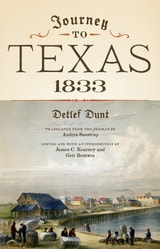
Journey to Texas, 1833
By Detlef Dunt. Translated by Anders Saustrup, edited and with an introduction by James C. Kearney and Geir Bentzen
University of Texas Press, 2015
In 1834, a German immigrant to Texas, D. T. F. (Detlef Thomas Friedrich) Jordt, aka Detlef Dunt, published Reise nach Texas, a delightful little book that praised Texas as “a land which puts riches in [the immigrant’s] lap, which can bring happiness to thousands and to their descendants.” Dunt’s volume was the first one written by an on-the-ground observer to encourage German immigration to Texas, and it provides an unparalleled portrait of Austin’s Colony from the lower Brazos region and San Felipe to the Industry and Frelsburg areas, where Dunt resided with Friedrich Ernst and his family.
Journey to Texas, 1833 offers the first English translation of Reise nach Texas. It brings to vivid life the personalities, scenic landscapes, and customs that Dunt encountered in colonial Texas on the eve of revolution, along with his many practical suggestions for Germans who intended to emigrate. The editors’ introduction describes the social, political, and economic conditions that prompted Europeans to emigrate to Texas and provides biographical background on Dunt and his connection with Friedrich Ernst. Also included in the volume are a bibliography of German works about Texas and an interpretive essay discussing all of the early German literature about Texas and Dunt’s place within it. Expanding our knowledge of German immigration to Texas beyond the more fully documented Hill Country communities, Journey to Texas, 1833 also adds an important chapter to the story of pre-Revolutionary Texas by a sophisticated commentator.
Journey toward the Cradle of Mankind
Guido Gozzano
Northwestern University Press, 1996
The extent of Gozzano's travels--to Ceylon, Goa, Agra, Jaipur--makes one wonder how the writer could visit all or even most of the places he so vividly describes. "I did not honestly think I would find so much of it intact," the spellbound Gozzano repeats to himself, before what he must shortly recognize as prodigious evidence of decay.
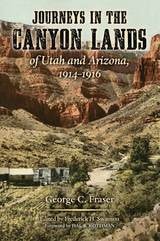
Journeys in the Canyon Lands of Utah and Arizona, 1914-1916
George C. Fraser; Edited by Frederick H. Swanson; Foreword by Hal K. Rothman
University of Arizona Press, 2005
Frederick H. Swanson has edited Fraser’s voluminous journals into a single volume covering three trips taken from 1914 to 1916. As Fraser wades the bone-chilling waters of the Zion Narrows, crosses the Grand Canyon in midsummer heat, and rides through the trackless forest of the Aquarius Plateau, he conveys impressions of the land that will fascinate any reader who wonders what the canyon country was like before it became a popular tourist destination—and one that will inform historians interested in early accounts of the region. Accompanied by a selection of photographs taken by Fraser and his fellow travelers, Journeys in the Canyon Lands brings to life the Southwest’s breathtaking backcountry on the brink of discovery.