Results by title
55 books match the query 'Documentary films' and 2 start with j

Japanese Documentary Film
The Meiji Era Through HiroshimaAbe Mark Nornes
University of Minnesota Press, 2003
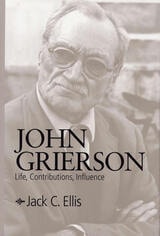
John Grierson
Life, Contributions, InfluenceJack C. Ellis
Southern Illinois University Press, 2000
More than any other person, Jack C. Ellis notes, John Grierson, a Scot, was responsible for the documentary film as it has developed in English-speaking countries.
While in the United States in the 1920s, Grierson first applied the term documentary to Robert Flaherty's Moana. In 1927, Grierson returned to Britain, where he was hired to promote the marketing of products of the British Empire. The first practical application of Grierson’s theory of documentary film was Drifters, a 1929 short feature about herring fishing in the North Sea. That success led Grierson to establish the Empire Marketing Board Film Unit (later the General Post Office Film Unit).
In 1939, Grierson moved to Canada, leaving behind a legacy of some sixty British filmmakers who spread his ideas and techniques to other countries. In Canada, he progressed beyond national concerns to global problems. The National Film Board of Canada stands as the largest and most impressive monument to Grierson's concepts and actions in regard to the use of film by governments in communicating with citizens.
Ellis examines Grierson's accomplishments in detail, probing the complexities of Grierson's motivations and personality. His subject, a true titan in the world of documentary film, was the first filmmaker to use public and private institutional sponsorship—not the box office—to pay for his films. He also employed nontraditional distribution techniques, going outside the movie theaters to reach audiences in schools and factories, union halls, and church basements. Essentially, Grierson created documentary film and established an audience for it.