Results by title
304 books match the query 'Entertainment & Performing Arts' and 14 start with j
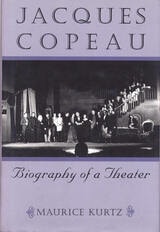
Jacques Copeau
Biography of a TheaterMaurice Kurtz
Southern Illinois University Press, 1999
The French writer, editor, and drama critic Jacques Copeau (1879–1949) opened his Théâtre du Vieux-Colombier in Paris in 1913. Copeau was well on his way to exerting a major influence in the theater in the year that saw the end of the career of the dominant innovator of an earlier generation, André Antoine, whose Théâtre Libre (Free Stage) had featured an uncompromising realism.
In marked contrast to Antoine, Copeau returned the poetry and freshness to Shakespeare and Moliére. By May 1914, Paris and Europe had recognized his genius and his special gift to the theater. Yet like Antoine, Copeau wanted to sweep "staginess" from the stage, to banish overacting, overdressing, and flashy house trappings. To cleanse the stage of its artificiality, he created a fixed, architectural acting space where dramatic literature and theater technique could live in harmony and thrive in freedom of thought and movement. A major part of his program was teaching actors and actresses their craft.
Maurice Kurtz points out that the Théâtre du Vieux-Colombier incarnates the "ideal of Copeau's stubborn struggle to remain strong in the face of indifference, independent in the face of success, proud in the face of defeat. It is the story of group spirit in its purest, most eloquent form, the spirit of personal sacrifice of all for the dignity of their art."
Kurtz here re-creates the vitality Copeau imbued in theater artists throughout the world. He conveys Copeau's enthusiasm, the crusading spirit that enabled Copeau and his Théâtre du Vieux-Colombier to transform experimentation into tradition, into the heritage of civilization. He has written a biography of a theater that was tremendously influential in Europe and America.
Jacques Rivette
Mary M. Wiles
University of Illinois Press, 2012
Jan Svankmajer
Keith Johnson
University of Illinois Press, 2017
Jane Campion
Kathleen McHugh
University of Illinois Press, 2006
In considering Jane Campion's early award-winning short films on through international sensation The Piano and beyond, Kathleen McHugh traces the director's distinctive visual style as well as her commitment to consistently renovating the conventions of "women's films." By refusing to position her female protagonists as victims, McHugh argues, Campion scrupulously avoids the moral structures of melodrama, and though she often works with the narratives, mise-en-scene, and visual tropes typical of that genre, her films instead invite a distanced or even amused engagement.
Jane Campion concludes with four brief, revelatory interviews and a filmography. Campion spoke twice with Michel Ciment—after the screening of her short and medium-length films at the Cannes Film Festival 1986, and three years later, after the Cannes screening of Sweetie. Judith Lewis narrates a Beverly Hills interview with Campion that followed the release of Holy Smoke, and Lizzie Francke's interview, reprinted from Sight and Sound,centers on Campion's film In the Cut, adapted from Susanna Moore's novel.
A volume in the series Contemporary Film Directors, edited by James R. Naremore
Jane Fonda
There's a Great Deal to SayMarilyn S. Greenwald
Rutgers University Press, 0
Since the late 1960s, Jane Fonda has identified as an activist first and an actor second, using her celebrity as a vehicle to convey her views and her advocacy. Few stars of her stature have been as simultaneously acclaimed and vilified as Fonda. Even as she won two Academy Awards and was a major box office draw of the 1970s and 1980s, she received reams of hate mail for her political activism and antiwar stances. This book explores Fonda’s devotion to movement politics—sometimes at the expense of her career and her personal safety.
Digging deep into rare material from cinema archives and Fonda’s own personal papers, journalist Marilyn Greenwald tells the story of how Fonda came to view acting as a “side gig” that gives her a worldwide platform to convey her personal and political views. Charting the evolution of her activism and the merging of her acting and producing with her advocacy, Greenwald focuses on the years from 1968—when she was jarred out of complacency by the Vietnam War—to 1980, after the release of The China Syndrome and the advent of the Three Mile Island nuclear crisis, which brought to light the possible dangers of nuclear energy. Greenwald details how three of her films—Klute (1971), Coming Home (1978), and The China Syndrome (1979)—were designed to further her personal beliefs. She also considers how Fonda has weathered changes in the entertainment industry and public tastes to produce and star in decades' worth of socially conscious projects. Charting Fonda’s personal and professional growth while offering a candid account of her struggles, this book shows how Fonda viewed movies as an influential storytelling tool that can influence public opinion, change minds, and trigger social change.
Jean-Luc Godard
The Permanent RevolutionaryBert Rebhandl, translated by Edward Maltby
University of Wisconsin Press, 2023
Rebhandl skillfully weaves together biographical details; information about the cultural, intellectual, and cinematic milieu over the decades; and descriptions of Godard’s most significant films to support his assertion that the director was a permanent revolutionary—always seeking new ways to create, understand, and comment on film within a larger context. He views Godard as an artist consistently true to himself while never ceasing to change and evolve, often in unexpected, radical, and controversial ways.
Rebhandl is known as a journalist with deep insights and lucid prose. Despite the wealth of material to analyze, he neither gets lost in the details nor offers a superficial gloss, even while directly tackling such topics as the long-standing charges of antisemitism against Godard and his oeuvre. This volume will be welcome to both casual fans and dedicated devotees.
Jean-Pierre and Luc Dardenne
Joseph Mai
University of Illinois Press, 2010
For well over a decade, Jean-Pierre and Luc Dardenne have produced highly original and ethically charged films that immerse their audiences in an intense and embodied viewing experience. Their work has consistently attracted international recognition, including the rare feat of two Palmes d'Or at Cannes.
In this first book-length study of the Belgian brothers, Joseph Mai delivers sophisticated close analyses of their directorial style and explores the many philosophical issues dealt with in their films (especially the ethics of Emmanuel Levinas). Mai discusses the Dardennes' varied and searching career from its inception in the late 1970s, starting with the working-class political consciousness and lost utopias of their documentary period; passing through their transition toward fictional narrative, experimental techniques, and familial themes; and finishing with a series of in-depth and philosophically informed interpretations of the brothers' more recent work. In such highly influential films such as La promesse, Rosetta, The Son, and The Child, the brothers have recast filmmaking through what Mai calls a "sensuous realism"--realism capable of touching the audience with the most compelling problems and moral dilemmas of contemporary society. This volume also features an interview in which the Dardennes discuss their approach to film production and the direction of actors.
Jerusalem, Take One!
Memoirs of a Jewish FilmmakerAlan Rosenthal
Southern Illinois University Press, 2000
Jerusalem, Take One! Memoirs of a Jewish Filmmaker is a behind-the-scenes look at the life of documentary filmmaker Alan Rosenthal, the maker of over sixty films including Day of Peace, Out of the Ashes, A Nation Is Born, and On the Brink of Peace. As a witness to so much recent Israeli history through a camera’s viewfinder, Rosenthal himself makes as much of an interesting subject as the events he documents.
Born in London in 1936, Rosenthal studied law at Oxford before beginning his work in television directing in Israel and the United States. By the 1960s he was an established young filmmaker who had participated in the filming of the Eichmann trial in Jerusalem in 1961. He returned in 1968, initially for just one year, as part of a team invited by the Israeli government to set up the first television network; that year turned into the thirty-plus years that inspired this book.
The Eichmann trial, the development of Israel Television, the Oslo agreement, the search for the menorah from the Second Temple, the history of Zionism on the television screen, and the Yom Kippur War and Project Renewal are but a few of the recent moments in Israeli history that Rosenthal and his camera have witnessed. As he recalls these events with humor and wit, Rosenthal’s words recapture the emotions and feel of those times as vividly as his lens recorded their passing.
This is a memoir, not a history textbook, and Rosenthal himself is the true subject of the book’s most intensely personal and introspective moments, stories of growth and learning, of England and family, of love and loss, of ideological disappointment and renewed hope. Rosenthal’s tale is one of progress toward the man he wishes to be, the films he feels he must make, and the cultural identity he seeks to develop for himself and all Jewish people.
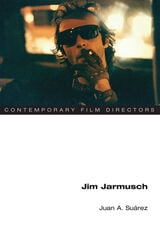
Jim Jarmusch
Juan A. Suarez
University of Illinois Press, 2006
At a time when gimmicky, action-driven blockbusters ruled Hollywood, Jim Jarmusch spearheaded a boom in independent cinema by making now-classic low-budget films like Stranger than Paradise, Down by Law, and Mystery Train. Jarmusch's films focused on intimacy, character, and new takes on classical narratives. His minimal form, peculiar pacing, wry humor, and blank affect have since been adopted by directors like Sofia Coppola, Hal Hartley, Richard Linklater, and Tsai Ming-liang.
Juan A. Suárez identifies and describes an abundance of aesthetic influences on Jarmusch, delving into the director's links to punk, Structural film, classic street photography, hip-hop, beat literature and art, and the New York pop vanguard of the late 1970s. At the same time, he analyzes Jarmusch's work from three mutually implicated perspectives: in relation to independent filmmaking from the 1980s to the present; as a form of cultural production that appropriates existing icons, genres, and motifs; and as an instance of postmodern politics.
A volume in the series Contemporary Film Directors, edited by James R. Naremore
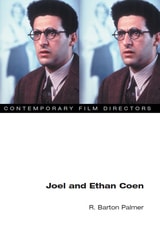
Joel and Ethan Coen
R. Barton Palmer
University of Illinois Press, 2004
R. Barton Palmer argues that the Coen oeuvre forms a central element in what might be called postmodernist filmmaking. Mixing high and low cultural sources and blurring genres like noir and comedy, the use of pastiche and anti-realist elements in films such as The Hudsucker Proxy and Barton Fink clearly fit the postmodernist paradigm. Palmer argues that for a full understanding of the Coen brothers' unique position within film culture, it is important to see how they have developed a new type of text within general postmodernist practice that Palmer terms commercial/independent. Analyzing their substantial body of work from this "generic" framework is the central focus of this book.
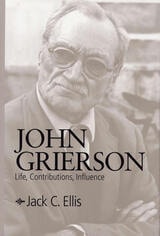
John Grierson
Life, Contributions, InfluenceJack C. Ellis
Southern Illinois University Press, 2000
More than any other person, Jack C. Ellis notes, John Grierson, a Scot, was responsible for the documentary film as it has developed in English-speaking countries.
While in the United States in the 1920s, Grierson first applied the term documentary to Robert Flaherty's Moana. In 1927, Grierson returned to Britain, where he was hired to promote the marketing of products of the British Empire. The first practical application of Grierson’s theory of documentary film was Drifters, a 1929 short feature about herring fishing in the North Sea. That success led Grierson to establish the Empire Marketing Board Film Unit (later the General Post Office Film Unit).
In 1939, Grierson moved to Canada, leaving behind a legacy of some sixty British filmmakers who spread his ideas and techniques to other countries. In Canada, he progressed beyond national concerns to global problems. The National Film Board of Canada stands as the largest and most impressive monument to Grierson's concepts and actions in regard to the use of film by governments in communicating with citizens.
Ellis examines Grierson's accomplishments in detail, probing the complexities of Grierson's motivations and personality. His subject, a true titan in the world of documentary film, was the first filmmaker to use public and private institutional sponsorship—not the box office—to pay for his films. He also employed nontraditional distribution techniques, going outside the movie theaters to reach audiences in schools and factories, union halls, and church basements. Essentially, Grierson created documentary film and established an audience for it.
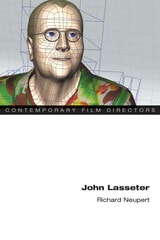
John Lasseter
Richard Neupert
University of Illinois Press, 2016
Richard Neupert explores Lasseter's signature aesthetic and storytelling strategies and details how he became the architect of Pixar's studio style. Neupert contends that Lasseter's accomplishments emerged from a unique blend of technical skill and artistic vision, as well as a passion for working with collaborators. In addition, Neupert traces the director's career arc from the time Lasseter joined Pixar in 1984. As Neupert shows, Lasseter's ability to keep a foot in both animation and CGI allowed him to thrive in an unconventional corporate culture that valued creative interaction between colleagues. The ideas that emerged built an animation studio that updated and refined classical Hollywood storytelling practices--and changed commercial animation forever.
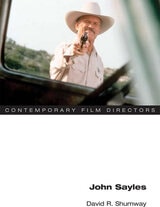
John Sayles
David R. Shumway
University of Illinois Press, 2012
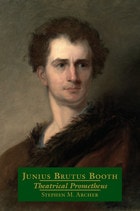
Junius Brutus Booth
Theatrical PrometheusStephen M. Archer
Southern Illinois University Press, 1992
In this, the first thoroughly researched scholarly biography of British actor Junius Brutus Booth, Stephen M. Archer reveals Booth to have been an artist of considerable range and a man of sensitivity and intellect. Archer provides a clear account of Booth’s professional and personal life and places him in relationship to his contemporaries, particularly Edmund Kean and William Charles Macready.
The worldwide fame assured for the Booth family of actors by John Wilkes Booth’s bone-shattering leap from the President’s box had eluded Junius Brutus Booth throughout his lifelong exile in America. But from that event until today, no American family of actors has stimulated such scrutiny as the Booths.
Eight years of research, pursuing Booth from Amsterdam to San Francisco, has resulted in an accurate, fascinating narrative that both records and illuminates the actor’s life.