Results by title
329 books match the query 'Folklore & Mythology' and 6 start with j
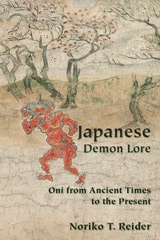
Japanese Demon Lore
Oni from Ancient Times to the PresentNoriko Reider
Utah State University Press, 2010
Oni, ubiquitous supernatural figures in Japanese literature, lore, art, and religion, usually appear as demons or ogres. Characteristically threatening, monstrous creatures with ugly features and fearful habits, including cannibalism, they also can be harbingers of prosperity, beautiful and sexual, and especially in modern contexts, even cute and lovable. There has been much ambiguity in their character and identity over their long history. Usually male, their female manifestations convey distinctivly gendered social and cultural meanings.
Oni appear frequently in various arts and media, from Noh theater and picture scrolls to modern fiction and political propaganda, They remain common figures in popular Japanese anime, manga, and film and are becoming embedded in American and international popular culture through such media. Noriko Reiderýs book is the first in English devoted to oni. Reider fully examines their cultural history, multifaceted roles, and complex significance as "others" to the Japanese.
Jeffrey Introduces Thirteen More Southern Ghosts
Commemorative EditionKathryn Tucker Windham
University of Alabama Press, 2015
A commemorative edition of the beloved and best-selling second book in famed folklorist Kathryn Tucker Windham’s southern ghosts series.
Jeffrey was the resident apparition in the Selma, Alabama, home of nationally-known folklorist Kathryn Tucker Windham and the inspiration for Windham’s best-selling collection of macabre tales that reveal two hundred years of Alabama’s ghostly secrets, Thirteen Alabama Ghosts and Jeffrey. One of the most popular books ever published in the state, generations of Alabama children and students have been thrilled and chilled by Windham’s spectral legends.
Following the overwhelming success of Thirteen Alabama Ghosts and Jeffrey, Windham and Jeffrey began to journey across the South assembling a second collection of ghastly tales that repeat Windham’s winning combination of traditional folklore, Southern history and culture, and family-friendly story-telling. In Jeffrey Introduces Thirteen More Southern Ghosts, Windham’s disembodied friend roams the states of Kentucky, Tennessee, Georgia, Mississippi, Louisiana, and Florida to recall thirteen more timeless, spine-tingling tales of baneful and melancholy spirits that spook the most stoic heart.
Opening this volume is “The Girl Nobody Knew.” One midsummer night in the genteel Kentucky mineral spring resort of Harrodsburg, a beautiful lady arrived at the town’s grand hotel. The belle danced late into the night with the town’s smitten gallants only to expire suddenly with the notes of the last quadrille. The spooked residents of Harrodsburg guard a grave you can see to this day. Readers then visit the world-famous Bell Witch of Robinson County, Tennessee. Jeffrey also makes his first trip to old New Orleans to reveal a revenant in residence on Royal Street before continuing his ghostly progress across Dixie.
This new edition returns Jeffrey Introduces Thirteen More Southern Ghosts to its original format in jacketed cloth full of original, black-and-white illustrations in a handsome keepsake edition perfect for gift-giving and for families, folklorists of all ages, and libraries.
Jeffrey's Latest Thirteen
More Alabama Ghosts, Commemorative EditionKathryn Tucker Windham
University of Alabama Press, 2016
A deluxe, commemorative edition of a beloved collection of ghostly stories from famed southern author and folklorist Kathryn Tucker Windham’s home state of Alabama.
Accompanied by her faithful companion, Jeffrey, a friendly spirit who resided in her home in Selma, Alabama, Kathryn Tucker Windham traveled the South, visiting the sites of spectral legends in Mississippi, Georgia, and Tennessee, among other places. In Jeffrey’s Latest Thirteen: More Alabama Ghosts, a sequel to her landmark Thirteen Alabama Ghosts and Jeffrey, Windham introduces readers to thirteen more of Jeffrey's ghostly acquaintances, each with the charm and universal appeal that has created hundreds of thousands of Jeffrey fans.
Among the other hair-raising tales in this collection, Windham spotlights the apparitions of academia. From the three Yankee soldiers who haunt the University of Alabama’s Civil War–era Little Round House to the Confederate soldier who resides in the University Chapel at Auburn University, Alabama’s institutions of higher learning seem to have more than a few paranormal pupils.
Photographs of the sites about which Windham writes are one of the best-loved features of her series of “Jeffrey the Ghost” books. Jeffrey’s Latest Thirteen features the image of a beautiful child who, though not photographed in life, reappeared long enough to be photographed with his bereaved father's borrowed camera. Bewitched readers will find the startling photograph of the child in the next-to-last chapter, just pages before he book’s photograph of Windham’s own spectral muse, Jeffrey.
This commemorative edition returns Windham’s thrilling classic to its original 1982 keepsake quality and includes a new afterword by the author’s children.
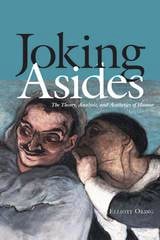
Joking Asides
The Theory, Analysis, and Aesthetics of HumorElliott Oring
Utah State University Press, 2016
A folklorist drawn to the study of humor, Oring developed his formulation of “appropriate incongruity” as a frame to understand what jokes must do to produce humor. He tests appropriate incongruity against other major positions in the field, including the general theory of verbal humor, conceptual integration theory, benign violation theory, and false-belief theory. Oring draws on the work of scholars from several disciplines—anthropology, folklore, philosophy, psychology, linguistics, and literature—to ask basic questions about the construction and evolution of jokes, untangle the matter of who the actual targets of a joke might be, and characterize the artistic qualities of jokes and joke performances.
Although Oring guides the reader through a forest of jokes and joke genres, this is not a joke book. A major work from a major scholar, Joking Asides is a rigorous exploration of theoretical approaches to jokes and their functions and is filled with disquieting questions, penetrating criticisms, and original observations. Written in a clear and accessible style, this book will prove valuable to any scholar or student who takes matters of jokes and joking seriously.
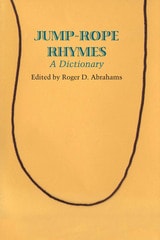
Jump-rope Rhymes
A DictionaryEdited by Roger D. Abrahams
University of Texas Press, 1969
I had a little brother.
His name was Tiny Tim.
I put him in the bathtub
To teach him how to swim.
He drank all the water.
He ate all the soap.
He died last night
With a bubble in his throat.
Jump-rope rhymes, chanted to maintain the rhythm of the game, have other, equally entertaining uses:
- You can dispatch bothersome younger siblings instantly—and temporarily.
- You can learn the name of your boyfriend through the magic words "Ice cream soda, Delaware Punch, Tell me the initials of my honey-bunch."
- You can perform the series of tasks set forth in "Teddy Bear, Teddy Bear, turn around" and find out who, really, is the most nimble.
- You can even, with impunity, "conk your teacher on the bean with a rotten tangerine. "
This collection of over six hundred jump-rope rhymes, originally published in 1969, is an introduction into the world of children—their attitudes, their concerns, their humor. Like other children's folklore, the rhymes are both richly inventive and innocently derivative, ranging from on-the-spot improvisations to old standards like "Bluebells, cockleshells," with a generous sprinkling of borrowings from other play activities—nursery rhymes, counting-out rhymes, and taunts. Even adult attitudes of the time are appropriated, but expressed with the artless candor of the child:
Eeny, meeny, miny, moe.
Catch Castro by the toe.
If he hollers make him say
"I surrender, U.S.A."
Though aware that children's play serves social and psychological functions, folklorists had long neglected analytical study of children's lore because primary data was not available in organized form. Roger Abraham's Dictionary has provided such a bibliographical tool for one category of children's lore and a model for future compendia in other areas. The alphabetically arranged rhymes are accompanied by notes on sources, provenience, variants, and connection with other play activities.
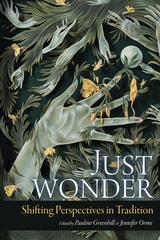
Just Wonder
Shifting Perspectives in TraditionPauline Greenhill
Utah State University Press, 2024
These essays examine fairy tales and other traditional forms of the fantastic and the real to offer alternative expressions of justice relevant to gender, sex, sexuality, environment, Indigeneity, class, ability, race, decolonizing, and human and nonhuman relations. By analyzing fairy tales and wonder texts from various media through an intersectional feminist lens, Pauline Greenhill and Jennifer Orme consider how wonder genres and forms blend with diverse conceptions of seeking and enacting justice. International collaborators—both established and emerging scholars who self-identify with different subjectivities, locations, and generations and come from an impressive range of inter/disciplines—engage with contemporary and historical texts from various languages and cultural contexts, including interventions, counterparts, and comparisons to the fairy tale. Just Wonder offers a critical look at how creative wondering can expand the ability to resist modes of oppression while fostering equity, as well as encourage curiosity and imagination.
In a world that can be overwhelming and precarious, this book presents scholarly, artistic, personal, and collective-action interventions to identify and respond to injustice while centering wonder and, thus, imagination, questioning, and hope. Just Wonder will appeal to fairy-tale scholars; folklorists; students and scholars of film, media studies, and cultural studies; as well as a general audience.