Results by title
95 books match the query 'History & Culture' and 4 start with j

Jerusalem the Center of the Universe
Its Archaeology and History (1800–100 BCE)Israel Finkelstein
SBL Press, 2024
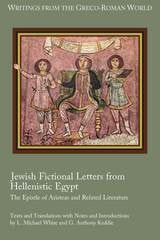
Jewish Fictional Letters from Hellenistic Egypt
The Epistle of Aristeas and Related LiteratureL. Michael White
SBL Press, 2017
The first Greek text of the Epistle of Aristeas published in more than a century
The Greek text Epistle of Aristeas is a Jewish work of the late Hellenistic period that recounts the origins of the Septuagint. Long recognized as a literary fiction, the Epistle of Aristeas has been variously dated from the third century BCE to the first century CE. As a result, its epistolary features, and especially those in which the putative author, Aristeas, addresses his brother and correspondent, Philocrates, have largely been ignored. In light of more recent scholarship on epistolary literature in the Greco-Roman world, however, this volume presents for the first time a complete Greek text and English Translation with introduction, notes, and commentary of the Epistle of Aristeas with key testimonia from Philo, Josephus, and Eusebius, as well as other related examples of Jewish fictional letters from the Apocrypha and Pseudepigrapha.
Features
- Relevant excerpts from Eupolemus, 2 Maccabees, 3 Maccabees, and the Greek Additions to Esther with translations and introductions
- A critical introduction to ancient Greek letter-writing
- An outline of epistolary features in the text

Judah in the Neo-Babylonian Period
The Archaeology of DesolationAvraham Faust
SBL Press, 2012
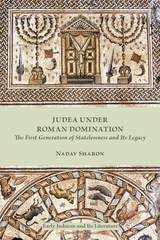
Judea under Roman Domination
The First Generation of Statelessness and Its LegacyNadav Sharon
SBL Press, 2017
Investigate a relatively neglected but momentous period in Judean history
Nadav Sharon closely examines a critical period in Judean history, which saw the end of the Hasmonean dynasty and the beginning of Roman domination of Judea leading up to the kingship of Herod (67-37 BCE). In this period renowned Roman figures such as Pompey the Great, Julius Caesar, Gaius Cassius (a conspirator against Caesar), and Mark Anthony, led the Roman Republic on the eve of its transformation into an Empire, each having his own dealings with—and holding sway over—Judea at different times. This volume explores the impact of the Roman conquest on the authors of the Dead Sea Scrolls, enhances the understanding of later Judean-Roman relations and the roots of the Great Revolt, and examines how this early period of Roman domination had on impact on later developments in Judean society and religion.
Features:
- Part one dedicating to reconstructing Judean history from the death of Alexander to the reign of King Herod
- Part two examining the effects of Roman domination on Judean society
- Maps, illustrations, and appendices