Results by title
260 books match the query 'Human ecology' and 2 start with j
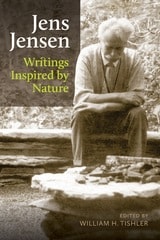
Jens Jensen
Writings Inspired by NatureWilliam H. Tishler
Wisconsin Historical Society Press, 2012
Today, Jensen is perhaps best remembered for establishing The Clearing on Wisconsin's Door County Peninsula. But the outspoken views in his writings - many of which were included in ephemeral planning reports, early newspapers, and now out-of-print journals - are virtually forgotten, with the exception of his two small books. "Jens Jensen: Writings Inspired by Nature" is an anthology of Jensen's most significant yet lesser-known articles, including a "Saturday Evening Post" piece that enabled him to reach the largest audience of his publishing career. The scope of Jensen's thoughts represented in this collection will further solidify his legacy and rightful place alongside conservation leaders such as John Muir and Aldo Leopold.
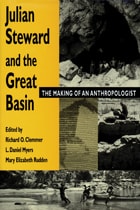
Julian Steward and the Great Basin
The Making of an AnthropologistRichard O Clemmer
University of Utah Press, 1999
Julian Steward and the Great Basin is a critical assessment of Steward’s work, the factors that influenced him, and his deep effect on American anthropology. Steward (1902–1972) was one of the foremost American exponents of cultural ecology, the idea that societies evolve in adaptation to their human and natural environments. He was also central in shaping basic anthropological constructs such as "hunter-gatherer" and "adaptation." But his fieldwork took place almost entirely in the Great Basin.
In one sense, the phases of Steward’s career epitomize the successive schools of anthropological theory and practice. Each chapter explores a different aspect of his work ranging from early efforts at documenting trait distributions to his later role in the development of social transformation theory, area studies, and applied anthropology.
Julian Steward and the Great Basin also corrects long-standing misperceptions that originated with Steward about lifeways of the Indians living between the Great Plains and California. It charts new directions for research, demanding a more exacting study of environmental conditions, material adaptations, and organizational responses, as well as an appreciation of the ideological and humanistic dimensions of Basin Life.