Results by title
110 books match the query 'Individual Photographers' and 2 start with j
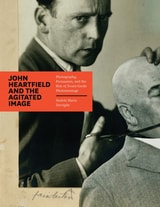
John Heartfield and the Agitated Image
Photography, Persuasion, and the Rise of Avant-Garde PhotomontageAndrés Mario Zervigón
University of Chicago Press, 2012
Working in Germany between the two world wars, John Heartfield (born Helmut Herzfeld, 1891–1968) developed an innovative method of appropriating and reusing photographs to powerful political effect. As a pioneer of modern photomontage, he sliced up mass media photos with his iconic scissors and then reassembled the fragments into compositions that utterly transformed the meaning of the originals. In John Heartfield and the Agitated Image, Andrés Mario Zervigón explores this crucial period in the life and work of a brilliant, radical artist whose desire to disclose the truth obscured by the mainstream press and imperial propaganda made him a de facto prosecutor of Germany’s visual culture.
Zervigón charts the evolution of Heartfield’s photomontage from an act of antiwar resistance into a formalized and widely disseminated political art in the Weimar Republic. Appearing on everything from campaign posters to book covers, the photomonteur’s notorious pictures challenged well-worn assumption and correspondingly walked a dangerous tightrope over the political, social, and cultural cauldron that was interwar Germany. Zervigón explains how Heartfield’s engagement with montage arose from a broadly-shared dissatisfaction with photography’s capacity to represent the modern world. The result was likely the most important combination of avant-garde art and politics in the twentieth century.
A rare look at Heartfield’s early and middle years as an artist and designer, this book provides a new understanding of photography’s role at this critical juncture in history.
[more]
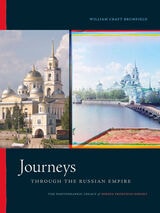
Journeys through the Russian Empire
The Photographic Legacy of Sergey Prokudin-GorskyWilliam Craft Brumfield
Duke University Press, 2020
At the turn of the twentieth century, the photographer Sergey Prokudin-Gorsky undertook a quest to document an empire that was undergoing rapid change due to industrialization and the building of railroads. Between 1903 and 1916 Prokudin-Gorsky, who developed a pioneering method of capturing color images on glass plates, scoured the Russian Empire with the patronage of Nicholas II. Intrepidly carrying his cumbersome and awkward camera from the western borderlands over the Volga River to Siberia and central Asia, he created a singular record of Imperial Russia.
In 1918 Prokudin-Gorsky escaped an increasingly chaotic, violent Russia and regained nearly 2,000 of his bulky glass negatives. His subsequent peripatetic existence before settling in Paris makes his collection's survival all the more miraculous. The U.S. Library of Congress acquired Prokudin-Gorsky's collection in 1948, and since then it has become a touchstone for understanding pre-revolutionary Russia. Now digitized and publicly available, his images are a sensation in Russia, where people visit websites dedicated to them.
William Craft Brumfield—photographer, scholar, and the leading authority on Russian architecture in the West—began working with Prokudin-Gorsky's photographs in 1985. He curated the first public exhibition of them in the United States and has annotated the entire collection. In Journeys through the Russian Empire, Brumfield—who has spent decades traversing Russia and photographing buildings and landscapes in their various stages of disintegration or restoration—juxtaposes Prokudin-Gorsky's images against those he took of the same buildings and areas. In examining the intersections between his own photography and that of Prokudin-Gorsky, Brumfield assesses the state of preservation of Russia's architectural heritage and calls into question the nostalgic assumptions of those who see Prokudin-Gorsky's images as the recovery of the lost past of an idyllic, pre-Soviet Russia.
This lavishly illustrated volume—which features some 400 stunning full-color images of ancient churches and mosques, railways and monasteries, towns and remote natural landscapes—is a testament to two brilliant photographers whose work prompts and illuminates, monument by monument, questions of conservation, restoration, and cultural identity and memory.
[more]