Results by title
328 books match the query 'Islam' and 8 start with j
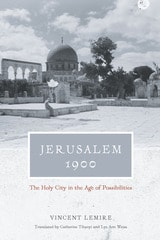
Jerusalem 1900
The Holy City in the Age of PossibilitiesVincent Lemire
University of Chicago Press, 2017
In this masterly history, Lemire uses newly opened archives to explore how Jerusalem’s elite residents of differing faiths cooperated through an intercommunity municipal council they created in the mid-1860s to administer the affairs of all inhabitants and improve their shared city. These residents embraced a spirit of modern urbanism and cultivated a civic identity that transcended religion and reflected the relatively secular and cosmopolitan way of life of Jerusalem at the time. These few years would turn out to be a tipping point in the city’s history—a pivotal moment when the horizon of possibility was still open, before the council broke up in 1934, under British rule, into separate Jewish and Arab factions. Uncovering this often overlooked diplomatic period, Lemire reveals that the struggle over Jerusalem was not historically inevitable—and therefore is not necessarily intractable. Jerusalem 1900 sheds light on how the Holy City once functioned peacefully and illustrates how it might one day do so again.
Jesus, Son of Mary, in Muslim Thought
S. R. Burge
SBL Press, 2026
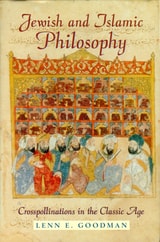
Jewish and Islamic Philosophy
Crosspollinations in the Classic AgeLenn E. Goodman
Rutgers University Press, 1999
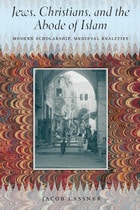
Jews, Christians, and the Abode of Islam
Modern Scholarship, Medieval RealitiesJacob Lassner
University of Chicago Press, 2012
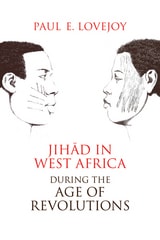
Jihad in West Africa during the Age of Revolutions
Paul E. Lovejoy
Ohio University Press, 2016
In Jihād in West Africa during the Age of Revolutions, a preeminent historian of Africa argues that scholars of the Americas and the Atlantic world have not given Africa its due consideration as part of either the Atlantic world or the age of revolutions. The book examines the jihād movement in the context of the age of revolutions—commonly associated with the American and French revolutions and the erosion of European imperialist powers—and shows how West Africa, too, experienced a period of profound political change in the late eighteenth through the mid-nineteenth centuries. Paul E. Lovejoy argues that West Africa was a vital actor in the Atlantic world and has wrongly been excluded from analyses of the period.
Among its chief contributions, the book reconceptualizes slavery. Lovejoy shows that during the decades in question, slavery expanded extensively not only in the southern United States, Cuba, and Brazil but also in the jihād states of West Africa. In particular, this expansion occurred in the Muslim states of the Sokoto Caliphate, Fuuta Jalon, and Fuuta Toro. At the same time, he offers new information on the role antislavery activity in West Africa played in the Atlantic slave trade and the African diaspora.
Finally, Jihād in West Africa during the Age of Revolutions provides unprecedented context for the political and cultural role of Islam in Africa—and of the concept of jihād in particular—from the eighteenth century into the present. Understanding that there is a long tradition of jihād in West Africa, Lovejoy argues, helps correct the current distortion in understanding the contemporary jihād movement in the Middle East, Afghanistan, Pakistan, and Africa.
Jihadism, Sectarianism and Politics in a Changing Middle East
Adib Abdulmajid
Eburon Academic Publishers, 2021
The emergence and growth of sectarian Islamist militant organizations, whether Sunni or Shia, is deemed to be the fruit of the emerging radical interpretations of the concept of jihad, and the evolution of Islamism in general. The main objective of this book is to help the reader understand the complex religio-political scene in today’s Middle East and the ideological principles and agendas of influential movements, whose beliefs and actions constitute a serious threat to cultural diversity in the region. It addresses the doctrinal tenets associated with the emergence of influential Islamist organizations and the challenges encountered by the culturally diverse populations that surround them. This book also delves into the historical events that have shaped the Middle East as we know it today. It further examines the key factors behind the rise of the most influential sectarian-guided, jihadi-based extremist groups in the recent years
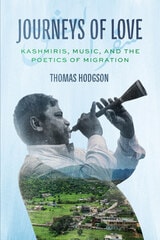
Journeys of Love
Kashmiris, Music, and the Poetics of MigrationThomas Hodgson
University of Chicago Press, 2025
In Journeys of Love, ethnomusicologist Thomas Hodgson offers a sensitive corrective to harmful portrayals of immigrants—specifically, Pakistanis living in England—as a self-segregating group prohibited from making music, a stereotype that has often resulted in violent Islamophobia. He argues that, in practice, these migrants—many of whom come from the Mirpur area of Azad Kashmir—occupy rich musical worlds, full of poetic metaphors, that are central to surviving migration and its attendant losses.
Hodgson shows how Mirpuris in England, as well as those who remain in Pakistan, carry on traditions of reciting a collection of poetry by the nineteenth-century Sufi saint Mian Muhammad Bakhsh, translated by Hodgson here as Journeys of Love. With its themes of remaining true to one’s home, the oppressed being saved, having patience, and keeping faith in God, this work has become the story of movement and displacement in its narrative arc, as well as through the way it provides spiritual and ethical frameworks for settling in new lands. These hidden poetics of migration transform across generations as young Mirpuris develop new expressions of the connections across continents. These poetics reveal the connections between Kashmir’s rural village life and urban centers abroad, offering a sensitive and illuminating portrait of migration and multiculturalism in Britain and beyond.
Just Schools
Pursuing Equality in Societies of DifferenceMartha Minow
Russell Sage Foundation, 2008