Results by title
82 books match the query 'Japanese Americans' and 5 start with j
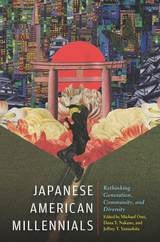
Japanese American Millennials
Rethinking Generation, Community, and DiversityMichael Omi
Temple University Press, 2019
Whereas most scholarship on Japanese Americans looks at historical case studies or the 1.5 generation assimilating, this pioneering anthology, Japanese American Millennials, captures theexperiences, perspectives, and aspirations of Asian Americans born between 1980 and 2000. The editors and contributors present multiple perspectives on who Japanese Americans are, how they think about notions of community and culture, and how they engage and negotiate multiple social identities.
The essays by scholars both in the United States and Japan draw upon the Japanese American millennial experience to examine how they find self-expression in Youth Basketball Leagues or Christian youth camps as well as how they grapple with being mixed-race, bicultural, or queer. Featuring compelling interviews and observations, Japanese American Millennials dislodges the dominant generational framework toaddress absences in the current literature and suggests how we might alternatively study Japanese Americans as a whole.
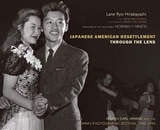
Japanese American Resettlement through the Lens
Hikaru Iwasaki and the WRA's Photographic Section, 1943-1945Lane Ryo Hirabayashi
University Press of Colorado, 2009
In Japanese American Resettlement through the Lens, Lane Ryo Hirabayashi gathers a unique collection of photographs by War Relocation Authority photographer Hikaru Iwasaki, the only full-time WRA photographer from the period still living.
With substantive focus on resettlement - and in particular Iwasaki's photos of Japanese Americans following their release from WRA camps from 1943 to 1945 - Hirabayashi explores the WRA's use of photography in its mission not only to encourage "loyal" Japanese Americans to return to society at large as quickly as possible but also to convince Euro-Americans this was safe and advantageous. Hirabayashi also assesses the relative success of the WRA project, as well as the multiple uses of the photographs over time, first by the WRA and then by students, scholars, and community members in the present day.
Although the photos have been used to illustrate a number of publications, this book is the first sustained treatment addressing questions directly related to official WRA photographs. How and under what conditions were they taken? Where were they developed, selected, and stored? How were they used during the 1940s? What impact did they have during and following the war?
By focusing on the WRA's Photographic Section, Japanese American Resettlement through the Lens makes a unique contribution to the body of literature on Japanese Americans during World War II.
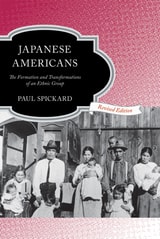
Japanese Americans
The Formation and Transformations of an Ethnic GroupSpickard, Paul
Rutgers University Press, 2008
In this concise history, Paul Spickard traces the struggles and achievements of Japanese Americans in claiming their place in American society. He outlines three forces shaping ethnic groups in general: shared interests, shared institutions, and shared culture, and chronicles the Japanese American experience within this framework, showing how these factors created and nurtured solidarity.
Japanese and Chinese Immigrant Activists
Organizing in American and International Communist Movements, 1919–1933Fowler, Josephine
Rutgers University Press, 2007
Japanese and Chinese immigrants in the United States have traditionally been characterized as hard workers who are hesitant to involve themselves in labor disputes or radical activism. How then does one explain the labor and Communist organizations in the Asian immigrant communities that existed from coast to coast between 1919 and 1933? Their organizers and members have been, until now, largely absent from the history of the American Communist movement. In Japanese and Chinese Immigrant Activists, Josephine Fowler brings us the first in-depth account of Japanese and Chinese immigrant radicalism inside the United States and across the Pacific.
Drawing on multilingual correspondence between left-wing and party members and other primary sources, such as records from branches of the Japanese Workers Association and the Chinese Nationalist Party, Fowler shows how pressures from the Comintern for various sub-groups of the party to unite as an “American” working class were met with resistance. The book also challenges longstanding stereotypes about the relationships among the Communist Party in the United States, the Comintern, and the Soviet Party.
Jerome and Rohwer
Memories of Japanese American Internment in World War II ArkansasWalter M. Imahara
University of Arkansas Press, 2022
This book is a collection of brief memoirs written by former internees of Jerome and Rohwer and their close family members. Here dozens of individuals, almost all of whom are now in their eighties or nineties, share their personal accounts as well as photographs and other illustrations related to their life-changing experiences. The collection, likely to be one of the last of its kind, is the only work composed solely of autobiographical remembrances of life in Jerome and Rohwer, and one of the very few that gathers in a single volume the experiences of internees in their own words.
What emerges is a vivid portrait of lives lived behind barbed wire, where inalienable rights were flouted and American values suspended to bring a misguided sense of security to a race-obsessed nation at war. However, in the barracks and the fields, the mess halls and the makeshift gathering places, values of perseverance, tolerance, and dignity—the gaman the internees shared—gave significance to a transformative experience that changed forever what it means to call oneself an American.