Results by title
403 books match the query 'Journalism' and 11 start with j
John Reed and the Writing of Revolution
Daniel W. Lehman
Ohio University Press, 2002
John Reed (1887-1920) is best known as the author of Ten Days That Shook the World and as champion of the communist movement in the United States. Still, Reed remains a writer almost systematically ignored by the literary critical establishment, even if alternately vilified and lionized by historians and by films like Warren Beatty’s Reds.
John Reed and the Writing of Revolution examines Reed’s writing from a different critical perspective—one informed by a theoretical and practical understanding of literary nonfiction. In both politics and writing, John Reed defied fashion. In his short career, Reed transcended the traditional creative arts of fiction, poetry, and drama in favor of deeply researched histories composed with the cadence of fiction and the power of fact. Reed thereby alienated literary critics who had idealized timeless artistry against the rough-and-tumble world of historical details and political implications.
Working from a close investigation of rare articles, manuscripts, and the Reed papers at Harvard as well as from Reed’s published work, Daniel W. Lehman offers the first detailed literary study of the man who followed Pancho Villa into battle; wrote literary profiles of such characters as Henry Ford, William Jennings Bryan, and Billy Sunday; explicated the Byzantine factionalism of Eastern Europe; and witnessed the storming of the Winter Palace and the birth of Soviet Russia.
Journalism 1908
Birth of a ProfessionEdited by Betty Houchin Winfield
University of Missouri Press, 2008
Journalism—1908 opens a window on mass communication a century ago. It tells how the news media in the United States were fundamentally changed by the creation of academic departments and schools of journalism, by the founding of the National Press Club, and by exciting advances that included early newsreels, the introduction of halftones to print, and even changes in newspaper design.
Journalism educator Betty Houchin Winfield has gathered a team of well-known media scholars, all specialists in particular areas of journalism history, to examine the status of their profession in 1908: news organizations, business practices, media law, advertising, forms of coverage from sports to arts, and more. Various facets of journalism are explored and situated within the country’s history and the movement toward reform and professionalism—not only formalized standards and ethics but also labor issues concerning pay, hours, and job differentiation that came with the emergence of new technologies.
This overview of a watershed year is national in scope, examining early journalism education programs not only at Missouri but also at such schools as Colgate, Washington and Lee, Wisconsin, and Columbia. It also reviews the status of women in the profession and looks beyond big-city papers to Progressive Era magazines, the immigrant press, and African American publications.
Journalism—1908 commemorates a century of progress in the media and, given the place of Missouri’s School of Journalism in that history, is an appropriate celebration of that school’s centennial. It is a lode of information about journalism education history that will surprise even many of those in the field and marks a seminal year with lasting significance for the profession.
Journalism Ethics
21 Essentials from Wars to Artificial IntelligenceEric Wishart
Hong Kong University Press, 2024
This concise and authoritative work offers the latest guidance on journalism ethics for students and media professionals and will help empower news consumers to make informed decisions about the trustworthiness of their sources of information. It offers advice on all aspects of journalism ethics including accuracy and seeking the truth, representation of women, LGBTQ coverage, climate change, mental health, use of images, conflict reporting, elections, and how to use artificial intelligence. The author brings a unique perspective and depth of knowledge to the complex challenges facing journalists and news consumers in this era of fake news, disinformation, and artificial intelligence.

Journalism Re-examined
Digital Challenges and Professional Orientations (Lessons from Northern Europe)Edited by Martin Eide, Helle Sjøvaag, and Leif Ove Larsen
Intellect Books, 2016
Journalism and Jim Crow
White Supremacy and the Black Struggle for a New AmericaEdited by Kathy Roberts Forde and Sid Bedingfield
University of Illinois Press, 2021
White publishers and editors used their newspapers to build, nurture, and protect white supremacy across the South in the decades after the Civil War. At the same time, a vibrant Black press fought to disrupt these efforts and force the United States to live up to its democratic ideals. Journalism and Jim Crow centers the press as a crucial political actor shaping the rise of the Jim Crow South. The contributors explore the leading role of the white press in constructing an anti-democratic society by promoting and supporting not only lynching and convict labor but also coordinated campaigns of violence and fraud that disenfranchised Black voters. They also examine the Black press’s parallel fight for a multiracial democracy of equality, justice, and opportunity for all—a losing battle with tragic consequences for the American experiment.
Original and revelatory, Journalism and Jim Crow opens up new ways of thinking about the complicated relationship between journalism and power in American democracy.
Contributors: Sid Bedingfield, Bryan Bowman, W. Fitzhugh Brundage, Kathy Roberts Forde, Robert Greene II, Kristin L. Gustafson, D'Weston Haywood, Blair LM Kelley, and Razvan Sibii
Journalism and Realism
Rendering American LifeThomas B Connery
Northwestern University Press, 2011
Journalism and Truth
Strange BedfellowsTom Goldstein
Northwestern University Press, 2007
Other disciplines, Goldstein tells us, have clear protocols for gathering evidence and searching for truth. Journalism, however, has some curious conventions that may actually work against such a goal. Looking at how journalism has changed over time--and with it, notions about accuracy and truth in reporting—Goldstein explores how these long-standing and ultimately untrustworthy conventions developed. He also examines why reliable standards of objectivity and accuracy are critical not just to a free press but to the democratic society it informs and serves. From a historical overview to a reconsideration of a misunderstood book about journalism (The Journalist and the Murderer) to a reflection on the coverage of the war in Iraq, his book offers a remarkably wide-ranging and thought-provoking account of how journalism and truth work—or fail to work—together, and why it matters.
Journalism in the Movies
Matthew C. Ehrlich
University of Illinois Press, 2006
From cynical portrayals like The Front Page to the nuanced complexity of All the President’s Men, and The Insider, movies about journalists and journalism have been a go-to film genre since the medium's early days. Often depicted as disrespectful, hard-drinking, scandal-mongering misfits, journalists also receive Hollywood's frequent respect as an essential part of American life.
Matthew C. Ehrlich tells the story of how Hollywood has treated American journalism. Ehrlich argues that films have relentlessly played off the image of the journalist as someone who sees through lies and hypocrisy, sticks up for the little guy, and serves democracy. He also delves into the genre's always-evolving myths and dualisms to analyze the tensions—hero and oppressor, objectivity and subjectivity, truth and falsehood—that allow journalism films to examine conflicts in society at large.
Journalism, Society and Politics in the Digital Media Era
Edited by Nael Jebril, Stephen Jukes, Sofia Iordanidou, and Emmanouil Takas
Intellect Books, 2020
Journalistic Autonomy
The Genealogy of a ConceptHenrik Örnebring
University of Missouri Press, 2022
The idea that journalism should be independent is foundational to its contemporary understandings and its role in democracy. But from what, exactly, should journalism be independent? This book traces the genealogy of the idea of journalistic autonomy, from the press freedom debates of the 17th century up to the digital, networked world of the 21st. Using an eclectic and thought-provoking theoretical framework that draws upon Friedrich Nietzsche, feminist philosophy, and theoretical biology, the authors analyze the deeper meanings and uses of the terms independence and autonomy in journalism.
This work tackles, in turn, questions of journalism’s independence from the state, politics, the market, sources, the workplace, the audience, technology, and algorithms. Using broad historical strokes as well as detailed historical case studies, the authors argue that autonomy can only be meaningful if it has a purpose. Unfortunately, for large parts of journalism’s history this purpose has been the maintenance of a societal status quo and the exclusion of large groups of the population from the democratic polity. “Independence,” far from being a shining ideal to which all journalists must aspire, has instead often been used to mask the very dependencies that lie at the heart of journalism. The authors posit, however, that by learning the lessons of history and embracing a purpose fit for the needs of the 21st century world, journalism might reclaim its autonomy and redeem its exclusionary uses of independence.
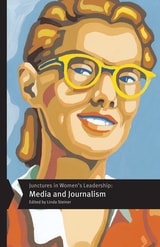
Junctures in Women’s Leadership
Media and JournalismLinda Steiner
Rutgers University Press, 2025
This book offers profiles of inspiring women in prominent media positions from the nineteenth century to today, beginning with trailblazers like abolitionist publisher Mary Ann Shadd and Memphis Free Speech anti-lynching editor Ida B. Wells. The book takes an in-depth look at the leadership styles of well-known media moguls like Oprah Winfrey and Washington Post publisher Katharine Graham. Other chapters highlight women now emerging as media leaders, such as digital media executive S. Mitra Kalita and Iman Zawahry, a Muslim hijabi filmmaker. Bringing together cases from print, broadcast, public relations, film, and digital media, this book offers useful insights into how to be an effective leader in an ever-changing industry.