Results by title
716 books match the query 'Literary Figures' and 41 start with j
J. D. Salinger and the Nazis
Eberhard Alsen
University of Wisconsin Press, 2018
Alsen, a longtime Salinger scholar who witnessed the Nazi regime firsthand as a child in Germany, tracks Salinger's prewar experiences in the army, his work for the CIC during significant military campaigns, and his reactions to three military disasters that killed more than a thousand fellow soldiers in his Fourth Infantry Division. Alsen also identifies the Nazi death camp where Salinger saw mounds of recently burned bodies. Revealing details shed light on Salinger's outspoken disgust for American military leaders, the personality changes that others saw in him after the war, and his avoidance of topics related to the Holocaust.
J. Frank Dobie
A Liberated MindBy Steven L. Davis
University of Texas Press, 2009
The first Texas-based writer to gain national attention, J. Frank Dobie proved that authentic writing springs easily from the native soil of Texas and the Southwest. In best-selling books such as Tales of Old-Time Texas, Coronado's Children, and The Longhorns, Dobie captured the Southwest's folk history, which was quickly disappearing as the United States became ever more urbanized and industrial. Renowned as "Mr. Texas," Dobie paradoxically has almost disappeared from view—a casualty of changing tastes in literature and shifts in social and political attitudes since the 1960s.
In this lively biography, Steven L. Davis takes a fresh look at a J. Frank Dobie whose "liberated mind" set him on an intellectual journey that culminated in Dobie becoming a political liberal who fought for labor, free speech, and civil rights well before these causes became acceptable to most Anglo Texans. Tracing the full arc of Dobie's life (1888–1964), Davis shows how Dobie's insistence on "free-range thinking" led him to such radical actions as calling for the complete integration of the University of Texas during the 1940s, as well as taking on governors, senators, and the FBI (which secretly investigated him) as Texas's leading dissenter during the McCarthy era.
J. G. Ballard
D. Wilson
University of Illinois Press, 2017
D. Harlan Wilson offers the first career-spanning analysis of an author who helped steer SF in new, if startling, directions. Here was a writer committed to moral ambiguity, one who drowned the world and erected a London high-rise doomed to descend into savagery--and coolly picked apart the characters trapped within each story. Wilson also examines Ballard's methods, his influence on cyberpunk, and the ways his fiction operates within the sphere of our larger culture and within SF itself.

J.D. Salinger - American Writers 51
University of Minnesota Pamphlets on American WritersJames E. Miller Jr.
University of Minnesota Press, 1965
J.D. Salinger - American Writers 51 was first published in 1965. Minnesota Archive Editions uses digital technology to make long-unavailable books once again accessible, and are published unaltered from the original University of Minnesota Press editions.

JOHN PEALE BISHOP
A BIOGRAPHYELIZABETH C. SPINDLER
West Virginia University Press, 1980
Jack London - American Writers 57
University of Minnesota Pamphlets on American WritersCharles Child Walcutt
University of Minnesota Press, 1966
Jack London - American Writers 57 was first published in 1966. Minnesota Archive Editions uses digital technology to make long-unavailable books once again accessible, and are published unaltered from the original University of Minnesota Press editions.
Jack London's Women
Clarice Stasz
University of Massachusetts Press, 2001
Using newly available letters and diaries from private collections, Stasz brings this diverse constellation of women to life. London was the son of freethinking Flora Wellman, yet found more maternal comfort from freed slave Jennie Prentiss and his stepsister Eliza. His early loves included a British-born consumptive, a Jewish socialist, and an African American. His first wife, Bess Maddern, was a teacher and devoted mother to daughters Bess and Joan, while his second wife, Charmian Kittredge, shared his passion for adventure and served as a model for many characters in his writings. Following his death, the various women who survived him both promoted his legacy and suffered the consequences of being constantly identified with a famous man.
In recasting London's life through the eyes of three generations of women, Stasz manages to untangle his seemingly contradictory attitudes and actions. She also reveals the struggle that ensued, after his death, among family members and scholars over how he should be remembered. What emerges from this well-researched book is a new understanding of London and a compelling portrayal of the women who knew him best.
James Agee - American Writers 95
University of Minnesota Pamphlets on American WritersErling Larsen
University of Minnesota Press, 1971
James Agee - American Writers 95 was first published in 1971. Minnesota Archive Editions uses digital technology to make long-unavailable books once again accessible, and are published unaltered from the original University of Minnesota Press editions.

James Baldwin's Turkish Decade
Erotics of ExileMagdalena J. Zaborowska
Duke University Press, 2008
Following Baldwin’s footsteps through Istanbul, Ankara, and Bodrum, Zaborowska presents many never published photographs, new information from Turkish archives, and original interviews with Turkish artists and intellectuals who knew Baldwin and collaborated with him on a play that he directed in 1969. She analyzes the effect of his experiences on his novel Another Country (1962) and on two volumes of his essays, The Fire Next Time (1963) and No Name in the Street (1972), and she explains how Baldwin’s time in Turkey informed his ambivalent relationship to New York, his responses to the American South, and his decision to settle in southern France. James Baldwin’s Turkish Decade expands the knowledge of Baldwin’s role as a transnational African American intellectual, casts new light on his later works, and suggests ways of reassessing his earlier writing in relation to ideas of exile and migration.
James Fenimore Cooper - American Writers 48
University of Minnesota Pamphlets on American WritersRobert E. Spiller
University of Minnesota Press, 1965
James Fenimore Cooper - American Writers 48 was first published in 1965. Minnesota Archive Editions uses digital technology to make long-unavailable books once again accessible, and are published unaltered from the original University of Minnesota Press editions.
James Gould Cozzens - American Writers 58
University of Minnesota Pamphlets on American WritersGranville Hicks
University of Minnesota Press, 1966
James Gould Cozzens - American Writers 58 was first published in 1966. Minnesota Archive Editions uses digital technology to make long-unavailable books once again accessible, and are published unaltered from the original University of Minnesota Press editions.
James Hall, Literary Pioneer of the Ohio Valley
John T. Flanagan
University of Minnesota Press, 1941
James Hall, Literary Pioneer of the Ohio Valley was first published in 1941. Minnesota Archive Editions uses digital technology to make long-unavailable books once again accessible, and are published unaltered from the original University of Minnesota Press editions.
For generations the attention of students of American literature has been directed toward the Atlantic seaboard, but the rise of regional literature and the development of genuine artists in various parts of the United States has caused them to turn their scrutiny westward. High on the western horizon of the early 1800's stands James Hall, a literary pioneer in the Ohio Valley, one of the minor literary figures whose influence on the artistic consciousness of the frontier was widely felt.
Author, critic, journalist, editor, publisher, and historian—few men have had more to do with the early cultural development of the Middle West. Every historian of the Ohio and Mississippi valleys is indebted to Hall for facts and details of life in America in the early nineteenth century.
A circuit judge when there were only 55,000 people in all Illinois—he had an unparalleled opportunity to observe the life and customs of the times. A publisher of the first literary magazine west of the Ohio when there were more Indians and horse thieves in the state than there were literate readers—he had a virgin field for awakening the artistic, literary, even scientific, interest of the frontier.
He organized the first State Historical Society of Illinois, was state treasurer, published two newspapers, welcomed Lafayette on his triumphal tour, edited the first literary annual in the West, awarded a prize to Harriet Beecher (Stowe) for her "New England Sketch," published in his magazine. Moving to Cincinnati when it was at the peak of its sectional importance, an intellectual and cultural oasis on the frontier, Hall continued his sponsorship of education and culture.
James Hall's own published works were multitudinous in the fields of fiction, biography, poetry, criticism, history, and anthropology. His picture of the prairies in his day is still one of the best accounts ever written and his Indian Tribes of North America a monumental volume, but none of his works is of first-rate importance. Nevertheless, because of the tremendous variety of his activities and the breadth of his influence, he left his stamp upon the history and the literature of the region.
Hall's work is an honest, vigorous record of the path of the American pioneer in the days of the rapid growth and expansion of a new nation, and an understanding of his contribution is obligatory for every serious student of American literature.
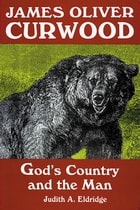
James Oliver Curwood
God's Country and the ManJudith A. Eldridge
University of Wisconsin Press, 1993
When the wounded bear he faced on a mountain ledge that day turned aside, James Curwood felt that he had been spared. From this encounter he became an avid conservationist. He wrote relentlessly—magazine stories and books and then for the new medium of motion pictures. Like many authors of his time, he was actively involved in movie-making until the plight of the forests and wildlife in his home state of Michigan turned his energies toward conservation.
A man ahead of his time, and quickly forgotten after his death in 1927, his gift of himself to his readers and to nature has finally come to be appreciated again two generations later.
James T. Farrell - American Writers 29
University of Minnesota Pamphlets on American WritersEdgar M. Branch
University of Minnesota Press, 1963
James T. Farrell - American Writers 29 was first published in 1963. Minnesota Archive Editions uses digital technology to make long-unavailable books once again accessible, and are published unaltered from the original University of Minnesota Press editions.
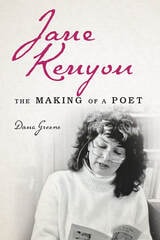
Jane Kenyon
The Making of a PoetDana Greene
University of Illinois Press, 2023
Pleasure-loving, sarcastic, stubborn, determined, erotic, deeply sad--Jane Kenyon’s complexity and contradictions found expression in luminous poems that continue to attract a passionate following. Dana Greene draws on a wealth of personal correspondence and other newly available materials to delve into the origins, achievement, and legacy of Kenyon’s poetry and separate the artist’s life story from that of her husband, the award-winning poet Donald Hall.
Impacted by relatives’ depression during her isolated childhood, Kenyon found poetry at college, where writers like Robert Bly encouraged her development. Her graduate school marriage to the middle-aged Hall and subsequent move to New Hampshire had an enormous impact on her life, moods, and creativity. Immersed in poetry, Kenyon wrote about women’s lives, nature, death, mystical experiences, and melancholy--becoming, in her own words, an “advocate of the inner life.” Her breakthrough in the 1980s brought acclaim as “a born poet” and appearances in the New Yorker and elsewhere. Yet her ongoing success and artistic growth exacerbated strains in her marriage and failed to stave off depressive episodes that sometimes left her non-functional. Refusing to live out the stereotype of the mad woman poet, Kenyon sought treatment and confronted her illness in her work and in public while redoubling her personal dedication to finding pleasure in every fleeting moment. Prestigious fellowships, high-profile events, residencies, and media interviews had propelled her career to new heights when leukemia cut her life short and left her husband the loving but flawed curator of her memory and legacy.
Revelatory and insightful, Jane Kenyon offers the first full-length biography of the elusive poet and the unquiet life that shaped her art.
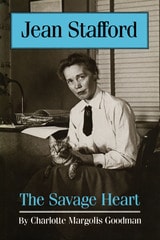
Jean Stafford
The Savage HeartBy Charlotte Margolis Goodman
University of Texas Press, 1990
One of America's best short story writers and author of three fine novels, Boston Adventure (1944), The Mountain Lion (1947), and The Catherine Wheel (1952), Jean Stafford has been rediscovered by another generation of readers and scholars. Although her novels and her Pulitzer Prize–winning short stories were widely read in the 1940s and 1950s, her fiction has received less critical attention than that of other distinguished contemporary American women writers such as Carson McCullers, Flannery O'Connor, and Eudora Welty. In this literary biography, Charlotte M. Goodman traces the life of the brilliant yet troubled Jean Stafford and reassesses her importance.
Drawing on a wealth of original material, Goodman describes the vital connections between Stafford's life and her fiction. She discusses Stafford's difficult family relationships, her tempestuous first marriage to the poet Robert Lowell, her unresolved conflicts about gender roles, her alcoholism and bouts with depression—and her amazing ability to transform the chaotic details of her life into elegant works of fiction. These wonderfully crafted works offer insightful portraits of alienated and isolated characters, most of whom exemplify not only human estrangement in the modern world, but also the special difficulties of girls and women who refuse to play traditional roles.
Goodman locates Jean Stafford within the literary world of the 1940s and 1950s. In her own right, and through her marriages to Robert Lowell, Life magazine editor Oliver Jensen, and journalist A. J. Liebling, Stafford associated with many of the major literary figures of her day, including the Southern Fugitives, the New York intellectual coterie, and writers for the New Yorker, to which she regularly contributed short stories. Goodman also describes Stafford's sustaining friendships with other women writers, such as Evelyn Scott and Caroline Gordon, and with her New Yorker editor, Katharine S. White.
This highly readable biography will appeal to a wide audience interested in twentieth-century literature and the writing of women's lives.

Jean-Paul Sartre
Hated Conscience of His Century, Volume 1: Protestant or Protester?John Gerassi
University of Chicago Press, 1989
Joanna Russ
Gwyneth Jones
University of Illinois Press, 2019
John Barth - American Writers 91
University of Minnesota Pamphlets on American WritersGerhard Joseph
University of Minnesota Press, 1970
John Barth - American Writers 91 was first published in 1970. Minnesota Archive Editions uses digital technology to make long-unavailable books once again accessible, and are published unaltered from the original University of Minnesota Press editions.
John Berryman - American Writers 85
University of Minnesota Pamphlets on American WritersWilliam J. Martz
University of Minnesota Press, 1969
John Berryman - American Writers 85 was first published in 1969. Minnesota Archive Editions uses digital technology to make long-unavailable books once again accessible, and are published unaltered from the original University of Minnesota Press editions.
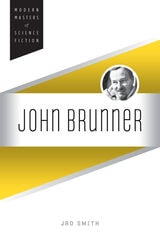
John Brunner
Jad Smith
University of Illinois Press, 2012
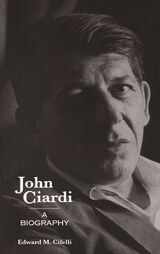
John Ciardi
A BiographyEdward M. Cifelli
University of Arkansas Press, 1997
John Crowe Ransom - American Writers 18
University of Minnesota Pamphlets on American WritersJohn L. Stewart
University of Minnesota Press, 1962
John Crowe Ransom - American Writers 18 was first published in 1962. Minnesota Archive Editions uses digital technology to make long-unavailable books once again accessible, and are published unaltered from the original University of Minnesota Press editions.
John Dos Passos - American Writers 20
University of Minnesota Pamphlets on American WritersRobert Gorham Davis
University of Minnesota Press, 1962
John Dos Passos - American Writers 20 was first published in 1962. Minnesota Archive Editions uses digital technology to make long-unavailable books once again accessible, and are published unaltered from the original University of Minnesota Press editions.
John Duns Scotus
A LifeAntoon Vos
Central European University Press, 2026
John O’Hara - American Writers 80
University of Minnesota Pamphlets on American WritersCharles Child Walcutt
University of Minnesota Press, 1969
John O'Hara - American Writers 80 was first published in 1969. Minnesota Archive Editions uses digital technology to make long-unavailable books once again accessible, and are published unaltered from the original University of Minnesota Press editions.
John P. Marquand - American Writers 46
University of Minnesota Pamphlets on American WritersC. Hugh Holman
University of Minnesota Press, 1965
John P. Marquand - American Writers 46 was first published in 1965. Minnesota Archive Editions uses digital technology to make long-unavailable books once again accessible, and are published unaltered from the original University of Minnesota Press editions.
John Steinbeck - American Writers 94
University of Minnesota Pamphlets on American WritersJames Gray
University of Minnesota Press, 1971
John Steinbeck - American Writers 94 was first published in 1971. Minnesota Archive Editions uses digital technology to make long-unavailable books once again accessible, and are published unaltered from the original University of Minnesota Press editions.
John Updike - American Writers 79
University of Minnesota Pamphlets on American WritersCharles Thomas Samuels
University of Minnesota Press, 1969
John Updike - American Writers 79 was first published in 1969. Minnesota Archive Editions uses digital technology to make long-unavailable books once again accessible, and are published unaltered from the original University of Minnesota Press editions.
Jonathan Edwards - American Writers 97
University of Minnesota Pamphlets on American WritersEdward M. Griffin
University of Minnesota Press, 1971
Jonathan Edwards - American Writers 97 was first published in 1971. Minnesota Archive Editions uses digital technology to make long-unavailable books once again accessible, and are published unaltered from the original University of Minnesota Press editions.

Jonathan Odell
The Loyalist Poet of the American RevolutionCynthia Dubin Edelberg
Duke University Press, 1987
One of the best-educated of the colonialists, Odell, a physician turned Anglican minister and then writer, lived the gamut of experience: powerful friends sustained him and the British commanders-in-chief Sir William Howe, Henry Clinton, and Sir Guy Carleton employed him; nevertheless, during the war he was a lonely exile ("Tory hunters" forced him from his home in 1775), and, at the end of the war, when his hope for reconciliation between the Loyalists and the Americans came to nothing, he reluctantly emigrated to Canada.
Here is a voice, all but silenced for over two hundred years, that must now be heard if we are to better understand the American Revolution.
Jonathan Swift
Irish Blow-InEugene Hammond
University of Delaware Press, 2016
Jonathan Swift: Irish Blow-in covers the arc of the first half of Jonathan Swift’s life, offering fresh details of the contentment and exuberance of his childhood, of the support he received from his grandmother, of his striking affection for Esther Johnson from the time she was ten years old (his pet name for her in her twenties was “saucebox”), of his precocious entry into English politics with his Contests and Dissensions pamphlet, of his brilliant and much misunderstood Tale of a Tub, and of his naive determination to do well both as a vicar of the small parish of Laracor in Ireland and as a writer for the Tory administration trying to pull England out of debt by ending the war England was engaged in with France.
I do not share with past biographers the sense that Swift had a deprived childhood. I do not share the suspicion that most of Swift’s enmities were politically motivated. I do not feel critical of him because he was often fastidious with his money. I do not think he was insincere about his religious faith. His pride, his sexual interests, his often shocking or uninhibited language, his instinct for revenge – emphasized by many previous biographers – were all fundamental elements of his being, but elements that he either used for rhetorical effect, or that he tried to keep in check, and that he felt that religion helped him to keep in check. Swift had as firm a conviction as did Freud that we are born with wayward tendencies; unlike Freud, though, he saw both religion and civil society as necessary and helpful checks on those wayward tendencies, and he (frequently, but certainly not always) acknowledged that he shared those tendencies with the rest of us.
This biography, in two books, Jonathan Swift: Irish Blow-in and Jonathan Swift: Our Dean, will differ from most literary biographies in that it does not aim to show how Swift’s life illuminates his writings, but rather how and why Swift wrote in order to live the life he wanted to live. I have liberally quoted Swift’s own words in this biography because his inventive expression of ideas, both in his public works and in his private letters, was what has made him a unique and compelling figure in the history of literature. I hope in these two books to come closer than past biographies to capturing how it felt to Swift himself to live his life.
Published by University of Delaware Press. Distributed worldwide by Rutgers University Press.
Jonathan Swift
Our DeanEugene Hammond
University of Delaware Press, 2016
Jonathan Swift: Our Dean details the political climax of his remarkable career—his writing and publication of The Drapier’s Letters (1724), Gulliver’s Travels (1726), and A Modest Proposal (1729)—stressing the relentless political opposition he faced and the numerous ways, including through his sermons, that he worked from his political base as Dean of St. Patrick’s Cathedral, psychologically as well as physically just outside the Dublin city walls, to attempt to rouse the Irish people to awareness of the ways that England was abusing them.
This book faces squarely the likelihood that Swift had a physical affair with Esther Vanhomrigh between 1719 and 1723, and reassesses in the light of that likelihood his conflicting relations with Esther Vanhomrigh and Esther Johnson. It traces the many loving friendships with both men and women in Ireland that sustained Swift during the years when his health gradually failed him, enabling him to continue indefatiguably, both through his writings and his authority as Dean of St. Patrick’s, to contribute to the public welfare in the face of relentless British attempts to squeeze greater and greater profits out of their Irish colony. Finally, it traces how Swift’s political indignation led to his treating many people, friends and enemies, cruelly during the 1730s, even while his humor and his ability to make and attract new friends sustained themselves until his memory finally failed him in 1742.
This biography, in two books, Jonathan Swift: Irish Blow-in and Jonathan Swift:Our Dean, comes closer than past biographies to capturing how it felt to Swift himself to live his life.
Published by University of Delaware Press. Distributed worldwide by Rutgers University Press.
José Martí
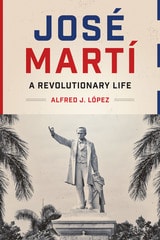
A Revolutionary LifeBy Alfred J. López
University of Texas Press, 2014
José Martí (1853–1895) was the founding hero of Cuban independence. In all of modern Latin American history, arguably only the “Great Liberator” Simón Bolívar rivals Martí in stature and legacy. Beyond his accomplishments as a revolutionary and political thinker, Martí was a giant of Latin American letters, whose poetry, essays, and journalism still rank among the most important works of the region. Today he is revered by both the Castro regime and the Cuban exile community, whose shared veneration of the “apostle” of freedom has led to his virtual apotheosis as a national saint.
In José Martí: A Revolutionary Life, Alfred J. López presents the definitive biography of the Cuban patriot and martyr. Writing from a nonpartisan perspective and drawing on years of research using original Cuban and U.S. sources, including materials never before used in a Martí biography, López strips away generations of mythmaking and portrays Martí as Cuba’s greatest founding father and one of Latin America’s literary and political giants, without suppressing his public missteps and personal flaws. In a lively account that engrosses like a novel, López traces the full arc of Martí’s eventful life, from his childhood and adolescence in Cuba, to his first exile and subsequent life in Spain, Mexico City, and Guatemala, through his mature revolutionary period in New York City and much-mythologized death in Cuba on the battlefield at Dos Ríos. The first major biography of Martí in over half a century and the first ever in English, José Martí is the most substantial examination of Martí’s life and work ever published.
Journal of Rehearsals
A Memoir by Wallace FowlieWallace Fowlie
Duke University Press, 0
Journals
Volume FifteenHerman Melville
Northwestern University Press, 1989
The editors supply full annotations of Melville's allusions and terse entries and an exhaustive index makes available the range of his acquaintance with people, places, and works of art. Also included are related documents, illustrations, maps, and many pages and passages reproduced from the journals. This scholarly edition aims to present a text as close to the author's intention as his difficult handwriting permits. It is an Approved Text of the Center for Editions of American Authors (Modern Language Association of America).
Joyce
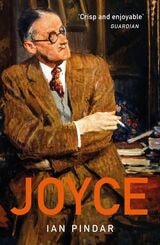
Second EditionIan Pindar
Haus Publishing, 2025
James Joyce (1882–1941) is hailed as one of the greatest writers of the twentieth century. Rejecting his homeland and its religion as a young man, Joyce went on to reinvent the Dublin of his youth in his fiction. His masterpiece, Ulysses—once banned in Britain and the United States—redefined the modern novel and has become a canonical classic. Finnegans Wake, written as Joyce’s eyesight deteriorated, cemented his legacy as one of the founding figures of modernist literature.
In a revised edition of this lucid and compelling biography, containing a new foreword from the author, crucial events in Joyce’s life, from his self-imposed exile to his creative triumphs, are explored vividly. Ian Pindar reveals how Joyce’s work carefully blends the abstract and the mundane, capturing the great human comedy of which we are all part.

Juan Felipe Herrera
Migrant, Activist, Poet LaureateEdited by Francisco A. Lomelí and Osiris Aníbal Gómez
University of Arizona Press, 2023
For the first time, this book presents the distinguished, prolific, and highly experimental writer Juan Felipe Herrera. This wide-ranging collection of essays by leading experts offers critical approaches on Herrera, who transcends ethnic and mainstream poetics. It expertly demonstrates Herrera’s versatility, resourcefulness, innovations, and infinite creativity.
As a poet Herrera has had an enormous impact within and beyond Chicano poetics. He embodies much of the advancements and innovations found in American and Latin American poetry from the early l970s to the present. His writings have no limits or boundaries, indulging in the quotidian as well as the overarching topics of his era at different periods of his life. Both Herrera and his work are far from being unidimensional. His poetics are eclectic, incessantly diverse, transnational, unorthodox, and distinctive.
Reading Herrera is an act of having to rearrange your perceptions about things, events, historical or intra-historical happenings, and people. The essays in this work delve deeply into Juan Felipe Herrera’s oeuvre and provide critical perspectives on his body of work. They include discussion of Chicanx indigeneity, social justice, environmental imaginaries, Herrera’s knack for challenging theory and poetics, transborder experiences, transgeneric constructions, and children’s and young adult literature.
This book includes an extensive interview with the poet and a voluminous bibliography on everything by, about, and on the author. The chapters in this book offer a deep dive into the life and work of an internationally beloved poet who, along with serving as the poet laureate of California and the U.S. poet laureate, creates work that fosters a deep understanding of and appreciation for people’s humanity.
Contributors
Trevor Boffone
Marina Bernardo-Flórez
Manuel de Jesús Hernández-G.
Whitney DeVos
Michael Dowdy
Osiris Aníbal Gómez
Carmen González Ramos
Cristina Herrera
María Herrera-Sobek
Francisco A. Lomelí
Tom Lutz
Manuel M. Martín-Rodríguez
Marzia Milazzo
Maria Antònia Oliver-Rotger
Rafael Pérez-Torres
Renato Rosaldo
Donaldo W. Urioste
Luis Alberto Urrea
Santiago Vaquera-Vásquez
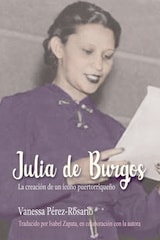
Julia de Burgos
La creación de un ícono puertorriqueñoVanessa Pérez-Rosario. Traducido por Isabel Zapata, en colaboración con la autora
University of Illinois Press, 2021
Disponible por primera vez en español, Julia de Burgos cuenta la destacada historia de la poeta y activista puertorriqueña.
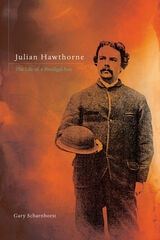
Julian Hawthorne
The Life of a Prodigal SonGary Scharnhorst
University of Illinois Press, 2014
Julian Hawthorne (1846-1934), Nathaniel Hawthorne's only son, lived a long and influential life marked by bad circumstances and worse choices. Raised among luminaries such as Thoreau, Emerson, and the Beecher family, Julian became a promising novelist in his twenties, but his writing soon devolved into mediocrity.
What talent the young Hawthorne had was spent chasing across the changing literary and publishing landscapes of the period in search of a paycheck, writing everything from potboilers to ad copy. Julian was consistently short of funds because--as biographer Gary Scharnhorst is the first to reveal--he was supporting two households: his wife in one and a longtime mistress in the other.
The younger Hawthorne's name and work ethic gave him influence in spite of his haphazard writing. Julian helped to found Cosmopolitan and Collier's Weekly. As a Hearst stringer, he covered some of the era's most important events: McKinley's assassination, the Galveston hurricane, and the Spanish-American War, among others.
When Julian died at age 87, he had written millions of words and more than 3,000 pieces, out-publishing his father by a ratio of twenty to one. Gary Scharnhorst, after his own long career including works on Mark Twain, Oscar Wilde, and other famous writers, became fascinated by the leaps and falls of Julian Hawthorne. This biography shows why.
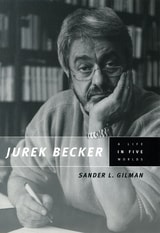
Jurek Becker
A Life in Five WorldsSander L. Gilman
University of Chicago Press, 2003
In the first biography of this fascinating figure, Sander Gilman tells the story of Becker's life in five worlds: the Polish-Jewish middle-class neighborhood where Becker was born; the Warsaw ghetto and the concentration camps where Becker spent his childhood; the socialist order of the GDR, which Becker idealized, resisted, and finally was forced to leave; the isolated world of West Berlin, where he settled down to continue his writing; and the new, reunified Germany, for which Becker served as both conscience and inspiration.
Gilman was close friends with Becker for nearly thirty years, and his biography is based on unprecedented access to both the man and his papers. As Gilman reveals, Becker's story encapsulates the fractured experience of life in twentieth-century Europe, a time and place in which political systems and national borders were constantly in flux. The life of Becker, we learn, was one of great literary achievement and notoriety, but it was also one of profound cultural dislocation. An important theme in the book is Becker's struggle with his Jewishness, an identity he repressed in socialist East Germany, but embraced after reunification, when he found himself at the center of Jewish culture and literature.
Sander Gilman's story of Jurek Becker is biography of the highest order, a portrait of an extraordinarily gifted artist whose hope and courage are manifested in his legacy as one of the greatest German writers of the past century.