Results by title
328 books match the query 'Literature and society' and 4 start with j
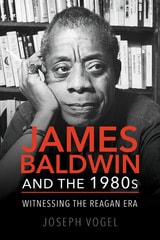
James Baldwin and the 1980s
Witnessing the Reagan EraJoseph Vogel
University of Illinois Press, 2018
Joseph Vogel offers the first in-depth look at Baldwin's dynamic final decade of work. Delving into the writer's creative endeavors, crucial essays and articles, and the impassioned polemic The Evidence of Things Not Seen, Vogel finds Baldwin as prescient and fearless as ever. Baldwin's sustained grappling with "the great transforming energy" of mass culture revealed his gifts for media and cultural criticism. It also brought him into the fray on issues ranging from the Reagan-era culture wars to the New South, from the deterioration of inner cities to the disproportionate incarceration of black youth, and from pop culture gender-bending to the evolving women's and gay rights movements.
Astute and compelling, James Baldwin and the 1980s revives and redeems the final act of a great American writer.
John Reed and the Writing of Revolution
Daniel W. Lehman
Ohio University Press, 2002
John Reed (1887-1920) is best known as the author of Ten Days That Shook the World and as champion of the communist movement in the United States. Still, Reed remains a writer almost systematically ignored by the literary critical establishment, even if alternately vilified and lionized by historians and by films like Warren Beatty’s Reds.
John Reed and the Writing of Revolution examines Reed’s writing from a different critical perspective—one informed by a theoretical and practical understanding of literary nonfiction. In both politics and writing, John Reed defied fashion. In his short career, Reed transcended the traditional creative arts of fiction, poetry, and drama in favor of deeply researched histories composed with the cadence of fiction and the power of fact. Reed thereby alienated literary critics who had idealized timeless artistry against the rough-and-tumble world of historical details and political implications.
Working from a close investigation of rare articles, manuscripts, and the Reed papers at Harvard as well as from Reed’s published work, Daniel W. Lehman offers the first detailed literary study of the man who followed Pancho Villa into battle; wrote literary profiles of such characters as Henry Ford, William Jennings Bryan, and Billy Sunday; explicated the Byzantine factionalism of Eastern Europe; and witnessed the storming of the Winter Palace and the birth of Soviet Russia.
Joinings and Disjoinings
The Significance of Marital Status in LiteratureJoAnna Stephens Mink
University of Wisconsin Press, 1991
Joyce's Web
The Social Unraveling of ModernismBy Margot Norris
University of Texas Press, 1992
James Joyce has long been viewed as a literary modernist who helped define and uphold modernism's fundamental concepts of the artist as martyr to bourgeois sensibilities and of an idealistic faith in artistic freedom. In this revolutionary work, however, Margot Norris proposes that Joyce's art actually critiques these modernist tenets by revealing an awareness of the artist's connections to and constraints within bourgeois society.
In sections organized around three mythologized and aestheticized figures in Joyce's works—artist, woman, and child—Norris' readings "unravel the web" of Joyce's early and late stories, novels, and experimental texts. She shows how Joyce's texts employ multiple mechanisms to expose their own distortions, silences, and lies and reveal connections between art and politics, and art and society.
This ambitious new reading not only repositions Joyce within contemporary debates about the ideological assumptions behind modernism and postmodernism, but also urges reconsideration of the phenomenon of modernism itself. It will be of interest and importance to all literary scholars.