Results by title
914 books match the query 'Medieval' and 7 start with j
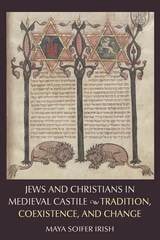
Jews and Christians in Medieval Castile
Maya Soifer Irish
Catholic University of America Press, 2016
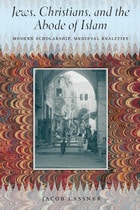
Jews, Christians, and the Abode of Islam
Modern Scholarship, Medieval RealitiesJacob Lassner
University of Chicago Press, 2012
John Duns Scotus 1265-1965
John K. Ryan
Catholic University of America Press, 2018
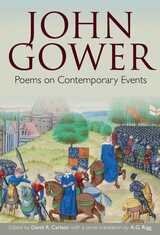
John Gower
Poems on Contemporary EventsDavid R. Carlson
Bodleian Library Publishing, 2011
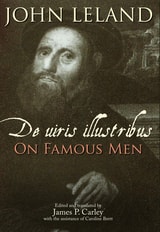
John Leland
De uiris illustribus / On Famous MenJohn Leland
Bodleian Library Publishing, 2010
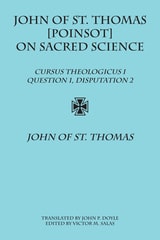
John of St. Thomas [Poinsot] on Sacred Science
Cursus Theologicus I, Question 1, Disputation 2John Of St. Thomas
St. Augustine's Press, 2012
This volume offers an English translation of John of St. Thomas’s Cursus theologicus I, question I, disputation 2. In this particular text, the Dominican master raises questions concerning the scientific status and nature of theology. At issue, here, are a number of factors: namely, Christianity’s continual coming to terms with the “Third Entry” of Aristotelian thought into Western Christian intellectual culture – specifically the Aristotelian notion of ‘science’ and sacra doctrina’s satisfaction of those requirements – the Thomistic-commentary tradition, and the larger backdrop of the Iberian Peninsula’s flourishing “Second Scholasticism.”
In this latter context, John of St. Thomas applies the theological principles of Thomas Aquinas to the Scholastic disputes preoccupying Thomist, Franciscan, and Jesuit theologians, such as Cajetan, Bañez, Luis de Molina, Vazquez, Suárez – to name only a few – in a tour de force of theological thinking throughout the entire period of Scholasticism. In the process – and not insignificantly – the status quaestionis of theology’s scientific character is clearly framed and answered according to John’s satisfaction.
Key to John of St. Thomas’s resolution of the question is his understanding of the continuity of the power of human reason with the super-intelligibility of divine revelation spelled out in terms of what he calls “virtual revelation.” This text presented in this volume is a quintessential example of the deep and abiding harmony that flourished between faith and reason as well as grace and nature within the golden era of Baroque Scholasticism.
Joining the Conversation
Dialogues by Renaissance WomenJanet Levarie Smarr
University of Michigan Press, 2005
Avoiding the male-authored model of competing orations, French and Italian women of the Renaissance framed their dialogues as informal conversations, as letters with friends that in turn became epistles to a wider audience, and even sometimes as dramas. No other study to date has provided thorough, comparative view of these works across French, Italian, and Latin. Smarr's comprehensive treatment relates these writings to classical, medieval, and Renaissance forms of dialogue, and to other genres including drama, lyric exchange, and humanist invective -- as well as to the real conversations in women's lives -- in order to show how women adapted existing models to their own needs and purposes.
Janet Levarie Smarr is Professor of Theatre and Italian Studies at the University of California, San Diego.