Results by title
99 books match the query 'Motion picture producers and directors' and 5 start with j
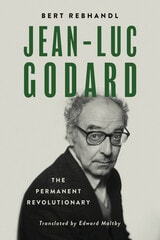
Jean-Luc Godard
The Permanent RevolutionaryBert Rebhandl, translated by Edward Maltby
University of Wisconsin Press, 2023
Rebhandl skillfully weaves together biographical details; information about the cultural, intellectual, and cinematic milieu over the decades; and descriptions of Godard’s most significant films to support his assertion that the director was a permanent revolutionary—always seeking new ways to create, understand, and comment on film within a larger context. He views Godard as an artist consistently true to himself while never ceasing to change and evolve, often in unexpected, radical, and controversial ways.
Rebhandl is known as a journalist with deep insights and lucid prose. Despite the wealth of material to analyze, he neither gets lost in the details nor offers a superficial gloss, even while directly tackling such topics as the long-standing charges of antisemitism against Godard and his oeuvre. This volume will be welcome to both casual fans and dedicated devotees.

Jia Zhangke on Jia Zhangke
Michael Berry
Duke University Press, 2022
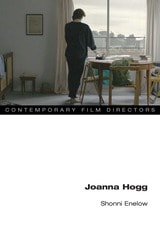
Joanna Hogg
Shonni Enelow
University of Illinois Press, 2024
Films like The Eternal Daughter and the diptych The Souvenir and The Souvenir Part II have cemented Joanna Hogg’s reputation as an original voice in contemporary cinema. Her rigorous and quiet style draws on the histories of film and art to tell stories that weave autobiography with studies in human opacity.
Shonni Enelow analyzes Hogg’s six feature films around the concepts of turning away, the reality effect, and the impossible encounter. Throughout, Enelow explores the tension between absorption, in which characters are immersed in a diegetic fiction, and self-reflexivity, as the filmmaker comments on her techniques of representation. An in-depth interview with Hogg delves into the director’s process, approach to creating character, and use of artistic and literary references.
Sophisticated and innovative, Joanna Hogg illuminates the work of one of today’s most original filmmakers.
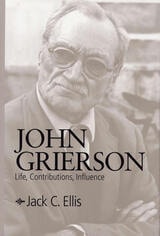
John Grierson
Life, Contributions, InfluenceJack C. Ellis
Southern Illinois University Press, 2000
More than any other person, Jack C. Ellis notes, John Grierson, a Scot, was responsible for the documentary film as it has developed in English-speaking countries.
While in the United States in the 1920s, Grierson first applied the term documentary to Robert Flaherty's Moana. In 1927, Grierson returned to Britain, where he was hired to promote the marketing of products of the British Empire. The first practical application of Grierson’s theory of documentary film was Drifters, a 1929 short feature about herring fishing in the North Sea. That success led Grierson to establish the Empire Marketing Board Film Unit (later the General Post Office Film Unit).
In 1939, Grierson moved to Canada, leaving behind a legacy of some sixty British filmmakers who spread his ideas and techniques to other countries. In Canada, he progressed beyond national concerns to global problems. The National Film Board of Canada stands as the largest and most impressive monument to Grierson's concepts and actions in regard to the use of film by governments in communicating with citizens.
Ellis examines Grierson's accomplishments in detail, probing the complexities of Grierson's motivations and personality. His subject, a true titan in the world of documentary film, was the first filmmaker to use public and private institutional sponsorship—not the box office—to pay for his films. He also employed nontraditional distribution techniques, going outside the movie theaters to reach audiences in schools and factories, union halls, and church basements. Essentially, Grierson created documentary film and established an audience for it.
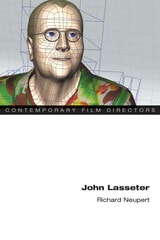
John Lasseter
Richard Neupert
University of Illinois Press, 2016
Richard Neupert explores Lasseter's signature aesthetic and storytelling strategies and details how he became the architect of Pixar's studio style. Neupert contends that Lasseter's accomplishments emerged from a unique blend of technical skill and artistic vision, as well as a passion for working with collaborators. In addition, Neupert traces the director's career arc from the time Lasseter joined Pixar in 1984. As Neupert shows, Lasseter's ability to keep a foot in both animation and CGI allowed him to thrive in an unconventional corporate culture that valued creative interaction between colleagues. The ideas that emerged built an animation studio that updated and refined classical Hollywood storytelling practices--and changed commercial animation forever.