Results by title
1325 books match the query 'Psychology' and 18 start with j
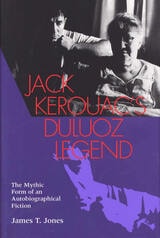
Jack Kerouac's Duluoz Legend
The Mythic Form of an Autobiographical FictionJames T. Jones
Southern Illinois University Press, 1999
In the only critical examination of all of Jack Kerouac's published prose, James T. Jones turns to Freud to show how the great Beat writer used the Oedipus myth to shape not only his individual works but also the entire body of his writing.
Like Balzac, Jones explains, Kerouac conceived an overall plan for his total writing corpus, which he called the Duluoz Legend after Jack Duluoz, his fictional alter ego. While Kerouac's work attracts biographical treatment—the ninth full-length biography was published in 1998—Jones takes a Freudian approach to focus on the form of the work. Noting that even casual readers recognize family relationships as the basis for Kerouac's autobiographical prose, Jones discusses these relationships in terms of Freud's notion of the Oedipus complex.
After establishing the basic biographical facts and explaining Freud's application of the Oedipus myth, Jones explicates Kerouac's novels of childhood and adolescence, focusing on sibling rivalry. Supporting his contention that the Beat writer worked according to a plan, Jones then shows how Kerouac revised The Town and the City (1950), his first published novel, in Vanity of Duluoz, the last novel published in his lifetime, to de-emphasize the death of the father. He treats three versions of Kerouac's road novel—including On the Road—as versions of Oedipus's fateful journey from Corinth to Thebes. And he argues that Pic, often considered peripheral to the Duluoz Legend, replicates the Oedipal themes.
Jones demonstrates that Maggie Cassidy, The Subterraneans, and Tristessa share a form that results from Kerouac's unresolved rivalry with his father for the love of his mother. He discusses Kerouac's replacement of the destructive brother figures in On the Road and Visions of Cody with the constructive hero of The Dharma Bums. He also shows how the Oedipal structure of the Duluoz Legend applies to Kerouac's nonfiction.
In the penultimate chapter, Jones explains how Big Sur, Kerouac's story of his alcohol-induced nervous breakdown, actually marks the climax of the Duluoz Legend. The alcoholism, Jones insists, is not the cause but a symptom of a breakdown brought on by his attachment to his mother. He shows how Kerouac's obsession with his family repeats Oedipal themes throughout the Duluoz Legend. Finally, he deals with Oedipal themes in Kerouac's nonnarrative work, including Old Angel Midnight, Some of the Dharma, The Scripture of the Golden Eternity, and several poems.
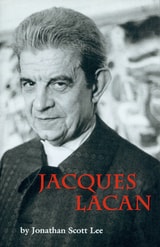
Jacques Lacan
Jonathan Scott Lee
University of Massachusetts Press, 1991
Originally published as part of Twayne's World Authors Series, Jacques Lacan offers a comprehensive and rigorous introduction to the life and work of the French psychoanalyst Jacques Lacan, one of the most influential and challenging thinkers of the twentieth century. Written by a philosopher with a deep engagement in both continental philosophy and psychoanalytic theory, Jonathan Scott Lee traces the development of Lacan's theoretical project from his early psychiatric writings through the landmark Écrits and the renowned seminars that Lacan delivered over more than two decades.
Lee's approach is distinctive in its philosophical clarity, making complex Lacanian ideas available to readers in the humanities and social sciences. His careful analysis of the mirror stage, the role of the Other, and Lacan's three fundamental registers—the Imaginary, the Symbolic, and the Real— provides new insight into the ways they structure human subjectivity, language, and desire. This book situates Lacan within the broader intellectual currents of twentieth-century French thought, drawing connections to structuralism, post-structuralism, and the philosophical traditions that shaped and were shaped by Lacan's radical "return to Freud."
Widely cited in scholarly literature across disciplines, including literary criticism, philosophy, theology, film studies, and cultural theory, Jacques Lacan remains a valued introduction for students, scholars, and general readers seeking a careful and comprehensive guide to one of the most formidable intellectual figures of the modern era.
Jacques Lacan & Co
A History of Psychoanalysis in France, 1925-1985Elisabeth Roudinesco
University of Chicago Press, 1990

Jacques Lacan and the Other Side of Psychoanalysis
Reflections on Seminar XVII, sic viJustin Clemens and Russell Grigg, eds.
Duke University Press, 2006
The contributors examine Lacan’s theory of the four discourses, his critique of the Oedipus complex and the superego, the role of primal affects in political life, and his prophetic grasp of twenty-first-century developments. They take up these issues in detail, illuminating the Lacanian concepts with in-depth discussions of shame and guilt, literature and intimacy, femininity, perversion, authority and revolt, and the discourse of marketing and political rhetoric. Topics of more specific psychoanalytic interest include the role of objet a, philosophy and psychoanalysis, the status of knowledge, and the relation between psychoanalytic practices and the modern university.
Contributors. Geoff Boucher, Marie-Hélène Brousse, Justin Clemens, Mladen Dolar, Oliver Feltham, Russell Grigg, Pierre-Gilles Guéguen, Dominique Hecq, Dominiek Hoens, Éric Laurent, Juliet Flower MacCannell, Jacques-Alain Miller, Ellie Ragland, Matthew Sharpe, Paul Verhaeghe, Slavoj Žižek, Alenka Zupancic
Jacques Lacan and the Philosophy of Psychoanalysis
Ellie Ragland-Sullivan
University of Illinois Press, 1986
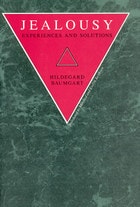
Jealousy
Experiences and SolutionsHildegard Baumgart
University of Chicago Press, 1990
Hildegard Baumgart, a practicing marriage counselor, pursues a multilayered exploration of jealousy that is at once public history, based on literary and cultural records, and private history, drawn from individual clinical cases and psychoanalytic practice. In the process she discovers provocative new answers to two central questions: How can one understand jealousy, whether one's own or another's?
Baumgart focuses on the fear of comparison with the rival that motivates much jealousy, and she shows how this idea is, in fact, built into both mythology and theology. She adroitly combines a rich array of documentation and evidence: detailed, clinical descriptions of the classic dilemmas of love triangles; a history of the concept of jealousy in the Judeo-Christian tradition; examples from the lives and writings of a fascinating gallery of authors (Shakespeare, Tolstoy, and Goethe, among others); discussions of Freud's writings on jealousy and of later psychoanalytic methodologies such as systems analysis, paradoxical intervention, and communications theory.
Throughout her narrative, Baumgart writes with compassion and feeling. Drawing on her personal experience of jealousy, her own psychoanalysis, and anecdotes from her counseling work and the clinical literature at large, she presents many fascinating vignettes of the painful—sometimes crippling—effects of jealousy as seen from the standpoints of both sufferer and therapist. What is more, she offers sensitive and sensible solutions to the problem of jealousy.
Baumgart's intriguing tapestry of the varied manifestations and interpretations of jealousy gives extraordinary resonance to the case histories she describes. In providing such a panoramic view, Jealousy invites everyone—analysts, counselors, sociologists, jealous lovers, and avid readers of advice columns—to reconsider both the cultural significance and personal meaning of this universal emotion.

Jewish Origins of the Psychoanalytic Movement
Dennis B. Klein
University of Chicago Press, 1985

Jews and Gender
Responses to Otto WeiningerNancy Harrowitz
Temple University Press, 1994

Job Loss, Identity, and Mental Health
Norris, Dawn R
Rutgers University Press, 2016
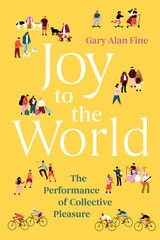
Joy to the World
The Performance of Collective PleasureGary Alan Fine
University of Chicago Press, 2026
A celebration and exploration of the idea of pleasure and the unique role it serves in bringing individuals and communities together.
There are innumerable ways to take pleasure in life: a bite of cake in the late afternoon, a walk in the warm springtime air after a long winter, a listen to the opening chords of your favorite song. But each of these pleasures is transformed by the presence of others. In Joy to the World, sociologist Gary Alan Fine takes up one of the major themes of his lifetime of work: pleasure. Fine gives us the conceptual basis for a sociology of pleasure: a joyous view of the world that, at times, inspires us, through expectations of interaction, shared cultures, and routine practices that make life worth living in community.
Fine focuses on the impact of group relations as the platform for satisfaction, emphasizing the power of communities of practice. While pleasures may be enjoyed alone, the pleasure that occurs in social spaces performs a unique function in our personal and social lives; they help us understand ourselves as individuals who are part of a group. What is pleasurably transgressive in one context might seem inappropriate, cruel, or just plain nonsensical in another, and these shades of difference serve to solidify the bonds of the group.
Joy to the World urges us to understand what draws us together as well as to appreciate what drives us apart. Our joys, as well as our challenges, help us to be a part of a caring, conscientious, committed community.

Junctures in Women's Leadership
BusinessHetfield, Lisa
Rutgers University Press, 2016
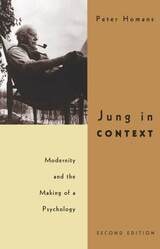
Jung in Context
Modernity and the Making of a PsychologyPeter Homans
University of Chicago Press, 1995
"Jung in Context is an intellectual triumph. . . . Utilizes the resources of biography, psychology, sociology, and theology to probe the genesis of a psychological system which is currently enjoying a wide following. . . . A splendid job."—Lewis R. Rambo, Psychiatry
"Anyone seeking an introduction to Jung's thought will find a masterful précis here."—Jan Goldstein, Journal of Sociology
"An unusually perceptive and clearly written book. . . . An important advance in the understanding of Jung, and Homans's methodology sets the stage for all future efforts to understand psychological innovators."—Herbert H. Stroup, Christian Century
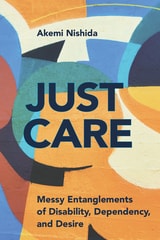
Just Care
Messy Entanglements of Disability, Dependency, and DesireAkemi Nishida
Temple University Press, 2022
Just Care is Akemi Nishida’s thoughtful examination of care injustice and social justice enabled through care. The current neoliberal political economy has turned care into a business opportunity for the healthcare industrial complex and a mechanism of social oppression and control. Nishida analyzes the challenges people negotiate whether they are situated as caregivers, receivers, or both. Also illuminated is how people with disabilities come together to assemble community care collectives and bed activism (resistance and visions emerging from the space of bed) to reimagine care as a key element for social change.
The structure of care, Nishida writes, is deeply embedded in and embodies the cruel social order—based on disability, race, gender, migration status, and wealth—that determines who survives or deteriorates. Simultaneously, many marginalized communities treat care as the foundation of activism. Using interviews, focus groups, and participant observation with care workers and people with disabilities, Just Care looks into lives unfolding in the assemblage of Medicaid long-term care programs, community-based care collectives, and bed activism. Just Care identifies what care does, and asks: How can we activate care justice or just care where people feel cared affirmatively and care being used for the wellbeing of community and for just world making?
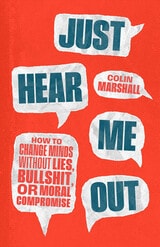
Just Hear Me Out
How to Change Minds Without Lies, Bullshit, or Moral CompromiseColin Marshall
University of Chicago Press, 2026
A guide to persuasion for people who want to change minds without manipulation or coercion.
Most of us have given up on persuasion. We say our problems are too pressing, people are too polarized, and success is too dubious—and it’s true! After all, when was the last time you heard someone actually change their mind? To improve our persuasive powers, self-help books often ask us to stoop to dishonest, manipulative tricks that rarely achieve lasting results. But perhaps there is a way to persuade people that is neither hopelessly misguided nor morally suspect.
In Just Hear Me Out, philosopher Colin Marshall describes a persuasive method that is both effective and ethical. Rather than share a flurry of tips for how to win friends and influence people, Marshall invites us to take up persuasion as fundamentally civil work, good both for our conscience and our communities. Real-world persuaders such as Jane Addams, Daryl Davis, and Fred Rogers show us an ethical route, he argues, to changing hearts through patience, respect, and compassion.
Accessible, practical, and buoyed by hope, Just Hear Me Out offers a powerful method for all who want to persuade others but aren’t interested in winning at any cost. When it works, people don’t just change their minds; they discover anew how to value our common humanity.
Just Hear Me Out
How to Change Minds Without Lies, Bullshit, or Moral CompromiseColin Marshall
University of Chicago Press, 2026
A guide to persuasion for people who want to change minds without manipulation or coercion.
Most of us have given up on persuasion. We say our problems are too pressing, people are too polarized, and success is too dubious—and it’s true! After all, when was the last time you heard someone actually change their mind? To improve our persuasive powers, self-help books often ask us to stoop to dishonest, manipulative tricks that rarely achieve lasting results. But perhaps there is a way to persuade people that is neither hopelessly misguided nor morally suspect.
In Just Hear Me Out, philosopher Colin Marshall describes a persuasive method that is both effective and ethical. Rather than share a flurry of tips for how to win friends and influence people, Marshall invites us to take up persuasion as fundamentally civil work, good both for our conscience and our communities. Real-world persuaders such as Jane Addams, Daryl Davis, and Fred Rogers show us an ethical route, he argues, to changing hearts through patience, respect, and compassion.
Accessible, practical, and buoyed by hope, Just Hear Me Out offers a powerful method for all who want to persuade others but aren’t interested in winning at any cost. When it works, people don’t just change their minds; they discover anew how to value our common humanity.
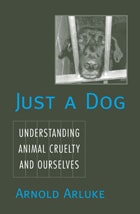
Just a Dog
Animal Cruelty, Self, and SocietyArnold Arluke
Temple University Press, 2006

Justice, Gender, and Affirmative Action
Susan D. Clayton and Faye J. Crosby
University of Michigan Press, 1992
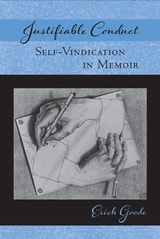
Justifiable Conduct
Self-Vindication in MemoirErich Goode
Temple University Press, 2013
Using a theory of deviance neutralization, Goode assesses the types of behavior exhibited by these memoirists to draw out generic narratives that are most effective in attempting to absolve the actor-author. Despite the highly individualistic and variable lives of these writers, Goode demonstrates that memoirists use a conventional vocabulary for their unconventional behavior.