Results by title
156 books match the query 'Psychotherapy' and 6 start with j
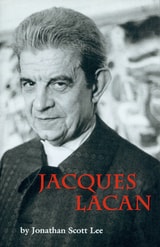
Jacques Lacan
Jonathan Scott Lee
University of Massachusetts Press, 1991
Originally published as part of Twayne's World Authors Series, Jacques Lacan offers a comprehensive and rigorous introduction to the life and work of the French psychoanalyst Jacques Lacan, one of the most influential and challenging thinkers of the twentieth century. Written by a philosopher with a deep engagement in both continental philosophy and psychoanalytic theory, Jonathan Scott Lee traces the development of Lacan's theoretical project from his early psychiatric writings through the landmark Écrits and the renowned seminars that Lacan delivered over more than two decades.
Lee's approach is distinctive in its philosophical clarity, making complex Lacanian ideas available to readers in the humanities and social sciences. His careful analysis of the mirror stage, the role of the Other, and Lacan's three fundamental registers—the Imaginary, the Symbolic, and the Real— provides new insight into the ways they structure human subjectivity, language, and desire. This book situates Lacan within the broader intellectual currents of twentieth-century French thought, drawing connections to structuralism, post-structuralism, and the philosophical traditions that shaped and were shaped by Lacan's radical "return to Freud."
Widely cited in scholarly literature across disciplines, including literary criticism, philosophy, theology, film studies, and cultural theory, Jacques Lacan remains a valued introduction for students, scholars, and general readers seeking a careful and comprehensive guide to one of the most formidable intellectual figures of the modern era.
Jacques Lacan & Co
A History of Psychoanalysis in France, 1925-1985Elisabeth Roudinesco
University of Chicago Press, 1990
Jacques Lacan and the Other Side of Psychoanalysis
Reflections on Seminar XVII, sic viJustin Clemens and Russell Grigg, eds.
Duke University Press, 2006
The contributors examine Lacan’s theory of the four discourses, his critique of the Oedipus complex and the superego, the role of primal affects in political life, and his prophetic grasp of twenty-first-century developments. They take up these issues in detail, illuminating the Lacanian concepts with in-depth discussions of shame and guilt, literature and intimacy, femininity, perversion, authority and revolt, and the discourse of marketing and political rhetoric. Topics of more specific psychoanalytic interest include the role of objet a, philosophy and psychoanalysis, the status of knowledge, and the relation between psychoanalytic practices and the modern university.
Contributors. Geoff Boucher, Marie-Hélène Brousse, Justin Clemens, Mladen Dolar, Oliver Feltham, Russell Grigg, Pierre-Gilles Guéguen, Dominique Hecq, Dominiek Hoens, Éric Laurent, Juliet Flower MacCannell, Jacques-Alain Miller, Ellie Ragland, Matthew Sharpe, Paul Verhaeghe, Slavoj Žižek, Alenka Zupancic
Jacques Lacan and the Philosophy of Psychoanalysis
Ellie Ragland-Sullivan
University of Illinois Press, 1986
Jewish Origins of the Psychoanalytic Movement
Dennis B. Klein
University of Chicago Press, 1985
Jung in Context
Modernity and the Making of a PsychologyPeter Homans
University of Chicago Press, 1995
"Jung in Context is an intellectual triumph. . . . Utilizes the resources of biography, psychology, sociology, and theology to probe the genesis of a psychological system which is currently enjoying a wide following. . . . A splendid job."—Lewis R. Rambo, Psychiatry
"Anyone seeking an introduction to Jung's thought will find a masterful précis here."—Jan Goldstein, Journal of Sociology
"An unusually perceptive and clearly written book. . . . An important advance in the understanding of Jung, and Homans's methodology sets the stage for all future efforts to understand psychological innovators."—Herbert H. Stroup, Christian Century