Results by title
939 books match the query 'Religious aspects' and 9 start with j

Japan's Holy War
The Ideology of Radical Shinto UltranationalismWalter A. Skya
Duke University Press, 2009
Skya documents a transformation in the ideology of State Shintō in the late nineteenth century and the early twentieth. He shows that within the religion, support for the German-inspired theory of constitutional monarchy that had underpinned the Meiji Constitution gave way to a theory of absolute monarchy advocated by the constitutional scholar Hozumi Yatsuka in the late 1890s. That, in turn, was superseded by a totalitarian ideology centered on the emperor: an ideology advanced by the political theorists Uesugi Shinkichi and Kakehi Katsuhiko in the 1910s and 1920s. Examining the connections between various forms of Shintō nationalism and the state, Skya demonstrates that where the Meiji oligarchs had constructed a quasi-religious, quasi-secular state, Hozumi Yatsuka desired a traditional theocratic state. Uesugi Shinkichi and Kakehi Katsuhiko went further, encouraging radical, militant forms of extreme religious nationalism. Skya suggests that the creeping democracy and secularization of Japan’s political order in the early twentieth century were the principal causes of the terrorism of the 1930s, which ultimately led to a holy war against Western civilization.
Jesus, Jobs, and Justice
African American Women and ReligionBettye Collier-Thomas
Temple University Press, 2013
Jewish Tradition and the Challenge of Darwinism
Edited by Geoffrey Cantor and Marc Swetlitz
University of Chicago Press, 2006
Darwin’s theory of evolution transformed the life sciences and made profound claims about human origins and the human condition, topics often viewed as the prerogative of religion. As a result, evolution has provoked a wide variety of religious responses, ranging from angry rejection to enthusiastic acceptance. While Christian responses to evolution have been studied extensively, little scholarly attention has been paid to Jewish reactions. Jewish Tradition and the Challenge of Darwinism is the first extended meditation on the Jewish engagement with this crucial and controversial theory.
The contributors to Jewish Tradition and the Challenge of Darwinism—from several academic disciplines and two branches of the rabbinate—present case studies showing how Jewish discussions of evolution have been shaped by the intersections of faith, science, philosophy, and ideology in specific historical contexts. Furthermore, they examine how evolutionary theory has been deployed when characterizing Jews as a race, both by Zionists and by anti-Semites. Jewish Tradition and the Challenge of Darwinism addresses historical and contemporary, as well as progressive and Orthodox, responses to evolution in America, Europe, and Israel, ultimately extending the history of Darwinism into new religious domains.
Jewish on Their Own Terms
How Intermarried Couples are Changing American JudaismThompson, Jennifer A
Rutgers University Press, 0
Over half of all American Jewish children are being raised by intermarried parents. This demographic group will have a tremendous impact on American Judaism as it is lived and practiced in the coming decades. To date, however, in both academic studies about Judaism and in the popular imagination, such children and their parents remain marginal.
Jennifer A. Thompson takes a different approach. In Jewish on Their Own Terms, she tells the stories of intermarried couples, the rabbis and other Jewish educators who work with them, and the conflicting public conversations about intermarriage among American Jews. Thompson notes that in the dominant Jewish cultural narrative, intermarriage symbolizes individualism and assimilation. Talking about intermarriage allows American Jews to discuss their anxieties about remaining distinctively Jewish despite their success in assimilating into American culture.
In contrast, Thompson uses ethnography to describe the compelling concerns of all of these parties and places their anxieties firmly within the context of American religious culture and morality. She explains how American and traditional Jewish gender roles converge to put non-Jewish women in charge of raising Jewish children. Interfaith couples are like other Americans in often harboring contradictory notions of individual autonomy, universal religious truths, and obligations to family and history.
Focusing on the lived experiences of these families, Jewish on Their OwnTerms provides a complex and insightful portrait of intermarried couples and the new forms of American Judaism that they are constructing.

Jewish-Catholic Engagements on Israel
Holy Land, Political Territory, or Theological Promise?Gavin D'Costa
Catholic University of America Press, 2025
Jews, Christians, and the Abode of Islam
Modern Scholarship, Medieval RealitiesJacob Lassner
University of Chicago Press, 2012
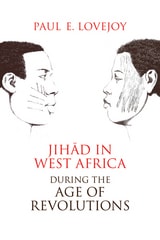
Jihad in West Africa during the Age of Revolutions
Paul E. Lovejoy
Ohio University Press, 2016
In Jihād in West Africa during the Age of Revolutions, a preeminent historian of Africa argues that scholars of the Americas and the Atlantic world have not given Africa its due consideration as part of either the Atlantic world or the age of revolutions. The book examines the jihād movement in the context of the age of revolutions—commonly associated with the American and French revolutions and the erosion of European imperialist powers—and shows how West Africa, too, experienced a period of profound political change in the late eighteenth through the mid-nineteenth centuries. Paul E. Lovejoy argues that West Africa was a vital actor in the Atlantic world and has wrongly been excluded from analyses of the period.
Among its chief contributions, the book reconceptualizes slavery. Lovejoy shows that during the decades in question, slavery expanded extensively not only in the southern United States, Cuba, and Brazil but also in the jihād states of West Africa. In particular, this expansion occurred in the Muslim states of the Sokoto Caliphate, Fuuta Jalon, and Fuuta Toro. At the same time, he offers new information on the role antislavery activity in West Africa played in the Atlantic slave trade and the African diaspora.
Finally, Jihād in West Africa during the Age of Revolutions provides unprecedented context for the political and cultural role of Islam in Africa—and of the concept of jihād in particular—from the eighteenth century into the present. Understanding that there is a long tradition of jihād in West Africa, Lovejoy argues, helps correct the current distortion in understanding the contemporary jihād movement in the Middle East, Afghanistan, Pakistan, and Africa.
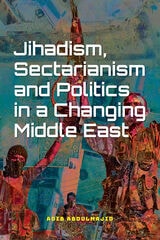
Jihadism, Sectarianism and Politics in a Changing Middle East
Adib Abdulmajid
Eburon Academic Publishers, 2021
The emergence and growth of sectarian Islamist militant organizations, whether Sunni or Shia, is deemed to be the fruit of the emerging radical interpretations of the concept of jihad, and the evolution of Islamism in general. The main objective of this book is to help the reader understand the complex religio-political scene in today’s Middle East and the ideological principles and agendas of influential movements, whose beliefs and actions constitute a serious threat to cultural diversity in the region. It addresses the doctrinal tenets associated with the emergence of influential Islamist organizations and the challenges encountered by the culturally diverse populations that surround them. This book also delves into the historical events that have shaped the Middle East as we know it today. It further examines the key factors behind the rise of the most influential sectarian-guided, jihadi-based extremist groups in the recent years

Jokes, Life after Death, and God
Joseph Bobik
St. Augustine's Press, 2020
This book devises a general and comprehensive, but brief, theory of jokes. The author begins with critiques of other writers’ views on the subject. 1) Ted Cohen thinks that such a theory is impossible. 2) Ronald Berk, on the other hand, provides just such a theory. And 3) John Morreall provides a general theory of laughter, which may include some things which can be used in a general theory of jokes. 4) Neil Schaeffer, too, provides a general theory of laughter, which makes a big point out of what he calls the “ludicrous context”; but he does include a chapter on jokes. 5) Christopher Wilson offers a general theory of jokes in which he focuses on form and content. And 6) Thomas Werge, in reflecting on the comic, suggests a general theory of jokes which identifies their matter, form, agents, purposes, and beyond these, the underlying shared relational context, which makes it possible for jokes to arise. 7) Bill Fuller’s message is that there is more funniness coming out of two or more heads than out of one, just as Socrates’ message was that there is more clarity coming out of two or more heads than out of one. 8) Umberto Eco feels that monks should laugh, just as ordinary people do; for laughter not only refreshes our seeking spirits, it also illuminates the truth we seek. 9) Simon Critchley, in his reflections on humor, notes that jokes bring on a kind of everyday anamnesis, that they are anti-story stories, that they are like prayers, that they are like philosophy; and that they require a certain underlying context, which is implicitly recognized by both teller and listener, and which renders possible the tension needed to make the punch line work. 10) Martha Wolfenstein, pursuing a psychological analysis of children’s humor, proposes that the underlying motive for telling jokes remains the same from childhood to adulthood, i.e., to transform painful and frustrating experiences so as to extract pleasure from them; and that the agent or productive cause of jokes is the repressing unconscious, as suggested by Freud.
As John Morreall has argued, neither the Superiority Theory (as in Plato, Aristotle and Hobbes), nor the Relief Theory (as in Spencer and Freud), nor the Incongruity Theory (as in Kant, Schopenhauer and Kierkegaard) appears to work as a general and comprehensive theory. Moreover, these writers talk more about humor and laughter than about jokes. To be sure, a joke is a type of humor. Thus, to say something about humor is to say something, though of a generic sort, about jokes. Similarly, to say something about the laughter caused by humor is to say something, though generic, about the laughter caused by jokes. Most of the authors considered in chapter one are concerned with jokes, and not only with humor as such. Section 11 of chapter one puts together, out of the combined contributions of these authors, what can be considered the beginnings of, some thoughts toward, a general and comprehensive theory of jokes. This task the author illustrates in a concrete way, by looking at individual jokes of different sorts; not, however, without inviting the reader to enjoy these jokes. The author looks particularly at Jewish jokes, Christian jokes, and Islamic jokes (jokes in three major religious traditions), jokes about philosophy and philosophers (philosophers ought to be able to laugh at themselves and at what they do), yo mama jokes (out of a healthy curiosity), Italian jokes and Slovak jokes, all of which makes for a clearer understanding of exactly what a joke is.
The analysis of general theory is then followed by some views on the morality of jokes and joke-telling, and an analysis of the connection between jokes and life after death, on the one hand, and God, on the other. Throughout the book Bobik offers innumerable examples to heighten our understanding and entertain us.