201 books match the query 'Social movements' and 3 start with j
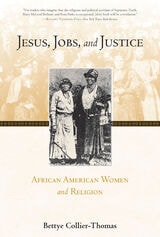
cover of Jesus, Jobs, and Justice: African American Women and Religion

Jesus, Jobs, and Justice

African American Women and Religion

Bettye Collier-Thomas

Temple University Press, 2013
Bettye Collier-Thomas’s groundbreaking book, Jesus, Jobs, and Justice—now available for the first time in paperback—provides a remarkable account of the religious faith, social and political activism, and extraordinary resilience of black women during the centuries of American growth and change. As co-creators of churches, women were a central factor in their development. However, women often had to cope with sexism in black churches, as well as racism in mostly white denominations.
 
Collier-Thomas skillfully shows how black church women created national organizations such as the National Association of Colored Women, the National League of Colored Republican Women, and the National Council of Negro Women to fight for civil rights and combat discrimination. She also examines how black women missionaries sacrificed their lives in service to their African sisters whose destiny they believed was tied to theirs.
 
While religion has been a guiding force in the lives of most African Americans, for black women it has been essential. Jesus, Jobs, and Justice restores black women to their rightful place in American and black history and demonstrates their faith in themselves, their race, and their God.
[more]
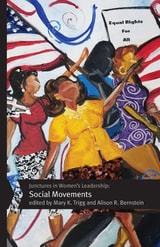
cover of Junctures in Women's Leadership: Social Movements

Junctures in Women's Leadership

Social Movements

Trigg, Mary K

Rutgers University Press, 2016

2016 Choice Outstanding Academic Title

From Eleanor Roosevelt to feminist icon Gloria Steinem to HIV/AIDS activist Dazon Dixon Diallo, women have assumed leadership roles in struggles for social justice. How did these remarkable women ascend to positions of influence? And once in power, what leadership strategies did they use to deal with various challenges? 
 
Junctures in Women’s Leadership: Social Movements explores these questions by introducing twelve women who have spearheaded a wide array of social movements that span the 1940s to the present, working for indigenous peoples’ rights, gender equality, reproductive rights, labor advocacy, environmental justice, and other causes. The women profiled here work in a variety of arenas across the globe: Planned Parenthood CEO Cecile Richards, New York City labor organizer Bhairavi Desai, women’s rights leader Charlotte Bunch, feminist poet Audre Lorde, civil rights activists Daisy Bates and Aileen Clarke Hernandez, Kenyan environmental activist Wangari Maathai, Nicaraguan revolutionary Mirna Cunningham, and South African public prosecutor Thuli Madonsela. What unites them all is the way these women made sacrifices, asked critical questions, challenged injustice, and exhibited the will to act in the face of often-harsh criticism and violence.
 
The case studies in Junctures in Women’s Leadership: Social Movements demonstrate the diversity of ways that women around the world have practiced leadership, in many instances overcoming rigid cultural expectations about gender. Moreover, the cases provide a unique window into the ways that women leaders make decisions at moments of struggle and historical change. 
 
[more]
cover of Justice at Work: The Rise of Economic and Racial Justice Coalitions in Cities

Justice at Work

The Rise of Economic and Racial Justice Coalitions in Cities

Marc Doussard

University of Minnesota Press, 2022

A pathbreaking look at how progressive policy change for economic justice has swept U.S. cities


In the 2010s cities and counties across the United States witnessed long-overdue change as they engaged more than ever before with questions of social, economic, and racial justice. After decades of urban economic restructuring that intensified class divides and institutional and systemic racism, dozens of local governments countered the conventional wisdom that cities couldn’t address inequality—enacting progressive labor market policies, from $15 minimum wages to paid sick leave.

Justice at Work examines the mutually reinforcing roles of economic and racial justice organizing and policy entrepreneurship in building power and support for policy changes. Bridging urban social movement and urban politics studies, it demonstrates how economic and racial justice coalitions are collectively the critical institution underpinning progressive change. It also shows that urban policy change is driven by “urban policy entrepreneurs” who use public space and the intangible resources of the city to open “agenda windows” for progressive policy proposals incubated through national networks. 

Through case studies of organizing and policy change efforts in cities including Chicago, Seattle, and New Orleans around minimum wages, targeted hiring, paid time off, fair scheduling, and anti-austerity, Marc Doussard and Greg Schrock show that the contemporary wave of successful progressive organizing efforts is likely to endure. Yet they caution that success is dependent on skillful organizing that builds and sustains power at the grassroots—and skillful policy work inside City Hall. By promoting justice at—and increasingly beyond—work, these movements hold the potential to unlock a new model for inclusive economic development in cities. 

[more]