150 books match the query 'Social psychology' and 5 start with j

cover of Job Loss, Identity, and Mental Health

Job Loss, Identity, and Mental Health

Norris, Dawn R

Rutgers University Press, 2016
Our jobs are often a big part of our identities, and when we are fired, we can feel confused, hurt, and powerless—at sea in terms of who we are. Drawing on extensive, real-life interviews, Job Loss, Identity, and Mental Health shines a light on the experiences of unemployed, middle-class professional men and women, showing how job loss can affect both identity and mental health.
 
Sociologist Dawn R. Norris uses in-depth interviews to offer insight into the experience of losing a job—what it means for daily life, how the unemployed feel about it, and the process they go through as they try to deal with job loss and their new identities as unemployed people. Norris highlights several specific challenges to identity that can occur. For instance, the way other people interact with the unemployed either helps them feel sure about who they are, or leads them to question their identities. Another identity threat happens when the unemployed no longer feel they are the same person they used to be. Norris also examines the importance of the subjective meaning people give to statuses, along with the strong influence of society’s expectations. For example, men in Norris’s study often used the stereotype of the “male breadwinner” to define who they were. Job Loss, Identity, and Mental Health describes various strategies to cope with identity loss, including “shifting” away from a work-related identity and instead emphasizing a nonwork identity (such as “a parent”), or conversely “sustaining” a work-related identity even though he or she is actually unemployed. Finally, Norris explores the social factors—often out of the control of unemployed people—that make these strategies possible or impossible.
 
A compelling portrait of a little-studied aspect of the Great Recession, Job Loss, Identity, and Mental Health is filled with insight into the identity crises that unemployment can trigger, as well as strategies to help the unemployed maintain their mental strength.
 
[more]
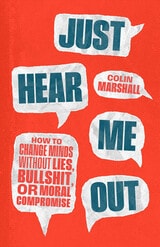
cover of Just Hear Me Out: How to Change Minds Without Lies, Bullshit, or Moral Compromise

Just Hear Me Out

How to Change Minds Without Lies, Bullshit, or Moral Compromise

Colin Marshall

University of Chicago Press, 2026

A guide to persuasion for people who want to change minds without manipulation or coercion.

Most of us have given up on persuasion. We say our problems are too pressing, people are too polarized, and success is too dubious—and it’s true! After all, when was the last time you heard someone actually change their mind? To improve our persuasive powers, self-help books often ask us to stoop to dishonest, manipulative tricks that rarely achieve lasting results. But perhaps there is a way to persuade people that is neither hopelessly misguided nor morally suspect.

In Just Hear Me Out, philosopher Colin Marshall describes a persuasive method that is both effective and ethical. Rather than share a flurry of tips for how to win friends and influence people, Marshall invites us to take up persuasion as fundamentally civil work, good both for our conscience and our communities. Real-world persuaders such as Jane Addams, Daryl Davis, and Fred Rogers show us an ethical route, he argues, to changing hearts through patience, respect, and compassion.

Accessible, practical, and buoyed by hope, Just Hear Me Out offers a powerful method for all who want to persuade others but aren’t interested in winning at any cost. When it works, people don’t just change their minds; they discover anew how to value our common humanity.
[more]
cover of Just Hear Me Out: How to Change Minds Without Lies, Bullshit, or Moral Compromise

Just Hear Me Out

How to Change Minds Without Lies, Bullshit, or Moral Compromise

Colin Marshall

University of Chicago Press, 2026

A guide to persuasion for people who want to change minds without manipulation or coercion.

Most of us have given up on persuasion. We say our problems are too pressing, people are too polarized, and success is too dubious—and it’s true! After all, when was the last time you heard someone actually change their mind? To improve our persuasive powers, self-help books often ask us to stoop to dishonest, manipulative tricks that rarely achieve lasting results. But perhaps there is a way to persuade people that is neither hopelessly misguided nor morally suspect.

In Just Hear Me Out, philosopher Colin Marshall describes a persuasive method that is both effective and ethical. Rather than share a flurry of tips for how to win friends and influence people, Marshall invites us to take up persuasion as fundamentally civil work, good both for our conscience and our communities. Real-world persuaders such as Jane Addams, Daryl Davis, and Fred Rogers show us an ethical route, he argues, to changing hearts through patience, respect, and compassion.

Accessible, practical, and buoyed by hope, Just Hear Me Out offers a powerful method for all who want to persuade others but aren’t interested in winning at any cost. When it works, people don’t just change their minds; they discover anew how to value our common humanity.
[more]
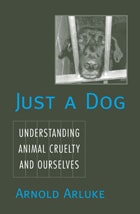
cover of Just a Dog: Animal Cruelty, Self, and Society

Just a Dog

Animal Cruelty, Self, and Society

Arnold Arluke

Temple University Press, 2006
Psychiatrists define cruelty to animals as a psychological problem or personality disorder. Legally, animal cruelty is described by a list of behaviors. In Just a Dog, Arnold Arluke argues that our current constructs of animal cruelty are decontextualized—imposed without regard to the experience of the groups committing the act. Yet those who engage in animal cruelty have their own understandings of their actions and of themselves as actors. In this fascinating book, Arluke probes those understandings and reveals the surprising complexities of our relationships with animals. Just a Dog draws from interviews with more than 250 people, including humane agents who enforce cruelty laws, college students who tell stories of childhood abuse of animals, hoarders who chronically neglect the welfare of many animals, shelter workers who cope with the ethics of euthanizing animals, and public relations experts who use incidents of animal cruelty for fundraising purposes. Through these case studies, Arluke shows how the meaning of "cruelty" reflects and helps to create identities and ideologies.
[more]
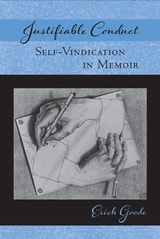
cover of Justifiable Conduct: Self-Vindication in Memoir

Justifiable Conduct

Self-Vindication in Memoir

Erich Goode

Temple University Press, 2013

How do memoirists make their work interesting, daring, exciting, and unorthodox enough so that they attract an audience, yet not so heinous and scandalous that their readers are unable to empathize or identify with them? In Justifiable Conduct, renowned sociologist Erich Goode explores the different strategies memoirists use to "neutralize" their alleged wrongdoing and fashion a more positive image of themselves for audiences. He examines how writers, including James Frey, Susan Cheever, Roman Polanski, Charles Van Doren and Elia Kazan, explain, justify, contextualize, excuse, or warrant their participation in activities such as criminal behavior, substance abuse, sexual transgressions, and political radicalism.

Using a theory of deviance neutralization, Goode assesses the types of behavior exhibited by these memoirists to draw out generic narratives that are most effective in attempting to absolve the actor-author. Despite the highly individualistic and variable lives of these writers, Goode demonstrates that memoirists use a conventional vocabulary for their unconventional behavior.  
[more]