Results by title
254 books match the query 'Sports' and 11 start with j
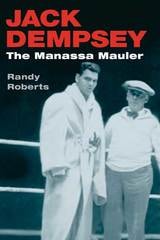
Jack Dempsey
THE MANASSA MAULERRandy Roberts
University of Illinois Press, 1979
In this incisive, fast-paced biography, Randy Roberts charts the life and career of a man widely regarded as one of the toughest ever to enter the ring. He details Dempsey's transition from barroom fights to professional boxing and his emerging reputation for fast, brutal knockouts. Roberts draws on a wealth of newspaper articles and interviews to chronicle Dempsey's rise to the heavyweight championship and his six title defenses. Also included are accounts of the eventual loss of his title to Gene Tunney in 1926, and the rematch in 1927, which Dempsey also lost in the infamous "long count." After continuing to fight in exhibitions, Dempsey retired from boxing in 1940 with an astonishing 64 victories, 49 of them knockouts.
Roberts tells of the building of this record, including accounts of Dempsey's forays into Hollywood, the controversy over his alleged draft-dodging, his long life after retirement, and his enduring legacy as one of the greatest fighters in boxing history.
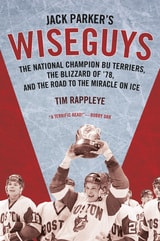
Jack Parker's Wiseguys
The National Champion BU Terriers, the Blizzard of ’78, and the Road to the Miracle on IceTim Rappleye
University Press of New England, 2017
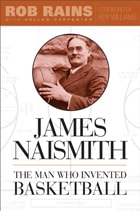
James Naismith
The Man Who Invented BasketballRob Rains with Hellen Carpenter, Foreword by Roy Williams
Temple University Press, 2009
James Naismith reveals how Naismith invented basketball in part to find an indoor activity to occupy students in the winter months. When he realized that the key to his game was that men could not run with the ball, and that throwing and jumping would eliminate the roughness of force, he was on to something. And while Naismith thought that other sports provided better exercise, he was pleased to create a game that “anyone could play.”
With unprecedented access to the Naismith archives and documents, Rains and Carpenter chronicle how Naismith developed the 13 rules of basketball, coached the game at the University of Kansas—establishing college basketball in the process—and was honored for his work at the 1936 Olympic games in Berlin.
Jesse Crosse
a novelMichael J. Moran
Parkhurst Brothers, Inc., 2011
Mike Moran first attended Little Rock Catholic High School for Boys-all four years. On the basketball team, he was a point guard. Then, as "Mr. Moran," he taught English for forty years, also at Little Rock Catholic High School for Boys. Recently retired, Moran wrote the boys a novel. The tale revolves around a struggling small-town basketball team with a nerdy manager and a Walter Mittyesque coach. Presented with too few players to scrimmage in practice, the manager takes it upon himself to spread the word throughout the school: "We need you on the team." Three young students appear, diminutive in stature and with scrawny chests, unimpressive at first sight. But with the trio, and their fleet leader Jesse Crosse, the team first experiences shock, then inspiration and constant surprises. The team bonds, leading to stories that will be retold a very long time in a small, out-of-the-way town. It's not a long novel; like one's high school years, it goes by before you know it. Only the message is eternal.
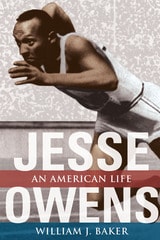
Jesse Owens
An American LifeWilliam J. Baker
University of Illinois Press, 2006

Jews, Sports, and the Rites of Citizenship
Edited by Jack Kugelmass
University of Illinois Press, 2006
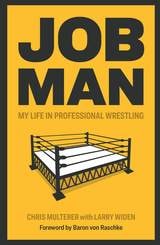
Job Man
My Life in Professional WrestlingChris Multerer
Wisconsin Historical Society Press, 2019
In Job Man, Multerer, along with his friend Larry Widen, shows what life was like for wrestlers outside the spotlight. Long nights on the road, thoughtful takes on some the biggest personalities in the business, and, perhaps most of all, a love for the sport, are as much a part of Multerer’s revealing and remarkable story as his time in the ring.
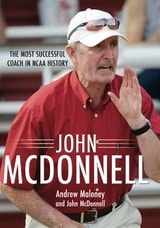
John McDonnell
The Most Successful Coach in NCAA HistoryAndrew Maloney
University of Arkansas Press, 2013
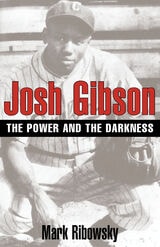
Josh Gibson
The Power and the DarknessMark Ribowsky
University of Illinois Press, 1996
Though Gibson is best remembered as "the black Babe Ruth," Ruth became a beloved symbol of the national pastime, while Gibson lived a life veiled in the darkness that came both from the shadow world of the Negro leagues and from within his own tortured soul.
Mark Ribowsky, the widely acclaimed biographer of Satchel Paige, pulls no punches in his portrait of this magnificent, troubled athlete. This is the most complete, thorough, and authoritative account of the life of black ball's greatest hitter, and one of its most important stars.
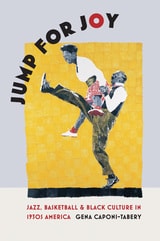
Jump for Joy
Jazz, Basketball, and Black Culture in 1930s AmericaGena Caponi-Tabery
University of Massachusetts Press, 2008
If the 1930s was the Swing Era, then the years from 1937 on might well be called the Jump Era. That summer Count Basie recorded “Jumping at the Woodside,” and suddenly jump tunes seemed to be everywhere. Along with the bouncy beat came a new dance step—the high-flying aerials of the jitterbuggers—and the basketball games that took place in the dance halls of African America became faster, higher, and flashier. Duke Ellington and a cast of hundreds put the buoyant spirit of the era on stage with their 1941 musical revue, Jump for Joy, a title that captured the momentum and direction of the new culture of exuberance.
Several high-profile public victories accompanied this increasing optimism: the spectacular successes of African American athletes at the 1936 Olympics, the 1937 union victory of the Brotherhood of Sleeping Car Porters, and Joe Louis's 1937 and 1938 heavyweight championship fights. For the first time in history, Black Americans emerged as cultural heroes and ambassadors, and many felt a new pride in citizenship.
In this book, Gena Caponi-Tabery chronicles these triumphs and shows how they shaped American music, sports, and dance of the 1930s and beyond. But she also shows how they emboldened ordinary African Americans to push for greater recognition and civil liberties—how cultural change preceded and catalyzed political action.
Tracing the path of one symbolic gesture—the jump—across cultural and disciplinary boundaries, Caponi-Tabery provides a unique political, intellectual, and artistic analysis of the years immediately preceding World War II.
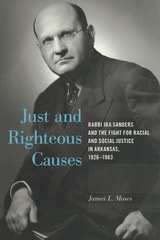
Just and Righteous Causes
Rabbi Ira Sanders and the Fight for Racial and Social Justice in Arkansas, 1926-1963James L. Moses
University of Arkansas Press, 2018
Winner, 2019 Booker Worthen Prize from the Central Arkansas Library System.
A dedicated advocate for social justice long before the term entered everyday usage, Rabbi Ira Sanders began striving against the Jim Crow system soon after he arrived in Little Rock from New York in 1926. Sanders, who led Little Rock’s Temple B’nai Israel for nearly forty years, was a trained social worker as well as a rabbi and his career as a dynamic religious and community leader in Little Rock spanned the traumas of the Great Depression, World War II and the Holocaust, and the social and racial struggles of the 1950s and 1960s.
Just and Righteous Causes—a full biographical study of this bold social-activist rabbi—examines how Sanders expertly navigated the intersections of race, religion, and gender to advocate for a more just society. It joins a growing body of literature about the lives and histories of Southern rabbis, deftly balancing scholarly and narrative tones to provide a personal look into the complicated position of the Southern rabbi and the Jewish community throughout the political struggles of the twentieth-century South.