Results by title
870 books match the query 'Sports & Recreation' and 13 start with j
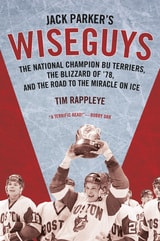
Jack Parker's Wiseguys
The National Champion BU Terriers, the Blizzard of ’78, and the Road to the Miracle on IceTim Rappleye
University Press of New England, 2017
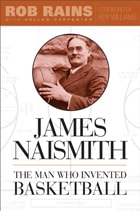
James Naismith
The Man Who Invented BasketballRob Rains with Hellen Carpenter, Foreword by Roy Williams
Temple University Press, 2009
James Naismith reveals how Naismith invented basketball in part to find an indoor activity to occupy students in the winter months. When he realized that the key to his game was that men could not run with the ball, and that throwing and jumping would eliminate the roughness of force, he was on to something. And while Naismith thought that other sports provided better exercise, he was pleased to create a game that “anyone could play.”
With unprecedented access to the Naismith archives and documents, Rains and Carpenter chronicle how Naismith developed the 13 rules of basketball, coached the game at the University of Kansas—establishing college basketball in the process—and was honored for his work at the 1936 Olympic games in Berlin.
Jews, Sports, and the Rites of Citizenship
Edited by Jack Kugelmass
University of Illinois Press, 2006
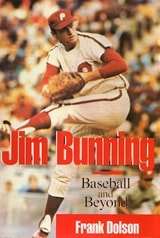
Jim Bunning
Frank Dolson
Temple University Press, 1998
He was the second pitcher in major league history to win 100 games in each league. The first was CY Young. He was the second pitcher to strike out 1000 in each league; again, only Cy Young beat hims to it. When Bunning retired at the end of the 1971 season, only one man -- Walter Johnson -- had more career strikeouts.
A proud, intensely competitive man, Bunning relished his duels with Ted Williams, Micky Mantle, and other slugging superstars of the day. What he didn't relish was dealing with sportswriter who didn't do their homework and with baseball leaders whose mismanagement, Bunning felt, jeopardized the game's place in the nation's heart. He waged battles with the likes of former commissioner Peter Ueberroth and club-owner-turned-interim-commissioner Bud Selig.
But Bunning did more than play baseball. He was a driving force in the early years of the Players Association, one of the men responsible for choosing Marvin Miller as head of the union. Bunning also was a manager in the minor leagues and in Puerto Rico and the Dominican Republic and was even a player's agent for a time. His baseball career behind him, he began a second career in politics. With a huge assist from his wife, Mary, the mother of their nine children, he waged an unsuccessful gubernational campaign in Kentucky and then became a six-term congressman. Bunning is currently running for the U.S. Senate seat in Kentucky.
Job Man
My Life in Professional WrestlingChris Multerer
Wisconsin Historical Society Press, 2019
In Job Man, Multerer, along with his friend Larry Widen, shows what life was like for wrestlers outside the spotlight. Long nights on the road, thoughtful takes on some the biggest personalities in the business, and, perhaps most of all, a love for the sport, are as much a part of Multerer’s revealing and remarkable story as his time in the ring.
John L. Sullivan and His America
Michael T. Isenberg
University of Illinois Press, 1988
The "Great John L." reigned supreme as world heavyweight champion from his victory over Paddy Ryan in 1882 until James J. Corbett knocked him out in 1892. A drunkard, a wastrel, an adulterer, a wife beater, and a bully, Sullivan still became American's first national sports hero and represented the hopes and aspirations of millions of people.
Michael Isenberg traces Sullivan's eventful life from his humble beginnings in Boston to the height of his immense popularity. The boxer moved as easily in the world of reputable workingmen as he did in the shadowlands on the margins of the sport while his success played a major role in transforming boxing into a profitable and ultimately legitimate business. Tapping previously unexplored archival material--including the notorious National Police Gazette and the other sporting papers of the day--Isenberg tells us why presidents, princes, and turn-of-the-century Americans accepted Sullivan as a hero, even as others vilified him for his drunken and belligerent behavior.
John McDonnell
The Most Successful Coach in NCAA HistoryAndrew Maloney
University of Arkansas Press, 2013
Josh Gibson
The Power and the DarknessMark Ribowsky
University of Illinois Press, 1996
Though Gibson is best remembered as "the black Babe Ruth," Ruth became a beloved symbol of the national pastime, while Gibson lived a life veiled in the darkness that came both from the shadow world of the Negro leagues and from within his own tortured soul.
Mark Ribowsky, the widely acclaimed biographer of Satchel Paige, pulls no punches in his portrait of this magnificent, troubled athlete. This is the most complete, thorough, and authoritative account of the life of black ball's greatest hitter, and one of its most important stars.
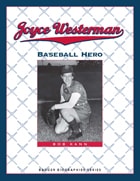
Joyce Westerman
Baseball HeroBob Kann
Wisconsin Historical Society Press, 2012
Joyce Westerman grew up on a farm in Pleasant Prairie, Wisconsin. As a kid, she cleaned the barn, picked vegetables, and helped her father cut down trees. But what she really loved to do was play baseball. Joyce played ball at recess and with friends whenever she could. She even joined her aunt’s adult softball team when she was only twelve.
As Joyce got older, she went to work at a factory in Kenosha. But when World War II broke out, she got a chance to try out for the All American Girls Professional Baseball League. Women from all over the country signed up to show off their skills. Only a few were good enough, and Joyce was one of them. For eight years, Joyce travelled around the United Stated playing ball, winning the league championship in her last season.
This addition to the Badger Biographies series for young readers tells the story of a woman who lived her dream of becoming a professional athlete. In a time when women had few opportunities for careers, and next to none in professional sports, Joyce and her teammates showed that women have what it takes.
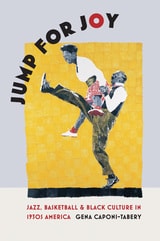
Jump for Joy
Jazz, Basketball, and Black Culture in 1930s AmericaGena Caponi-Tabery
University of Massachusetts Press, 2008
If the 1930s was the Swing Era, then the years from 1937 on might well be called the Jump Era. That summer Count Basie recorded “Jumping at the Woodside,” and suddenly jump tunes seemed to be everywhere. Along with the bouncy beat came a new dance step—the high-flying aerials of the jitterbuggers—and the basketball games that took place in the dance halls of African America became faster, higher, and flashier. Duke Ellington and a cast of hundreds put the buoyant spirit of the era on stage with their 1941 musical revue, Jump for Joy, a title that captured the momentum and direction of the new culture of exuberance.
Several high-profile public victories accompanied this increasing optimism: the spectacular successes of African American athletes at the 1936 Olympics, the 1937 union victory of the Brotherhood of Sleeping Car Porters, and Joe Louis's 1937 and 1938 heavyweight championship fights. For the first time in history, Black Americans emerged as cultural heroes and ambassadors, and many felt a new pride in citizenship.
In this book, Gena Caponi-Tabery chronicles these triumphs and shows how they shaped American music, sports, and dance of the 1930s and beyond. But she also shows how they emboldened ordinary African Americans to push for greater recognition and civil liberties—how cultural change preceded and catalyzed political action.
Tracing the path of one symbolic gesture—the jump—across cultural and disciplinary boundaries, Caponi-Tabery provides a unique political, intellectual, and artistic analysis of the years immediately preceding World War II.
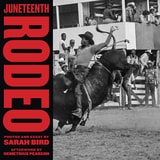
Juneteenth Rodeo
Photos and essay by Sarah Bird; Afterword by Demetrius Pearson
University of Texas Press, 2024
Award of Excellence — Communication Arts
Honorable Mention — The International Photography Awards 2024 Book Category
Jury Top 5 Selection — The International Photography Awards 2024 Book Category
Silver Winner in Zines And Photo Book/Culture— 2024 International Film Photography Award, Analog Sparks
Timeless photos offer a rare portrait of the jubilant, vibrant, vital, nearly hidden, and now all-but-vanished world of small-town Black rodeos.
Long before Americans began to officially commemorate Juneteenth, in the heat of East Texas, saddles were being cinched, buckles shined, and lassoes adjusted for a day on the Black rodeo circuit in honor of the holiday. In the late 1970s, as they had been doing for generations, Black communities across the region held local rodeos for the talented cowboys and cowgirls who were segregated from the mainstream circuit. It was to these vibrant community events that bestselling Texas writer Sarah Bird, then a young photojournalist, found herself drawn.
In Juneteenth Rodeo, Bird’s lens celebrates a world that was undervalued at the time, capturing everything, from the moment the pit master fired up his smoker, through the death-defying rides, to the last celebratory dance at a nearby honky-tonk. Essays by Bird and sports historian Demetrius Pearson reclaim the crucial role of Black Americans in the Western US and show modern rodeo riders—who still compete on today’s circuit—as “descendants” in a more than two-hundred-year lineage of Black cowboys. A gorgeous tribute to the ropers and riders—legends like Willie Thomas, Myrtis Dightman, Rufus Green, Bailey’s Prairie Kid, Archie Wycoff, and Calvin Greeley—as well as the secretaries, judges, and pick-up men and even the audience members who were as much family as fans, Juneteenth Rodeo ultimately seeks to put Black cowboys and cowgirls where they have always belonged: in the center of the frame.
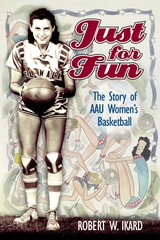
Just for Fun
The Story of AAU Women's BasketballRobert Ikard
University of Arkansas Press, 2005
Prior to the 1972 passage of Title IX, women’s basketball was a minor sport in the United States. It was played by companies such as Cook’s Goldblume Beer and Sunoco and for obscure colleges such as Iowa Wesleyan and Wayland Baptist as part of the Amateur Athletic Union (AAU). But during the two generations of the mid-twentieth century, women’s basketball improved and became more popular throughout the country. AAU All-Star teams dominated women’s international basketball until the emergence of subsidized national teams in the 1960s.
The women who played on these AAU teams helped to lay the foundation for women’s athletics today. Most of the teams came from central and southern states, and most of the players had rural origins. “Country girls” from Arkansas, Iowa, Oklahoma, Tennessee, and Texas competed at an elite level unknown to their city sisters. The AAU formed several successful international teams of gifted players that gained fame abroad but that were anonymous at home. Until nearly the last quarter of the century, skilled women basketball players had only one option after high school: the AAU.
This is the history of these gifted women, their coaches, and their teams—their records, motivations, and personal stories. Extensively illustrated, Just for Fun is the first book to thoroughly explore the complex history of the Amateur Athletic Union’s women’s basketball program and to bring to light the four decades of women’s basketball all but forgotten in the current success of women’s athletics.
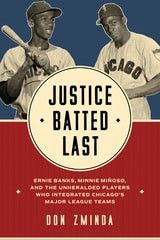
Justice Batted Last
Ernie Banks, Minnie Miñoso, and the Unheralded Players Who Integrated Chicago's Major League TeamsDon Zminda
University of Illinois Press, 2025
Don Zminda’s account looks at these interconnected events alongside the little-known chronicle of Chicago’s slow track to integrating major league baseball. By the early 1950s, the Cubs and White Sox organizations had become rich in Black and Afro-Latino stars and talented prospects. Unlike Miñoso and Banks, however, most of these minor leaguers never advanced to the majors or, if they did, it was for little more than a cup of coffee. Zminda also profiles these players, from Charles Pope, the Cubs’ first Black signee, to larger-than-life fireballer Blood Burns.
Essential and dramatic, Justice Batted Last uses the lives and careers of two Chicago legends to tell a story of integration on and off the diamond.