Results by title
392 books match the query 'State' and 6 start with j
Jewish Legal Theories
Writings on State, Religion, and MoralityEdited by Leora Batnitzky and Yonatan Brafman
Brandeis University Press, 2018
John Williams Walker
A Study in the Political, Social, and Cultural Life of the Old SouthwestHugh C. Bailey
University of Alabama Press, 1964
The definitive biography of the statesman who helped shape Alabama and the American frontier.
A biography of Alabama’s first Senator, this book is also the fascinating story of Southern frontier life as portrayed in contemporary letters and documents. When Madison County, Alabama, was still wilderness, Walker trekked across the mountains from Georgia with his bride, Matilda Pope, his slaves, and all his household possessions, to build a plantation near Huntsville. Here he began his extraordinary political career: member of the first territorial legislature; speaker of the house in the second; U.S. territorial judge; president of Alabama’s Constitutional Convention; and when statehood was won, first U.S. Senator.
Though his term in the Senate was cut short by illness, resignation, and death, in the four years he served, he met head-on the most controversial issues of his day—the Missouri Compromise, acquisition of Florida, and land relief legislation. It was in land relief that he made his most significant contribution, for he fathered the 1821 Land Law upon which new public-lands legislation for a decade thereafter was based. His own state wildly acclaimed him upon its passage; other frontier states had good reason to make him the public hero he became. But a year later, at 40, he was dead of tuberculosis.
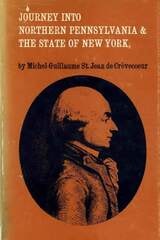
Journey into Northern Pennsylvania and the State of New York
Michel-Guillaume St. Jean de Crèvecoeur
University of Michigan Press, 1964
Judging Inequality
State Supreme Courts and the Inequality CrisisJames L. Gibson
Russell Sage Foundation, 2021
Drawing on an analysis of an original database of nearly 6,000 decisions made by over 900 judges on 50 state supreme courts over a quarter century, Judging Inequality documents two ways that state high courts have crafted policies relevant to inequality: through substantive policy decisions that fail to advance equality and by rulings favoring more privileged litigants (typically known as “upperdogs”). The authors discover that whether court-sanctioned policies lead to greater or lesser inequality depends on the ideologies of the justices serving on these high benches, the policy preferences of their constituents (the people of their state), and the institutional structures that determine who becomes a judge as well as who decides whether those individuals remain in office.
Gibson and Nelson decisively reject the conventional theory that state supreme courts tend to protect underdog litigants from the wrath of majorities. Instead, the authors demonstrate that the ideological compositions of state supreme courts most often mirror the dominant political coalition in their state at a given point in time. As a result, state supreme courts are unlikely to stand as an independent force against the rise of inequality in the United States, instead making decisions compatible with the preferences of political elites already in power. At least at the state high court level, the myth of judicial independence truly is a myth.
Judging Inequality offers a comprehensive examination of the powerful role that state supreme courts play in shaping public policies pertinent to inequality. This volume is a landmark contribution to scholarly work on the intersection of American jurisprudence and inequality, one that essentially rewrites the “conventional wisdom” on the role of courts in America’s democracy.
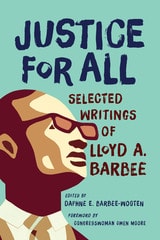
Justice for All
Selected Writings of Lloyd A. BarbeeLloyd A Barbee
Wisconsin Historical Society Press, 2017
Civil rights leader and legislator Lloyd A. Barbee frequently signed his correspondence with "Justice for All," a phrase that embodied his life’s work of fighting for equality and fairness. An attorney most remembered for the landmark case that desegregated Milwaukee Public Schools in 1972, Barbee stood up for justice throughout his career, from defending University of Wisconsin students who were expelled after pushing the school to offer black history courses, to representing a famous comedian who was arrested after stepping out of a line at a protest march. As the only African American in the Wisconsin legislature from 1965 to 1977, Barbee advocated for fair housing, criminal justice reform, equal employment opportunities, women’s rights, and access to quality education for all, as well as being an early advocate for gay rights and abortion access.
This collection features Barbee’s writings from the front lines of the civil rights movement, along with his reflections from later in life on the challenges of legislating as a minority, the logistics of coalition building, and the value of moving the needle on issues that would outlast him. Edited by his daughter, civil rights lawyer Daphne E. Barbee-Wooten, these documents are both a record of a significant period of conflict and progress, as well as a resource on issues that continue to be relevant to activists, lawmakers, and educators.
Justices of the Indiana Supreme Court
Linda C. Gugin and James E. St. Clair
Indiana Historical Society Press, 2010