Results by title
1214 books match the query 'Subjects & Themes' and 9 start with j

Jack London and the Sea
Anita Duneer
University of Alabama Press, 2022
The first book-length study of London as a maritime writer
Jack London’s fiction has been studied previously for its thematic connections to the ocean, but Jack London and the Sea marks the first time that his life as a writer has been considered extensively in relationship to his own sailing history and interests. In this new study, Anita Duneer claims a central place for London in the maritime literary tradition, arguing that for him romance and nostalgia for the Age of Sail work with and against the portrayal of a gritty social realism associated with American naturalism in urban or rural settings. The sea provides a dynamic setting for London’s navigation of romance, naturalism, and realism to interrogate key social and philosophical dilemmas of modernity: race, class, and gender. Furthermore, the maritime tradition spills over into texts that are not set at sea.
Jack London and the Sea does not address all of London’s sea stories, but rather identifies key maritime motifs that influenced his creative process. Duneer’s critical methodology employs techniques of literary and cultural analysis, drawing on extensive archival research from a wealth of previously unpublished biographical materials and other sources. Duneer explores London’s immersion in the lore and literature of the sea, revealing the extent to which his writing is informed by travel narratives, sensational sea yarns, and the history of exploration, as well as firsthand experiences as a sailor in the San Francisco Bay and Pacific Ocean.
Organized thematically, chapters address topics that interested London: labor abuses on “Hell-ships” and copra plantations, predatory and survival cannibalism, strong seafaring women, and environmental issues and property rights from San Francisco oyster beds to pearl diving in the Paumotos. Through its examination of the intersections of race, class, and gender in London’s writing, Jack London and the Sea plumbs the often-troubled waters of his representations of the racial Other and positions of capitalist and colonial privilege. We can see the manifestation of these socioeconomic hierarchies in London’s depiction of imperialist exploitation of labor and the environment, inequities that continue to reverberate in our current age of global capitalism.
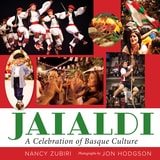
Jaialdi
A Celebration of Basque CultureNancy Zubiri
University of Nevada Press, 2022
Organized and staffed entirely by volunteers, Jaialdi attracts 35,000 to 50,000 visitors from around the world. Attendees enjoy festivities featuring Basque culture, including dancing, music, food, and competitive feats of strength. Photographer Jon C. Hodgson captures the spirit and merriment of the festival in vivid detail, taking readers on a journey into the heart of Basque culture. Coupled with author Nancy Zubiri’s observations from her own attendance at nearly every Jaialdi since 1987, the book reveals how Boise’s Basque community has committed to host the festival and why the celebration remains so popular today.
The Basque diaspora to the United States began in the late 1800s when these determined immigrants came seeking a new life filled with opportunities. Many were sheepherders who adapted to American life while maintaining their ties to the traditions of the Basque Country. Jaialdi: A Celebration of Basque Culture illuminates how this festival honors these traditions and captures the essence of the ancient Basque people, who are preserving their heritage while embracing life in the twenty-first-century West.
Jalousie
Allyson Paty
Tupelo Press, 2025
The “I-centered,” first person, yet experimental poems in Jalousie explore the ways in which expression of the deeply personal experience is both dictated to and altered by rigid societal expectations. The speaker of these highly personal poems can’t help but view language as a historical artifact, the DNA of past worlds, as these poems delve into the complexities of sorting out one’s individual identity amid broader cultural contexts. Paty’s poems attempt to connect the personal, private, intimate persona with elements that are always external—external not only to this poet but to every person.
These poems seek to capture fleeting moments of personal connection despite the impossibility of language, the societal dictates of gender roles, the pressures of making a living, the inexorable march of time, and the bewildering strangeness of architectural spaces. At the heart of this collection is “Premise,” an extensive poem that weaves in detours through the history of New York City, themes of discard, references to Bruegel's “Wedding Dance,” and discussions on representation and memory. The book also contains three full-color illustrations which augment the poet’s themes and concerns.
Jamón and Halal
Lessons in Tolerance from Rural AndalucíaChristina Civantos
Amherst College Press, 2022
“This is a book that is both a personal account and a rigorous academic study. It is a model for the kind of engaged humanistic work we are now beginning to see as a hallmark of the post-theory moment, and one that remembers the hard lessons of ethnographic fieldwork as well as the challenging foundational work from philosophically-tinged theory.” —Debra A. Castillo, Cornell University
“Filled with rich descriptions and interwoven personal anecdotes of both Civantos and her interlocuters that complement scholarly analysis.” —Jessica R. Boll, Carroll University
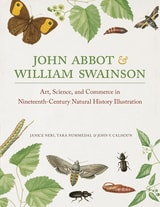
John Abbot and William Swainson
Art, Science, and Commerce in Nineteenth-Century Natural History IllustrationJanice Neri, Tara Nummedal, and John V. Calhoun
University of Alabama Press, 2019
During his lifetime (1751–ca. 1840), English-born naturalist and artist John Abbot rendered more than 4,000 natural history illustrations and profoundly influenced North American entomology, as he documented many species in the New World long before they were scientifically described. For sixty-five years, Abbot worked in Georgia to advance knowledge of the flora and fauna of the American South by sending superbly mounted specimens and exquisitely detailed illustrations of insects, birds, butterflies, and moths, on commission, to collectors and scientists all over the world.
Between 1816 and 1818, Abbot completed 104 drawings of insects on their native plants for English naturalist and patron William Swainson (1789–1855). Both Abbot and Swainson were artists, naturalists, and collectors during a time when natural history and the sciences flourished. Separated by nearly forty years in age, Abbot and Swainson were members of the same international communities and correspondence networks upon which the study of nature was based during this period.
The relationship between these two men—who never met in person—is explored in John Abbot and William Swainson: Art, Science, and Commerce in Nineteenth-Century Natural History Illustration. This volume also showcases, for the first time, the complete set of original, full-color illustrations discovered in 1977 in the Alexander Turnbull Library in Wellington, New Zealand. Originally intended as a companion to an earlier survey of insects from Georgia, the newly rediscovered Turnbull manuscript presents beetles, grasshoppers, butterflies, moths, and a wasp. Most of the insects are pictured with the flowering plants upon which Abbot thought them to feed. Abbot’s journal annotations about the habits and biology of each species are also included, as are nomenclature updates for the insect taxa.
Today, the Turnbull drawings illuminate the complex array of personal and professional concerns that informed the field of natural history in the eighteenth and nineteenth centuries. These illustrations are also treasured artifacts from times past, their far-flung travels revealing a world being reshaped by the forces of global commerce and information exchange even then. The shared project of John Abbot and William Swainson is now brought to completion, signaling the beginning of a new phase of its significance for modern readers and scholars.
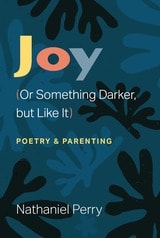
Joy (Or Something Darker, but Like It)
poetry & parentingNathaniel Perry
University of Michigan Press, 2024
Each of the twelve essays considers a different poet—Edward Thomas, Henry W. Longfellow, George Scarbrough, Elizabeth Bishop, Geoffrey Hill, Primus St. John, Robert Hayden, Elizabeth Coatsworth, Gwendolyn Brooks, Robert Frost, E.A. Robinson, and Belle Randall—and, alongside them, different concerns of parenting and living. Organized in chronological order, they track the growth of Nathaniel Perry’s own children who pop up from time to time in a believable way. Essays consider the idea of devotion and belief, the idea of imperfection, the small details we can focus on as parents, and the conceptions of the world we pass along to our children. Together these essays not only represent the author's personal canon of poets who have been important to him in his life and work, but also present a diverse slice of American poetry, in voice, form, identity, origin, and time period.
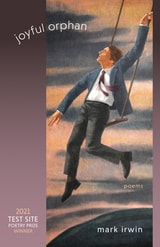
Joyful Orphan
PoemsMark Irwin
University of Nevada Press, 2023
Through poems of witness, species and habitat extinction, war, pandemic, technology, history, and race, Mark Irwin’s elegant collection of poetry explores the collision between metropolis and wilderness, and engages with forms of spirit that cannot be bound. With the incursion of electronic communication, our connections with one another have been radically distorted. Irwin’s poems confront what it means to be human, and how conflict, along with the interface between technology and humanity, can cause us to become orphaned in many different ways. But it is our decision to be joyful.
Excerpt from “Letter”
Times when we touch hope like the hem of a cloud
just as when we touch a body or door, or think
of the dead come back, romancing
us through the warp of memory, lighting a way
by luring . . .
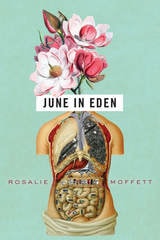
June in Eden
Rosalie Moffett
The Ohio State University Press, 2017
A sharp, darkly funny, and tender debut that exposes the fractures in our language, our technologies, and our attempts to call the world by its right name.
In June in Eden, Rosalie Ruth Moffett leads us through terrains that shift between the mythic and the modern. Sometimes the garden is wild and blooming; other times, the coveted tree is only hiding a cell tower, lungs become ATMs, and prayers travel by text message. This is a book for an age when “new kinds of war…keep / changing the maps,” and when even small slips—preying or praying—reveal the instability of the words we rely on.
At the heart of the collection lies an obsession with language: its power, its failures, and what remains when it falters. “Ruth,” our speaker notes, is “a kind of compassion / nobody wants anymore—the surviving half / of the pair of words is ruthless.” Throughout these poems, dark humor coexists with deep tenderness, reminding us of the human urge to “love the world / we made and all its shadows.
Moffett offers a speaker bewildered and awestruck by the world’s contradictions—its technological miracles, its medical uncertainties, its imaginative leaps. These poems, equal parts grief and wonder, give us a landscape that from some angles resembles paradise, and from others, something far stranger.
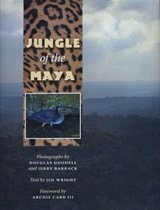
Jungle of the Maya
Photographs by Douglas Goodell and Jerry Barrack, Text by Jim Wright
University of Texas Press, 2006
The Selva Maya (Jungle of the Maya) is one of the world's most magical yet least appreciated places—an enormous tropical forest that encompasses much of Belize, Guatemala, and Mexico's Yucatan Peninsula. At 9,000,000 acres, it is the largest contiguous tropical forest north of the Amazon in the Western Hemisphere. Within its borders, the Selva Maya provides habitat for an astonishing diversity of plants and animals—more than 500 species of birds alone. The forest also contains the fascinating ruins of ancient Maya cities, which attract visitors and researchers from all over the globe.
Jungle of the Maya presents a stunning photographic portrait of this irreplaceable natural treasure. Nature photographers Douglas Goodell and Jerry Barrack capture the living wonders of the jungle—jaguars and other cats; spider and howler monkeys; hummingbirds and butterflies; and snakes, amphibians, and insects—as well as the region's hallmark Maya sites, including Tikal, Chichen Itza, Uxmal, and Tulum. Environmental writer Jim Wright invitingly describes the Selva Maya's natural and human history, helping visitors and residents appreciate the riches to be found in the forest and the need to protect and preserve them for generations to come.
Because human activities are encroaching more and more on the Mayan forest, Jungle of the Maya is a beautiful book with a timely message. As renowned naturalist Archie Carr III sums it up in his foreword, "Today, the Selva Maya is at risk again. As modern beings, can we manage the forest better than we believe the ancient Maya did? We should. We have the archaeological record to draw from. We have modern science. And we still have inspiration whispered to us by spirits in the great plazas of Tikal and beyond. Turn the pages, and witness."