Results by title
81 books match the query 'Tradition' and 3 start with j
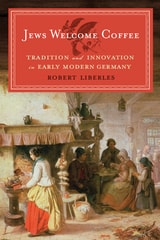
Jews Welcome Coffee
Tradition and Innovation in Early Modern GermanyRobert Liberles
Brandeis University Press, 2012
Tracing the introduction of coffee into Europe, Robert Liberles challenges long-held assumptions about early modern Jewish history and shows how the Jews harnessed an innovation that enriched their personal, religious, social, and economic lives. Focusing on Jewish society in Germany in the seventeenth and eighteenth centuries, and using coffee as a key to understanding social change, Liberles analyzes German rabbinic rulings on coffee, Jewish consumption patterns, the commercial importance of coffee for various social strata, differences based on gender, and the efforts of German authorities to restrict Jewish trade in coffee, as well as the integration of Jews into society.
[more]
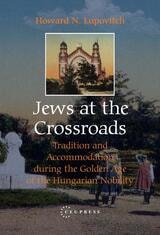
Jews at the Crossroads
Tradition and Accomodation during the Golden Age of the Hungarian NobilityHoward N. Lupovitch
Central European University Press, 2007
Examines the social and political history of the Jews of Miskolc-the third largest Jewish community in Hungary-and presents the wider transformation of Jewish identity during the eighteenth and nineteenth centuries. It explores the emergence of a moderate, accommodating form of traditional Judaism that combined elements of tradition and innovation, thereby creating an alternative to Orthodox and Neolog Judaism. This form of traditional Judaism reconciled the demands of religious tradition with the expectations of Magyarization and citizenship, thus allowing traditional Jews to be patriotic Magyars. By focusing on Hungary, this book seeks to correct a trend in modern Jewish historiography that views Habsburg Jewish History as an extension of German Jewish History, most notably with regard to emancipation and enlightenment. Rather than trying to fit Hungarian Jewry into a conventional Germano-centric taxonomy, this work places Hungarian Jews in the distinct contexts of the Habsburg Monarchy and the Danube Basin, positing a more seamless nexus between the eighteenth and nineteenth century. This nexus was rooted in a series of political experiments by Habsburg sovereigns and Hungarian noblemen that culminated in civic equality, and in the gradual expansion of traditional Judaism to meet the challenges of the age.
[more]
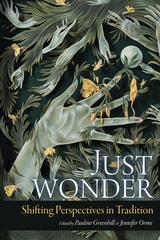
Just Wonder
Shifting Perspectives in TraditionPauline Greenhill
Utah State University Press, 2024
Inspired by folklore, television, fairy tales, social media, novels, and films, Just Wonder addresses crucial themes in social and ecological justice efforts. Moving into the mid-twenty-first century, wonder—as a potentially critical sociocultural, ecological, and individual stance—will play a significant role in reconceptualizing the present to imagine a different and better world.
These essays examine fairy tales and other traditional forms of the fantastic and the real to offer alternative expressions of justice relevant to gender, sex, sexuality, environment, Indigeneity, class, ability, race, decolonizing, and human and nonhuman relations. By analyzing fairy tales and wonder texts from various media through an intersectional feminist lens, Pauline Greenhill and Jennifer Orme consider how wonder genres and forms blend with diverse conceptions of seeking and enacting justice. International collaborators—both established and emerging scholars who self-identify with different subjectivities, locations, and generations and come from an impressive range of inter/disciplines—engage with contemporary and historical texts from various languages and cultural contexts, including interventions, counterparts, and comparisons to the fairy tale. Just Wonder offers a critical look at how creative wondering can expand the ability to resist modes of oppression while fostering equity, as well as encourage curiosity and imagination.
In a world that can be overwhelming and precarious, this book presents scholarly, artistic, personal, and collective-action interventions to identify and respond to injustice while centering wonder and, thus, imagination, questioning, and hope. Just Wonder will appeal to fairy-tale scholars; folklorists; students and scholars of film, media studies, and cultural studies; as well as a general audience.
[more]